Wānanga Two Quizz
For the retention of traditional Māori healing mātauranga, we have created this digital platform in the form of a quizz to help you actively engage with these lores so that you and your whānau members will remember some of the deep metaphysical healing lores of our ancestors. You might need to go over the app content to find the right answer. Enjoy!

Wānanga Two App Content 2025
Venue: Moteo Marae
Dates: 7th – 9th November 2025
Nau mai, kare mā, ki te rārangi mō te mātauranga hōhonu i te Moteo Marae.
Pepeha
Ko Tuhirangi te maunga
Ko Tutaekuri te awa
Ko Takitimu te waka
Ko Ngāti Kahungunu te iwi
Ko Ngāti Hinepare, Ngāti Maahu, Ngai Tāwhao ngā hapū
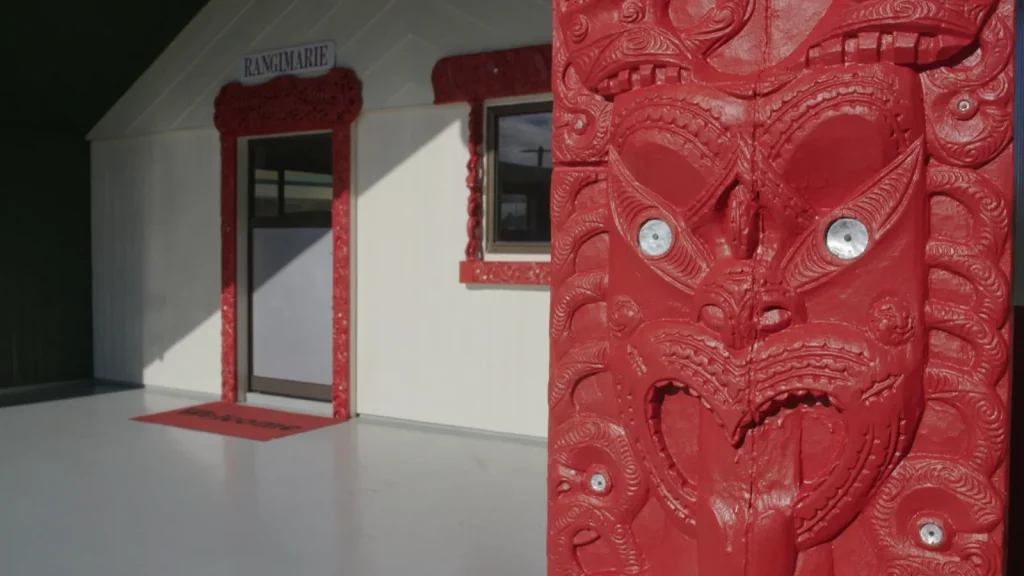
Ko Moteo te marae Ko Rangimarie te whare nui
Ko Hamuera te whare kai
Ko Paora Kaiwhata te tangata
It has been two years since the marae was yellow-stickered following Cyclone Gabrielle. Through immense effort in the clean-up and the support of funding, Mōteo Marae has been transformed into a beautiful and fully functional wharenui, wharekai, and kitchen. For many years the marae had been worn and tired; today, it is not only revitalised but truly stunning. The kitchen, in particular, surpassed any marae kitchen in our rohe that we have had the privilege of cooking in during our wānanga.
Please do not be concerned if your feedback has not been included. Due to the length of the app content, we have selected only certain comments to incorporate. We appreciate your patience and understanding throughout this process for our kaimahi, and we hope this resource will support and enrich your learning journey with us.
Venue Feedback
I love the venue, It would be awesome to have future wananga there, wow, it just has such a great feel, it has all the home comforts, the equipment to set up, is effortless, no time wasted, the kitchen is awesome, time saying equipment means more time for mahi.
Moteo Marae is beautiful and appropriate for the kaupapa. One of the attractions for me for this wananga is that my koroua came from here. “Ko Moteo Marae toku ukaipo”. With the rebuild of the marae from the horrible cyclone – lots of thought went into the function of the marae for wananga.Plenty of toilets and showers. A beautiful kitchen made prepping meals easy. A lovely small wharenui. I felt safe in here at night.
Moteo Marae, it’s a beautiful venue, close to town, peaceful, quiet and safe. fully refurbished because of the floods so the kitchen is state of the art absolutely wonderful to work in. I totally love it there.
The venue was beautiful and felt really tau. Everything we needed was right there and the environment held us in a calm and supportive way.
Warm and welcoming, stunning to have a well equipped venue.
Felt homely and very clean.
The marae was stunning — such a beautiful, well-designed, and thought-out space.
The size of the whare kai and dining area was perfect for the wānanga, and it really felt like a space that supported our learning and connection.
Central access and not far to travel to beach , hot pools and to town for top ups if needed. Loved that the water was bore water. Tidy up was fast and quick and easy.
While the contemporary rongoā definitions define mirimiri as ‘massage’ our Tohunga of old, have long described mirimiri as the spiritual manipulation of energy; to shift and clear any of the energies in the whatumanawa so that you can work the body. An example of this is when your hairs stand up on end or if you get goosebumps from an energy coming from someone or something spiritual that you can sense, taste, feel or hear.
Feedback from our Kohuorangi Camera Team
The romiromi and Makutu it was interesting to see the people work on their partners holding pressure on their pressure points, to be as one, breathe as one to feel each other’s energies.
The Waiata Ringa it was cool to take pictures and videos of all the whanau doing the waiata and kanikani but right now they are doing the puku, its quite a spiritual moment, I can feel it through the pictures and videos that Im taking Nga mihi.
Privileged to be in this space capturing everybody’s vulnerabilities, but in lots of ways, really beautiful ways of releasing so much stuff that we carry within our bodies and within our hinengaro.
All of the above was insightful and beautiful that everyone’s so open and I love how there’s so many wahine are in these spaces, but it makes sense as nurturers, carers connection to Papatuanuku.
Love anything to do with movement and waiata, so it was beautiful to have this simplicity of something where all of us are together in Kotahitanga to share in these spaces.
Interesting to be in this space where everyone is doing some mahi on the puku, but beautiful at the same time. Kia ora tatou.
Privileged to be in this space capturing everybody’s vulnerabilities, but in lots of ways, really beautiful ways of releasing so much stuff that we carry within our bodies and within our hinengaro.
All of the above was insightful and beautiful that everyone’s so open and I love how there’s so many wahine are in these spaces, but it makes sense as nurturers, carers connection to Papatuanuku.
Mirimiri
To reiterate yet again, Mirimiri is not a Māori practitioner doing massage therapy. According to our Tohunga, it is the spiritual manipulation of energy through different means. One aspect of mirimiri is to sing takutaku which is known as koo miri. Takutaku that can calm the waters (in the body) where the emotional experiences are held in the cellular memory of the body.
Another example of mirimiri, is the Tiwawe movement. This is an integral part of romiromi, known as the movement of the waters. Atarangi Muru (Ngāti Kuri Tohunga), shared the Tiwawe movement with me many years ago while I was working with her over a 12 year time frame. It not only moves and shifts all the memories that are held in the body, but also uses the waters to clean any paru from the organs. The different aspects of Mirimiri are an essential part of the many facets of romiromi.
Ngangara (entities) and Working the Gut area
The shifting of ngangara is only for those who have those abilities and is not for everybody. This is not something that can be taught to you but can only be mentored in how to use this gift. According to the late Dr Rose Pere, the ngangara are magnificent beings. They are not monsters as some people think out of fear. Why? Because when the romiromi practitioner works with the whaiora to release the ngangara that has the ability to take all the mamae and hara with them when they leave the body.
Tauira Feedback
Reflecting on the puku mahi, when I put my left hand on her puku and did my breath work it took a while to block out everything around me, but when, I did, wow the intense emotions feelings come up, I see how important it is to be able to breath, tears cum running down my face, If I don’t breath, and breathe deeply, I could easy full into uncontrollable sobbing, to be in a space like this is very intense, I have learnt to not think about it once its over otherwise, I can easily go back into feeling these intense emotions.
Doing the hands on mahi was a great experience, I found it valuable because I could feel the block in one of the ladies on the table and now I know a little bit about how to work that area of someone else I will be able to use it in future. I think I have to learn how to be more connected to the person I’m working so I don’t hurt them.
The work on the puku was profound for me, both spiritually and physically. It took me on a journey through layers of myself.
Think before we speak and clean out our own backyards so we are clear of jealousy, anger, resentment etc. Therefore won’t be sending those thoughts to people. Great reflection.
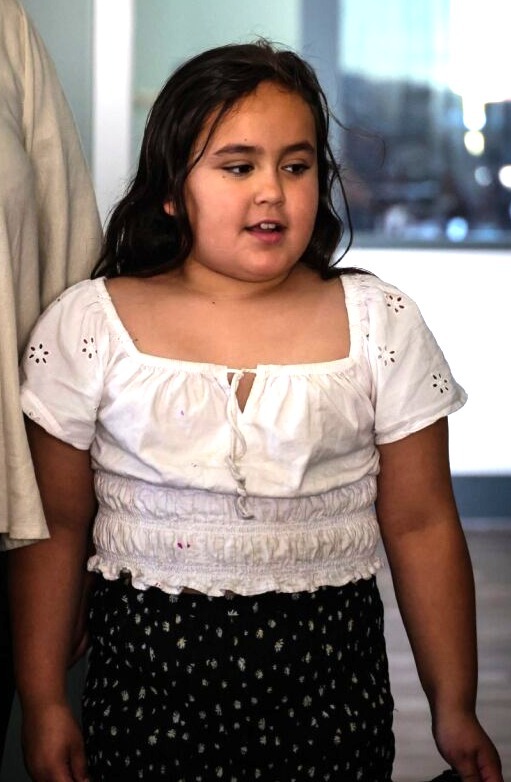
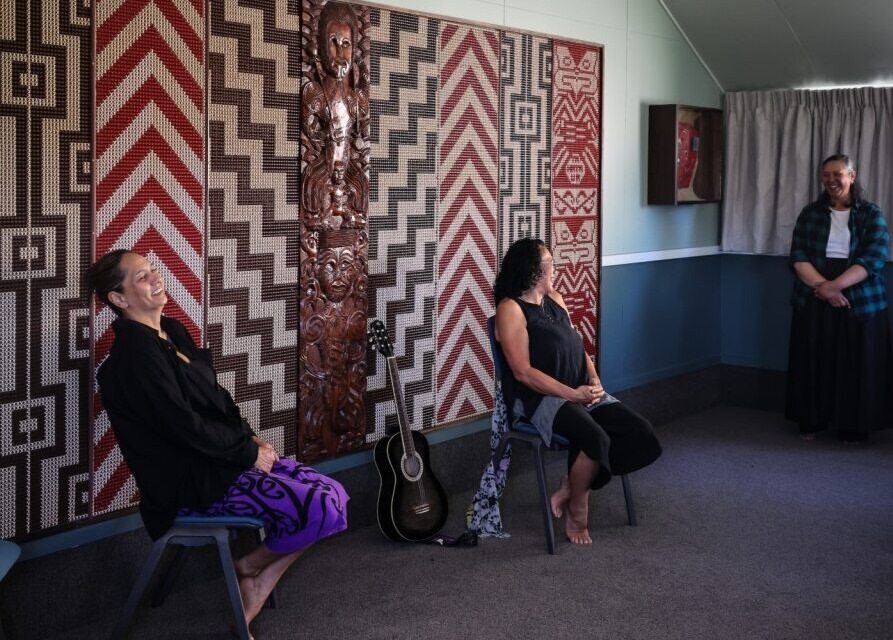
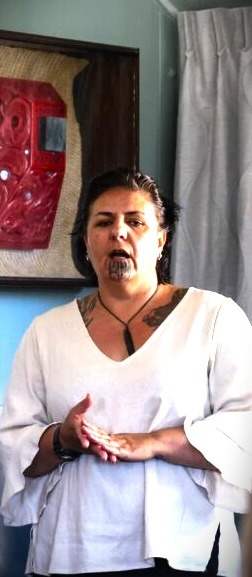
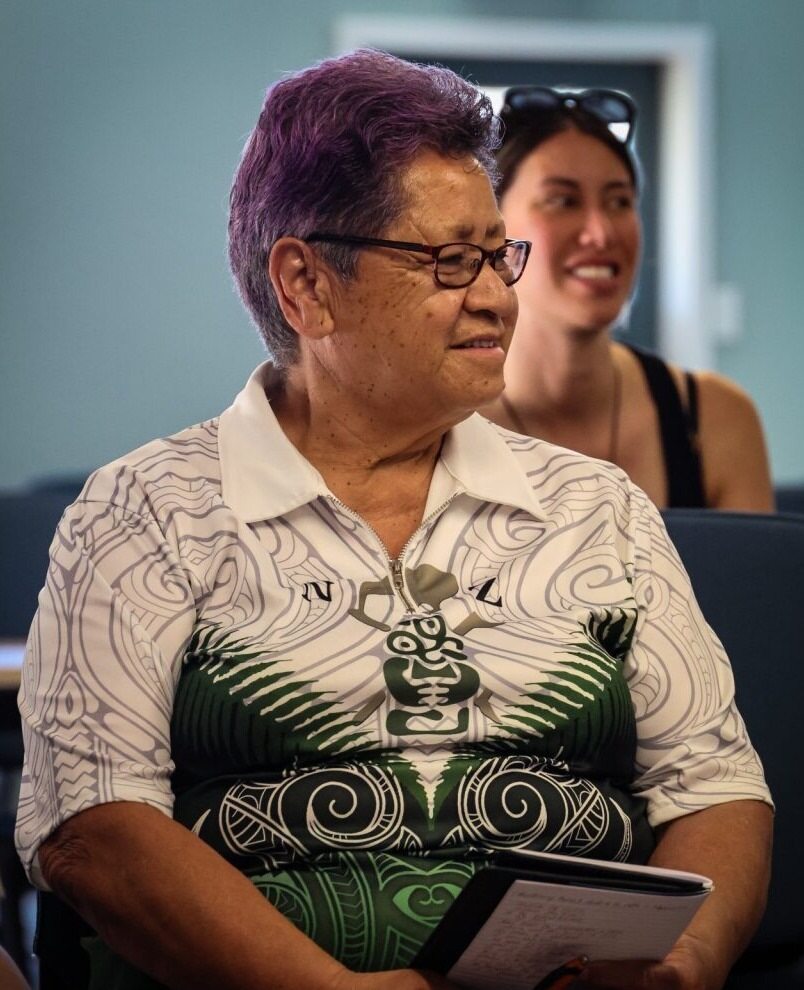
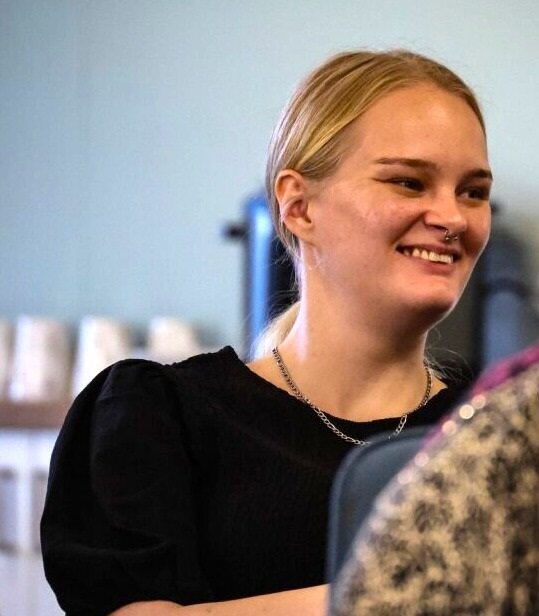
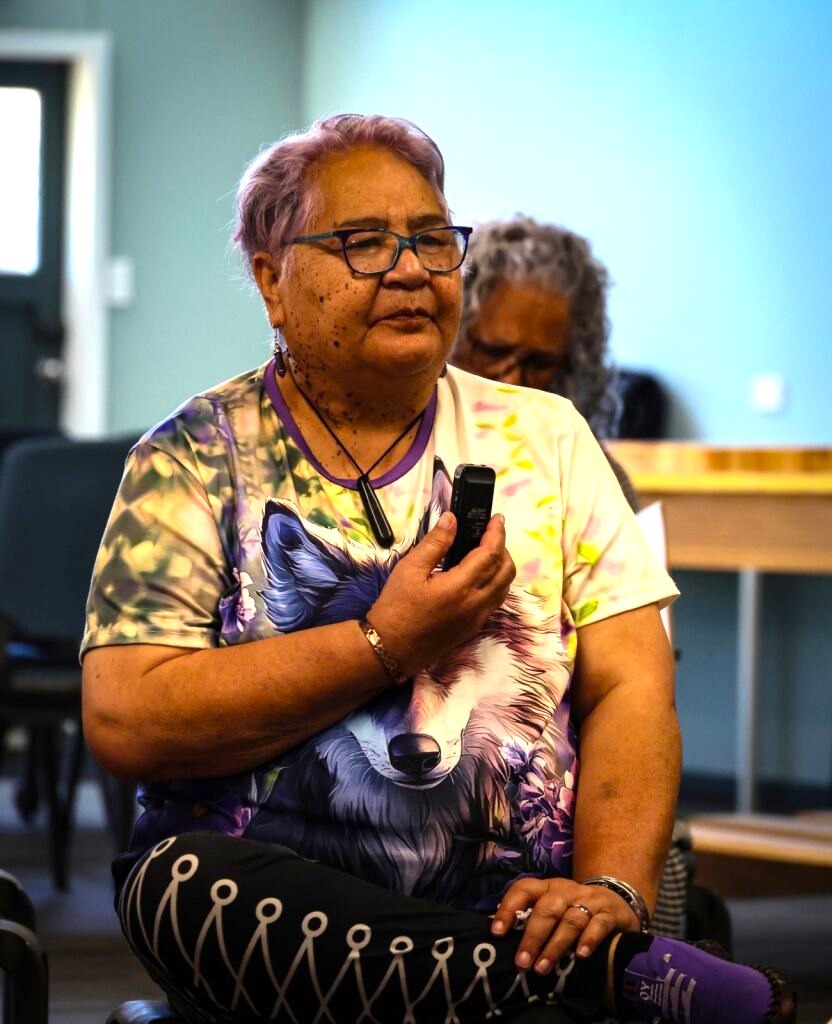
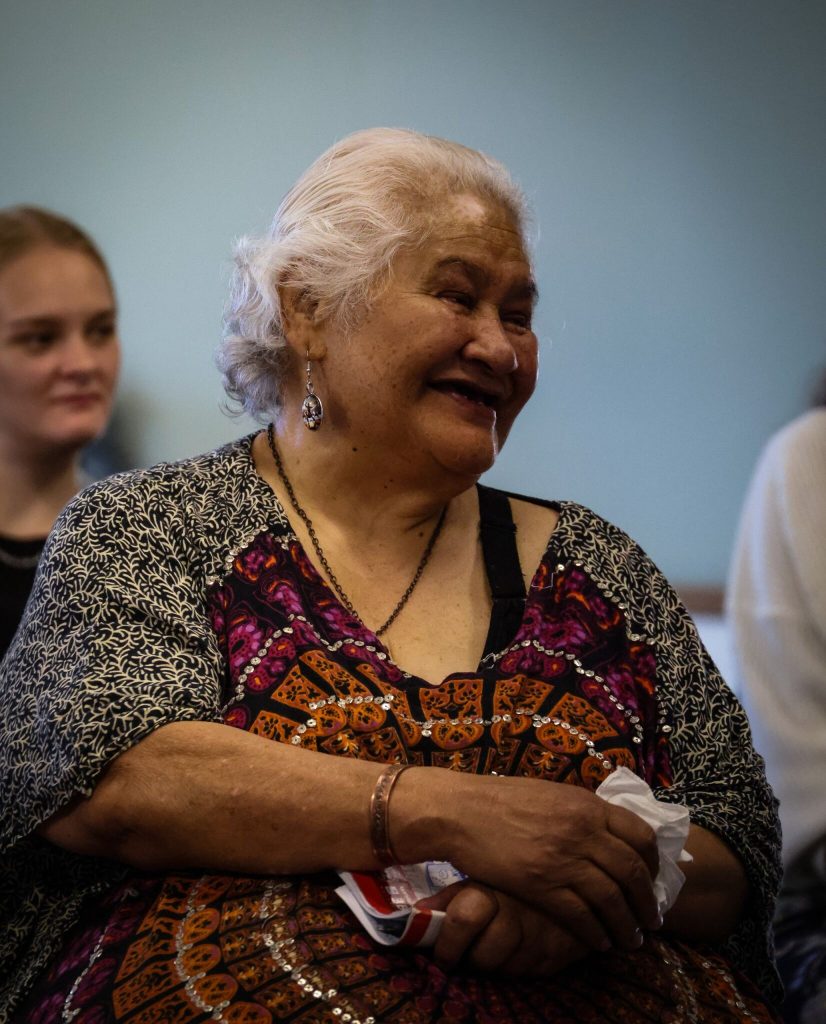
I was grateful to work with Priscilla. She gave me the direction of pressure and firmness. Using my body and breathing with hers. Watching her facial reactions.
Beautiful although I need more practice. I love the technique and seeing our nanny release! Incredible
I recognise how beneficial this mahi is, and I hope to practice more with my tamariki to support their well-being.
I would love to learn more on this area. I was a recipient and enjoyed the work done on me. I had alot of obstructions and felt it was a good learning point for me and those providing training.
The Lores of Makutu
Mate Makutu – the art of making and breaking curses
From our discussion at our wānanga, it only takes one second to send out a makutu to someone. Should we have a makutu thrown at us, sometimes we are unaware of when this has happened to us but, in some cases, a makutu can be like a sword going into your back or into some part of your body. Sometimes it can be where you feel really drained, and have to lay down, like you have lost all your life force. Being taken out can also mean you are down for days on end and can’t get up, at times where you have a fever like being delirious. Be mindful, sad to say, that it is often those who are the closest to us who throw at us, so be mindful of the first person you think of.
For those who remember from past wānanga, karaputoro (the first thought), will show you that it is usually the first person who comes to mind. There are also those who will go through somebody else to throw at you. If you challenge them, they will deny it but sometimes it is better to shift it and be aware of them.
I have become versed in makutu and was taught the spiritual lores of spiritual warfare for many years by the late Dr Rose Pere for unbeknown to me at that time, there was much puhaehae (jealousy) behind the ill intentions of others towards me. This was due to the caliber of work that I could do but did not understand why nor how I could do these things. As the saying goes ‘When the student is ready then the teacher/s will appear’ but sometimes the teacher teaches you how ‘never to be’. Know the difference and be grateful either way.
For me, with makutu experiences from those I loved or held in high regard, I would give them 3 chances before telling them that I could see what they were doing and only then would I pull it out and release it with no energy. From that point onwards, I would no longer engage with them. In dire circumstances, I would call upon my kaitiaki to handle it for me but there is no turning back from this.
I had to make the choice to honour me and my dignity instead of letting someone with ill intentions trample on my mana, and that of my whānau, over and over again. For those of you who do not know the one who is throwing makutu at you, you have to learn how to observe instead of ā and this is a skill that needs to be practised over many years as it is not something that is easily acquired.
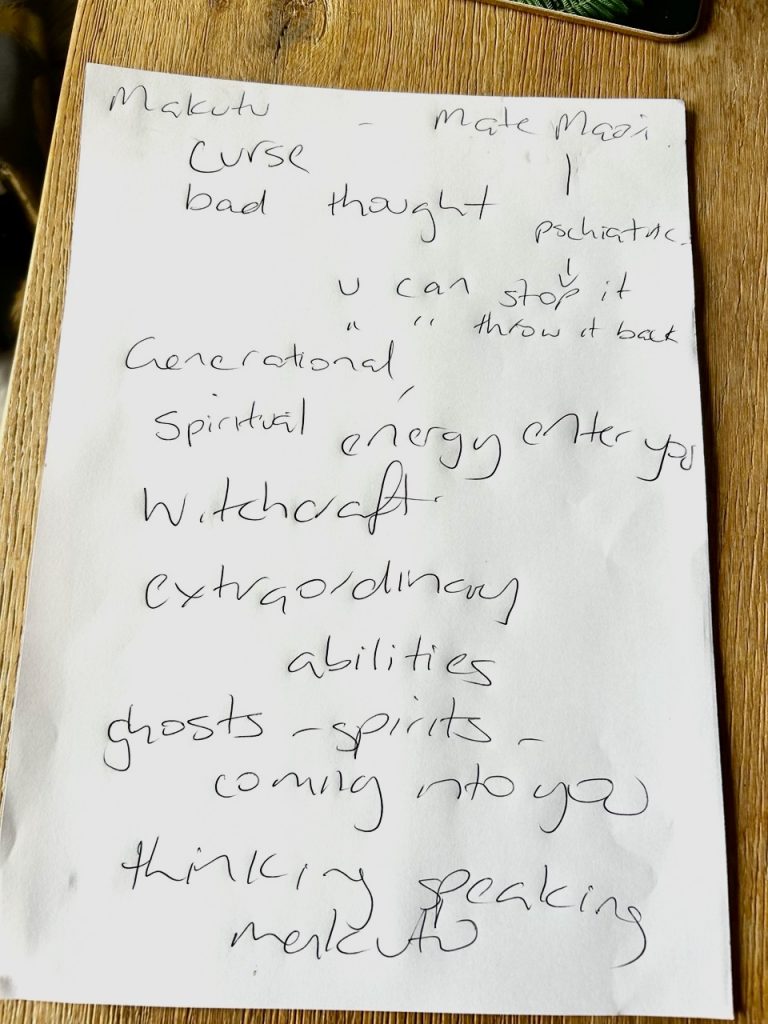
Mate Makutu – the art of making and breaking curses
To react to a makutu and to throw it back can come with dire consequences. According to Papa De La Mere, if we throw the makutu back then it can come back to us in full force, missing us, and hitting our children and our grandchildren instead. This action will hurt us much more as these are the ones we love, which hurts us much more. So, it is wiser to breathe, go into the whatumanawa to calm down so we can stay still. That way the person throwing the makutu will not be able to sense you in any way. To achieve this, silencing the mind and staying still gives us an opportunity to observe deep within to see clearly what is going on. With an understanding that our ancestors in the whatumanawa will guide us so that the wisdom will come down tuku iho. It is much better not to respond nor to react to makutu and far wiser to pull the makutu out yourself and then just to let it go back to where it came from without needing a desired outcome.
We have just touched on this mate makutu kaupapa as there is a lot to go over and this takes time and application of things learned. One of the main things we learned in our discussion was that the dead belong to the dead and the living to the living. As Papa De La Mere quoted, bury our loved ones either in ash or body in ‘Papatūānuku’ our earth mother from whence we came. Do not continue to keep them with you in the land of the living otherwise all kinds of supernatural things can happen. Keep you mokopuna safe and role model for them otherwise, you might find that the fate of your mokopuna may one day be led to the other side which will bring on a number of spiritual imbalances.
Feedback of Makutu Presentation
We have touched on this in previous wānanga, and it’s always good to be reminded so that the knowledge sticks. I do have to remind myself not to let my mouth flow with bad intent. It’s an ongoing battle, but I’m getting better at it. Stepping away from being in the mind and staying in the whatumanawa is a goal for me now.
I was taught to never throw it back, that it would come ten times stronger. I believed I should take the energy as my own. I now know energy is never lost, only transformed. I want to go deeper into this kaupapa and understand how to protect my own energy and that of my whanau with more ease. I have been practising staying out of my hinengaro and staying in my whatumanawa. It is ongoing but getting better.
Acknowledging everyone’s view aligns with similar whakaro I have around it. It reiterates to me how powerful our thoughts, words, and actions are.
Think before we speak and clean out our own backyards so we are clear of jealousy, anger, resentment etc. Therefore won’t be sending those thoughts to people.
I wasn’t able to attend this kōrero, but I am keen to learn more in future wānanga. There are aspects of my own whakapapa I haven’t had the opportunity to explore, and I look forward to deepening my understanding.
The complexities and preventatives on cursing and wishing ill on people intentionally or non intential is food for thought. The preventatives to heal generational makutu through cleansing and purifying your heart, body, soul, thoughts, actions and motives.
Makutu, funny enough Aunty and I were talking about Makutu and how our young boy at the marae it runs in the family, you know doing themselves in and we were saying there must be something from way back that’s happened because the family had started way back in the old days of their tipuna, and it seems to have carried on, it doesn’t seem they have healed it.
Interesting about the makutu how simple, that’s the thing it’s very simple and when we look at it, looking at it from a far it looks and we don’t know about it it looks very complicated in awe trying to work it out is the thing that’s complicated but its simple to throw a makutu and its simple to let it go, if you know it’s not complicated so we need to get out of complicating that for ourselves in the way that we’re thinking we’re being.
Acknowledging the past and clearing the way, something in the past in the way? yeah could be a number (of makutu?) ae, generational curse.
yep I was the same I never got taught it, but I guess my understanding of makutu, it would be a curse, basically.
So my understanding it was a curse as well, something to be feared, something not to talk about, basically put it away and don’t bring it up.
Yep I didn’t know what it was the makutu through experience in my own family some have come forward to say things like, “I had this bad thought about my friend cause she pissed me off” and I put something in my mind and she couldn’t talk for a while”, I had the same thing with my brother because someone hurt him and he lashed out but he wasn’t aware it was his thinking and that person died, and he says “oh I didn’t know”, “well you know now”. My sister describes it like it could be accidental, purposeful or a mistake.
I experienced one when I was a baby I could talk that’s for sure, aunty Hera was looking after me in the kitchen and they were talking away there somebody put me to bed and all of a sudden I gave a scream I said there’s a man up there and he’s poking his tongue at me I kept hiding my face underneath the blanket, (looking at the nannies), remember that and when you guys came in I said he’s there again mum, and he’s poking his tongue and he’s got drawings on his face I kept hiding away and I must have scared you guys and so you’s ended up sleeping with me that night, but I found out that my step father he got sick and he said if anything happens to him you fullas might as well go back home down by the church at Pakipaki, him and mum left and they moved back to the house cause we were all together, when he got there next day he was chopping wood, but when he was at home at nannies he just got sick and he had to get out of the house so yeah once he got to the homestead the next day he was chopping wood so that could be something that’s yeah.
Even though these are my sisters I was brought up by the Cracknels I was whangai out they had mate maori as well so I use to see my step brother tied down to stop him from hurting himself, he was a beautiful man when he was well but when he wasn’t, what did they do they shipped him off to the pakeha psychiatric unit as they did in those days, and doped them up with all those pills in the world and it lasted for a little while he came home but then it just came back 10 fold to the point he ended up passing away in this psychiatric unit and that to me it was like yep they know nothing about us. Then I had a brother in law my husband’s brother he had a makutu on him and he looked at me and he said I’m gonna put a makutu on you and I went do you know who I am? And he goes what and I said do you know who I am? Do you know who’s behind me? Because you don’t and if you try it’s going to come back 10 fold on you, so I believe within myself that my tipuna look after me, they look after all of us our tipuna look after us they give you the belief that you know stand, stand tall because no matter what they throw at you, you can throw back 10 fold, and that’s what I believe when it comes to makutu, you can throw it back you can stop it.
Same thing with sister Pinia, our father he had a makutu on him because he was bad to our mum and our mum was her dads pet, so that’s how I know makutu is when you do something wrong or ah I try to be good but I do be naughty at times but I do bless myself.
To me makutu can be intentional or unintentional and is something similar to a curse that can go on for generations, I do believe/ hope that it can be broken or stopped.
I believe that makutu is a curse its something you didn’t see you had to be very careful about what you say about a person cause it could come and hit them, be very careful I said my cousin would say this that you got to be careful what you say, uncle Tom use to say don’t say that, somebody will get hurt and it has happened in the family so you’ve got to be very careful, have love for everybody but a curse can hit somebody without you knowing that it’s happened, so be very very careful everybody with love.
My understanding, I had it around when I was a kid but never understood it, my understanding is like it can be a spiritual attack occurs like Miri said it could be intentional or unintentional. I had my own experience a couple of years back, a cousin of mine had passed and the whanau from up north wanted to bury her with her perpetrator, but nobody new of what had happened in our whanau and I spoke up about that so she wouldn’t go near him/ be buried with him, anyway after the tangi I had gone home and I had such a sore neck and shoulders it was like something was sitting on my back and my jaw it felt like someone had their hand on my jaw and every day that went by it just got worse and worse and then I found out later a couple of months down the track that it was a cousin of mine didn’t want this to come out didn’t want it to be aired out in the whanau, you know keep burying those secrets and what not, yeah it’s not a nice thing it scared my daughter cause she saw something on me yeah.
Long-Term Impacts of Psychiatric Systems on Tamariki and Rangatahi Māori
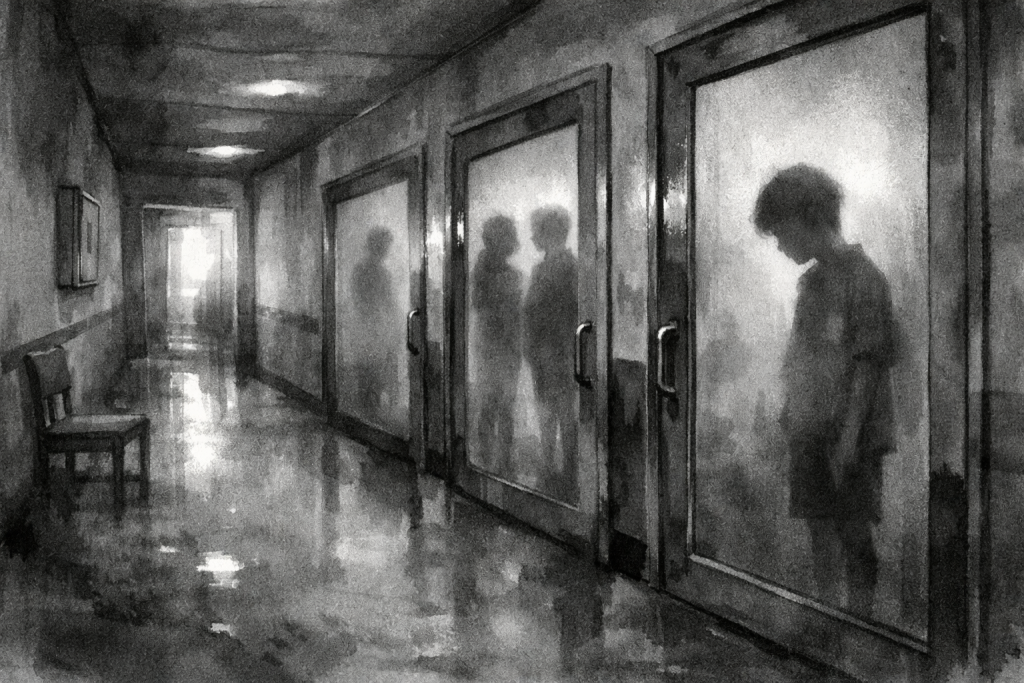
Without appropriate guidance and culturally grounded training from our Tohunga, many Māori tamariki and rangatahi are being identified as mentally unwell, sectioned under mental health legislation, medicated with psychiatric drugs, and admitted to psychiatric wards. For many, this is not a short-term intervention but the beginning of a lifelong course within the psychiatric system.
Some tamariki are being sectioned as young as six years old while under the care of Oranga Tamariki. Others are admitted to psychiatric wards as early as five years of age, progressing from child services into rangatahi wards and, ultimately, into adult psychiatric units. Throughout this progression, medication regimes intensify, with antipsychotic drugs frequently changed or increased over time rather than reduced or complemented with therapeutic or cultural healing support.
Through direct observation and lived experience, I have witnessed the severe side effects associated with long-term psychiatric medication use, including heightened distress and suicidal ideation. In one instance, a 17-year-old rangatahi was told by an older patient in an adult psychiatric ward that she herself had entered the system at the same age and, decades later, remained institutionalised at the age of 70, having never returned to meaningful community life.
This raises deeply concerning questions about the long-term outcomes of current mental health practices for Māori rangatahi, particularly those who are spiritually sensitive or gifted. By the time many reach their mid-twenties, access to care is often limited to medication alone, with little or no provision for therapy, cultural healing, or kaupapa Māori approaches. This reflects a broader Crown mental health framework in which pharmacological management is prioritised over holistic healing.
This issue is especially urgent given that over 50% of psychiatric inpatients in North Island facilities are Māori, many of whom are rangatahi Māori. The absence of culturally grounded pathways risks perpetuating cycles of institutionalisation rather than supporting healing, self-determination, and reconnection to whānau, whenua, and mātauranga Māori.
Displacement of Māori Whānau and Rangatahi in Mental Health Care
The latest Crown strategy for addressing capacity pressures in mental health services involves transferring Māori whānau and rangatahi Māori from the North Island to psychiatric wards in the South Island, due to North Island facilities reaching full capacity. However, for many of these whaiora, there is no immediate whānau support available in the South Island. This raises a critical question: will they recover, or will their distress deepen?
The importance of whānau to Māori wellbeing is well established. Separation from whakapapa, whenua, and support networks directly undermines healing and recovery. To remove whaiora from their whānau during times of acute vulnerability is to disregard fundamental principles of te ao Māori and tikanga-based care.
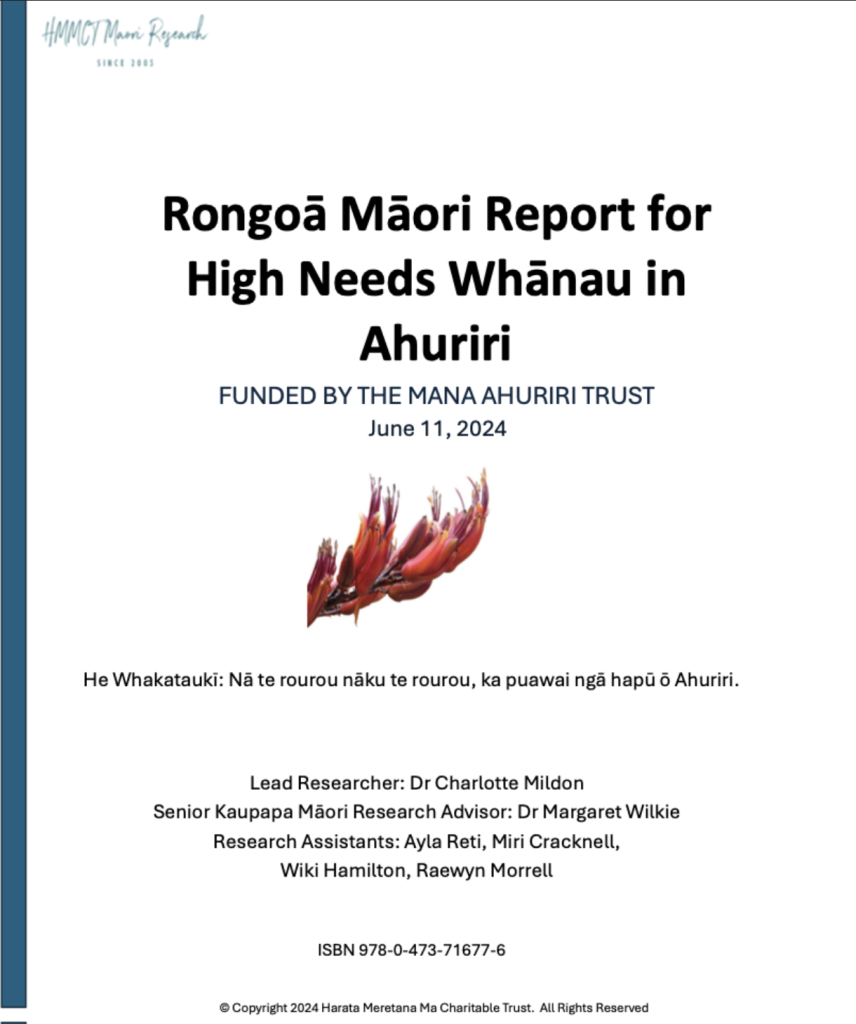
Supporting evidence for this concern is available through the AIO Healing Shop on this website, where a free downloadable research document is provided. This research, undertaken by the HMMC Trust, includes confirmation from a Forensic Nurse working in the Hastings Court that over 50% of whaiora admitted to psychiatric wards across the North Island are of Ngāti Kahungunu descent.
Although Ngāti Kahungunu people comprise approximately 2% of the North Island population, they account for an estimated 50% of psychiatric inpatient admissions, representing a per capita rate of mental health hospitalisation more than twenty times higher than the regional average.
If we continue to engage with these realities through a te ao Māori lens, we can better understand how to protect our tamariki and rangatahi from harm. By doing so, we support them to recognise and safely develop the spiritual gifts they were born with, rather than responding to fear and confusion in ways that can become distressing or traumatic. For many Māori, these experiences are rooted in the impacts of colonisation, where mātauranga Māori was misinterpreted, suppressed, and labelled as black magic and evil.
Reclaiming and restoring our mātauranga is not only an act of healing, it is essential to the wellbeing of future generations of mokopuna and mokomoko yet to come.
Embalming Processes for Tūpāpaku
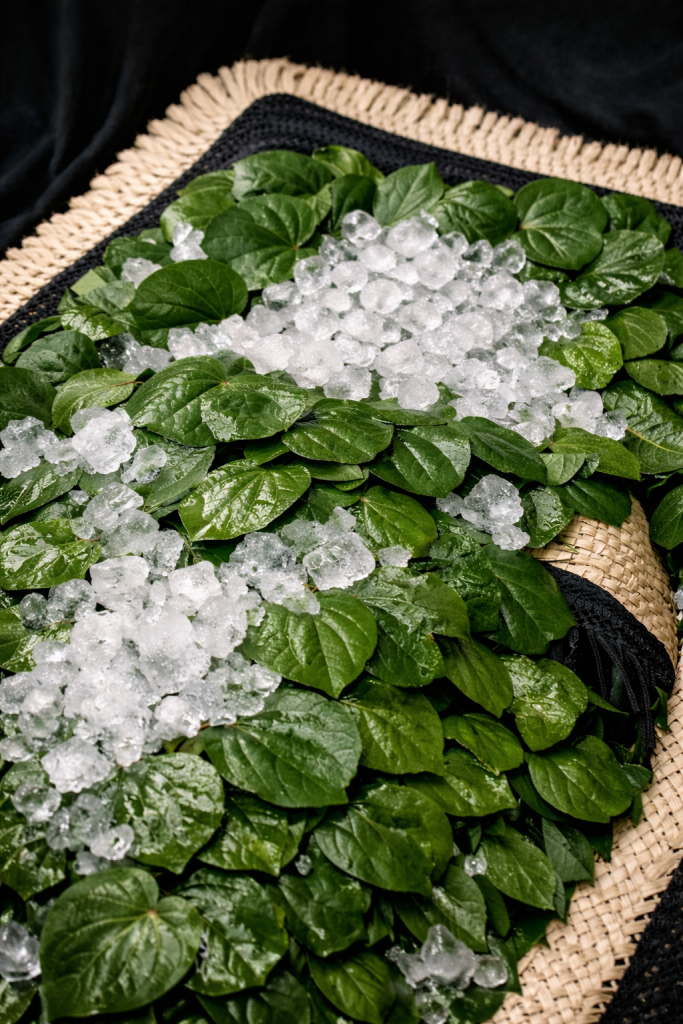
The embalming process that Maori used of preparing a deceased person for a tangihanga is called whakapaipai, which involves washing and dressing the body, and may use traditional elements like kōkōwai (red ochre) and oil. While the specific use of kawakawa in modern embalming is not widely documented, it’s possible it was used in traditional, non-chemical preservation methods, often alongside other natural materials and techniques.
The two interviews we conducted with Aunty Pauline Tangiora and our cousin Perak Nikora were deeply informative. Their presentations were, in essence, raw and real. Although both kōrero centred on the manaaki of our tūpāpaku, they also highlighted clear gaps within our communities, particularly around the affordability of tangihanga on the marae, and the feelings of disconnection many whānau experience from their whakapapa, their marae, and their ability to speak te reo Māori.
As whānau, we continue to research and reclaim the many beautiful aspects of our culture. Yet, at its heart, we are reminded of the words spoken decades ago by the late Hohepa Kereopa at a Rongoā hui just outside of Rotorua: “We are Māori and will always be Māori.” This truth stands regardless of whether we speak te reo, were raised on our marae, or know our full whakapapa. Unlike the Crown’s historical attempts to define us by fractions of half-caste, or quarter-caste, we know that we are perfect, whole, and complete, exactly as we are.
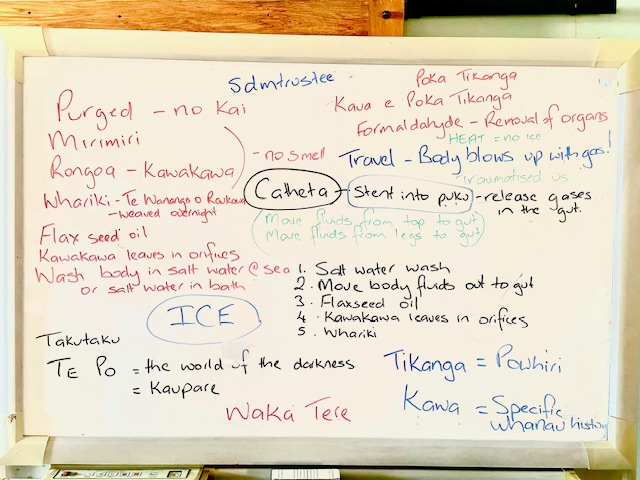
A key focus of Perak’s interview was the way she and her whānau navigated their personal healing journeys, especially in relation to the tapu and manaaki involved in caring for their Mum’s tūpāpaku in preparation for burial. She spoke about the decision-making process around embalming and her mother’s wish for a more natural approach. Perak shared the trauma the whānau experienced when their mother’s body began to swell during a long journey, and how they later learned that using a catheter to release gases and fluids could have prevented this, offering a natural alternative to embalming. She spoke of purging as well where people stop eating knowing that they are going to die which is helpful for the gut emptying out before the end of life.
Perak also described the traditional body preparation process: gently moving the fluids within the body, rubbing flaxseed oil into the skin all over the body, and placing kawakawa leaves as part of the preserving the body before heading to the marae for the final tangihanga for dear Aunty Charlotte.
Perak and Dr Charlotte Mildon also talked about the practical challenges of caring for and manoeuvring a body, acknowledging that whānau may need professional support during this stage. One of Perak’s key messages was the importance of draining the body each day using a catheter in situations where embalming is not chosen, especially if travelling with the tūpāpaku. Their experience, though traumatic, was shared so that others might learn from it and be better prepared with an end-of-life plan for their loved ones.
Feedback for Perak’s Interview
Interesting to hear about her knowledge of Māori can prepare their loved ones for burial. This includes mirimiri, kawakawa rongo to decrease the risk of smell. Māori are spiritual people. Māori need to know about Māori body preparation traditions as this is part of our tino rangatiratanga. We need to be aware of Māori tikanga options to prepare our loved ones for their final days.
I was deeply humbled by her korero. From learning her experiences, it has enable me to sit with it and seriously consider the process. I really want to do the natural way, but I feel I would have to consider if my family would be up to it.
We are seeing more whanau trying to navigate this, there may be more information out there that can give us a better understanding of how to manage the process. In particular what she said about stuffing the openings with kawakawa (orifice’s) is something that totally needs to be considered. So it was a brave conversation to have.
I’m sure as a people we could figure this out by learning from each other’s experiences to be able to navigate it to be a loving and less terrifying experience, so that we can meet our loved ones wishes. Perak’s korero was so helpful and I am so grateful for the opportunity to be able to learn from it.
Perak’s online korero touched me deeply. The depth of care and honour their whanau carry for their mama and her wishes was powerful. The way they supported each other through their grief was humbling and so full of mana. It reminded me of what we as a people are remembering again, how strong we are in our natural roles, and how far the pakeha system has strayed with its money centred structures that do not serve our tangata. What Perak shared felt true in my bones.
Planning and having wananga about complexities, and how to work through them.
it gives hope for our traditional ways of laying our Tinana into papatuanuku.
It was a bit confronting about the decomposition process without using the embalming fluids but it made me reflect on the necessity and intentionality of these practices. It is sad that tangi has become a monetary transaction instead of upholding and honouring our whānau.
There are lessons to be learned within their whānau story. The strength they held to take an unconventional path, and how much colonisation has influenced our world today. I also thought about the strength and care that our whānau carry in upholding these traditions, particularly and it left me with a lot of respect and contemplation for the mahi involved.
Part of me was shocked not knowing that the body can blow up with fluid when you are moving in a vehicle with a body that has not been embalmed.
Was a blessing to hear her still raw story. Hearing the journey of her loved one was a reminder that we need to have these discussions on end of life and have a plan of final wishes in the case of our loved ones passing. Understanding what we can and can’t do logistically when travelling/preparation of our loved ones.Perak’s korero was so helpful and I am so grateful for the opportunity to be able to learn from it.
With Perak k my cousin and her presentation, we spoke about three quarters of an hour to an hour prior to this about how to do this and talk about her own journey in having cancer and using natural supplements and things so that she can heal.
Now the doctor only told her well, wouldn’t allow her to look properly at her files and stuff about her cancer and stuff, and she pointed out to the doctor, “look theres a part there that says I’ve got parisites!, “oh no never mind about that the Philippineo doctor said you just focus on these medications I want you to take.
So I thought that was really really interesting but I must say Parruk isn’t looking very well so that’s because she’s sore she said yeah she’s younger than me but looking at where she’s at trying to heal herself, but it was good that she was able to do that but she had to stop it cause she wanted to cry, kei te pai Perruk it made me cry,
Interview with Dr Pauline Tangiora (86 years old).
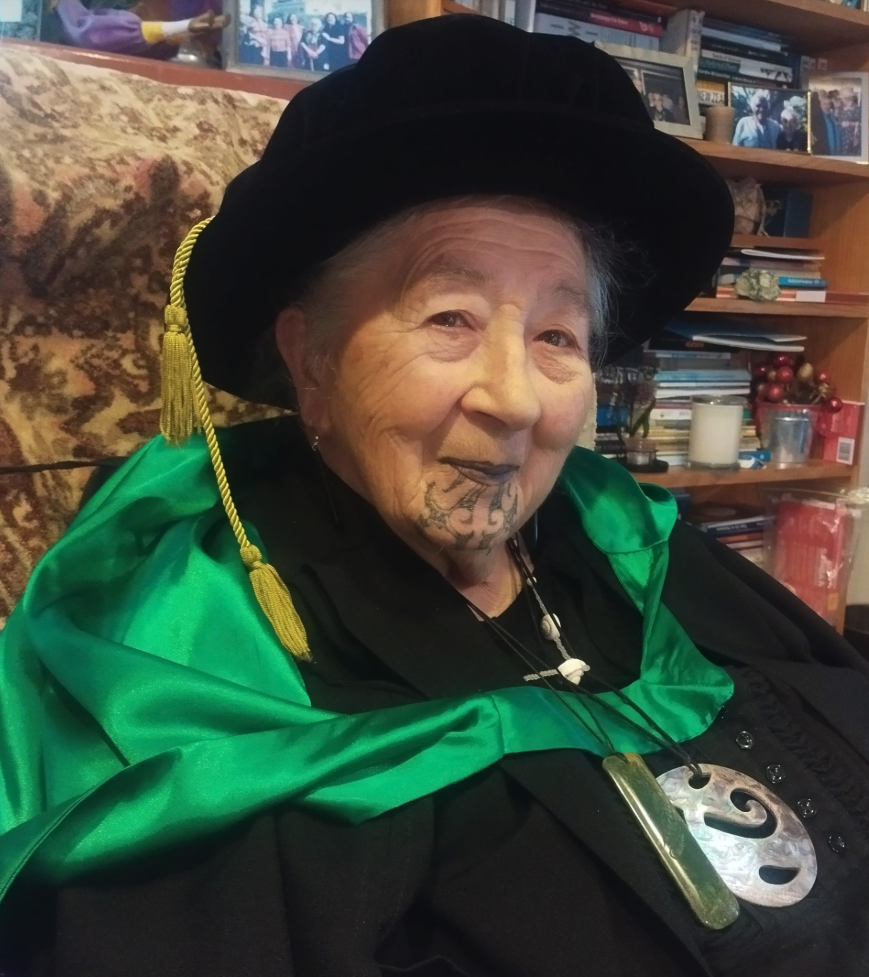
Aunty Pauline’s taonga to us was the reminder that, when the time comes, we must allow our loved ones to go with grace. She taught us not to hold on out of our own longing, but instead to support them in their journey of letting go. She shared her whakaaro about her own end-of-life wishes so that when her time arrived, she hoped to be buried within 12 hours, seated in a chair with shortened legs, and returned directly to Mother Earth, no coffin, just a gentle, sacred return to Papatūānuku.
The following section is a transciption of her interview on Saturday. Such a taonga! Tikanga Tangihanga, Tupapaku and Whakapapa. PT is Aunty Pauline and CM is Charlotte.
Aunty Pauline clarified that her knowledge is about Māhia only
PT:
I have to go back a thousand years. I can only speak for what I know around Māhia; I cannot speak for anywhere else.
Around the Māhia–East Coast area there are a lot of caves. In my experience, I have noticed that some bones have lain for hundreds of years in these caves and they still remain there.
A few years ago, when I was overseas on the road, we sent remains down to the Otago Museum. They identified it as a woman who had three children. This woman was rolled up, and they believed the body had been there for around fifteen hundred years.
We know in Māhia that bodies were placed outside homes or in caves that far back. There was one at Whangawehe—when somebody went to bury their dead, they found a body in a cave on their property. So we know burial has been very early in Māoridom.
PT:
When we talk about burial, we have to talk about how we want our people to be buried. In this day and age, we can’t do the same things we did a thousand or two thousand years ago. Times have changed.
Firstly, we have to get permission to bury our dead and register our dead. That can be quite hard for many people, especially us as Māori, because we like to know where our people are, what is being done.
So when you undertake to bury your dead, make sure your whole whānau know what you are going to do.
In the old days, they used to squeeze the tummy at the belly button to remove all the liquid from the body. Today, they pull it out with something—I don’t know what—and they put medical substances back into the body. That is now destroying Papatūānuku.
PT:
So when we do things, we have to really think about what we are doing.
When our people are ready to pass over, we need to let them go. Many of our whānau cry out, “You can’t go, you can’t go,” but that destroys the wishes of the person who is dying. We must encourage them to pass over, because if we delay that, we are only delaying the pain.
A couple of weeks ago, when I was in the rest home, I was asked to talk to a whānau because they didn’t want their tūpāpaku to go. I think that is very selfish. This person had been sick for a long time. You must help them to die. That is something we have to relearn. We have become very selfish in what we want.
PT:
Now, cremation is a new thing for us. In my day, when I was a young child—kohatu—when we laid bodies out on the rock, they lay there for twelve months. Birds picked the bones for twelve months before the bones were cleansed and buried in caves.
We can’t do that today. We must bury them or cremate them.
I think we are going to face difficulty in the next hundred years because there is not enough room to bury people in boxes. I, for one, will not be going down in a box. I will be sitting on a chair because coffins are so expensive. You can make your own coffin out of harakeke.
PT:
Charlotte, there are a lot of people who don’t understand Māori. That’s why I’m speaking English—because not everybody speaks te reo Māori.
Whether you’re blue-eyed and blond, black-haired with blue eyes, or brown-eyed—if your whakapapa goes back, then you are Māori. You don’t have to tell anybody what part Māori you are.
I often hear people say, “I’m part Māori,” and I say, “What part of you is Māori? What part do you cut off … your finger, your foot?”
If you know your whakapapa, you know who you are. You don’t have to explain.
PT:
Many of our older people, like me, never learned te reo Māori. They feel embarrassed because younger ones have surpassed them.
I’ll give you an example. I went to a tangihanga not long after my husband passed away. At five in the morning, two vehicles arrived full of university students. They said, “Oh Nan, we’re pleased to see you. Here’s our koha—will you put it down for us?”
I said, “No, you put your own koha down—and mine too.”
He said, “We’re not allowed.”
They told me that at a tangi for friends killed in a car crash, they were told, “Sit down until you learn the reo.” They were hurt and embarrassed.
From that day, I said I would never speak te reo again while I’m alive, because that is a disgusting thing to say to young people who are trying.
Use one word of Māori, let your heart guide the rest. Stop telling people they must learn te reo. Not everyone can pick it up—especially our older people, who feel whakamā.
CM:
You talked about being buried sitting on a chair, Aunty, and I am guilty of trying to hold onto you. Tell us your last wishes and what you’ve told your sons.
PT:
If I die in the evening, I want to be buried in the morning.
If I die in the morning, I want to be buried in the early evening.
Tangihanga has become too costly. People can tangi from home, write a letter, send koha. So many people are losing their jobs.
The meaning of tangihanga is not how many people turn up—it’s the sincerity.
I’ve told my children: I don’t need anyone to come cry for me. I’m prepared. When the tangi starts, the spirit has already moved on.
If you want to say goodbye, do it while people are alive. Too many of our kaumātua are left alone until the last minute.
CM:
You said, “Cut the legs off that chair, put me in it, and put me straight in the ground.”
My Aunty Charlotte wanted to go straight into the whenua with a whāriki wrapped around her. When she went down, smelling Papatūānuku—it was beautiful.
PT:
That’s why I want to sit up. I don’t want to lie down. I want to see everything.
We talk about positivity, not negativity.
CM:
It’s about surrender – letting go.
PT:
That’s why I’m in favour of cremation now. There isn’t enough room on Mother Earth.
When someone passes, their spirit is gone. The body is not the person. The spirit is on another journey.
I tell my mokopuna I’m going on a holiday. I’ll meet you somewhere along the way.
Nobody knows the truth – but there is another journey.
CM:
Āe, ka pai, Aunty.
Closing:
Ngā mihi maioha,
ngā mihi aroha.
Feedback for Aunty Pauline’s Interview
Her korero influenced me that I too do not want a 3 day tangi. How lovely that Aunty Pauline is thinking about the financial strain of others eg: having to take time off mahi to attend tangi and the time it takes to travel to the tangi.
This was an absolute privilege and I am extremely grateful for Nanny Pauline’s time. She is such a toanga. To be able to give her time whilst even in hospital was something I will never forget. She discussed how in the old days we would put our loved ones on a rock to decompose then bury the bones in caves. The korero around washing the body in the sea was also enlightening and made so much sense. It feels so appropriate for the ones who live close to the moana because the sea has salt and I’m guessing it would help with the preservation of the body. Squeezing the tummy to help the body & organs release the fluids is valuable and an important part of preservation because our bodies start to break down immediately. Touching on cremation as an option is a sensible approach. What great vision nanny Pauline has, to speak of this as a projection for our future generations. I like how she touched on the reality of how our people can whakaiti and put off others in terms of tikanga and kawa in a Powhiri/tangihana situation. That is why I love this space and how we are learning how to navigate tikanga and kawa. Her whakaroo around burying our loved ones in our backyard is not a new concept but it is an option for some. It was good that she pointed this out and reminded us of what to consider, examples being boundary lines and have permission from other whanau. Also to be aware of, and plan for at least the next hundred years in regards to the placement of any new Urupa.
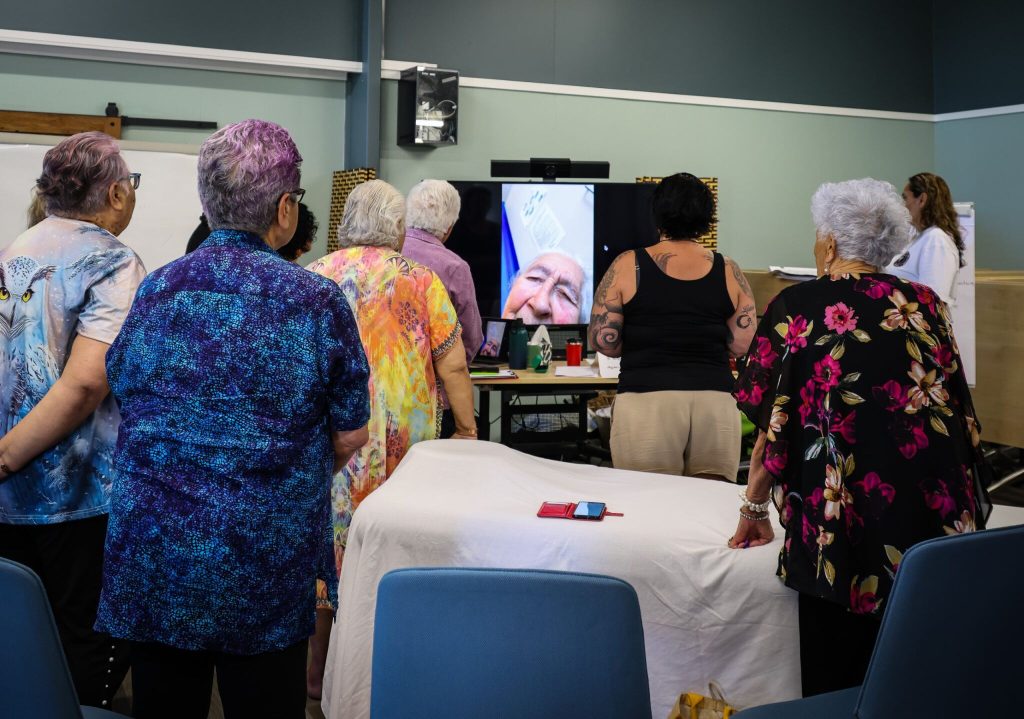
Aunty Pauline’s korero was another moment of deep connection. For her to share with us while in hospital was incredible. Poison does not belong in us or in our whenua. Anything not from us or our whenua is toxic. Her kōrero about honouring our loved ones bodies and burying them on our own sacred whenua struck me. Many cultures, including my Samoan heritage, bury their loved ones in their own whenua. Honoured, sacred, taonga. There is much to reclaim. Thank you Aunty Pauline and Whaea for your deep reverence, energy, and aroha.
Having her kuia energy presence in the room felt supportive. Her detail about how our people’s would put the bones in caves. The awa to bathe them as part of the ritual.
Beautiful kōrero on holding your nanny’s (Aunty Pauline & Charlotte) hand and no words being everything in a time of need.
I very much enjoyed hearing kōrero from back home as I’d heard other stories of how our Rongoaiwahine tīpuna utilised the caves and that it was used for different purposes. It also made me think about the Whangawehi awa and how that opening into the Moana is actually quite tapu — now lots of people use that path to go out to sea and probably fish, and I feel I wouldn’t use that pathway for kai as it might be a violation of tapu. Hearing how tikanga was adapted during challenging times was a real treasure.
The sea water is a natural Healer and preserver. I am greatful to be able to listen to this kaupapa especially preserving the body naturally and letting the body decompose naturally. I loved how she reminded us about pandemics and how the body would be laid to rest at the front of the house often unmarked.
I was deeply humbled by Pauline’s korero. From learning her experiences, it has enable me to sit with it and seriously consider the process. I really want to do the natural way, but I feel I would have to consider if my family would be up to it.
I’m sure as a people we could figure this out by learning from each other’s experiences to be able to navigate it to be a loving and less terrifying experience, so that we can meet our loved ones wishes.
Aunty Paulines one was hard when you see her trying to hold everything back, she’s got some massive insights aye when she talked about how the embalming chemical is hurting Papa and we gotta stop it that type of thing.
Aunty Pauline I loved her just her, her wairua, but I couldn’t hear, so maybe I couldn’t hear quite a bit of what she had said but to me I heard what I wanted to hear and I hope she’s ok.
Aunty Pauline rang and rang and rang me and left me all these messages and got all mixed up so I realized aunty’s not the best at the moment in hospital so having her come here when she was so fragile was really beautiful.
But then one part there I saw her face and she said come on come on you got to help me here help me as you get transfixed on watching her and listening to her I didn’t want to interrupt because sometimes you miss out on the pearls when you do that so yeah that was lovely just some reminders of that.
But how she wants to go down is pretty unreal the whanau think they having a big tangi but no.
There were many sparks of remembrance throughout the wananga, especially around the tangihanga and how putea has become such a heavy stress during a time already full of grief and loss. It made me think about how much more our people are expected to endure and the strain placed on whanau at the most vulnerable moments of life.
Recorded Tangihanga Feedback
The tangihanga group and presentations I sorta shy away from it a bit but it was good listening to especially the other nan who was in our group “Aunty Hera”, she comes in saying “oh I don’t know much and then all this korero comes out, so that was really neat, whereas with me I’m sorta like someone has to lead me with my korero to bring stuff out.
I really enjoyed that, this oh the whole lot it was just real all highlights for me real life stuff, real life experiences that’s right even the tangihanga online (how were they for you/), yeah they hit, I want to do that you know, someone mentioned that it was becoming normal all around the motu and yeah so it should be
I didn’t realize I’ve dealt with tangihanga quite a bit and didn’t realize just how much there is involved then there’s the back, the kitchen.
The preparing if your coming into the meeting house you’ve got to layout the meeting house, each marae must have their own mattress for their tupapaku, you don’t just put them on any mattress.
You’ve got to have the seating right for the men where they sit on the paepae there is heaps that goes into it. The kitchen rules the tangihanga because when they are ready for kai they will come and say kai or kapu ti you know, I really enjoyed the group presentation on tangihanga.
just a review of the tangihanga group work and the presentations. I noticed that before that, a lot of the nannies were a bit resistant especially our nanny Hera oh it was really difficult for her to go into the group thinking that she didn’t have anything to offer, but then I turned around to look at her in the group and she was full on sharing all these things and woohuu and even had you Moana how she had said something that put herself down but you went “But NO because you did that and you saw”, it was really really neat to see and then the other nannies away they went they were saying to make the point I don’t speak the reo so I can’t say what tangihanga is but they have lived experience, and it’s that lived experience that is really really important to share in terms of cultural things.
So when I rang Aunty Pauline to tell her oh Aunty the nannies were doing their presentations on the group work and they were helping out, and she goes were they and how was that I said yeah well they didn’t want to do it but then they couldn’t stop talking, I had to say I have to go home can we stop now, but it was lovely we will have to carry it on the next day.
And Aunties praise lovely to see how happy she was about that cause she also didn’t know the reo, she also found it difficult, you know in some places its difficult to deal with the oppression you get from not being able to speak the reo, and some people can be very arrogant in their reo and matauranga and put some of us down and I’ve had that for many many years. When I first started learning again.
Feedback on Priscilla’s Story
It was an honor to hear Pricilla’s experience of her 6 year old Pepi’s preparation for burial. I did not know the tikanga when a loved one went to the funeral directors for preparation of burial regarding the chemicals that put into the body. This korero has influenced me, that when my time comes, I will not be embalmed. I will return to Papatūānuku without the toxins.
Thank you Priscilla for sharing your journey with your baby, it was truly inspiring and touching to hear. You brought forward some very valuable insights that will be useful if I’m ever in that situation to help another whanau. Knowing that you can get the doctor to sign off so you don’t have to get a Hurst, which cost a hell of a lot of money to move your loved one from the hospital to home or the marae. Also your experience in the undertaking processes of being aware that there are some creepy dudes out there who will not handle you with care. Along with sharing that our bodily fluids get drained down the sink to god knows where. It is something that I had never thought of that part is very clinical.
Priscilla’s sharing of the tangi process of her baby brought me to tears. Her kōrero about how we can move our loved ones with aroha, honouring their mauri, and the sadness of how disconnected the modern process has become, highlighted again the damage done by systemic consumerism and greed.
I deeply felt Priscilla’s sharing and very grateful to her for this. It was in site full to know how we could find ways to support us through the hospital system. And using ice packs and air con at home.
Thank you for the tips on how to keep ourselves safe and preserved.
As a result of these presentations, I’ve decided that I do not want to be embalmed with this formaldahyde embalming fluid. Having courageous conversations with our whanau is vital. I don’t want to ask anybody to take the responsibility to drain the fluids from my body. Neither do I want to be cremated as they cannot tell whose ashes are whose in the fire pit. I prefer to be buried naturally using ice pads instead of anything else with maybe some kawakawa oils. Short and simple!
This kōrero was reminder that we never truly know the experiences of others or what they’re going or gone through until we take time to listen and the value of whakawhanaungatanga. I admired her inner strength, wisdom, and resilience, and I am grateful she shared this with us. Arohanui ki a koe, Priscilla.
I am so glad we had such a deep heartfelt discussion after the interviews. Pricilla’s story touched me deeply of when she lost her baby daughter. Getting the death certificate signed before taking baby out of the hospital by themselves without the support of any funeral director made it simple. IIt reminded me of the hospital when my Uncle Tom died. I didn’t know our rights then so when the funeral director came to the Wairoa hospital, he was so rough with Uncle’s body. It hurt me to witness something like this. Taking back our Rangatiratanga like Priscilla did was heartwarming. l oved her korero about using ice pads to keep their baby’s body cool and to keep changing them for frozen ones, without having to embalm or drain any fluids for 3 – 4 days. Replacing the ice pads, was the most simple and effective way I have heard yet. I
Death in its space must be sacred. There is no rush to call an ambulance or a coroner to pick up you loved one, staying in that special moment is valuable. I took my baby home and kept her under ice pack and cold atmosphere preserving the body without using nasty chemicals.
Working the Head
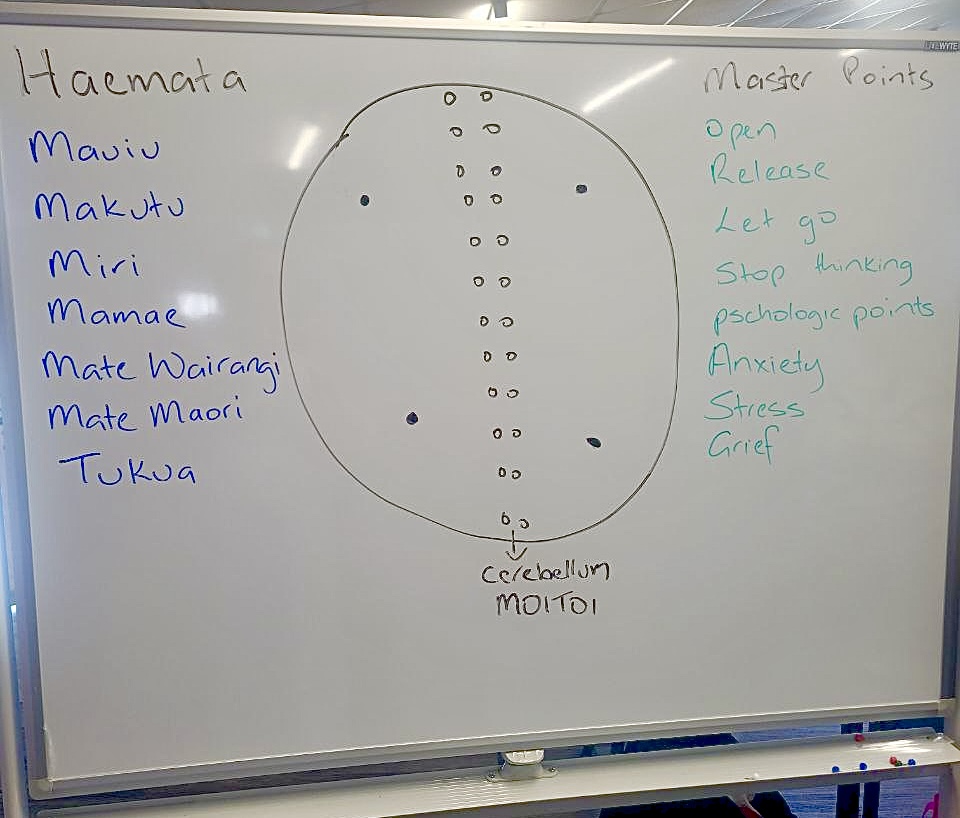
These are the haemata (master points) that our Tohunga use on the head. When studying with the late Papa De La Mere, he said they were psychological points that can help you stop thinking! I call it stinking thinking when it won’t turn off. It’s like a TV that won’t turn off and it can drive you crazy if you can’t stop it and lead you into psychosis. Anyone of any age can do this and it is very valuable to calm or support someone in times of stress. Clear yourself first before touching anyone. Please do not do this with long nails.
The pictures in this section say it all …
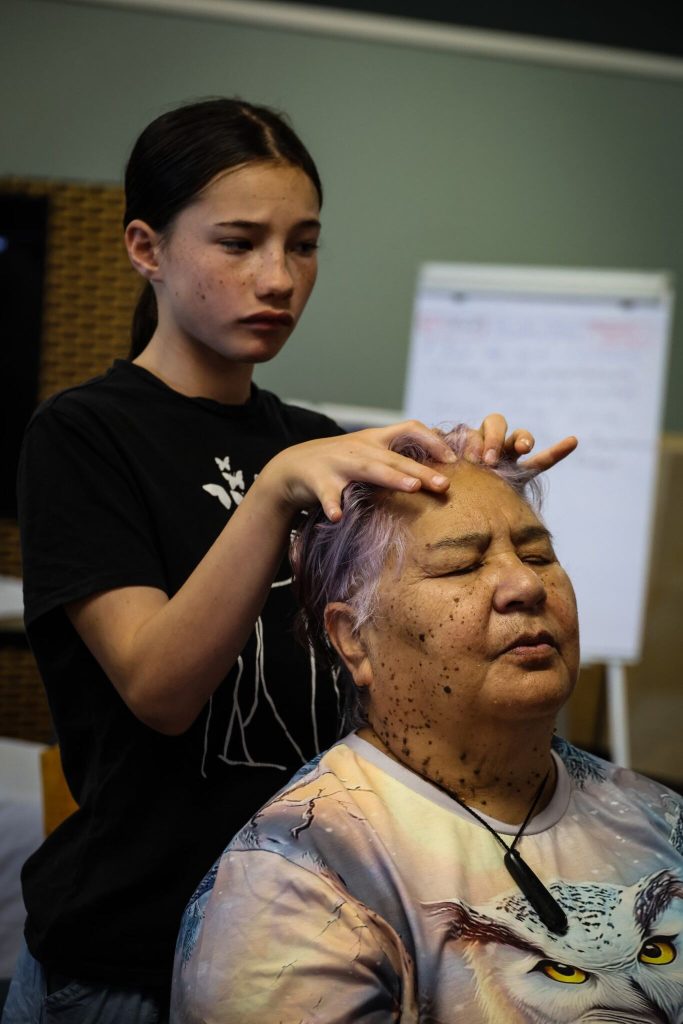
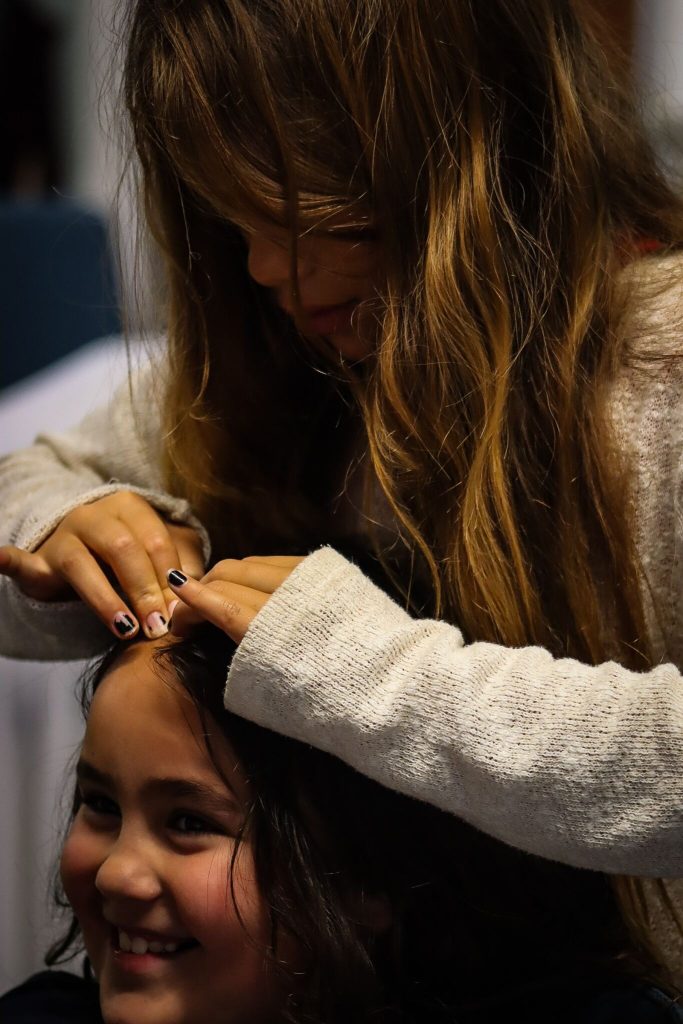
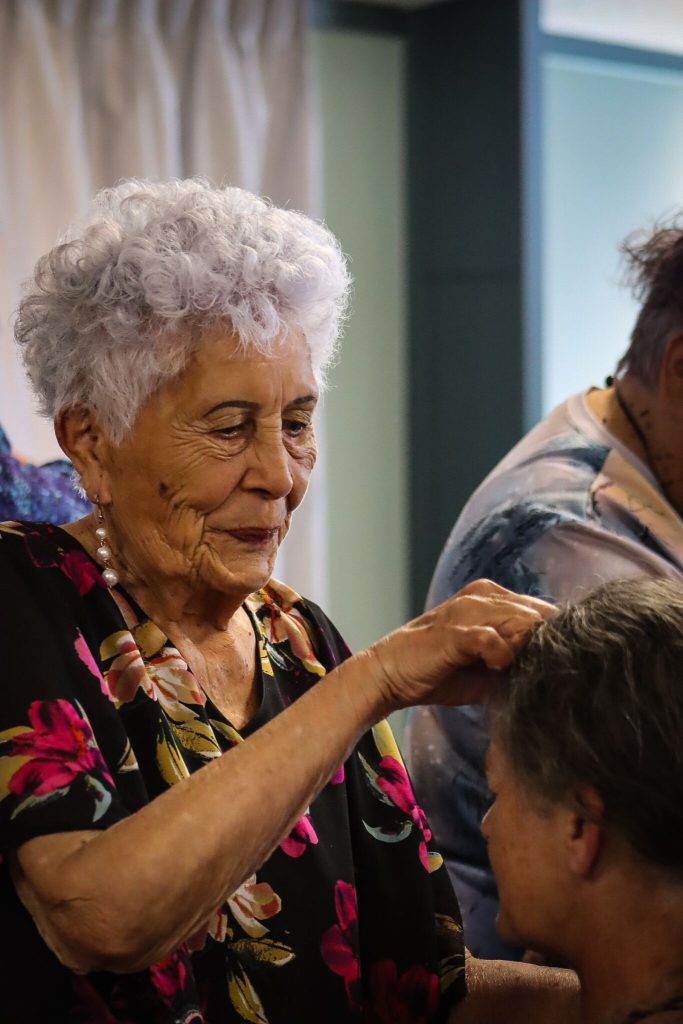
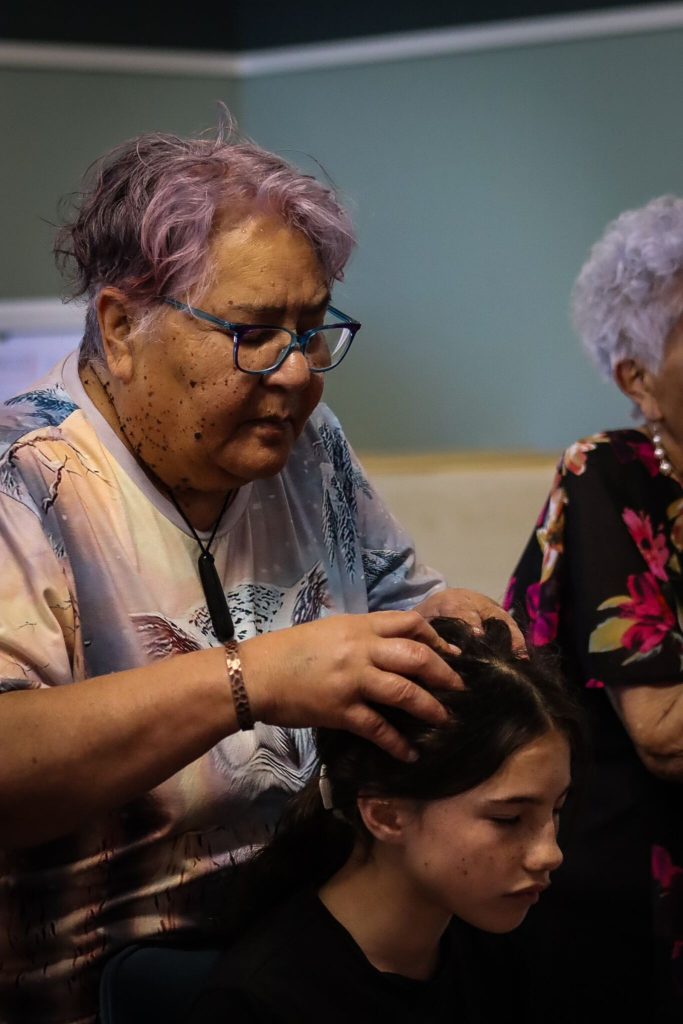
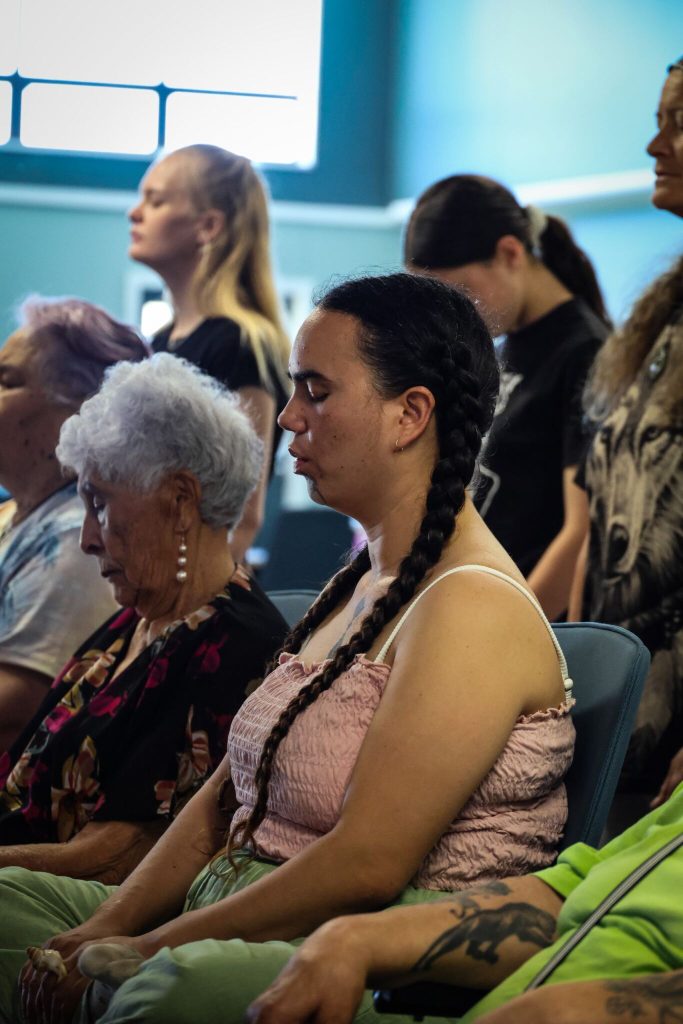
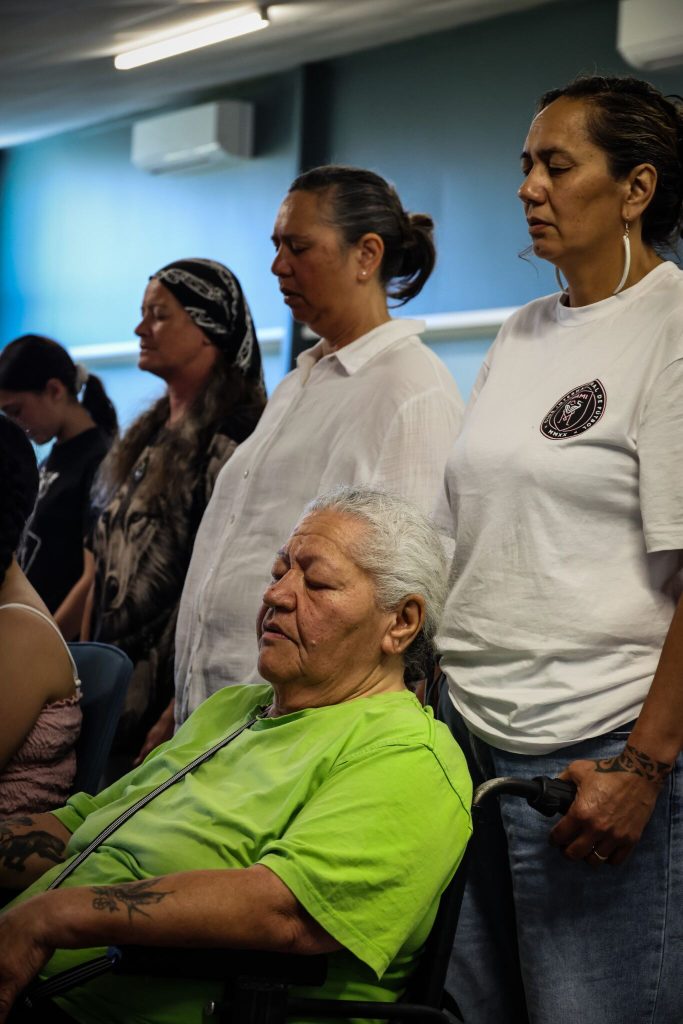
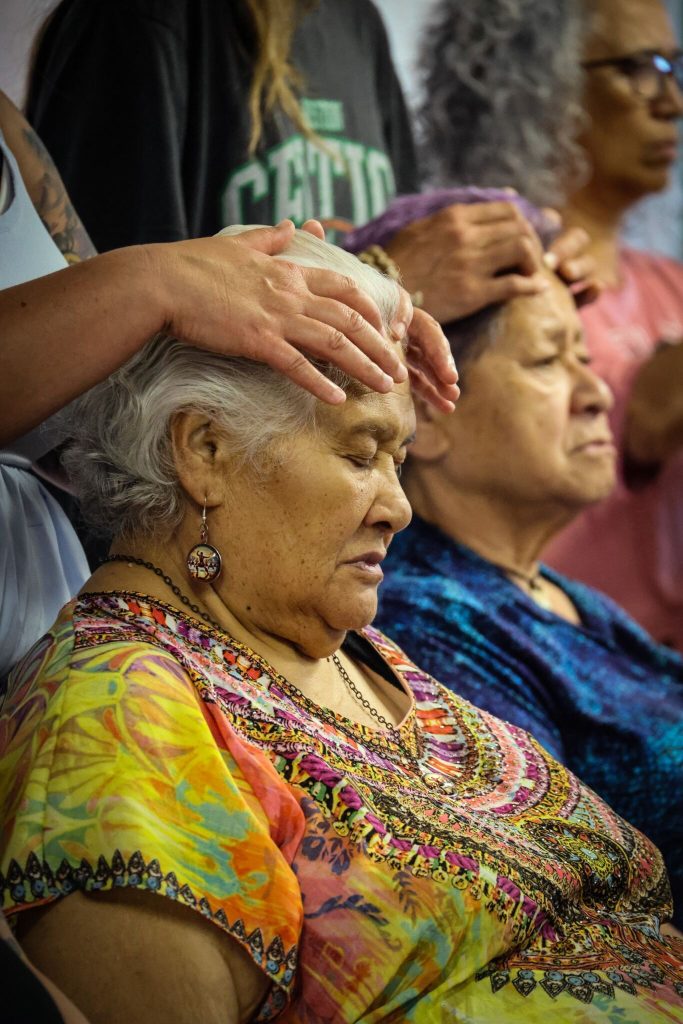
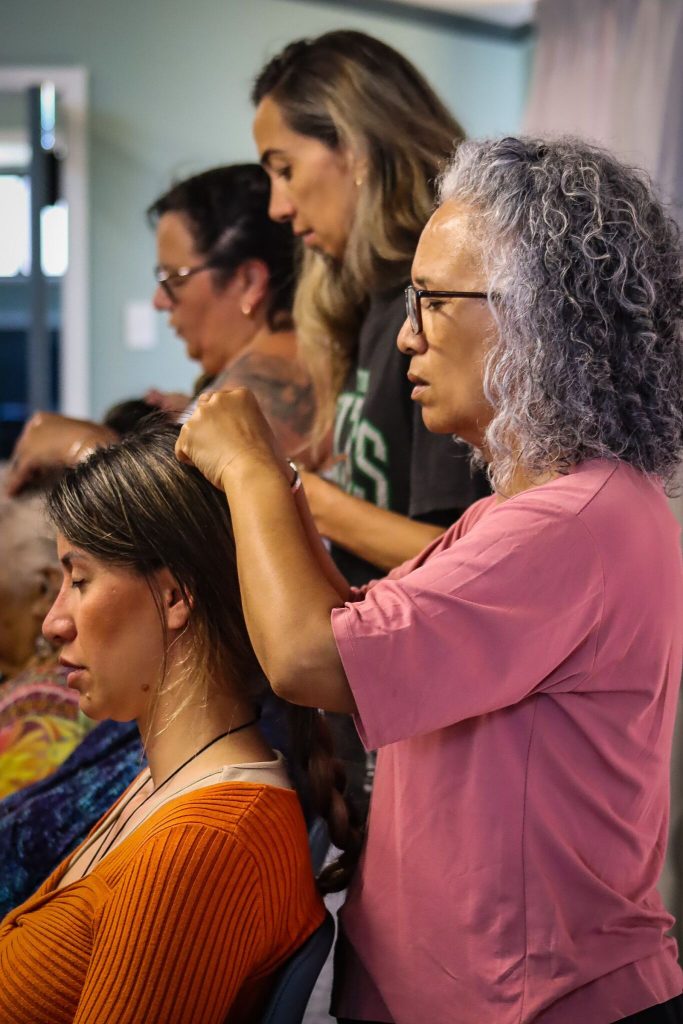
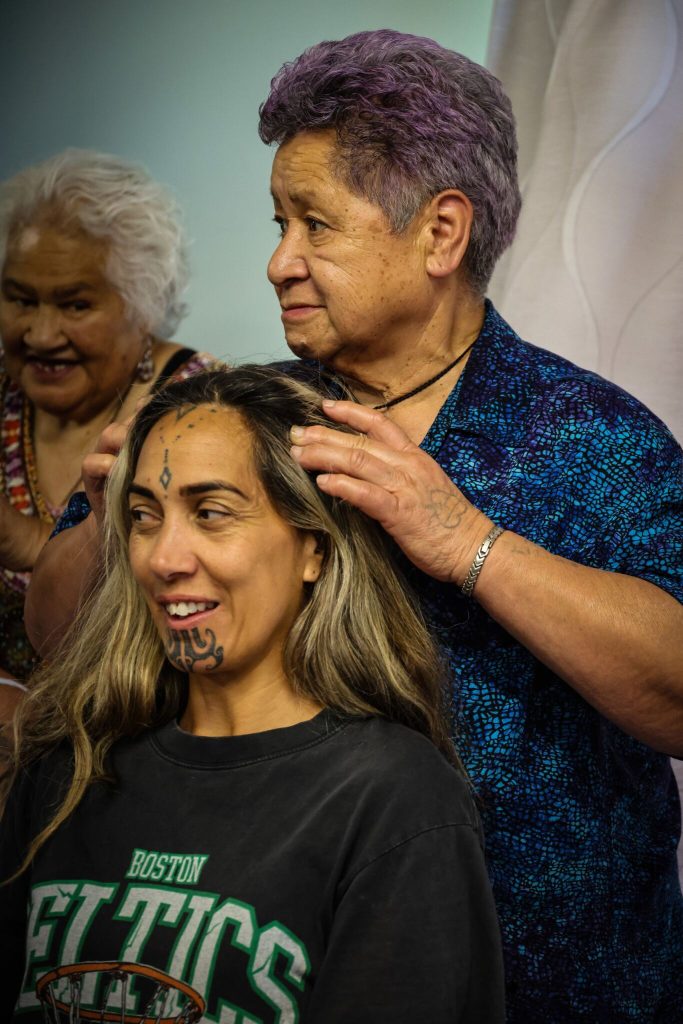
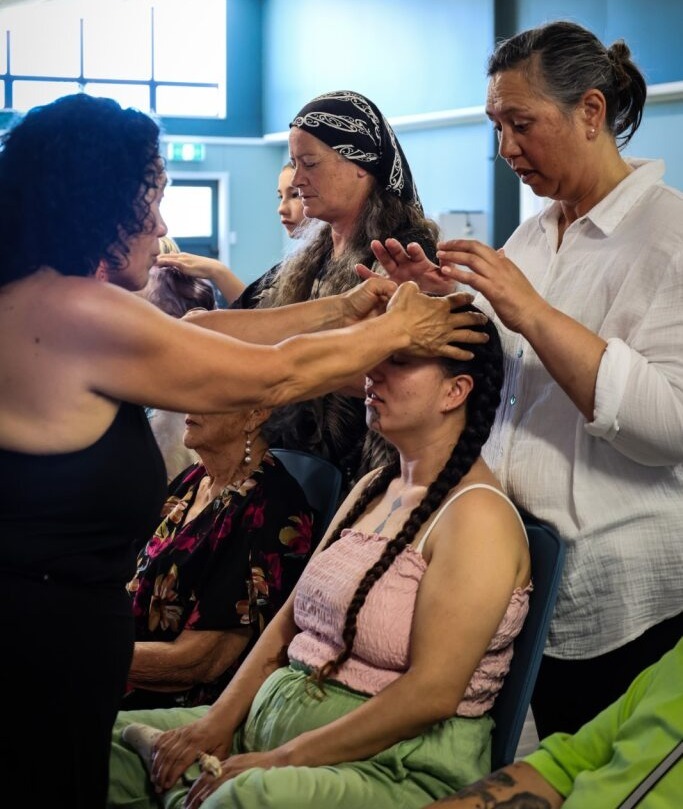
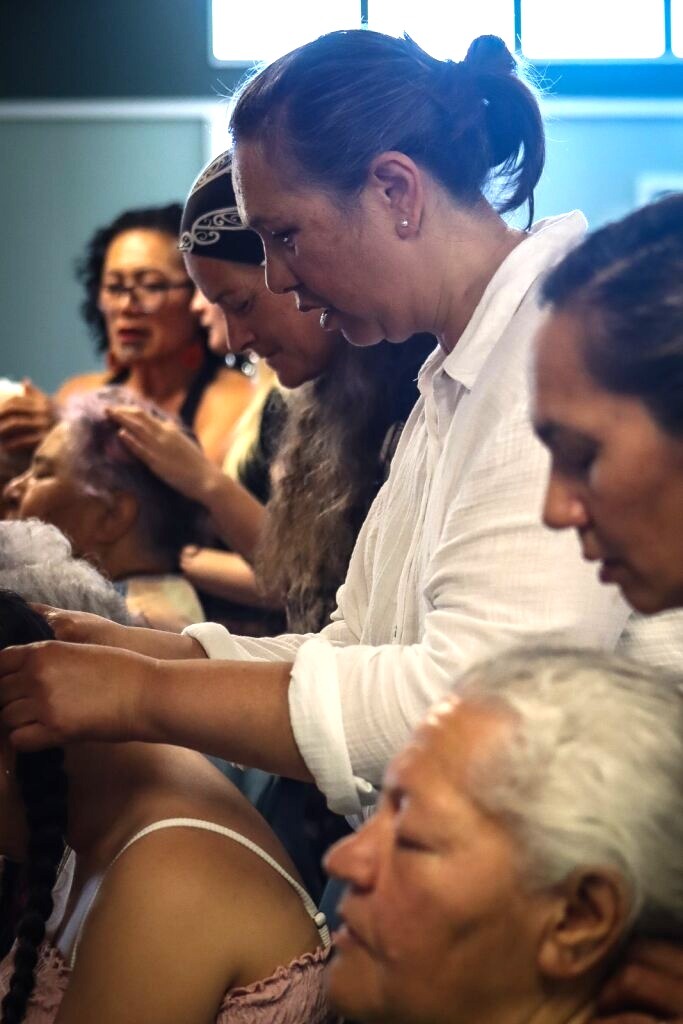
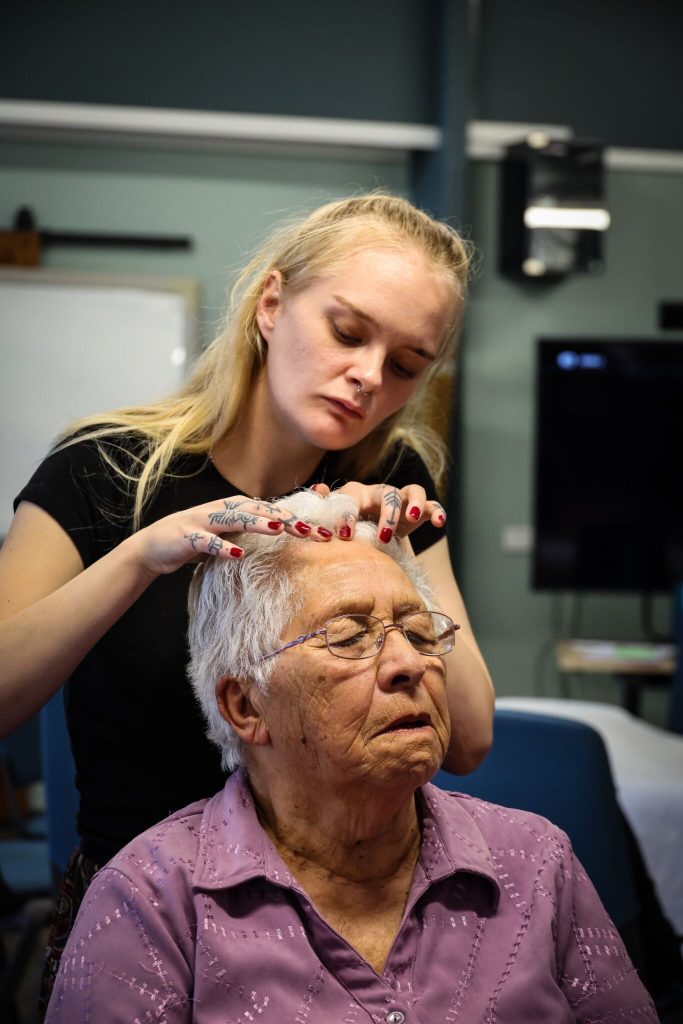
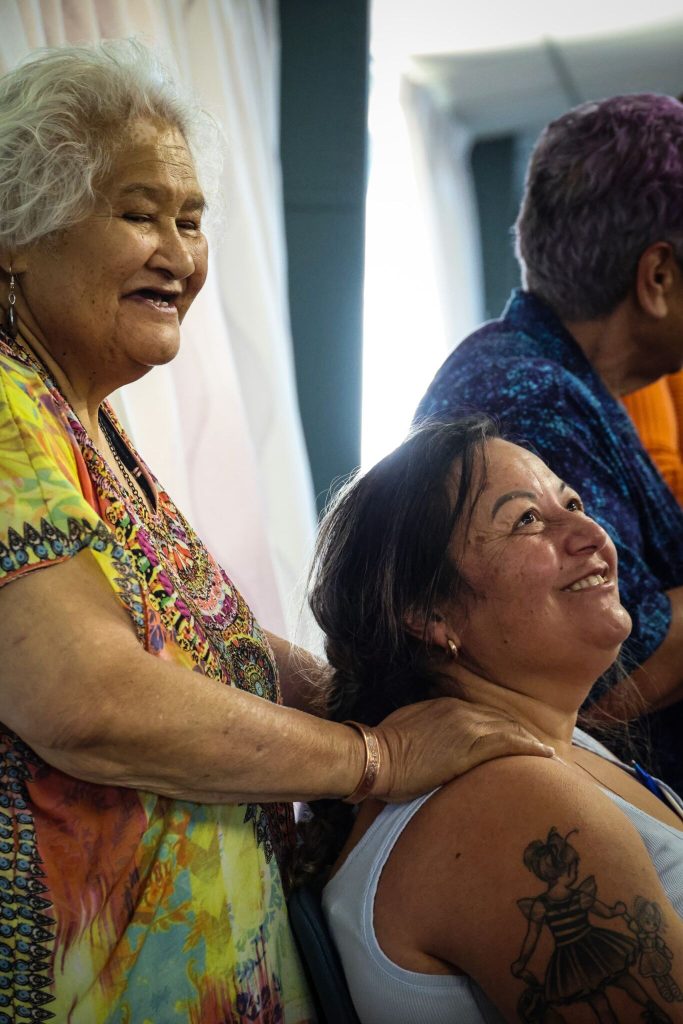
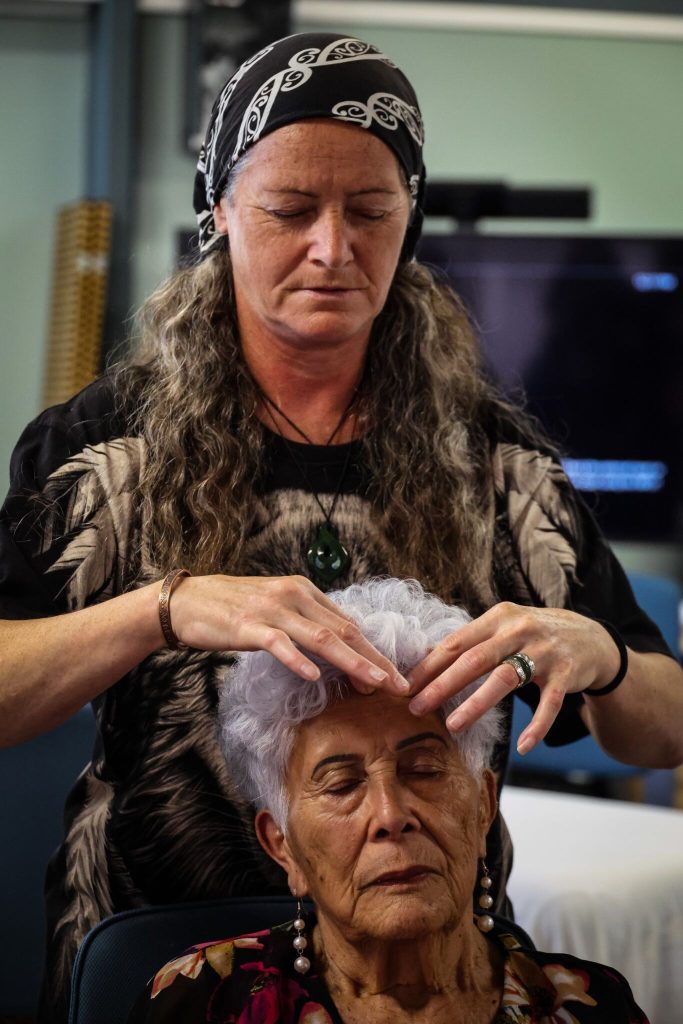
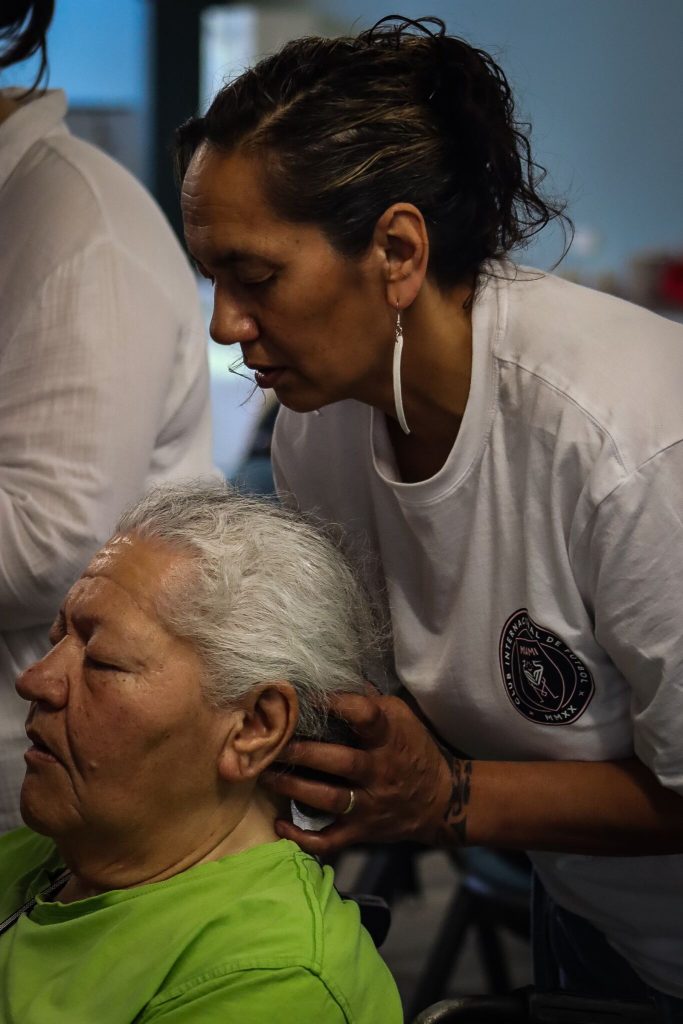
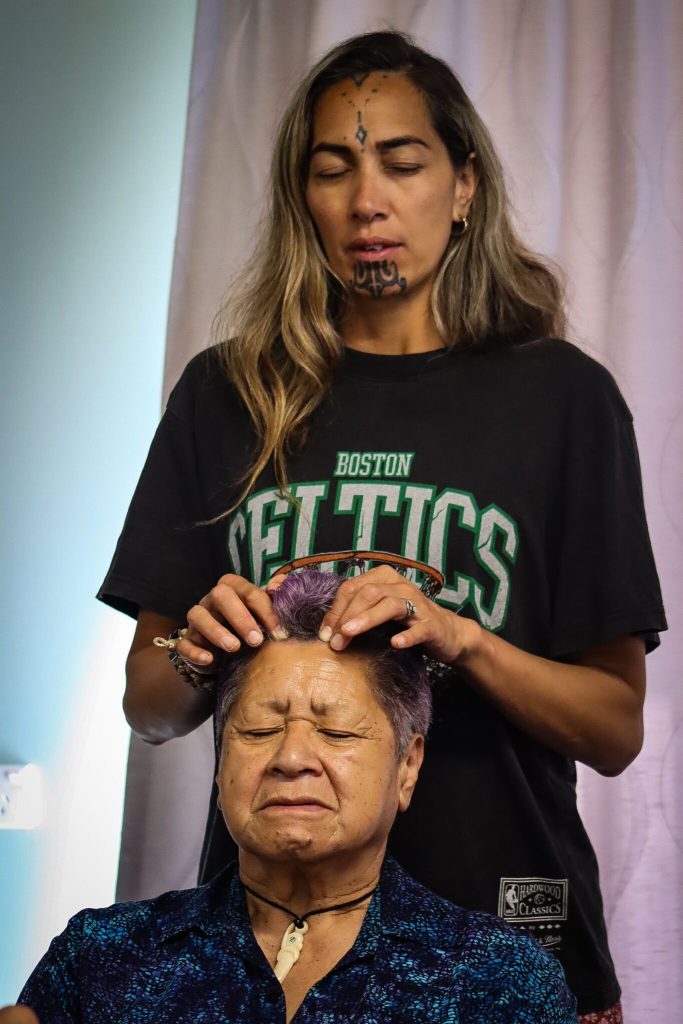
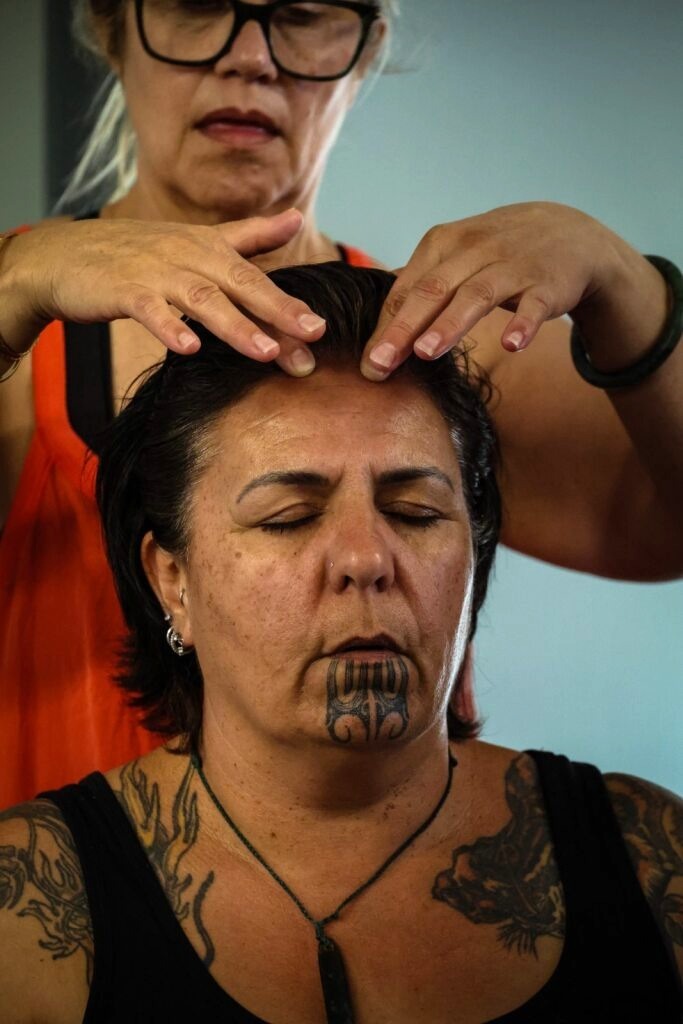
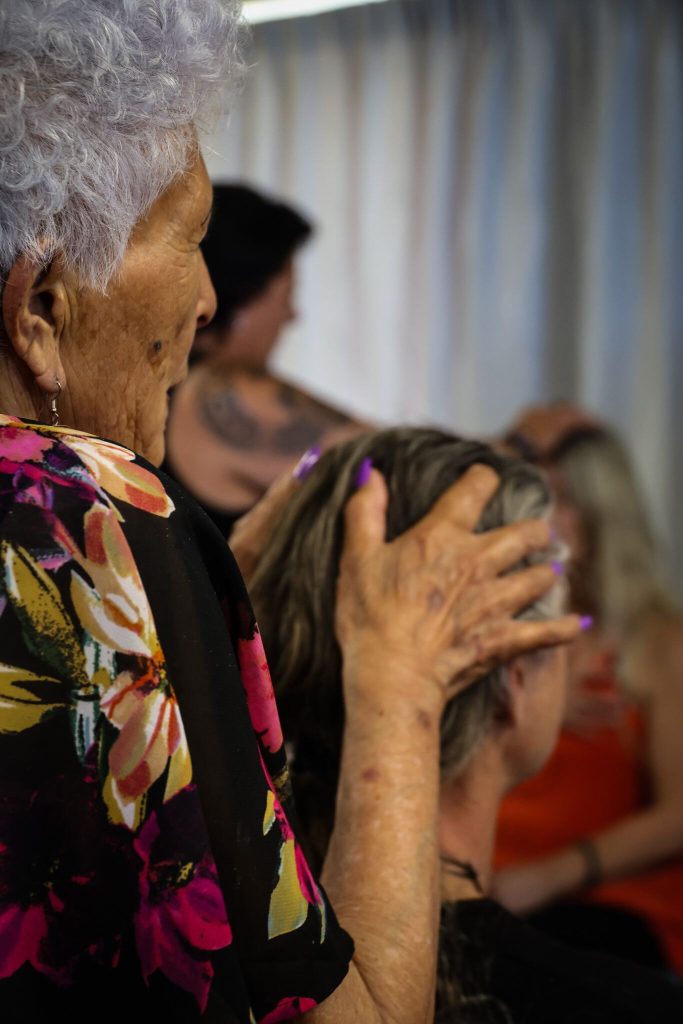
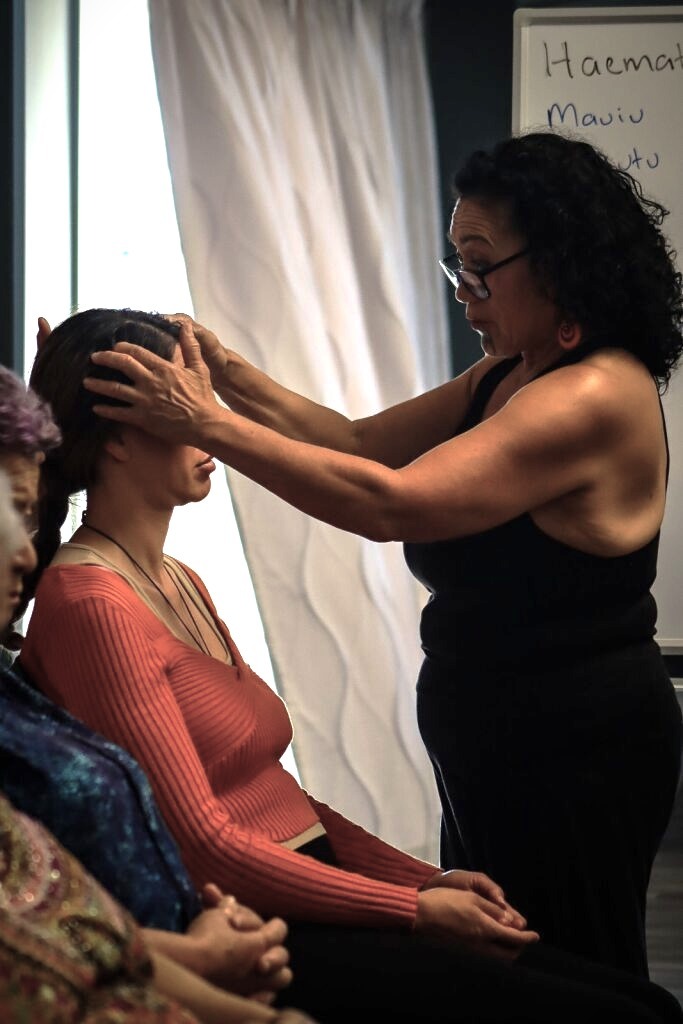
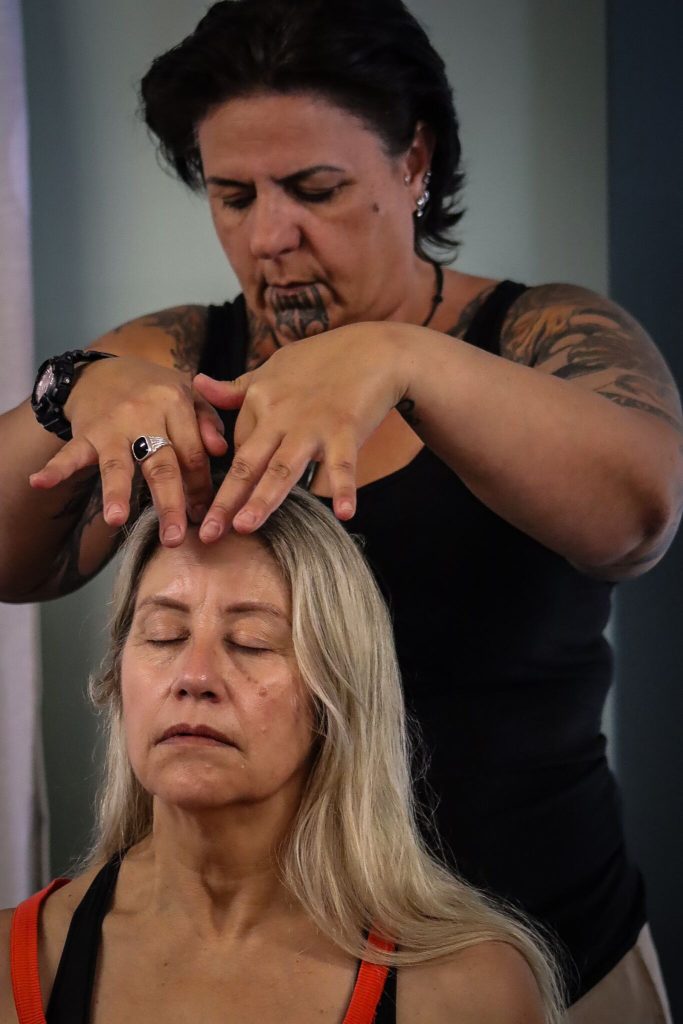
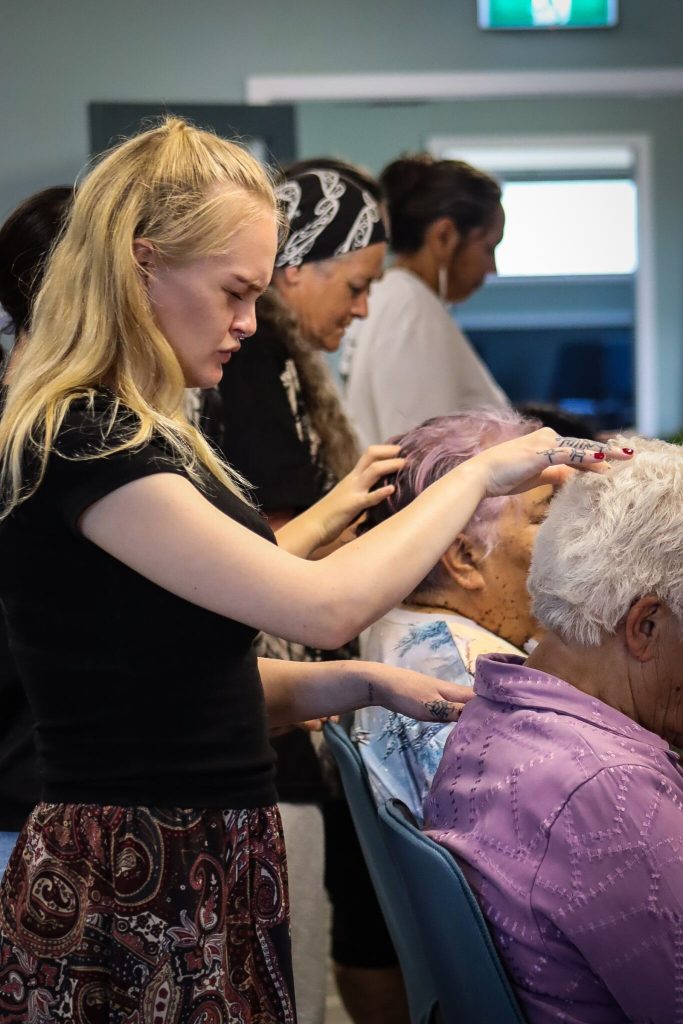
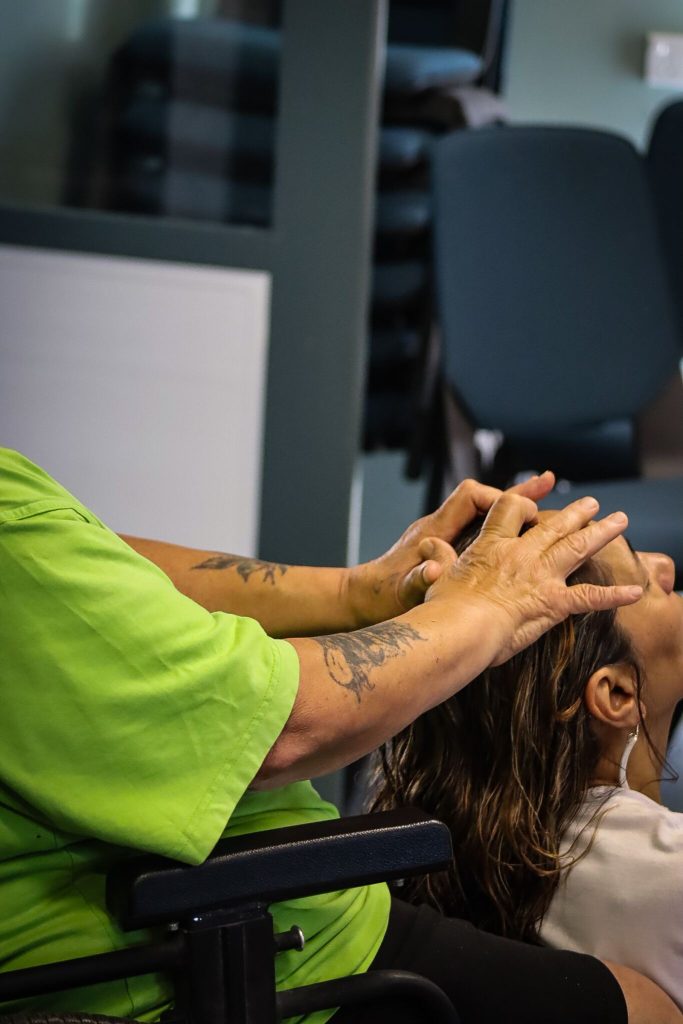
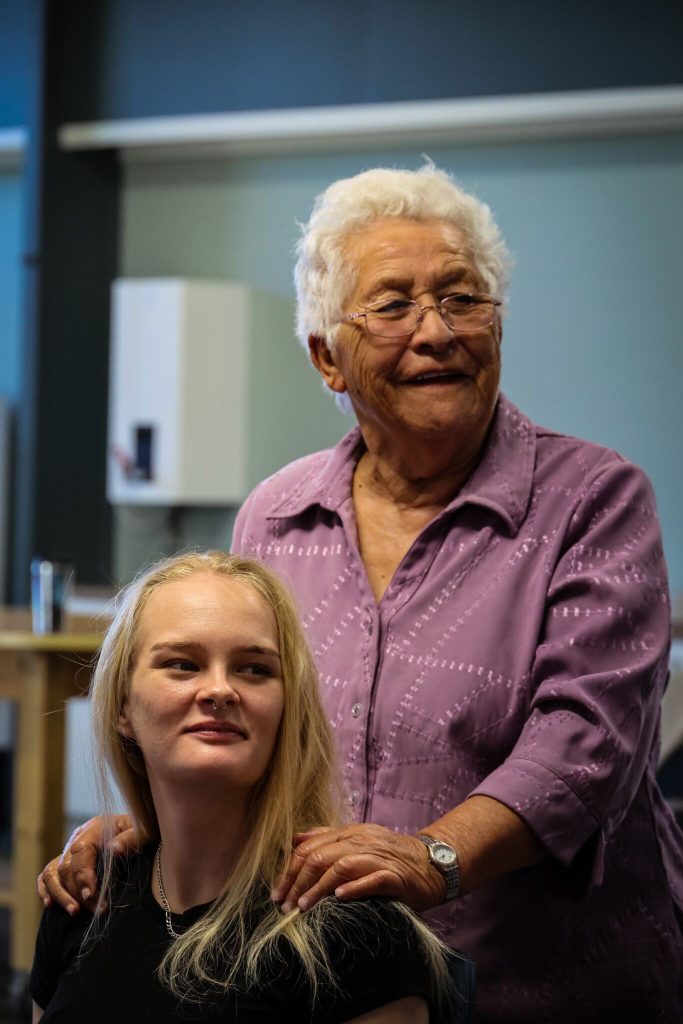
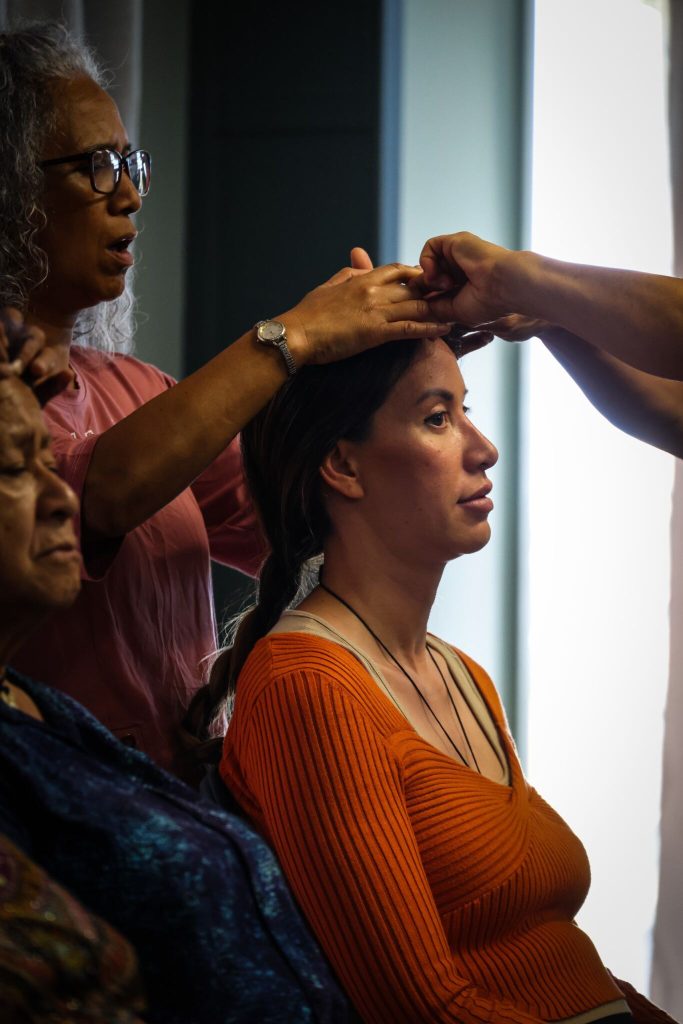
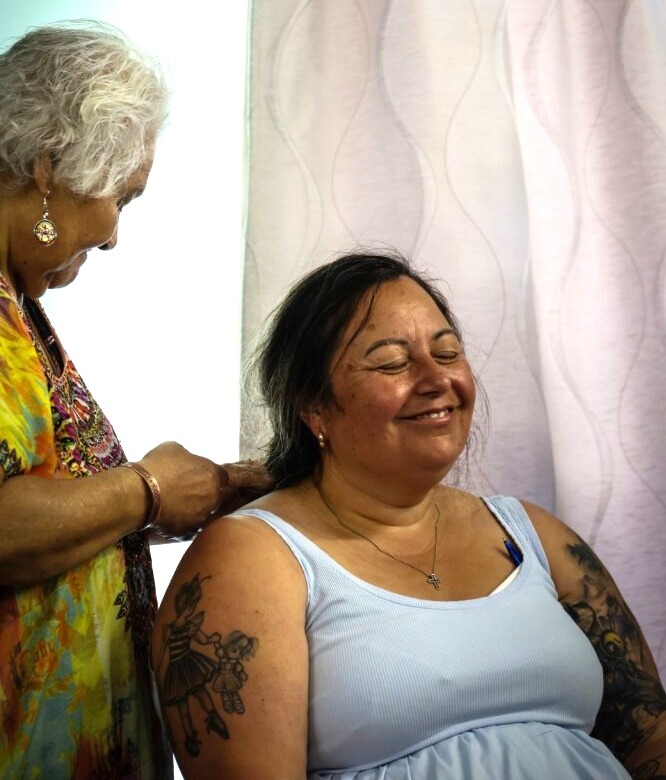
It was great practice for me to do this mahi … I feel all the emotions of everyone, it can be very overwhelming, so I avoid going as it has always been hard to block these feelings. With this work, it better equips me to be in these spaces and understand what is actually happening to me. It’s an amazing thing to experience and be a part of.
Feedback of Working the Head
The romiromi head mahi that was a real thing for me as its been a long time and it was the first time I was able to fully connect with my whatu manawa after quite a while and to see those colors coming in that I’d missed and I knew that healing was taking place and when we swapped around and I did Lisa’s head, because I’ve not been able to use my hands in healing for some time now due to my mauiui, the pressure had all gone. I hadn’t been able to do that stuff for soo long but I could feel it coming surging back … it was there and it was good to feel that, you know?, Cause it was coming back and partly all due to the healing energy around us, that was “mean”.
It was good cause not many people can get deep into my head I don’t feel it, but I did with Lisa that was “meke”, that was good real good. For starters, as soon as you started, my eyes … they begin to clear as my eyes are nearly always blurry. When she went down in to those points on the head, it just opens and clears your mind, as she goes down its such a big release. I suppose it’s the energy gets flowing and then you can think better, I had a great time in there, I love seeing the healing color purple in the whatu manawa and it was coming on really strong and it was so neat as I haven’t seen it in ages and then I saw some organ it reminded me of a cell with the membranes going around it but the membranes were gold what a highlight then they would switch to electric blue, I haven’t seen anything for a long time so it was just really neat.
Romiromi master points was really good I thoroughly enjoyed that, for me it was hard for me to find the points cause my finger tips have got that kinda tip thing.
Yes the master points are very very deep its very tapu the head but we’ve got to look after the head. And even with our kuia being using that exercise that putting her head right over the edge of the table and turning her head very very slowly from side to side, I urge everybody to do that you can hang off the end of your bed and do that. If you put your head right over the edge hanging where your shoulders are just on the very edge and your head right over the bed and all your blood will rush to your head if you go around slowly then you know you got to do that as all those little fibres inside, if there’s nothing like that then you just put your head back and it’s fine but otherwise its not then you put your head over the back and it goes all the way around to the other side, then you know you’ve got to move those fibres around again from side to side.
The romiromi and Makutu it was interesting to see the people work on their partners holding pressure on their pressure points, to be as one, breathe as one to feel each other’s energies.
It was interesting to see the people work on their partners holding pressure on their pressure points, to be as one, breathe as one to feel each other’s energies.
The Whatumanawa and the Mind
This can silence your mind and relieve stress, anxiety and grief. You could use a rākau as well to work the head as our old peole have for many generations. As you see on the board, these are a number of things this can support when we work whaiora. Tukua means release!
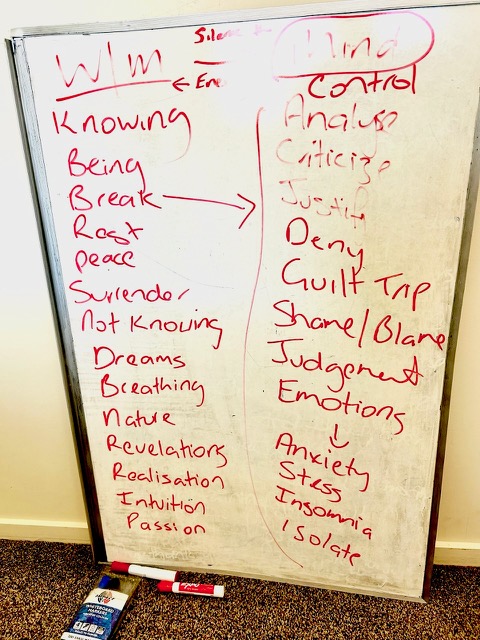
It is important for you to know the difference between the whatumanawa (the third eye) and the mind. The mind is your human self. Whereas the whatumanawa is your spiritual self. In order to access the healing, you need to be in the whatumanawa – a place of deep knowing and being. If you start to try and work out what you are seeing, feeling, hearing or sensing, then know that you have gone back into the mind. Go back and breathe so that you can go back in to the whatumanwa.
In the mind, it is just you, nobody else. Thinking thinking thinking! I often call it ‘stinking thinking‘. It can drive you insane with its negativity. Sometimes it won’t shut off and it just goes on and on. When I work people who are stuck in the mind, I give them homework to become aware of their thoughts to see if they are in the mind or the whatumanwa. It is difficult to do this at first. Have a go!
Know however that if you are in the whatumanawa, this is where all the ancestors are and this can go way back to mai rano – right back to the beginnings of time. Here the ancestors will guide you, support you and show you realisations, revelations and so much more. This is the place of enlightenment that monks and priests/priestesses go to 24/7 but it means you have to come out of the mind, as you cannot be in both.
Tauira Feedback
Kia ora koutou, I thoroughly enjoyed the wananga ( thank you Whaea) and meeting everyone. I enjoyed the conversations around all subjects, looking back over all the mahi we did, it’s amazing how much content we were able to cover over one weekend.
Kia ora koutou being new to this group and wananga I firstly had to.. like whaea said.. quiet all the mental chatter in my head to allow my wairua to guide me and trust that process and I am so glad I achieved that just to turn up and be in a beautiful, peaceful venue with a group of lovely souls full of positive vibes..the energy was very uplifting and korero very enlightening. I thought I would just sit and observe .. haha not so aye whaea when we all had to do each other’s pressure points on the mahunga I thought gee here we go I’m getting chucked in at the deep end not sure if I should be touching someone’s head without them asking first. However, again I found myself trusting the process and enjoyed that learning/teaching .. thankfully nanny enjoyed it and had a little moe.. just meeting you all and the nanny’s was great. The whole experience took me way out of my comfort zone.. which was good for me too.. so thank you all.
Cleaning Parasites out of your Body
Please remember that this parasite cleanse written on the board is not for everyone! There are many factors that need to be considered for each individual like for e.g. what medications they are on and for how long, whether or not they have chronic diseases or not. It is quite complex and it is best to work one on one with Charlotte if you fit into this category.
It is an important process to understanding what the parasites are and what you need to do to clear the parasites out of the body. If you do not drink enough water and eat the rights foods then this process will not work even if you take the health supplements because you need to make your body alkaline. If you are eating acidic foods and no water, then your body will be acidic. If your body is alkaline, then disease cannot survive. Remember these two things:
- Disease will thrive in an acidic body
- Disease cannot survive in an alkaline body
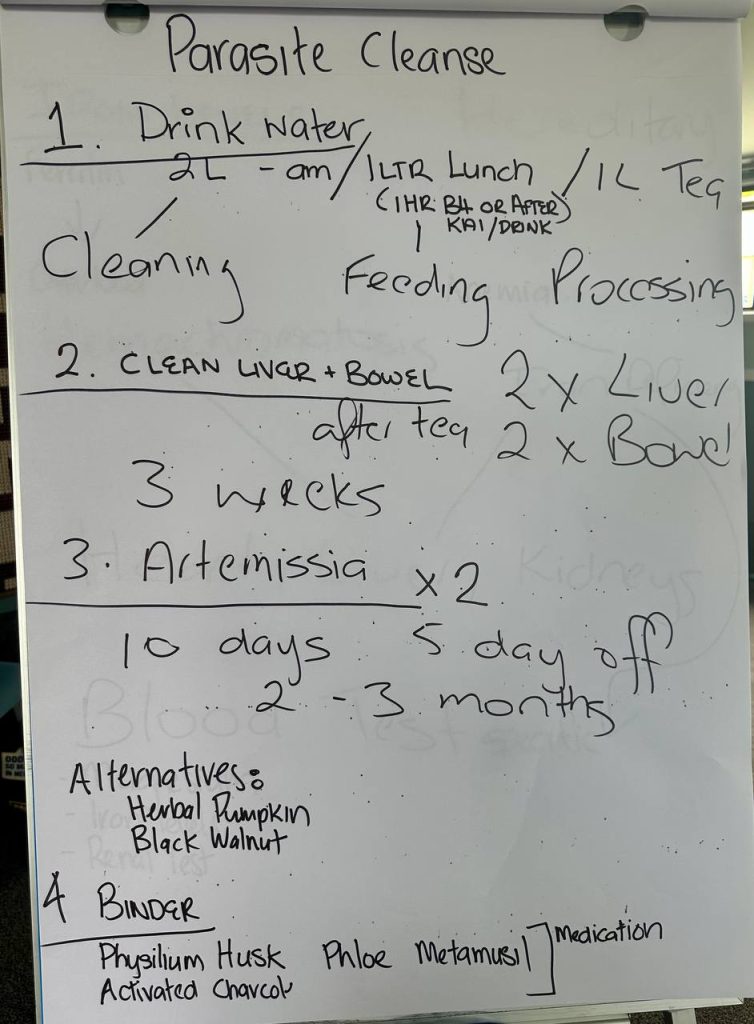
DRINKING WATER
The first thing you need to master is to drink enough water otherwise doing a parasite cleanse, nothing will come out and your gut cannot soften or clear away the back up of stool.
- Drinking 2 litres before eating or drinking anything first thing in the morning
- Drink another litre an hour before to an hour after lunch
- Drink another litre an hour after dinner
- Take bottles of water to bed with you, as your water after dinner will have you up to the toilet in 2 hours time. When you get up, have a guzzle of your water each time and then know you will be up again in another 2 hours until you wake up around 5 – 6am and then work on your litre of water so you have drunk up to 2 litres from early morning to when you get up.
DO NOT DRINK WATER WHILE YOU ARE EATING
If you drink water while eating, you are watering down the acids that help to digest the food so it takes longer for the food to be digested. The water is not used for cleaning the body when anything is added to it as it is digested instead.
If you do eat while drinking water or add anthing to the water then your body will digest the water with the food as anything you add to the water, the body sees it as food and will digest it accordingly. Nothing in the water and preferably, warm or hot water, so that the body doesn’t have to heat it up before using it to clean itself.
Try to remember, you cannot try to get the body to work with your preferred time frame as it is in an automatic program. Your body is a magnificent piece of work.
To support it, you have to work within the body processes it goes through each day.
First thing in the morning the body is in clean up mode.
During the day the body is feeding.
At night time the body is processing all the food you have eaten ready to clean it self in the early hours of the morning.
Once you have been able to master drinking water like this, then you must look at eating more alkaline foods.
EATING FOOD TO KEEP YOUR BODY ALKALINE
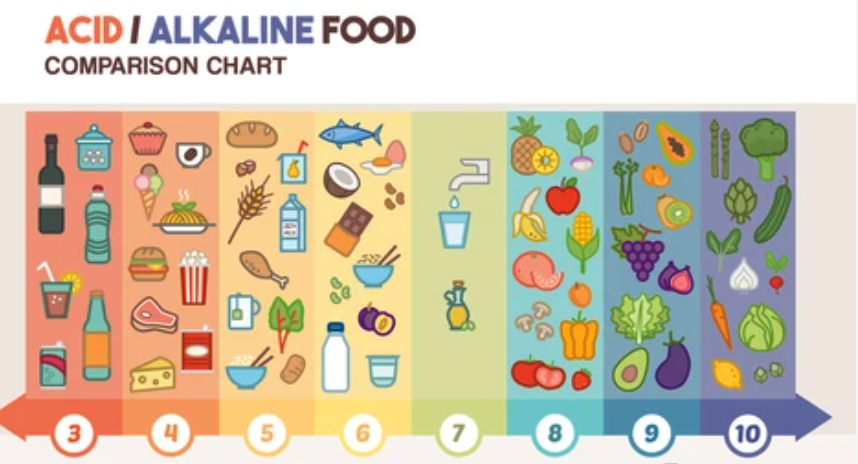
To the left in the pic from 3 – 6 are acidic foods and from 7- 10 are alkaline foods. Disease cannot survive in an alkaline body whereas disease will thrive in an acidic body. Changing our diet heals chronic disease naturally.
Foods like green leafy vegetables, fruits (especially lemons), and certain nuts and seeds are known for their alkaline-forming properties. These foods help balance the body’s pH levels by contributing to the reduction of acidic waste and the increase of alkaline minerals.
Alkaline-Forming Food:
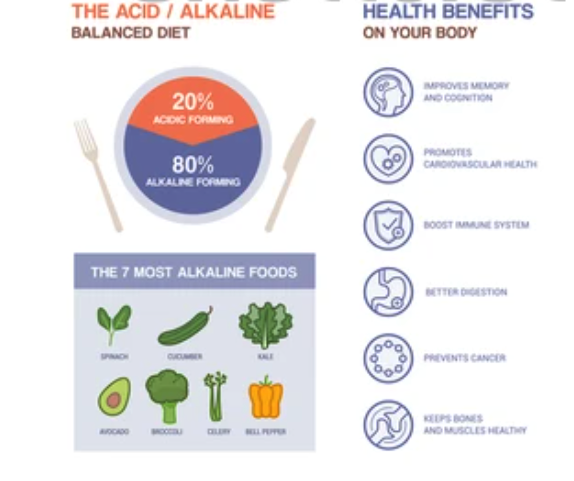
Once we have learned to prioritise alkaline foods then it can become a way of living rather than just a diet choice. So, 80 percent of the time we could eat alkaline foods and only 20 percent of the time, we could eat acidic foods but then afterwards, you must clean your body out.
Alkaline foods …
Fruits: Apples, cherries, avocado, bananas, apricots, and cantaloupe.
Non-starchy vegetables: Broccoli, beets, asparagus, leafy greens, garlic, carrots, and cabbage.
Green leafy vegetables: Spinach, kale, silverbeet.
Nuts and seeds: Almonds, sesame seeds, pepitas, pumpkin seeds.
Legumes: Lentils, beans.
Spirulina, barley, or wheatgrass: These are considered alkaline-forming foods.
Alkaline water: Water with added alkaline minerals.
Other: Raw honey, some grains like quinoa, and fermented soy.
Fresh fruits and vegetables are rich in both vitamins and flavonoids, with flavonoids being a class of plant compounds known for their antioxidant properties. Vitamin C, for example, is a powerful antioxidant found in many fruits and vegetables. Flavonoids, once called vitamin P, are also potent antioxidants, and some, like quercetin and anthocyanins, are found in various fruits and vegetables.
Vitamins in Fruits and Vegetables:
- Vitamin C: Found in citrus fruits, berries, and some vegetables like broccoli and peppers, Vitamin C is crucial for immune function and acts as an antioxidant.
- Vitamin A: Orange and yellow fruits and vegetables, as well as dark green leafy vegetables, are good sources of Vitamin A, which is important for vision, immune function, and cell growth.
- Other Vitamins: Fruits and vegetables also contain various other vitamins like folate, vitamin K, and B vitamins, which play roles in different bodily processes.
Flavonoids in Fruits and Vegetables:
- Anthocyanins: Found in berries (like blueberries, blackberries, and cranberries), these flavonoids give fruits their vibrant colors and are known for their antioxidant and heart-health benefits.
- Quercetin: Abundant in onions, apples, and other fruits and vegetables, Quercetin is a flavonol with potential anti-inflammatory and anti-cancer properties.
- Other Flavonoids: Fruits and vegetables contain a wide range of other flavonoids, including flavanones (in oranges and grapefruit) and catechins (in green tea and cocoa), which also possess antioxidant and other health-promoting effects.
Why Fruits and Vegetables are Important:
- Antioxidant Power: Both vitamins and flavonoids in fruits and vegetables act as antioxidants, helping to protect the body from damage caused by free radicals.
- Disease Prevention: Studies suggest that diets rich in fruits and vegetables, with their vitamins and flavonoids, may help reduce the risk of chronic diseases, such as heart disease, cancer, and diabetes.
- Overall Health: Fruits and vegetables contribute to overall health by providing essential nutrients, fiber, and other beneficial compounds.
ACIDIC FOODS/DRINKS TO AVOID ON AN ALKALINE DIET
When following an alkaline diet, it’s important to avoid foods and drinks that are considered acidic. These typically include meat, poultry, fish, dairy, eggs, grains, alcohol, lentils, and processed foods.
Here’s a more detailed list:
Foods to Avoid:
- Animal Products: Meat (including red meat), poultry, fish, shellfish, dairy products (milk, cheese, yogurt), and eggs.
- Grains: Most grains, including oats, whole wheat, bread, pasta, and rice.
- Legumes: Lentils, peas.
- Nuts and Seeds: Some nuts and seeds, like peanuts and walnuts.
- Processed Foods: Canned and packaged foods, fast food, and other processed snacks.
- Sugary Drinks: Soda, sweetened juices, and artificial sweeteners.
- Alcohol: All alcoholic beverages.
- Some Herbs and Spices: Salt, mustard, and nutmeg are generally avoided due to their high sodium content.
Drinks to Avoid:
- Alcohol: All types of alcoholic beverages.
- Colas and Pale Beers: These are considered acidic and should be avoided.
- Coffee and Caffeinated Drinks: Some alkaline diet approaches also advise avoiding caffeine.
To avoid experiencing acidity issues, it’s helpful to limit or avoid certain foods. Some examples include citrus fruits, tomatoes and tomato-based products, processed foods, sugary sweets, carbonated drinks, coffee and tea, dairy products, and spicy foods. Additionally, acidic foods like red meat, cheese, some grains, and high-sodium condiments should be consumed in moderation.
Here’s a more detailed look at foods to avoid:
Common Acidic Foods:
- Citrus Fruits: Oranges, lemons, grapefruits, limes, etc.
- Tomatoes and Tomato Products: Tomato sauce, ketchup, etc.
- Processed Foods: Many processed foods can be high in acid-forming ingredients.
- Sugary Sweets: High sugar intake can contribute to acidity.
- Carbonated Drinks: Sodas, etc., are acidic and can worsen acidity.
- Coffee and Tea: Can irritate the stomach and contribute to acid reflux.
- Dairy Products: Some dairy, especially full-fat yogurt, can be acidic.
- Spicy Foods: Can trigger heartburn and acidity.
- Meat: Fresh and processed meats can be acidic and difficult to digest.
- Grains: Some grains can contribute to acidity.
- High-sodium Condiments: Can irritate the stomach.
- Alcohol: Can worsen acid reflux symptoms.
- Chocolate: Can relax the lower esophageal sphincter and increase stomach acid.
- Peppermint: Although it can soothe digestion, it can also relax the LES, allowing stomach acid to rise.
- Fried Foods: Can lead to acidity due to high fat content.
Only once you have mastered this should you continue on to doing the parasite cleanse as the parasites feed on acidic foods and drinks so it is a waste of time to even start if you are doing this.
As well, another valuable point is the hydration of the body. No point in even starting a cleanse if you are not drinking enough water. How do you think the body will clean out the parasites or the heavy metals they feed on without WATER? The supplements and binder will turn your waste into concrete and your puku will be very sore if you don’t drink water to cleanse the body during a parasite cleanse.
Parasite Cleanse: 10 Days On / 5 Days Off
The following plan shows a cycle that needs to be adhered to to make sure that you not only clear out the parasites but also clear out the eggs that hatch in the gut over the five days off. Here is an example of what to expect. WARNING: You could start looking 10 – 20 years younger, lost 3 – 5 kgs and lose that brain fog you didn’t know you had!
10 days to kill
5 days to let eggs hatch.
Repeat to break the life cycle.
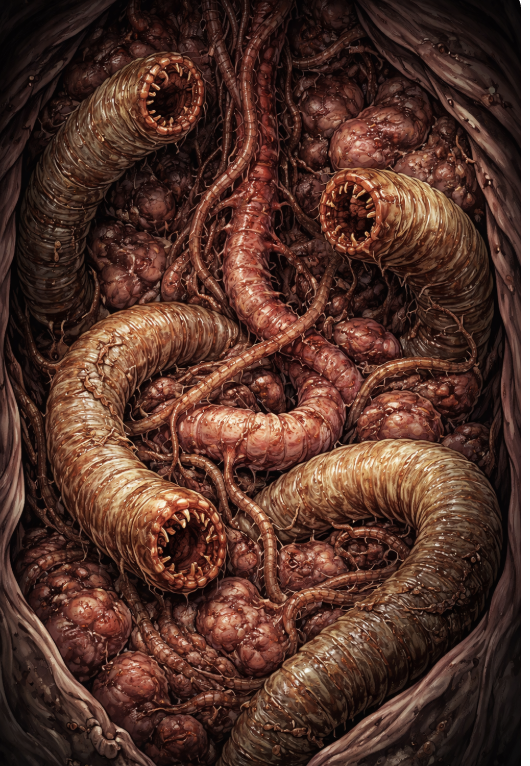
🔁 The Cycle
- Days 1–10: Take the parasite cleanse (herbal or protocol-based)
- Days 11–15: Stop the cleanse completely
- Repeat the cycle for 2 – 3 months to do a full cleanse
🗓 Schedule
| Day | What You Do | Why |
|---|---|---|
| 1–10 | Take parasite cleanse daily | Kill and weaken adult parasites |
| 11–15 | No cleanse (rest period) | Allow eggs to hatch + protect organs |
| 16–25 | Take cleanse again | Kill newly hatched parasites |
| 26–30 | Rest again | Body recovery |
| 2 – 3 months to cleanse | Same pattern | Ensure full life-cycle interruption |
🧬 WHY 10 DAYS ON?
1. Parasite Life Cycles
Most intestinal parasites:
- Lay eggs that are resistant to herbs
- Hatch in 7–14 days
Herbal cleanses kill adults and larvae, not eggs.
The 10 days:
- Weaken and kill adult parasites
- Reduce their ability to reproduce
- Disrupt feeding and attachment to the gut
2. Biofilm Breakdown
Parasites hide in:
- Intestinal biofilm
- Mucus lining
- Gut folds
Herbs (e.g. wormwood, black walnut, clove, neem):
- Take time to penetrate these layers
- Work cumulatively, not instantly
🛑 WHY 5 DAYS OFF?
1. Egg Hatching Window
When you stop:
- Eggs laid earlier begin to hatch
- Young parasites emerge without full defenses
This makes them vulnerable when you restart the cleanse.
2. Protecting the Body
Parasite cleanses are:
- Hard on the liver
- Stressful to kidneys
- Can disrupt electrolytes and gut bacteria
The 5 days off allow:
- Liver detox pathways to recover
- Inflammation to settle
- Toxins to be cleared safely
3. Preventing Resistance
Continuous cleansing:
- Can cause parasites to adapt
- Can weaken digestion and immunity
Cycling prevents adaptation.
WHY NOT CLEANSE NON-STOP?
Doing it continuously can cause:
- Headaches, nausea, fatigue
- Constipation or diarrhoea
- Electrolyte imbalance
- Liver overload
- Re-absorption of toxins from dying parasites
The rest period prevents Herxheimer (die-off) overload.
WHAT TO SUPPORT DURING THE 5 DAYS OFF
During rest days:
- Drink plenty of water
- Eat fibre (flaxseed, chia, vegetables)
- Support liver (lemon water, dandelion tea)
- Consider probiotics to restore gut balance
SIMPLE WAY TO REMEMBER
What Parasites Like to Feed On
Parasites survive by taking energy, nutrients, and minerals from the host. Most prefer foods that are easy to ferment or convert to sugar.
🍬 1. Sugar (their favourite)
- White sugar, lollies, cakes, soft drinks
- Parasites use sugar as fast fuel
- High sugar = faster growth and reproduction
➡️ This is why intense sugar cravings are common.
🍞 2. Refined Carbohydrates
- White bread, pasta, pastries
- Quickly break down into glucose
- Feed parasites almost as effectively as sugar
If a craving feels urgent, repetitive, and doesn’t resolve after eating well then it may not be “you” asking for the food.
🥛 3. Dairy (especially processed)
- Milk sugars (lactose)
- Mucus-forming → creates a protective environment
- Helps parasites hide and attach to the gut lining
🧂 4. Iron and Certain Minerals
- Parasites require iron to reproduce
- Some parasites actively steal iron from the host
- This can contribute to:
- Iron deficiency in the person
- Or iron misplacement in the body
🍖 5. Poorly Digested Proteins
- Undigested meat in the gut can rot
- Creates ammonia and toxins parasites thrive in
- More common when stomach acid is low
How Parasites Influence What We Want to Eat
Parasites do not have brains, but they manipulate the gut–brain axis.
🧠 1. Neurochemical Manipulation
Parasites can:
- Alter dopamine and serotonin signalling
- Increase cravings for:
- Sugar
- Starches
- Comfort foods
This makes the host want to eat what feeds the parasite, not what nourishes the body.
🔥 2. Blood Sugar Hijacking
- Parasites consume glucose → blood sugar drops
- Body responds with urgent hunger or cravings
- Person thinks: “I need sugar”
(but it’s the parasite demanding fuel)
😣 3. Nutrient Theft = False Hunger
Parasites steal:
- Iron
- B vitamins
- Magnesium
- Amino acids
This creates:
- Fatigue
- Anxiety
- Hunger signals
even when enough food has been eaten.
🦠 4. Gut Inflammation and Dysbiosis
Parasites:
- Damage gut lining
- Disrupt healthy bacteria
- Increase gut permeability
This leads to:
- Poor nutrient absorption
- More cravings
- Food intolerances
Common Signs Parasites May Be Influencing Cravings
(Non-diagnostic indicators)
- Strong sugar cravings, especially at night
- Hunger shortly after eating
- Bloating or gas after meals
- Grinding teeth during sleep
- Anal itching (especially children)
- Brain fog or mood swings
Key Insight
🧠/🟤 Liver
Foods Parasites Tend to Dislike
(Generally supportive foods)
- Garlic
- Onion
- Pumpkin seeds
- Bitter greens
- Fermented foods
- Fibre-rich vegetables
Feedback on Parasite Cleansing
Ongoing learning for me. I have been doing the bowel and liver detox for the last 3 months. My gut is feeling better with less bloating, not feeling sluggish after a meal. I am more active with healthy meal planning too. Iam even thinking with more clarity. Am now scheduling a time soon to do the cleanse. Great to have ongoing teachings about the parasite cleanse. Whaea Charlotte and other Tauranga have provided many reputable resources about how to do a safe parasite cleanse.
Since I have already done parasite cleansing through this wānanga it was a gentle reminder that I should be doing another Artemisia cleanse. It’s been over a year since my last one and my gut is more bloated so I guess I need to step that up.
I enjoyed the conversations around all subjects, looking back over all the mahi we did, it’s amazing how much content we were able to cover over one weekend. Looking forward to this process to improve my gut health and hopefully overall health.
I have done many cleanses in my life. Since returning and reintegrating after our noho I have been addressing my hydration first, one step at a time. I have a lot of pain in my Tinana from blocking the wairua from flowing, from not wanting to feel in this world. My next step is the heavy metal detox with binders, then the cleanse, but hydration has to come first.
The parasite cleansing process Great so far so good.
I was amazed by how well the process was shared, and how simple the instructions were for whānau who are newly starting their detox journey. It highlighted for me the importance of being conscious of what we eat, how we eat, and hydration for overall vitality.
Parasite cleanse, this has been very eye opening. I’m glad we are being taught this as it makes alot of sense. Looking at internal cleansing and keeping the body in an alkaline state.
Working the puku haven’t done it yet today but I have had it done and you can feel it as when you go into your gut you can feel those clogs and I would get it a lot down here and over here, theres still some over here and so you can get in by lifting your puku and yeah next min your off to the toilet not too long afterwards you know? You can go quite deep. Dessa was really good at that. Dancing, rocking is good for me swinging, getting the fluids moving yup kia ora.
You need to work only to the person the female work of doing romiromi is working only to the persons pain tolerance, not going further beyond that cause if you do you have that yeah and that’s the male way of working.
So we’re watching the person and their face all the time, not just doing that work on them does that make sense, we’re doing it with them not on them.
The male way of romiromi is like ‘I’m doing it on you’, you don’t get a say or make any choices about the romiromi work being done ON YOU. You don’t get a say if your pain levels are out the roof. Sometimes you are held done while you are screaming to release. The female way of romiromi is working with the whaiora, talking with them, giving them choices to participate in the healing so we not only have their consent but we are working with their pain tolerance levels. We watch their faces to see when it becomes uncomfortable, we ask them when we can see it’s getting sore the face will change so we might “breathe now breathe”, we ease up we don’t go harder. This is working with them to their pain levels.
So when we see the tiwawe, we see that she’s doing now is settling the body, … you can see here the water in the body is now cleaning that area. This is where a whole heap of emotions sit in the intestines and this area can get blocked so working the puku is really really important. If we’re going to do it ourselves, we will rock ourselves on the floor with our feet against the wall. We have to learn how to heal ourselves all the time.
So working the puku is really interesting as well cause we are going in here but there needs to be no ngangara when we work the puku so we just need to make sure. Never mind working on only healing other people if you’re not going to heal yourself, using your hand here pushing deep into this area so the kai can move around and then it can come out your bum, if it gets blocked in here and this nanny is here, its very blocked in here … and blocked here, feel this, … around there.
When their blocked, I know they’re not drinking enough water. I can smell it. There’s a smell to chronic dehydration, and then your gut will be all blocked up.
The parasite cleansing kaupapa reminded me how little time I have given myself. There has been so much happening in my whanau and I have not focussed on me. I am being called back into this mahi. I have done many cleanses in my life. My Tinana is telling me. Since returning and reintegrating after our noho I have been addressing my hydration first, one step at a time. I have a lot of pain in my Tinana from blocking the wairua from flowing, from not wanting to feel in this world. My next step is the heavy metal detox with binders, then the cleanse, but hydration has to come first.
Making the body alkaline: Exploring how kai, spices, teas, and water can influence the body’s pH has been transformative for me. Over the past year, our whānau has made many dietary changes, and learning these techniques has further supported our tinana naturally. I really enjoy hearing everyone’s kōrero about their own kai journeys.
For me gut health is paramount to healing, this encompasses making the body alkaline which you can only do by improving your diet and water intake in the first instance, then supporting your gut and organs in particular the liver because it’s our main filter with all the healthy kai, spices teas, supplements, etc. So that we can be healthy and role model this for our loved ones.
The kōrero on alkalinity reminded me how far from my own needs I have drifted. I feel acidic. I have not been drinking enough water or nourishing myself. I have been giving to others first. This highlighted exactly where I need to do my mahi, I have been sitting in the depths of te pō for a long time… If I do not care for and love myself first, i am no good to anyone and I will literally fall over, and I have been here before.
Exploring how kai, spices, teas, and water can influence the body’s pH has been transformative for me. Over the past year, our whānau has made many dietary changes, and learning these techniques has further supported our tinana naturally. I really enjoy hearing everyone’s kōrero about their own kai journeys.
Making the body alkaline as opposed to being acidic with water, Kai, spices and teas Wonderful and so true! Learning whanau” it’s a journey, be kind to one self.
Heart Problems and Iron Levels
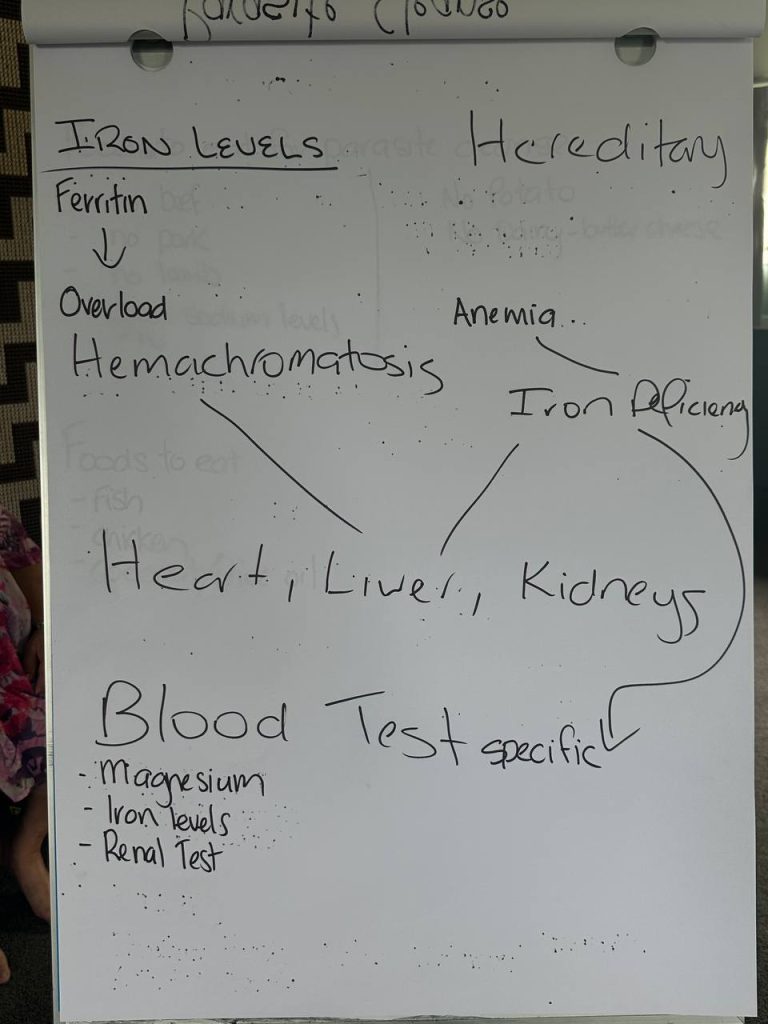
Iron Deficiency (Too Little Iron)
Iron is essential for oxygen transport and energy production. When iron is low, tissues are starved of oxygen.
❤️ Heart
- Low iron → low haemoglobin → reduced oxygen delivery
- Heart must pump harder and faster to compensate
- Can lead to enlarged heart, arrhythmias, and eventually heart failure
- Chronic oxygen shortage causes cell stress and inflammation
- Impairs liver metabolism and detoxification
- Can contribute to fatty liver changes
🫘 Kidneys
- Kidneys are highly oxygen-dependent
- Iron deficiency causes renal hypoxia, reducing filtration
- Can worsen or trigger chronic kidney disease
Iron Overload (Too Much Iron)
Excess iron is toxic. The body cannot easily excrete it, so it deposits in organs.
❤️ Heart
- Iron deposits in heart muscle cause oxidative damage
- Leads to cardiomyopathy, arrhythmias, and heart failure
🟤 Liver
- Liver stores excess iron → iron-induced inflammation
- Progresses to fibrosis, cirrhosis, and liver failure
- Increases risk of liver cancer
🫘 Kidneys
- Iron generates free radicals that damage kidney tubules
- Causes oxidative stress and scarring
- Can lead to acute or chronic kidney failure
Key Point (The Balance Matters)
Too little iron starves organs of oxygen.
Too much iron poisons them.
This is why iron levels must be tested and monitored, not guessed.
Feedback on Healing the Heart, Iron Levels, & Managing Dizziness & Vertigo
High blood pressure: Learning when and when not to check it was really insightful, it tells us the importance of how our health needs to be prioritised!
This was also valuable as my goal is to work in the healing space, I really need to get my head around this. Our people have very high statistics for heart problems so it is a good area to learn.
The kōrero on high blood pressure made so much sense and brought clarity to something that can feel complicated. I appreciated how simple and grounded it was made.
Learning when and when not to check it was really insightful – it tells us the importance of how our health needs to be prioritised!
It’s been a good learning curve. My iron blood work is low and I found I would at times forget to drink water. This with poor sleep, stresses, grief, poor exercise and poor choices in food have aided my blood pressure to remain high. I am slowly making lifestyle changes and can see my blood pressure lower slowly. I am making slow changes and can see the benefits.
I’ve only experienced vertigo once and learning the technique to hang your head off the side of a bed and slowly rotate from side to side and how to help others is a great tool that I can use.
The technique for vertigo was another moment of clarity. Such a simple way to help ourselves and our whanau when these symptoms arise, which they often do.
A great tip of hanging the head off the bed. Turning it slowly side to side.
I found it helpful to learn simple, intentional exercises like shifting your head on your moenga to bring balance.
I found it helpful to learn simple, intentional exercises like shifting your head on your moenga to bring balance.
Ngā mihi, I am grateful to everyone for sharing your knowledge, experiences, and mahi. Being part of this wānanga has given me reflections, questions, and inspiration for my own healing journey. Mauri ora ki a tātou katoa.
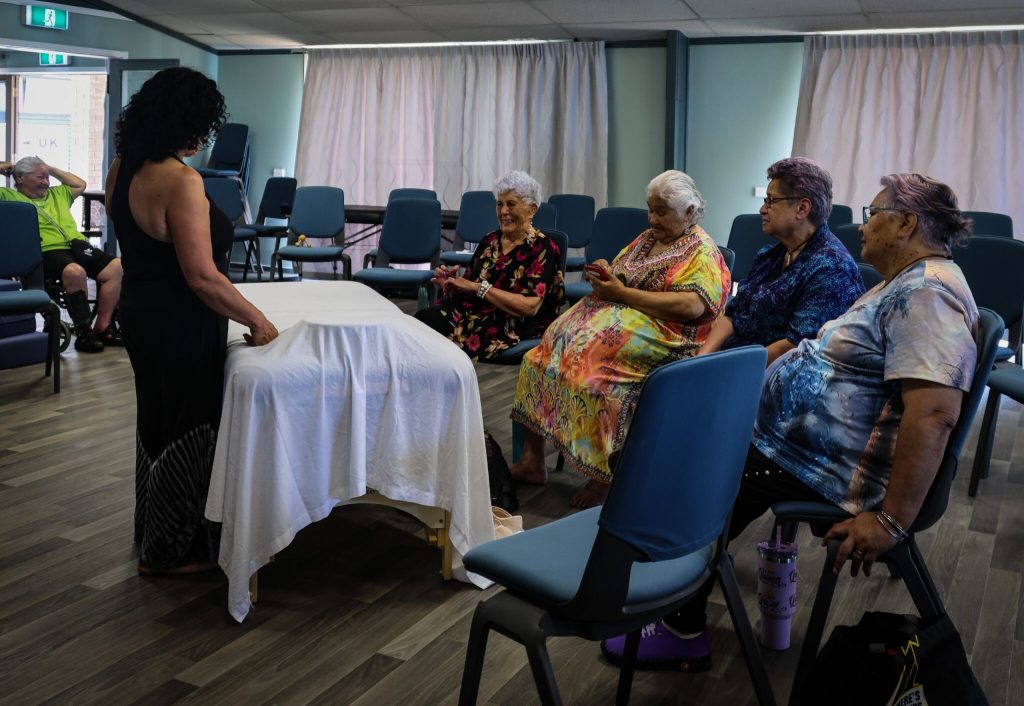
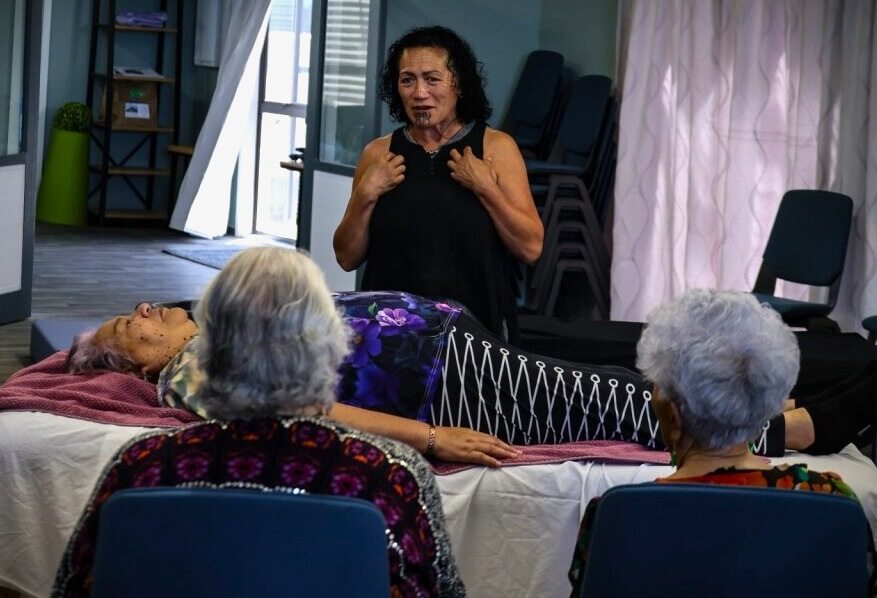
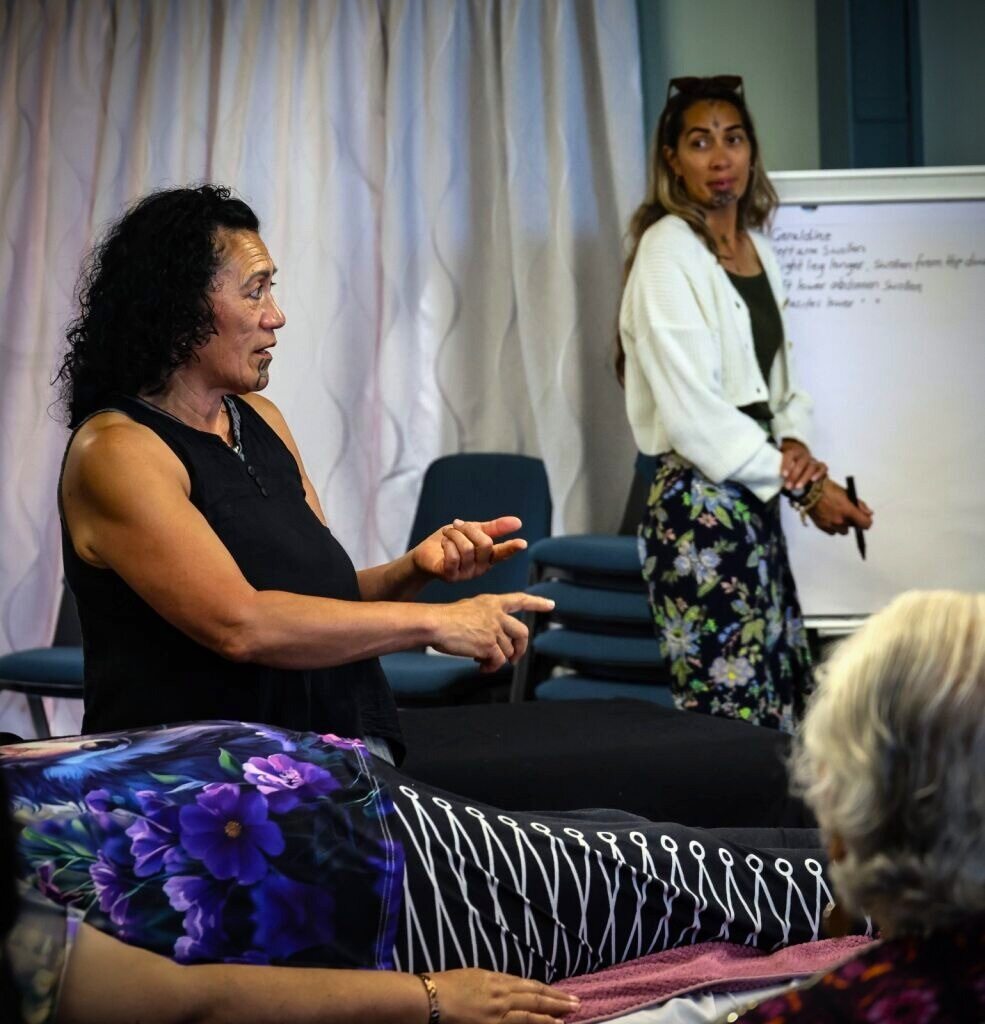
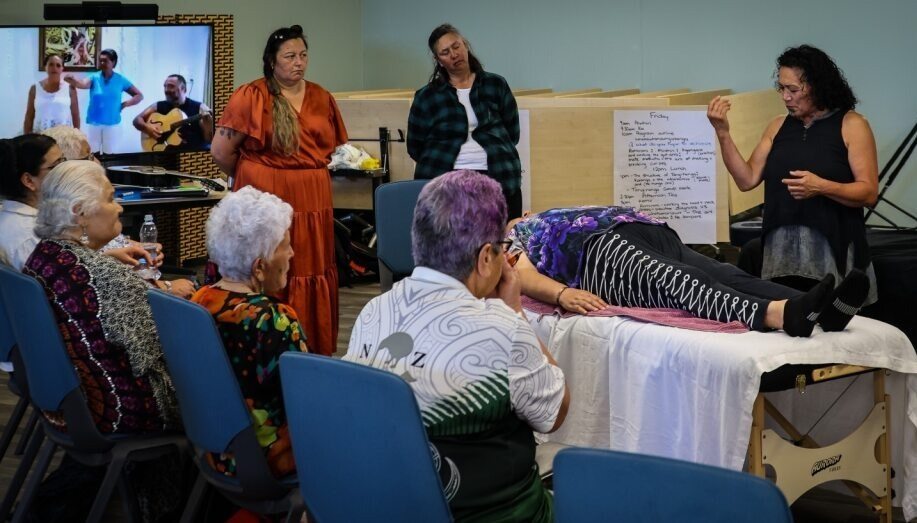
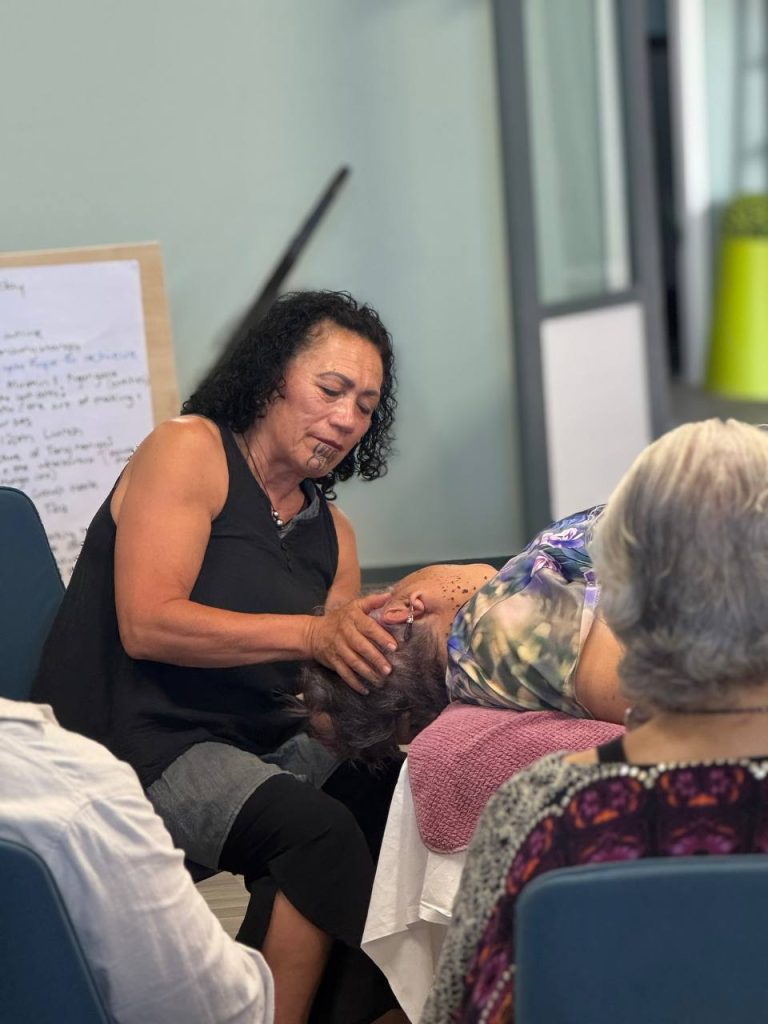
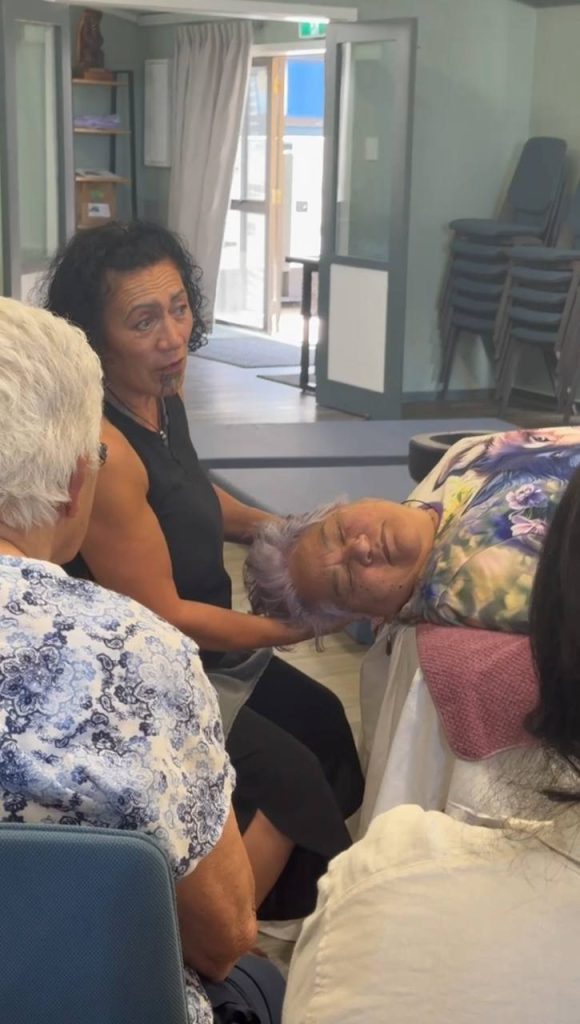
Group Work
The group work was very important because although our kuia wanted to impress that they could not speak te reo Māori, this did not mean that they did not have lived wisdom. The kuia shared some wonderful stories with our whanau about the tangihanga they had been a part of. One of the stories I hadn’t shared was how my great Granny Jane Mitchell nee Greening from Te Mahia, cut her long hair off at the graveside and laid it into the grave of her husband. My grandmother and her sisters, arranged this marriage for these first cousins. I have a picture of her just after cutting all her hair off which was in those days a promise to not ever marry again. Also the cutting of the wrists and scarring the body with sharp shells was another part of expressing the grief at tangihanga.
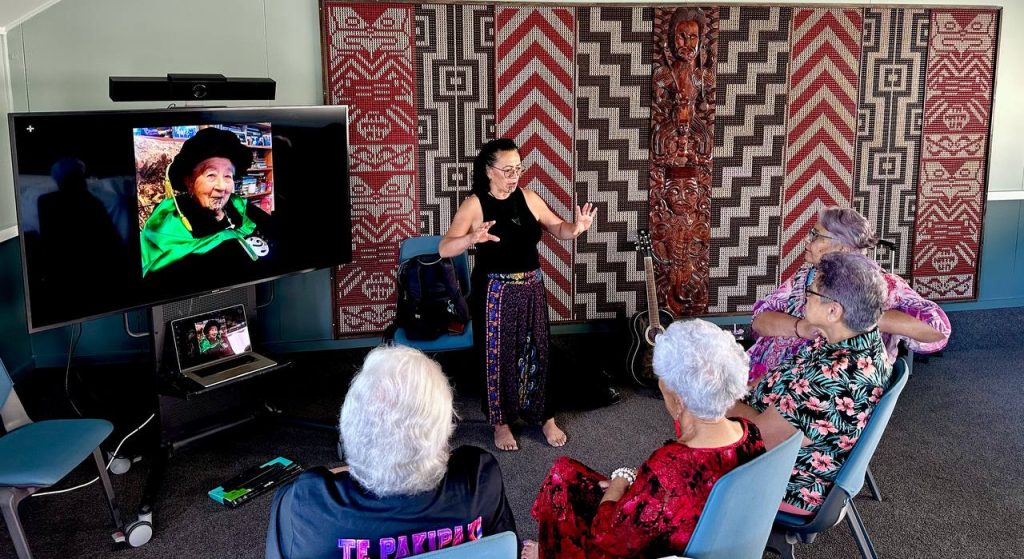
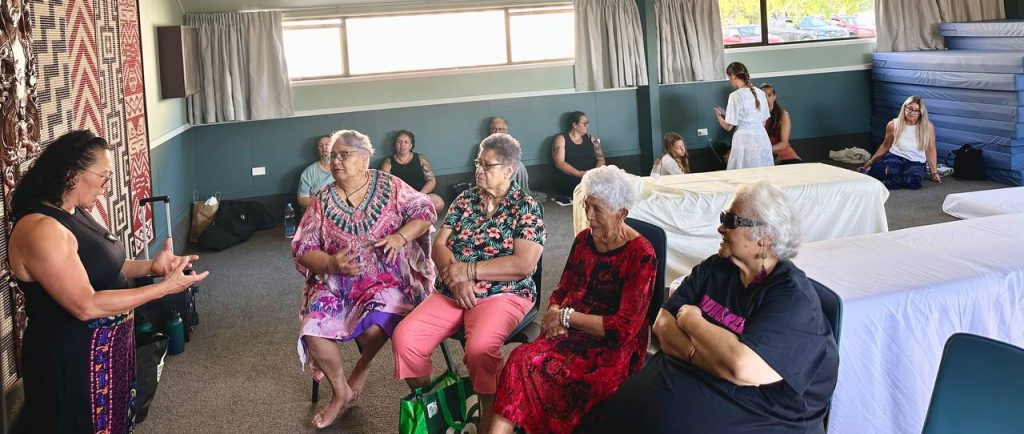
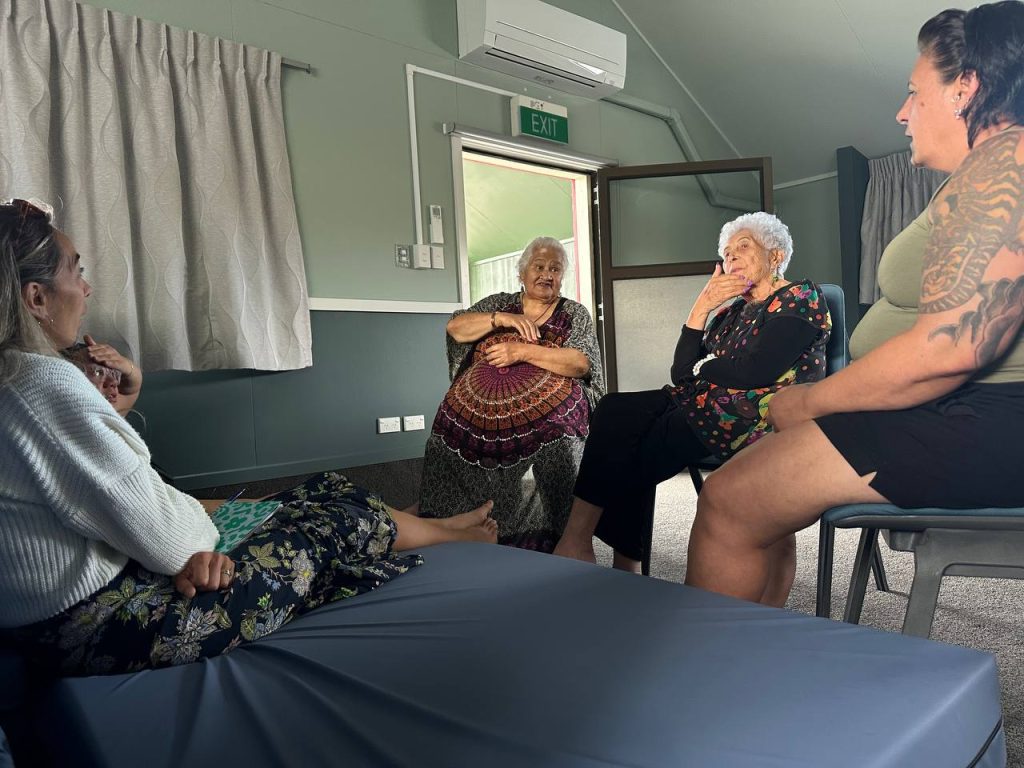
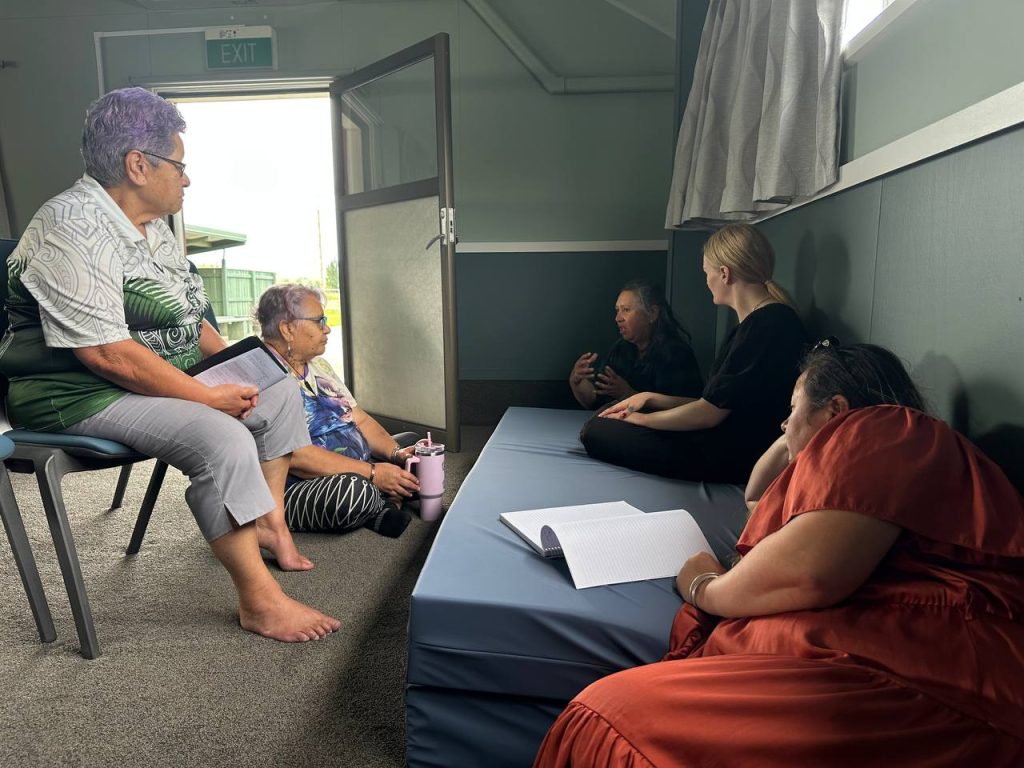
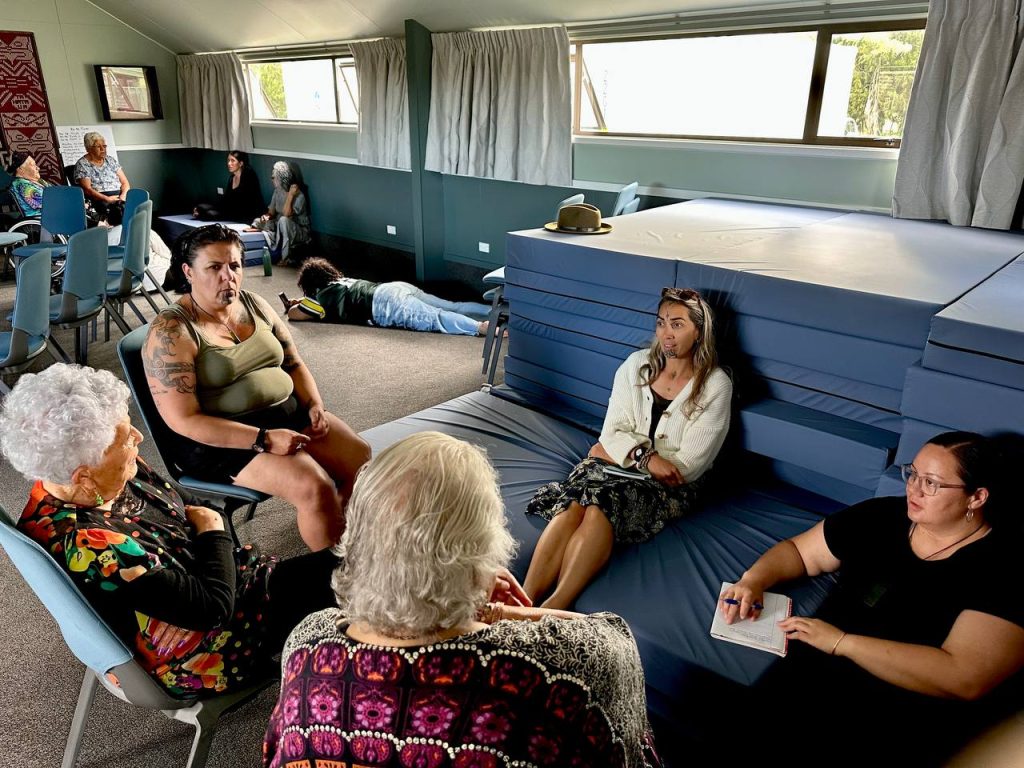
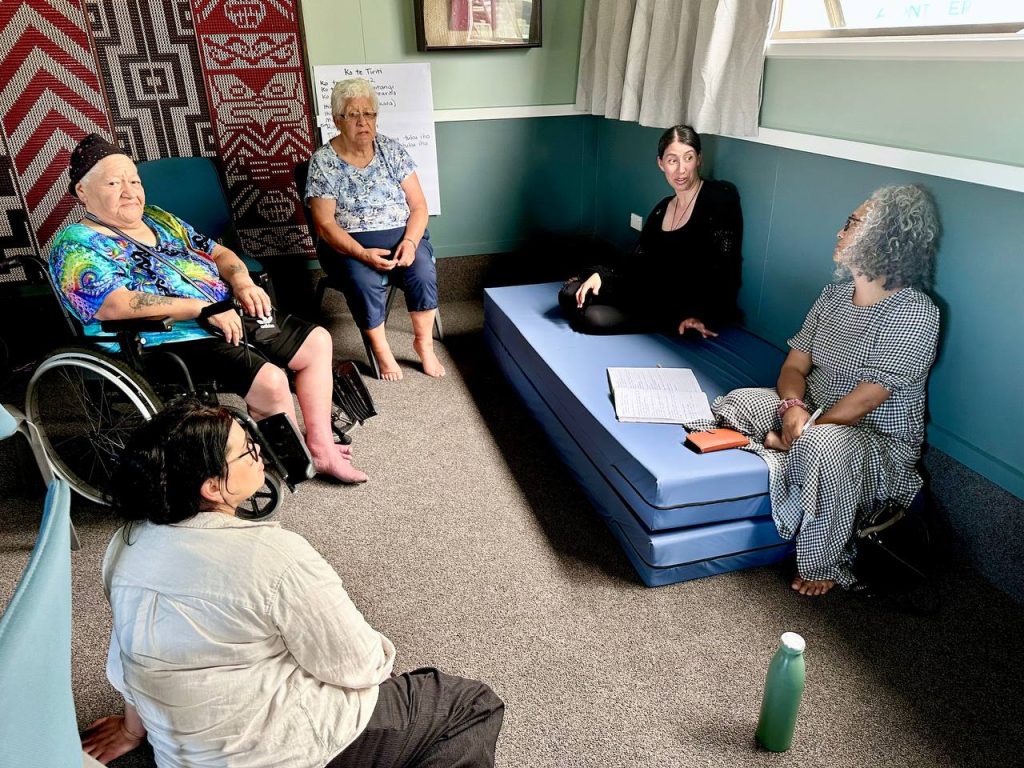
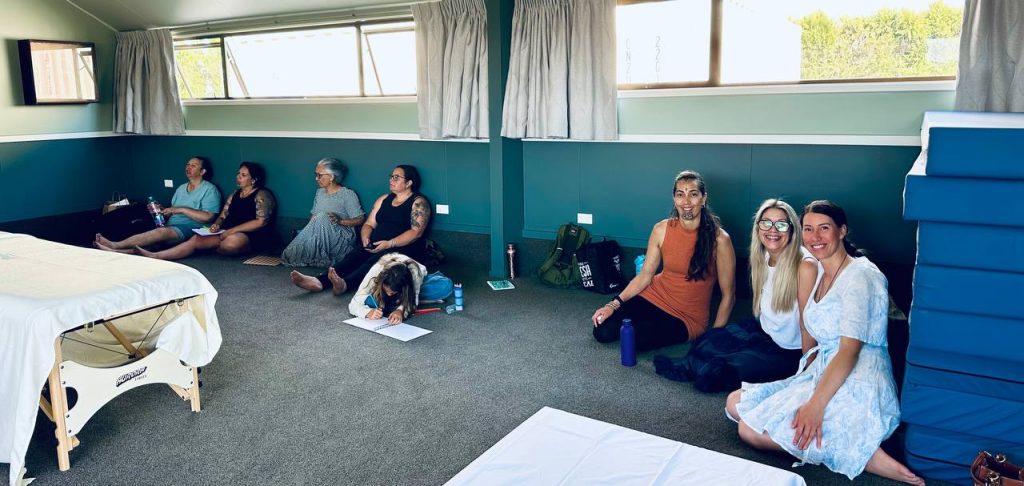
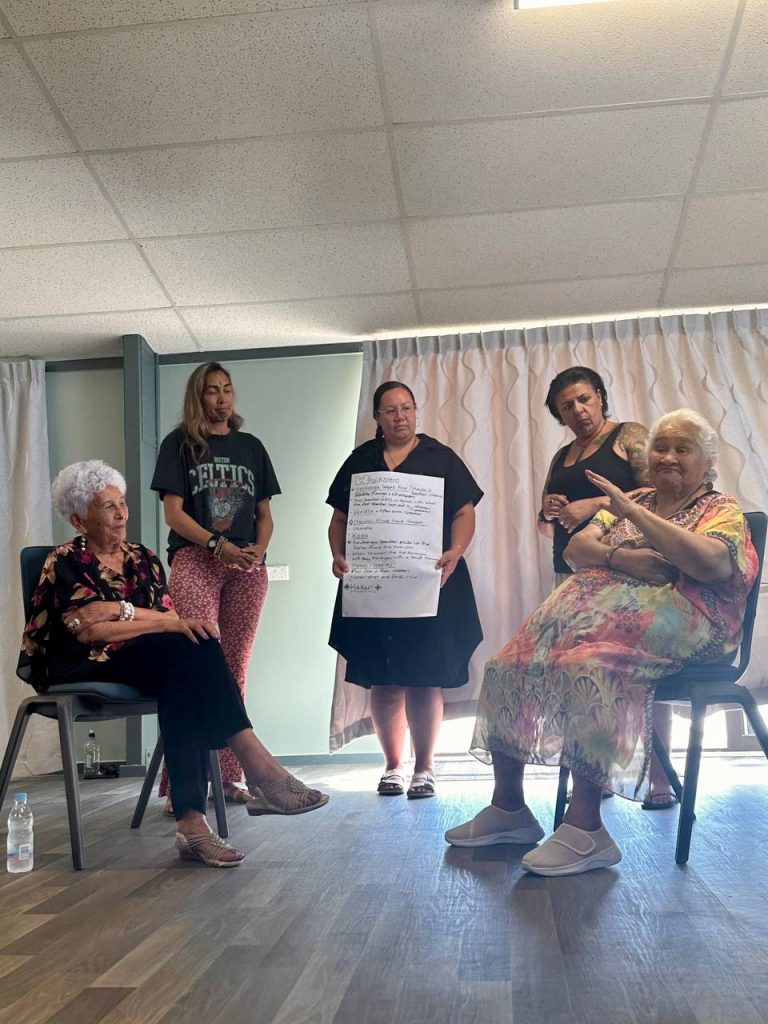
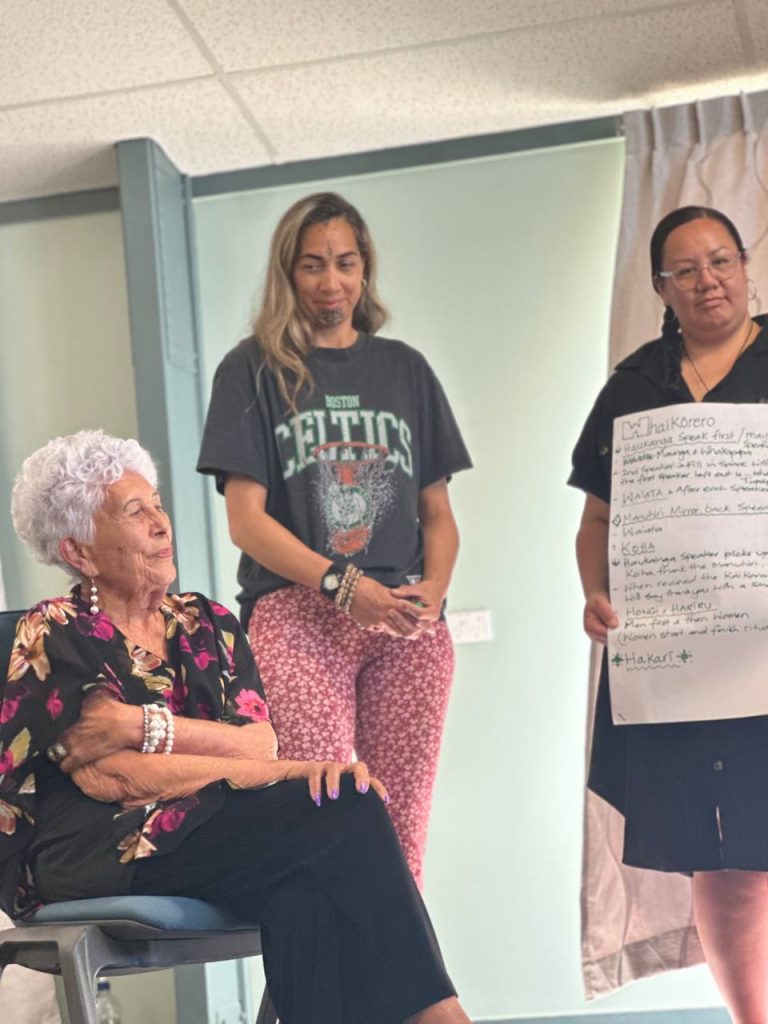
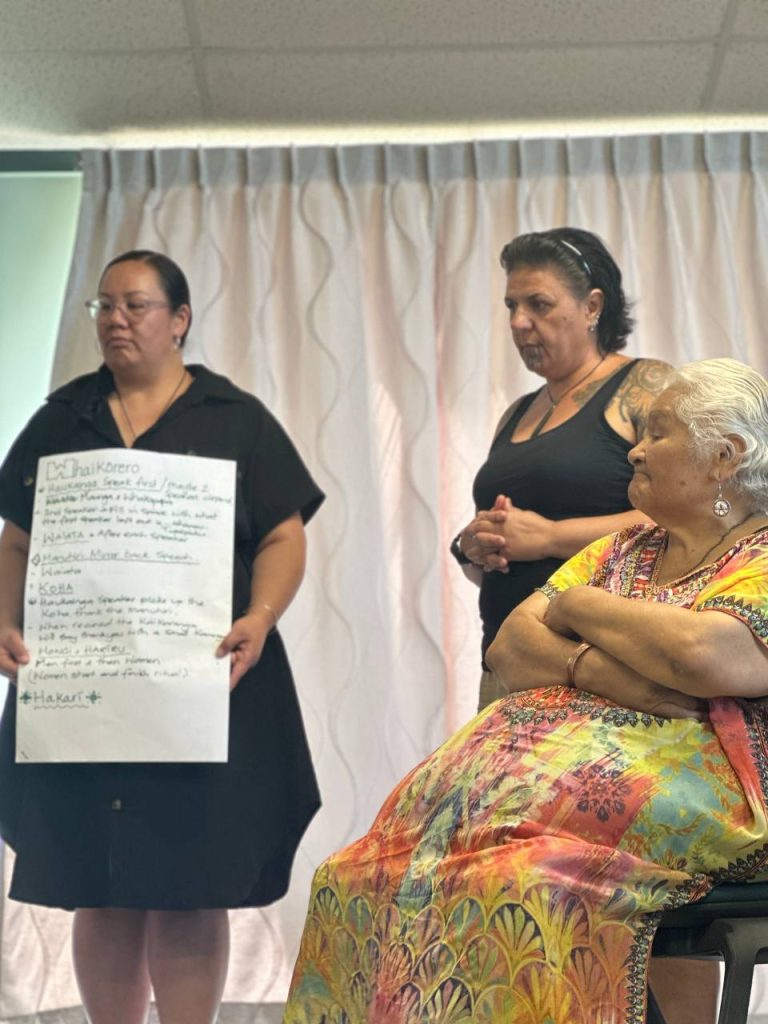
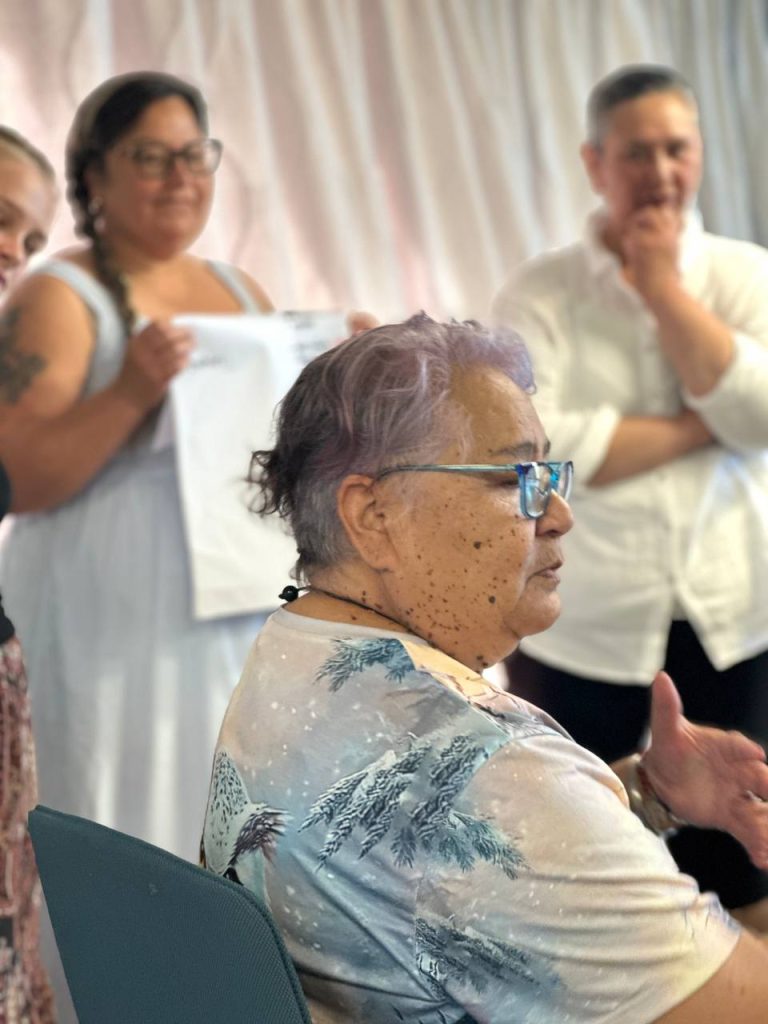
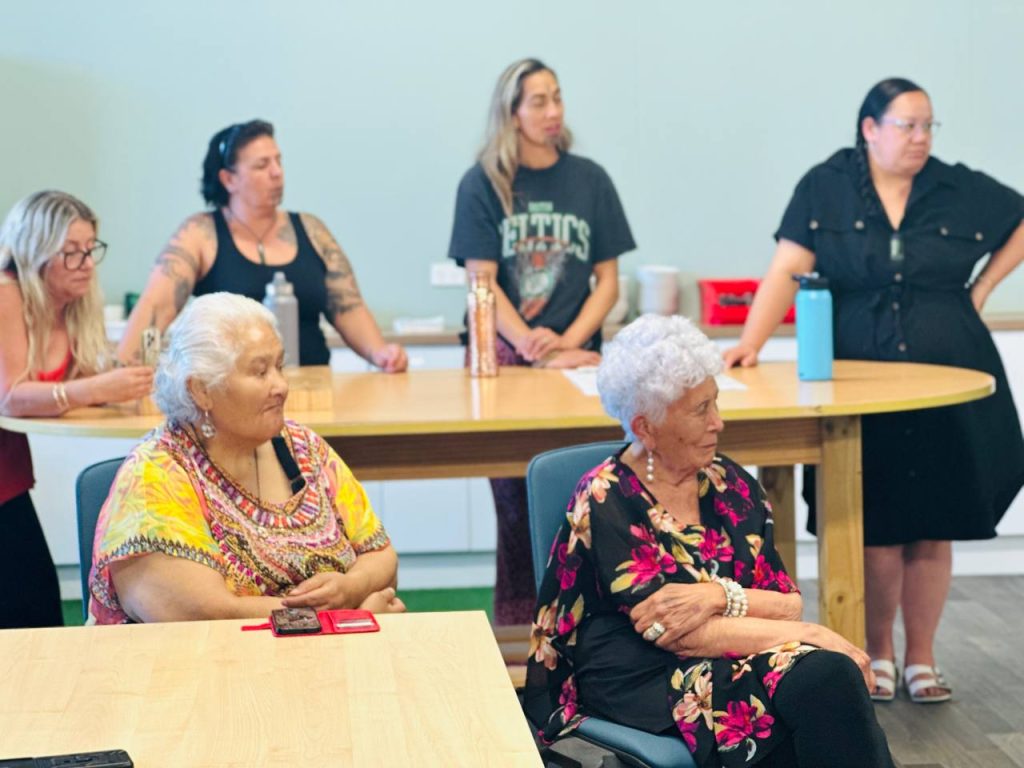
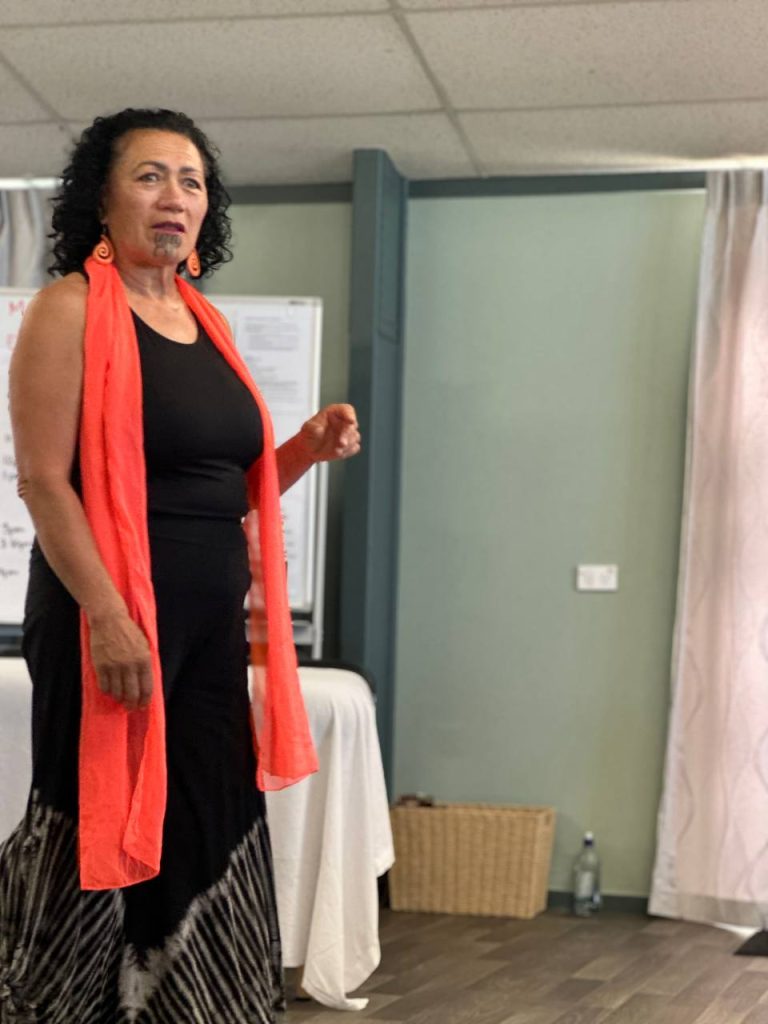
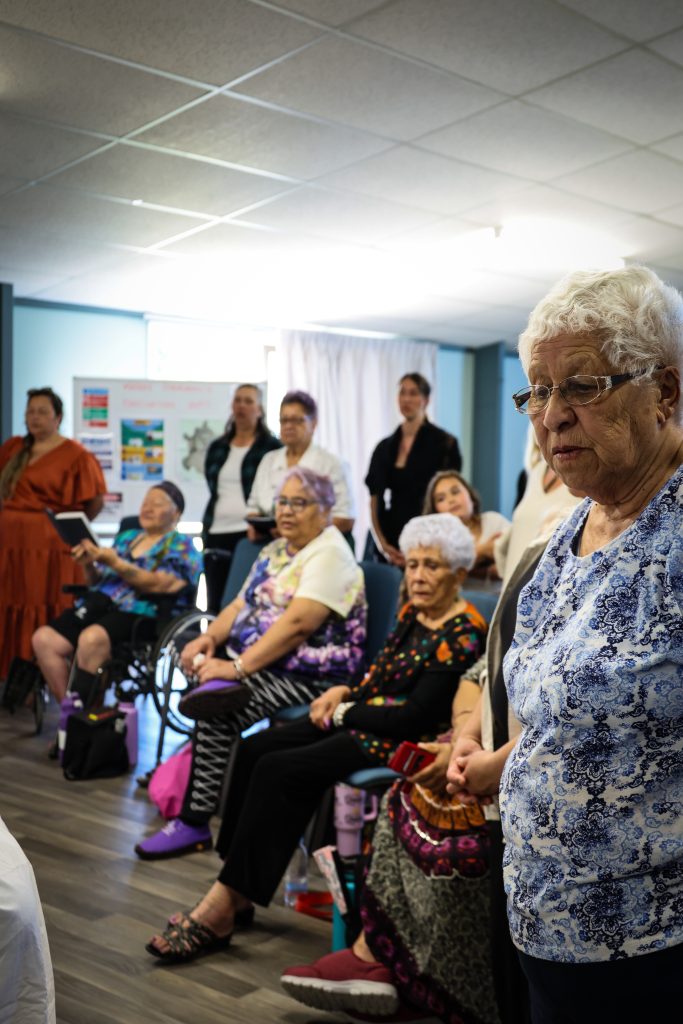
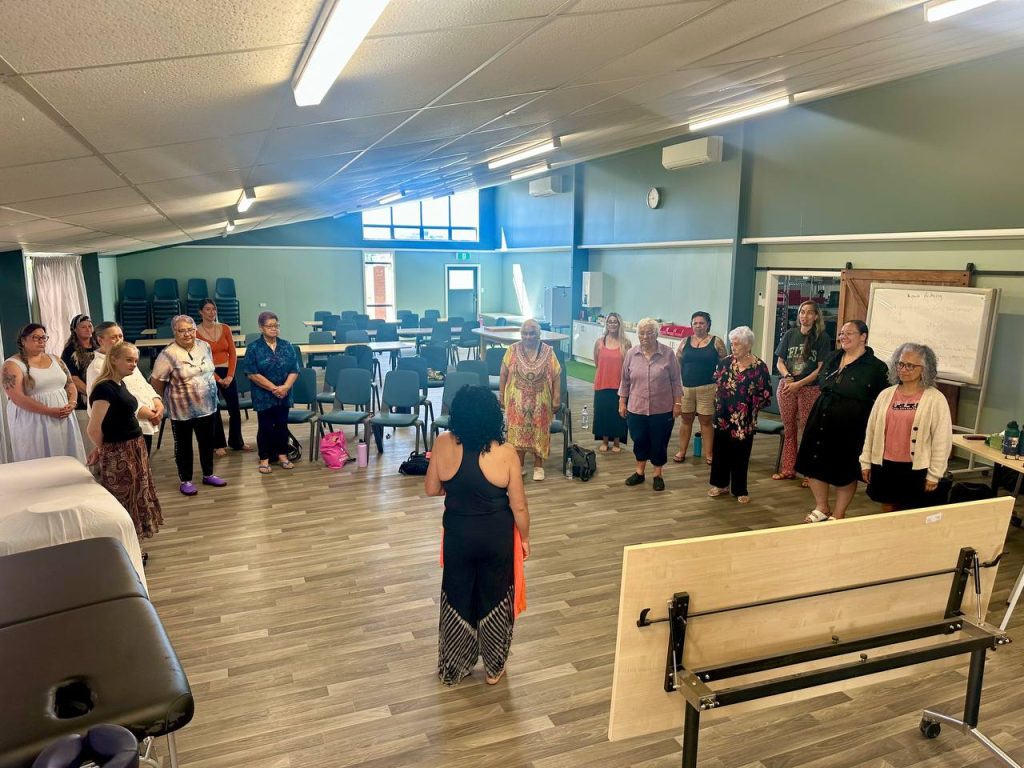
Mahi Puku
As you all saw on the Sunday, you must work the tummy gently at first for at least 20 mins to 30 mins before going in a little deeper to see where there are any blockages in the intestines. You must carefully watch the whaiora though to see if there is any discomfort. WE DO NOT GO IN HARD AND HURT THEM as you could damage their organs! We must watch their face as it will wince if this hurts as will the body react. Be gentle and kind.
Be sure to ask if they have had any operations on the tummy as well as some have a stent or a drain inserted in their tummy so you must leave this alone or you could cause some damage. There is no rush to do this.
Lately, I had to help Aunty Pauline because she was in a lot of pain but she thought it was a broken bone from a fall she’d had prior yet the xray results did not show this. I first asked about her medications and discovered she had been prescribed opiates, which explained the constipation. Her pain wasn’t just in her gut, but it also affected her right wide as she was (pointing to her liver) as well as to her lower back on either side of her spine, from a spinal injury she’d had over ten years ago. This kind of care requires caution, as improper handling or lack of awareness of stroke signs could be dangerous.
I worked her over 3 – 4 days. I discovered that Aunty Pauline wouldn’t drink water and was only eating sweet foods and so sugar causes inflammation which in turn causes pain. I told her that under no circumstances is she to be having any more sugar food as all the visitors keep bringing her sugar food, Xmas cake etc and I had to take away all the snacks that people had bought, fruit like cherries, and cakes, and biscuits and grapes, etc that are full of sugar.
Sugar creates inflammation which causes pain
I encouraged her to sip hot ginger water and bought her a BPA-free bottle so she could stay hydrated throughout the day. I also removed all the sugary foods visitors had brought, as sugar creates inflammation and worsens pain. After checking the side effects of her medications, many of them pointed to heart and the liver issues, so I researched the synchronicity of these with coconut oil, magnesium cream and a cayenne pepper cream for the pain. As opposed to opiates these worked wonders for her and she refused any more opiates.
It takes time to research how medications affect the body, the conditions they treat, and their potential side effects. Only then can rongoā or health supplements be safely recommended. Without this, interventions could cause serious harm or even be fatal.
I spent three hours with Aunty that first afternoon working on her puku, her lower back and her arms, sometimes under protest even crying when I left the room saying ‘You left me alone’. Pain does things to people especially chronic pain. Older adults, especially those with chronic illnesses, need gentleness, patience, and a calming presence. Within an hour, she wanted to sit on the toilet. Though I’m not a nurse, I helped her with personal care tasks because love requires showing up, even when it’s is way out of our scope.
Just finished cleaning up the room and wiping her down and redressing her then fixing her hair, then her next visitor came from Auckland who had a little present with all these sugar laden foods 🫣🙄 He was a pakeha priest and when he reminded Aunty who he was, then she started to cry.
I rang her Dr in Gisborne who recommended that I request the blood tests I wanted from an emergency Doctors in Napier as I wanted to check her liver, kidneys, iron, and magnesium levels, to ensure that the health supplements and rongoa would sync with her levels and her medications. Many older people take multiple medications, and conditions like partial colon removal, stents, or drains further influence what interventions are appropriate.
Aunty spent three hours with the emergency doctor who said her visit was timely as she was at risk of pneumonia being in pain for 10 days with severe complications from being constipated as a result of the opiates. He said that if she hadn’t have come and did get pneumonia then he doubted that she would have been able to recover due to her age and her chronic condition. She was able to go back home to Mahia the next day where before they said she would go back home until the 26th December. I had to write up the recommendations of diet, teas, spices, natural creams and rongoa based on the blood test results from the emergency Dr as as I had expected, she had very low magnesium and iron levels. Seeing that taking the magnesium orally would compromise the effectiveness of two of her medications, I recommended that she take them topically. In my experience, low iron levels are often at the core of heart and liver problems.
I did not anticipate receiving these flowers on Christmas Eve with a not from Aunty Pauline saying how grateful she was for all the support this year.
Being there for the ones we love, when they were always there for you through difficult times in your life, and then having the opportunity to do healing for them when they ask us, is such a joy!
Feedback for the Puku Mahi
Reflecting on the puku mahi, when I put my left hand on her puku and did my breath work it took a while to block out everything around me, but when, I did, wow the intense emotions feelings come up, I see how important it is to be able to breath, tears cum running down my face, If I don’t breath, and breathe deeply, I could easy full into uncontrollable sobbing, to be in a space like this is very intense, I have learnt to not think about it once its over otherwise, I can easily go back into feeling these intense emotions.
Doing the hands on mahi was a great experience, I found it valuable because I could feel the block in one of the ladies on the table and now I know a little bit about how to work that area of someone else I will be able to use it in future. I think I have to learn how to be more connected to the person I’m working so I don’t hurt them.
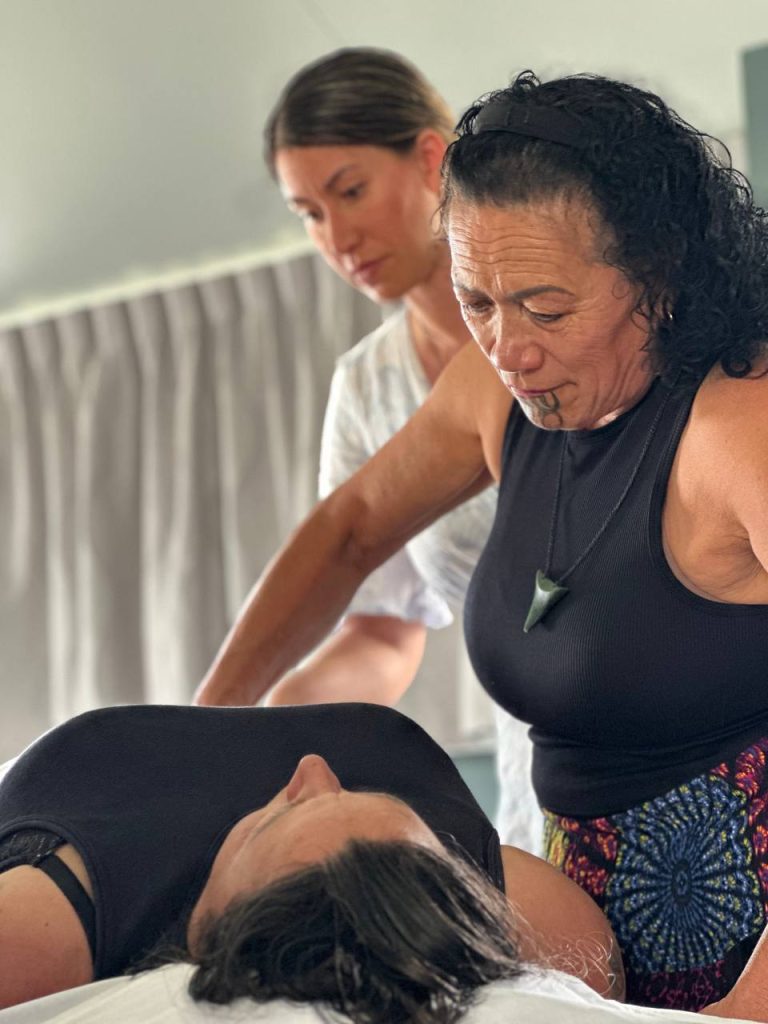
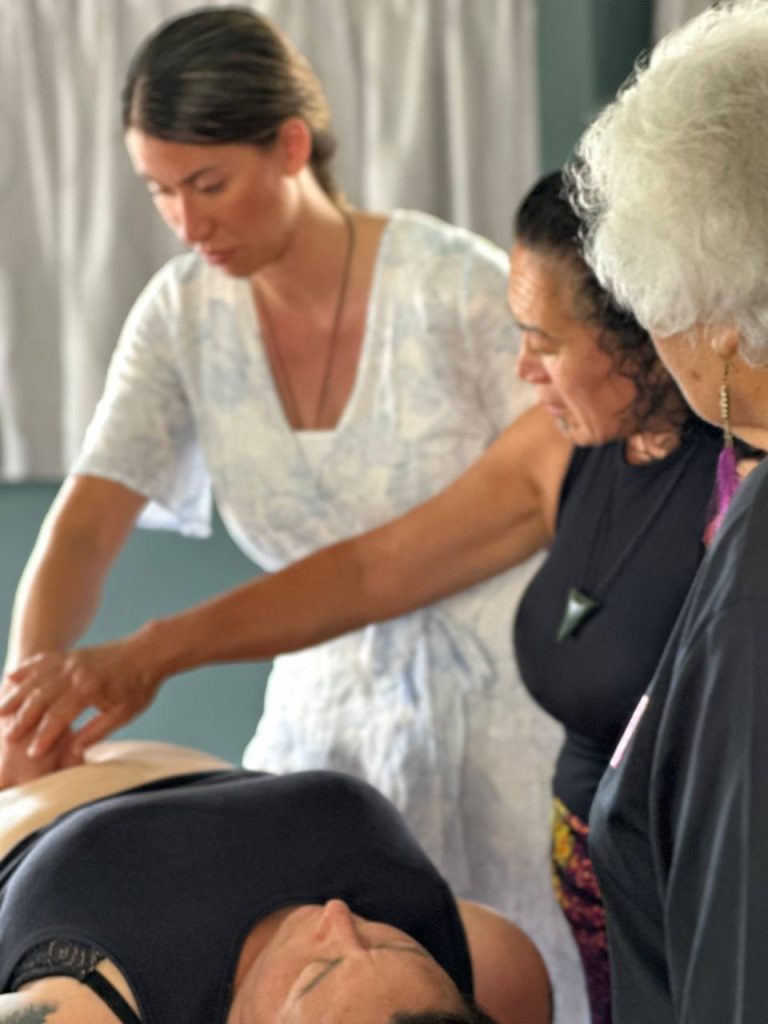
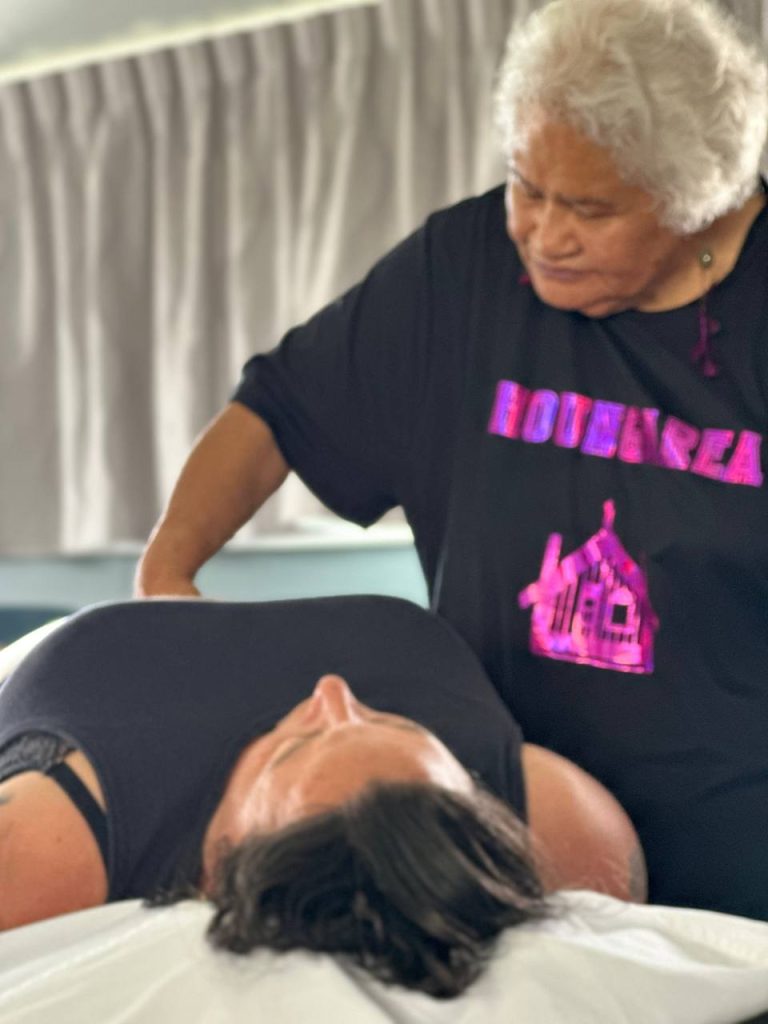
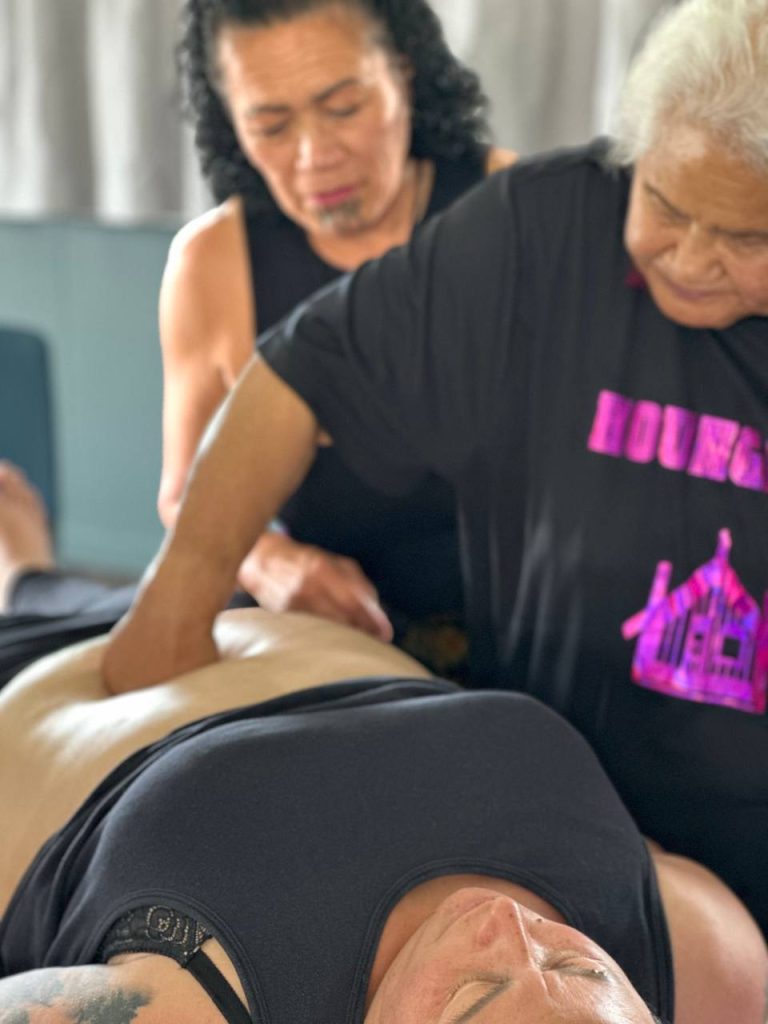
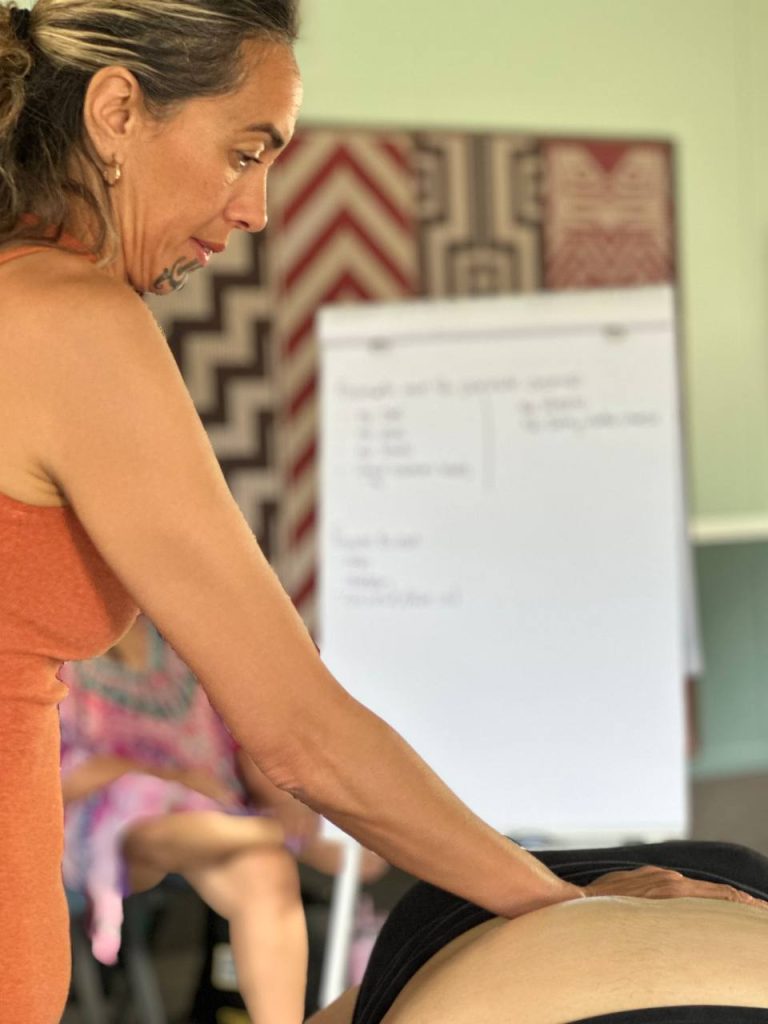
The work on the puku was profound for me, both spiritually and physically. It took me on a journey through layers of myself.
I was grateful to work with Priscilla. She gave me the direction of pressure and firmness. Using my body and breathing with hers. Watching her facial reactions.
Beautiful although I need more practice. I love the technique and seeing our nanny release! Incredible
I recognise how beneficial this mahi is, and I hope to practice more with my tamariki to support their well-being.
I would love to learn more on this area. I was a recipient and enjoyed the work done on me. I had a lot of obstructions and felt it was a good learning point for me and those providing training.
I have been supporting my nan in the rest home here in Whanganui.. she’s 94 years old and loved Mirimiri so I often go there to do her legs. One particular day she was constipated from the meds so I did a puku Mirimiri.. i could feel all the blockages. It’s just great to be able to look after our whānau, loved ones and the community when in need aye.. I really love looking after our kaumātua and seeing them happy 💛
It is impressive watching you whaea Charlotte utilise your body with intention so that you don’t use your energy to do the mahi but placing the body strategically to support you! So it was good observation to seeing the body movements and techniques demonstrated.
Working the puku haven’t done it yet today but I have had it done and you can feel it as when you go into your gut you can feel those clogs and I would get it a lot down here and over here, theres still some over here and so you can get in by lifting your puku and yeah next min your off to the toilet not too long afterwards you know? You can go quite deep. Dessa was really good at that. Dancing, rocking is good for me swinging, getting the fluids moving yup kia ora.
You need to work only to the person the female work of doing romiromi is working only to the persons pain tolerance, not going further beyond that cause if you do you have that yeah and that’s the male way of working.
So we’re watching the person and their face all the time, not just doing that work on them does that make sense, we’re doing it with them not on them.
The male way of romiromi is like ‘I’m doing it on you’, you don’t get a say or make any choices about the romiromi work being done ON YOU. You don’t get a say if your pain levels are out the roof. Sometimes you are held done while you are screaming to release. The female way of romiromi is working with the whaiora, talking with them, giving them choices to participate in the healing so we not only have their consent but we are working with their pain tolerance levels. We watch their faces to see when it becomes uncomfortable, we ask them when we can see it’s getting sore the face will change so we might “breathe now breathe”, we ease up we don’t go harder. This is working with them to their pain levels.
So when we see the tiwawe, we see that she’s doing now is settling the body, … you can see here the water in the body is now cleaning that area. This is where a whole heap of emotions sit in the intestines and this area can get blocked so working the puku is really really important. If we’re going to do it ourselves, we will rock ourselves on the floor with our feet against the wall. We have to learn how to heal ourselves all the time.
So working the puku is really interesting as well cause we are going in here but there needs to be no ngangara when we work the puku so we just need to make sure. Never mind working on only healing other people if you’re not going to heal yourself, using your hand here pushing deep into this area so the kai can move around and then it can come out your bum, if it gets blocked in here and this nanny is here, its very blocked in here … and blocked here, feel this, … around there.
When their blocked, I know they’re not drinking enough water. I can smell it. There’s a smell to chronic dehydration, and then your gut will be all blocked up.
I recognise how beneficial this mahi is, and I hope to practice more with my tamariki to support their well-being.
Alkaline, sugar free, gluten free, dairy free kai
We tried our very best to provide alkaline, sugar-free, gluten-free, dairy-free kai at our wānanga. Huge thanks to Treena, Miri, and Krystal for taking the initiative to cook and prepare the kai prior to the wānanga. Also to Lisa and Mary for supporting us before the powhiri and for those of you who helped in the kitchen with the catering an cleaning up. Kei te mihi, kei te mihi, kei te mihi. Ngā mihi aroha ki a koutou katoa.
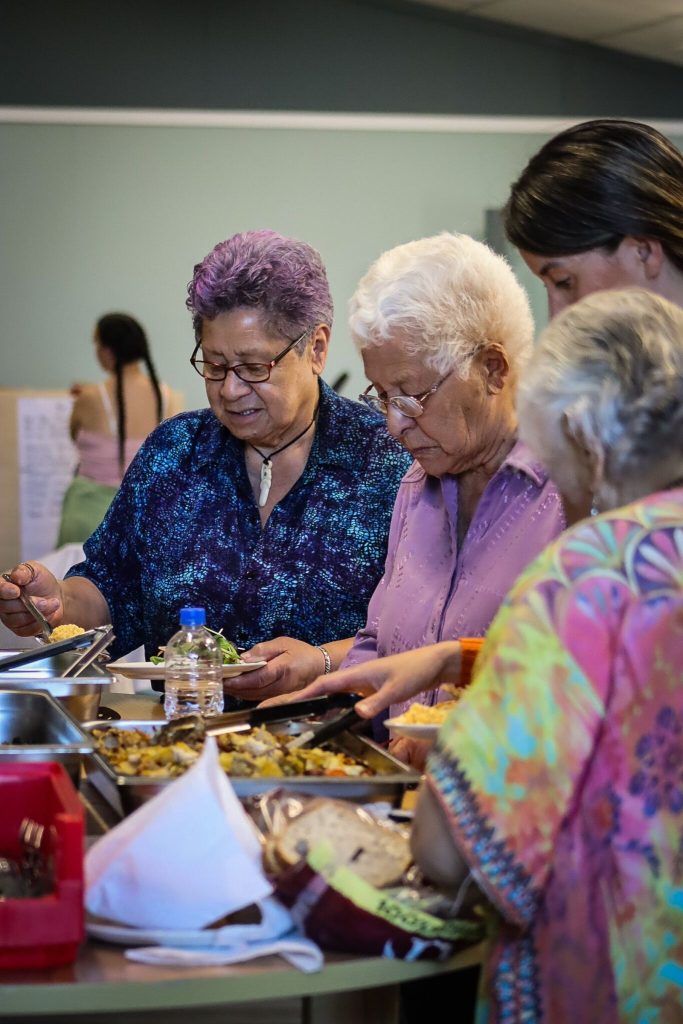
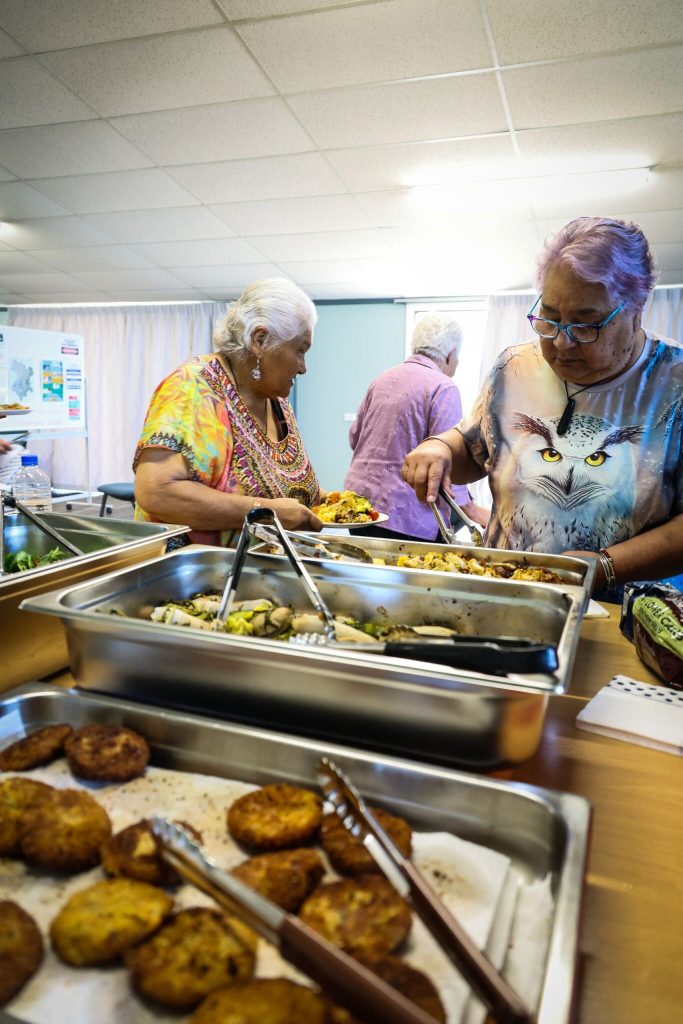
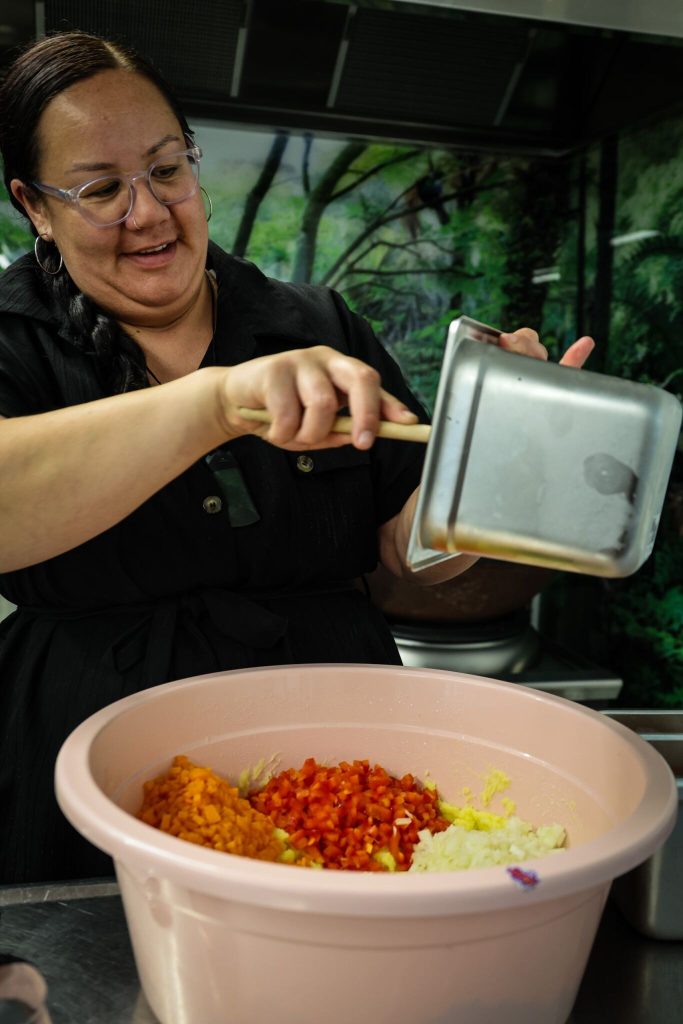
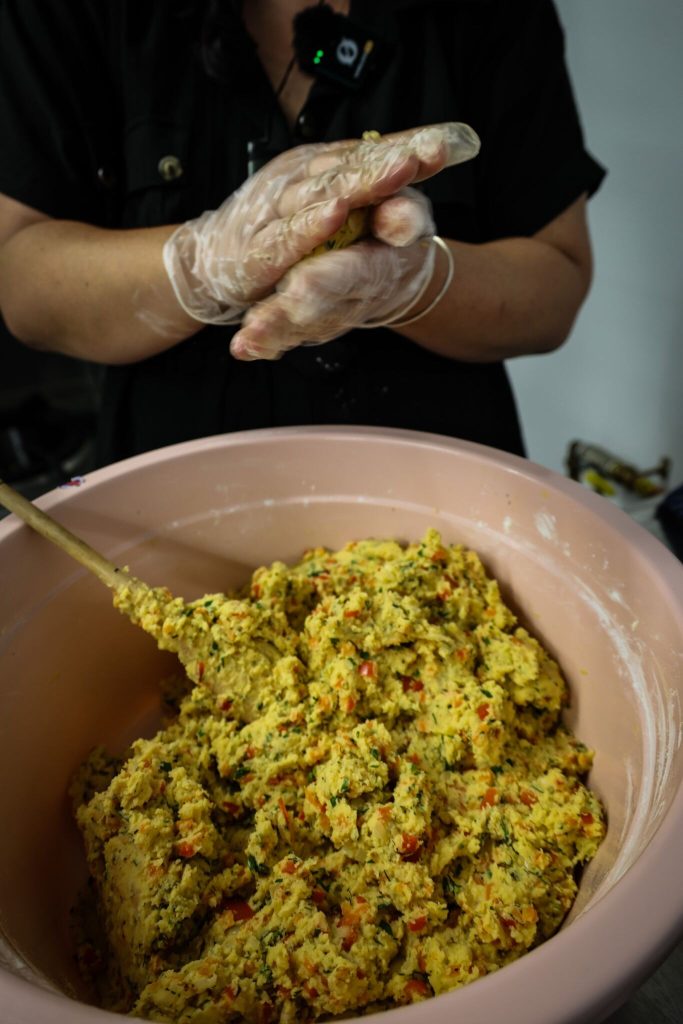
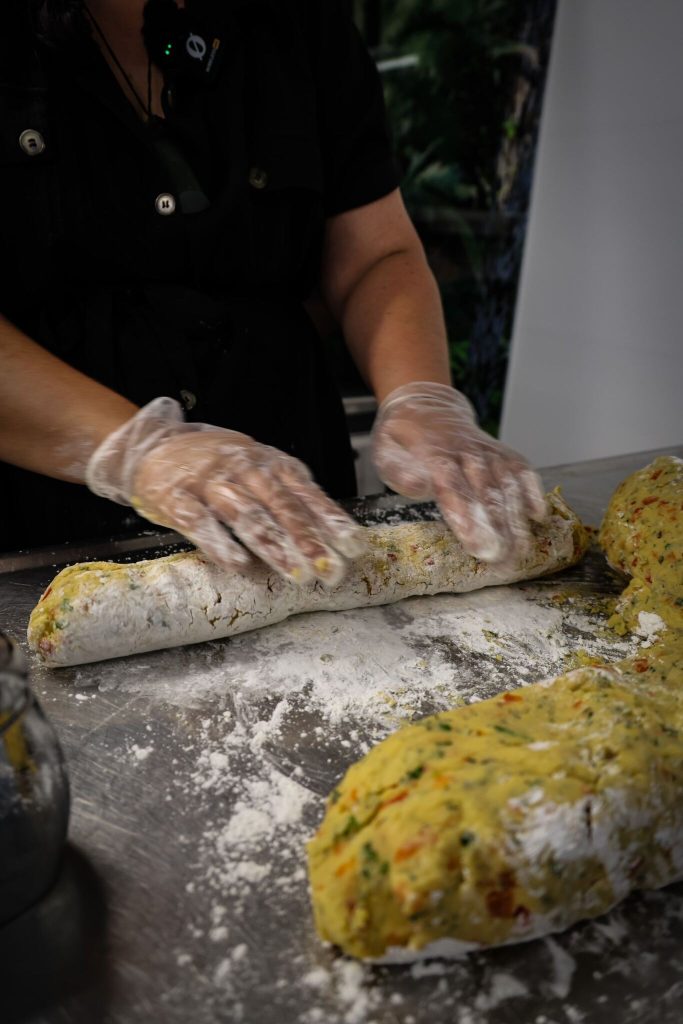
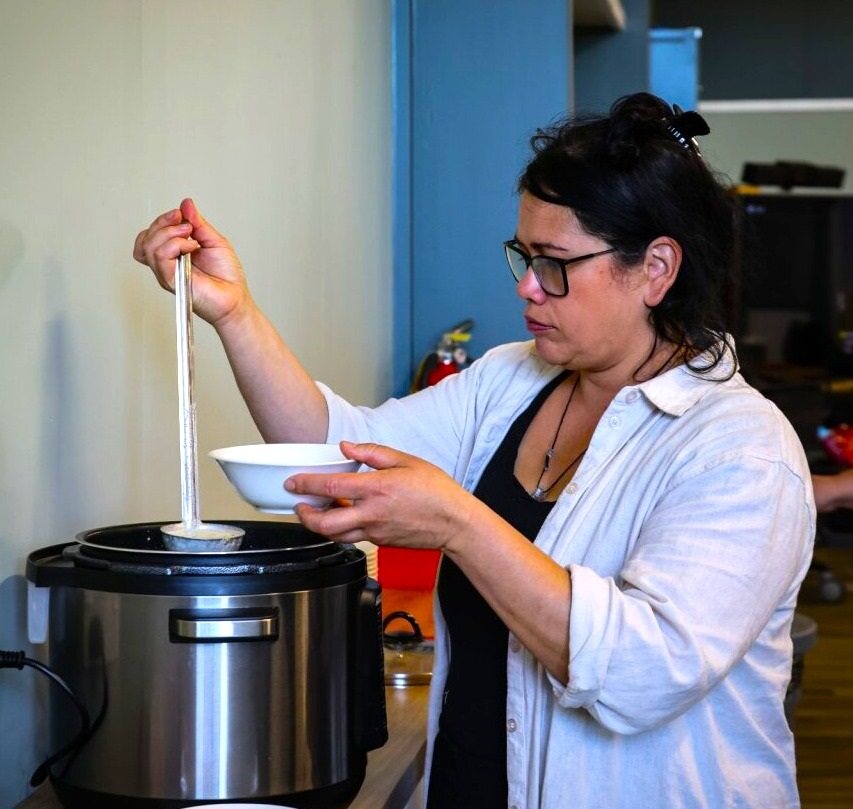
Feedback for the Kai & Catering
The kai was amazing. The menu was appropriate for the kaupapa – clean, healthy nutritious kai. Next to no processed kai. The salads were delicious, (reminds me of my dad in summer, he always had different salads on the go LOL). Lots of aroha was seen in the kai. I was always full after each meal, but never bloated. I loved the different varieties of teas. I sampled a few, and I continue to drink them today.
The kai I did have was beautiful. With my gut issues I stayed with the salad and fruit, and what I ate was delicious and nourishing. Thank you whanau for providing kai that felt gentle in my Tinana. Absolutely delicious kai and huge gratitude to all who poured their aroha into making it.
Delicious kai whanau! loved Krystals vege patties with the sauce, loved the bliss balls that Larnie made and the fruit salad that Treena made.
As always, the kai was amazing! Each wānanga it seems to get better and better. The salads were absolutely divine, and I really appreciate everyone who put their aroha, time, and skill into preparing such nourishing kai for us all.
I think this wa was the best in terms of the catering and organization of it. All the food was well thought out it and was all delicious. We are a great team out the back and everyone else is getting better at lifting her hands to mahi tahi.
Thank you to the Kai mahi, for the delicious and healthy kai. RAWE.
A huge mihi to our cooks.The kai was exceptional. I liked that it was the quickest meal prep to-date and alot less fuss. Loved the health benefits and minimal or no sodium added. I did not see salt or processed sugar on the tables. Tino Reka. The best part for me was that those in the kitchen got to partake in the wa and not be in the kitchen.
Kapa Haka: Koo Te Tiriti
Koo Te Tiriti – we really nailed it this time! Been trying for a few wānanga now. Very proud of you all for doing this. Well done!
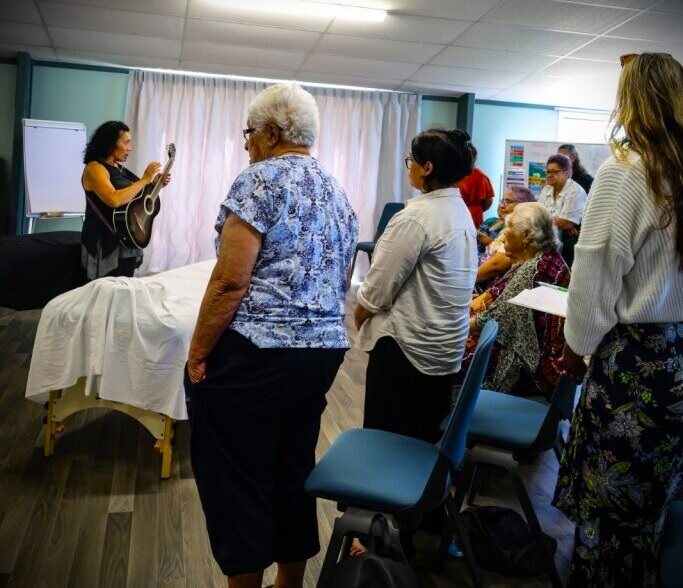
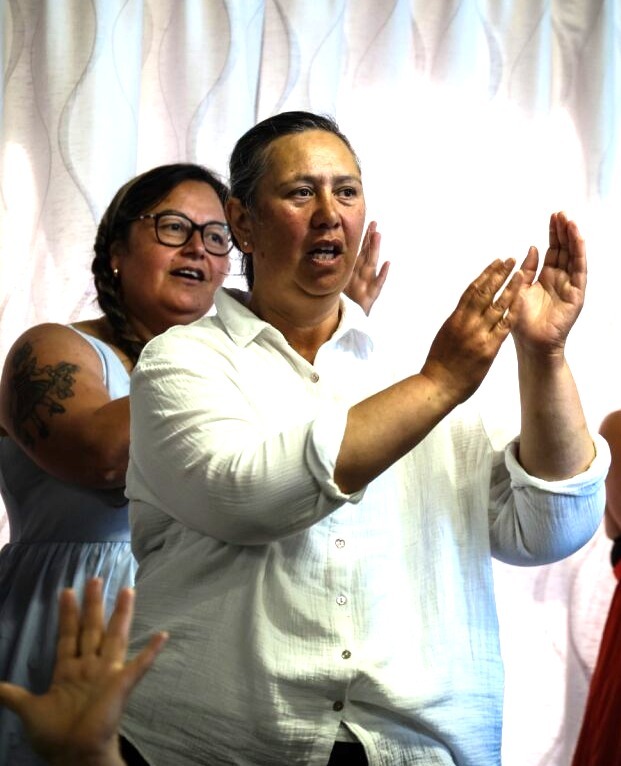
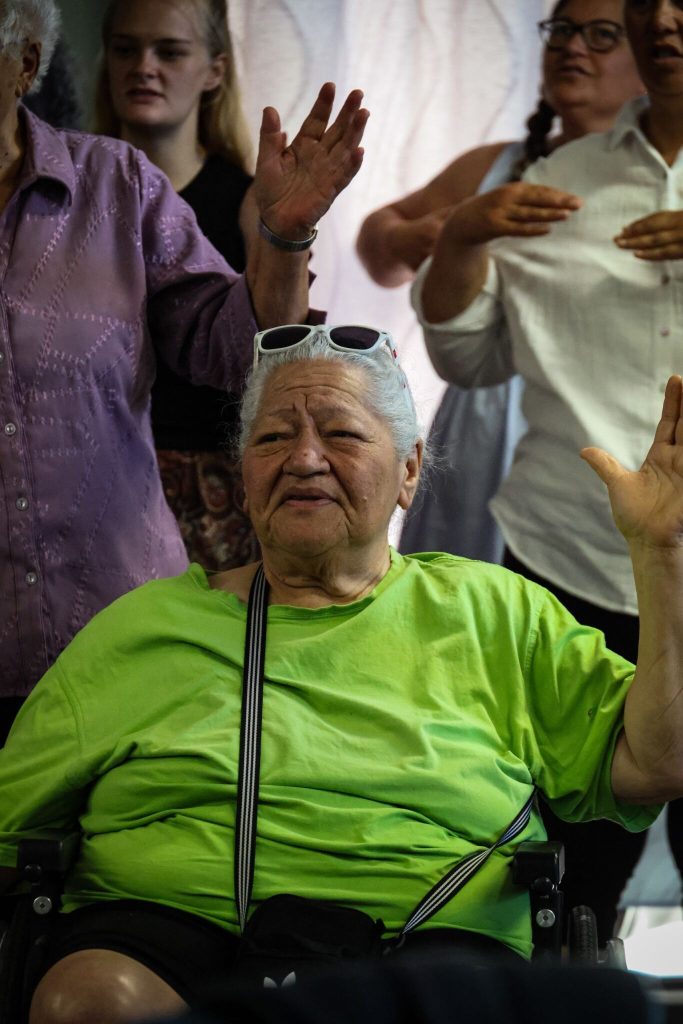
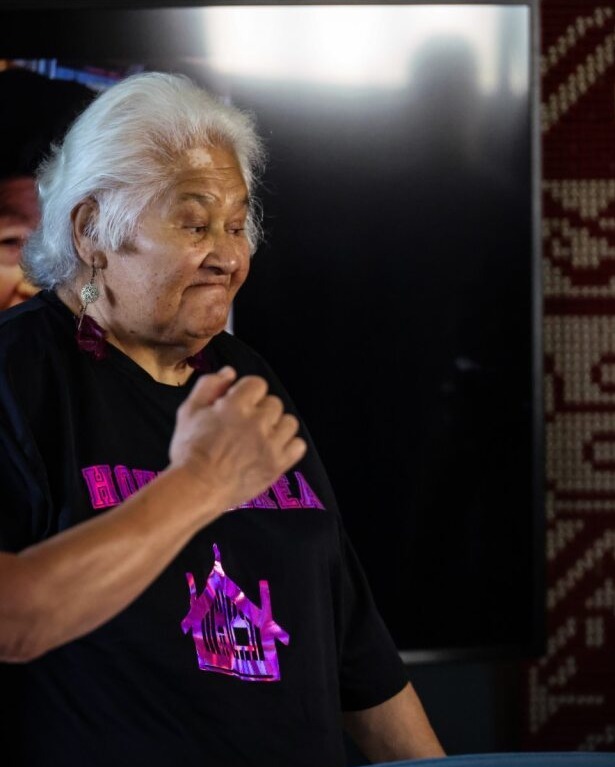
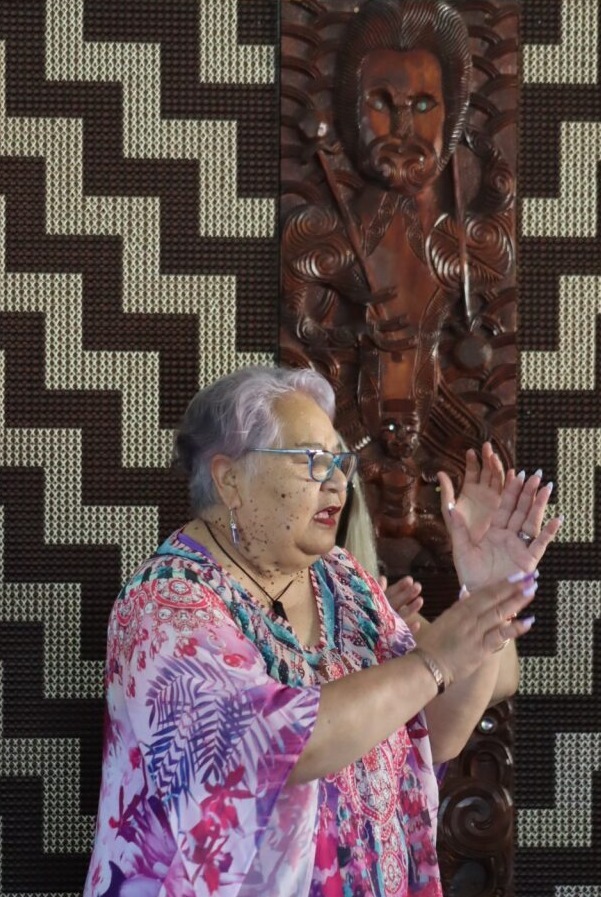
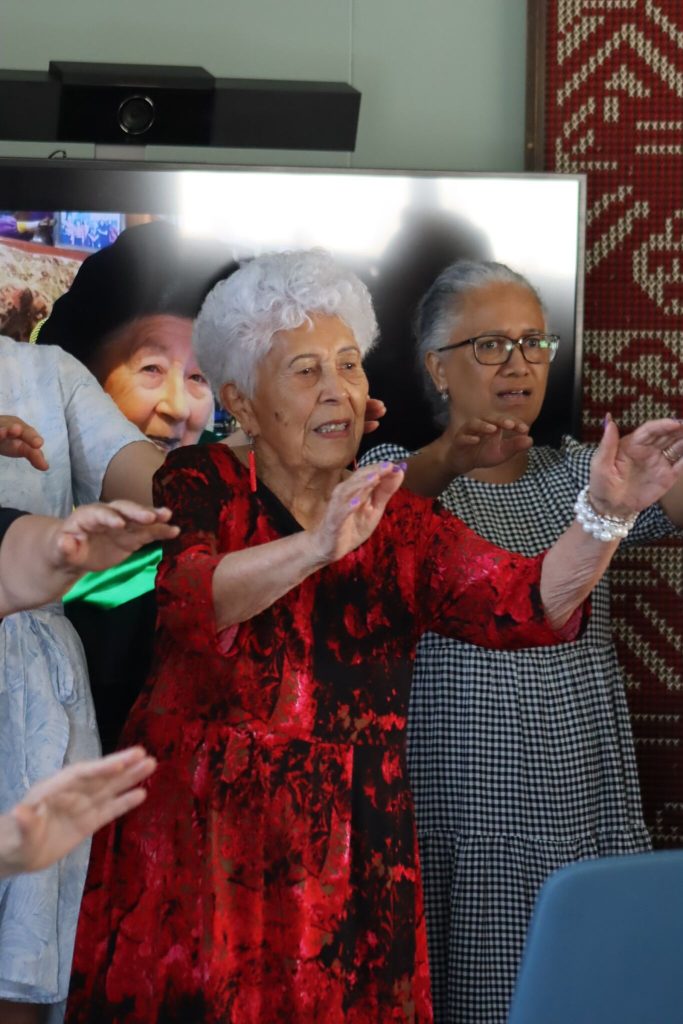
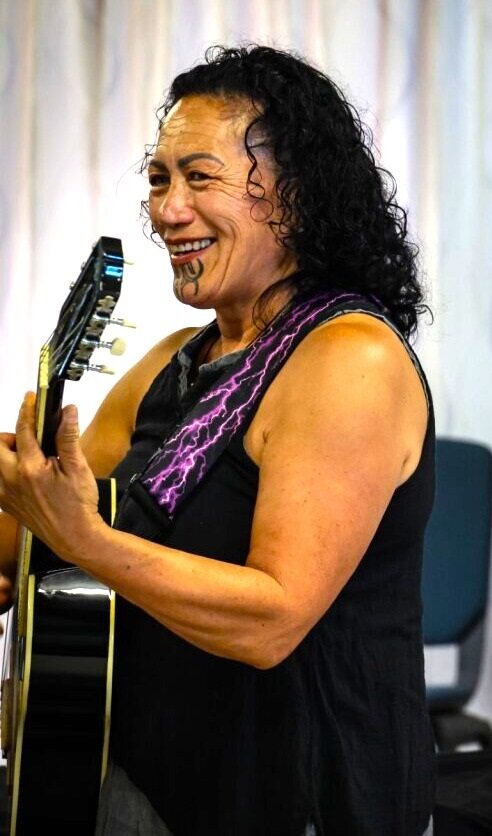
Feedback for Kapa Haka
I love all the time.
Waiata ringa such a difference from when we were doing it to this time, how its less pressure when you don’t have to do the singing and actions at once that’s a good way of learning.
He Kōrero Whakamutunga
Hei whakakapi ake, ka tuku mihi aroha atu mātou ki a koutou katoa i whai wāhi mai ki tēnei wānanga. Ka mihi hoki mātou ki a koutou, me ngā tūpuna i kawea mai e koutou, te aroaro huna o te whakapapa, o ngā maharatanga, me te mātauranga tuku iho i whakakaha, i ārahi hoki i tō tātou noho tahi i roto i tēnei kaupapa. Nā tō koutou ngākau māhaki, tō koutou māia ki te tuari, i whakakaha ake ai tō tātou māramatanga ā-kotahi, ā, i hōhonu ake ai ngā here o te whanaungatanga. Mā ēnei huihuinga ka whakanuia te mātauranga, ka kawea whakamua, ā, ka tuku iho ki ngā reanga e whai ake nei.
He Whakatauki: Mā te huruhuru ka rere te manu
English Translation
The tangihanga kaupapa was deeply insightful; however, I remain mindful of the significant number of whānau deaths that occurred before, during, and immediately following this wānanga. My cousin passed away in Kirikiriroa (Hamilton) the day before the wānanga began. On the first day of the wānanga, a young tāne was laid to rest at Hōungea Marae in Pakipaki, the marae of our Nanny’s present. On the Saturday night, Krystal’s niece died by suicide. This was followed by the passing of Priscilla’s mother on the Tuesday, and then Lisa’s lifelong friend the following day.
As a result, the mātauranga shared throughout the wānanga was immediately put into practice. While some may view these events as coincidental, the tohu associated with tangihanga is not a kaupapa that is taken lightly. In recognition of this, we have made the decision not to interview any further participants in the next wānanga.
Kua Ea: implies a state of being cleared “back to strength,” “restored,” or “empowered,” forming a strong foundation for life and growth.
We will, however, be working through the structure of karanga and whaikōrero specific to tangihanga, as these forms are distinct and unique. This will support your understanding in both te reo Māori and English, enabling you to confidently compose your own karanga and whaikōrero in a way that is easier to understand, retain, and deliver.
A Telegram page will be created especially for your reflections of this app content which will be added to this page at a later date.
Overall, I was deeply pleased with the wānanga, the level of participation, the strength of whānaungatanga, the sharing of lived wisdom, the beautiful kai, and the reflections. These elements collectively shape who we are and what we do, and they play a vital role in preserving our mātauranga for future generations of mokopuna and mokomoko.
In closing, as the creators, supporters, and those working behind the scenes, we extend our heartfelt gratitude to everyone who took part in this wānanga. We acknowledge not only those who were present in body, but also the tūpuna (ancestors) you each brought with you, the unseen presence of our Atua from whom we whakapapa, our collective cellular memory from past lifetimes, and our inherited wisdom that shaped our learning and held the space for us all to wānanga. Your openness, generosity, and willingness to share has strengthened our collective understanding and deepened our sense of connection to one another with this kaupapa. It is through these wānanga that our ancestral mātauranga is honoured and utilised within the whānau home, offering hope for the holistic wellbeing of future generations of Ngāti Kahungunu and Rongomaiwahine.
He Whakataukī : Mā te huruhuru ka rere te manu. With feathers, the bird can fly.
Ngā mihi aroha ki a tātou
Nā
Charlotte
Harata Meretana Ma Charitable Trust
Chair