Wānanga Three App Content & Quizz
To help retain traditional Māori healing mātauranga, we have created this digital platform in the form of a quiz. It is designed to help you actively engage with these ancestral lores, so you and your whānau can remember the deeper metaphysical healing knowledge passed down to us.
You may need to revisit the app content to find the correct answers.
This isn’t too serious, e kare mā. It’s light and a bit funny, which helps you engage with it and makes the mātauranga easier to remember.

A heartfelt thank you to everyone who generously shared your photos and videos on our Telegram Wānanga 3 page. We’re also incredibly grateful to those who took the time to provide thoughtful feedback on different aspects of the wānanga, helping us with our reporting and app content.
Most of your feedback has been included anonymously. Your contributions are deeply appreciated and add wonderful richness to our shared experience.
Ngā mihi ki a korua hoki, Charlotte and Mohaka from Kohuorangi Filming, for managing to capture some stunning shots of everybody at this wānanga.
Enjoy!
The Wānanga Journey
During registrations for this wānanga, a few people wondered if they could catch up on the content from the past three years and whether joining now would truly make a difference. I shared that every journey is unique, and that there is value in beginning at any stage. We were inundated by registrations this time so we had to close registrations early as we were not able to over 66 people to sleep in the whare nui. In the end, we had to ask those who lived close by and those who were travelling from afar, if they could possibly find affordable accommodation in Hawkes Bay. In support, the marae extended the numbers we were able to have to ten more and so, with these strategies, we managed to deal with the overload successfully.
Please be aware that not everybody will engage on the Telegram pages even though we encourage you all. It can be scary for some due to whakama, not feeling confident in reading and writing skills. So, this is why we try to do recorded feedback as well as feedback on the Wananga 3 Telegram page as this helps us with the reporting to Te Whatu Ora who funds our wananga. Likewise, not all have been able to provide feedback but those who did, will find this at the bottom of this page.
Since Te Waka Tapu o Takitimu Wānanga began in 2023, we’ve seen whānau come and go over this time. Maintaining a safe space grounded in mutual respect for our Te Ōmai Reia Romiromi whānau is essential to the collective wellbeing and healing of Te Waka Tapu o Takitimu Wānanga. At times, the Harata Meretana Ma Charitable Trust has had to take measures to protect our Te Oomai Reia whānau. Some whānau were asked to leave the wānanga due to ongoing excessive alcohol use, recreational drug use, aggressive behaviours, and inappropriate conduct relating to historical sexual predatory behaviours toward children and rangatahi. While some were referred to relevant health services in the community, there are those who are not able to return to the wānanga due to complaints from the tauira.
Each person’s healing journey is different, as are their learning outcomes. One size does not fit all. For some, life unfolds alongside the wānanga, family challenges arise, and tauira get off the waka until they’re ready to return. Others need time to absorb the mātauranga and apply it in their own lives, returning only after having a realisation, otherwise known as the AHA moment. To ensure a safe, supportive, and culturally grounded environment for everyone, especially our wāhine, tamariki, and rangatahi, the Harata Meretana Mā Charitable Trust asks that all tauira commit to doing their healing work both during the wānanga and in the periods between wānanga. This is the point of providing content like this so that you will be able to retain the knowledge and add this to your kete.
There are those who have not missed a single wānanga, our tuakana, who not only work on themselves during the wānanga but also apply the mātauranga of things learned into their everyday lives, in between each wānanga. As tuakana, they are expected to role-model as they have made the committment to work on themselves and this transformation has been life-changing for many. Monitoring the ‘transformation’ on your own healing journey ensures that Te Oomai Reia Romiromi becomes a ‘way of living’ rather than just something you turn to when you become unwell.
Mātauranga Romiromi
These wānanga are not like university courses where you complete the programme, receive a tohu, and then call yourself a practitioner. It takes decades to become a romiromi practitioner as maintaining your own wellbeing in the energy of unwellness continues to be a challenge on this journey. Dr Rose Pere used to liken it to being on the front lines of war, where the energies coming from many whaiora Māori with high needs often present intergenerational trauma, domestic violence, drug abuse, trauma, chronic diseases and mamae. Learning how to know yourself, when you are well, when you are becoming unwell, knowing when to clear yourself and how to bring yourself back to some normality after a heavy session.
Te Ao Tohunga/Tohuna is not readily availble online to support us when we need it the most so being diligent in our own healing is vital if you choose to work in the healing disciplines. Research is ongoing to better understand the Western health diagnosis and treatment plans, many of which do not heal our people and instead create a dependence upon a system that has historically never worked for our whanau due to the lack of cultural and spiritiual phenomena.
The metaphysical depth of mātauranga romiromi is profound and very effective for our people. It is always important to always begin with the foundational teachings. Safety is paramount in all of our wānanga. The ancestral knowledge of our healing traditions provides the base, but knowledge on its own, is still only knowledge. Without lived experience, it will not become wisdom.
As the foundations are strengthened and embodied, space is created to introduce deeper techniques, rituals, and a more in-depth exploration of whakapapa, including the divine feminine within the wānanga. It is the divine feminine who are all about intuition, caring, loving, supporting, feeding and cleansing.
In time, the mātauranga romiromi shared becomes more than a technique; this experiential learning becomes ‘an every day part of your life’. In time, this lived experience becomes your own healing wisdom.
We may revisit the same kaupapa more than once. Each time we return, the understanding deepens and becomes clearer. As growth unfolds, the learning becomes richer, more meaningful, and increasingly aligned for our tuakana.
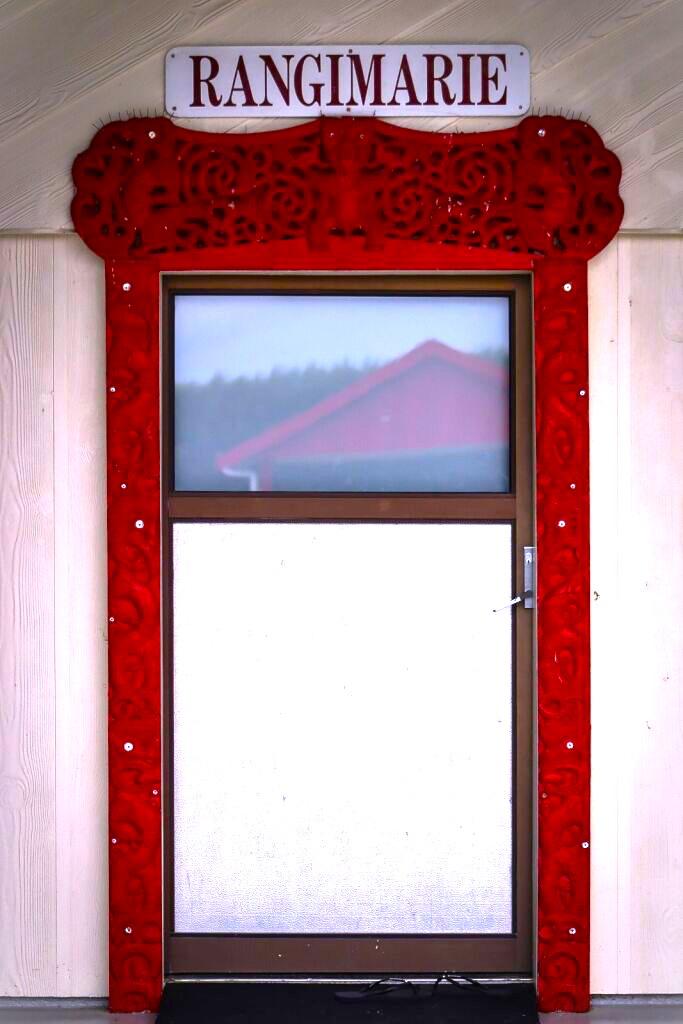
Venue: Moteo Marae – 16th – 18th January
For this wānanga, registrations exceeded all expectations. We were inundated and had to close registrations four days early due to the health and safety capacity limits of the wharenui. Even after closing registrations, the number of whānau intending to stay on-site exceeded what the marae could safely accommodate.
As a result, we contacted registered tauira to ask whether those who were local might be able to return home each evening. We also had whānau travelling from Australia and from across both the North and South Islands. Some of these attendees were asked whether they could arrange alternative accommodation, so that those who were not so financially well-off could stay at the marae.
Pepeha
Ko Tuhirangi te maunga
Ko Tutaekuri te awa
Ko Takitimu te waka
Ko Ngāti Kahungunu te iwi
Ko Ngāti Hinepare, Ngāti Maahu, Ngai Tāwhao ngā hapū
Ko Moteo te marae Ko Hareti Te Kuru te whare tipuna
Ko Hamuera te whare kai
Ko Paora Kaiwhata te tangata
This is the marae of my grandfather, Mei Penetiki Heremia who married my grandmother from Mahia, Keita Heremia nee Greening. My grandfather used to ride on a horse from Moteo to see my grandmother in Mahia. My grandfather was the bell ringer and used to say ‘Kua mutu te tangi o te pere, kua tai mai te wa o te Apotoro’.
It was not until my 40’s that I found the courage to come to the Moteo marae. I had in the past had difficulties getting any information for my assignments when I was studying at Te Wananga o Raukawa. The answer I got was ‘Ko wai koe?’ I persevered and found the generational raru and makutu on our marae was very real. The kuia were whakama and a young wahine stood on their mana and did the karanga on the marae for many years. Once I found out my whakapapa, I opened up a closed private facebook page and put up our whakapapa and research I had been given by some of the kuia about the Moteo marae. The following whakakaaro is from the kuia Charlotte who is looking after the marae bookings.
Although the name Rangimarie sits above the doorway of the wharenui, our kuia, the kaitiaki of Mōteo Marae, shared this important whakapapa with us. Her name was also Charlotte. Her own kuia, Hareti Te Kuru – the partner of Paora Kaiwhata, was the original landowner of the Moteo land blocks before our next generation of whānau succeeded to the whenua. We live in hope that our next generations of mokopuna return the mana of the kuia and the Atua Wāhine to its rightful place on our marae and to our whakapapa. As we reflected on this history together, we came to understand more clearly how colonisation and the introduction of religion reshaped our cultural narratives over the generations. In many ways, this process rendered our wāhine, our kuia, and our Atua wāhine invisible within our own spaces and stories.
To restore that balance and honour rightful lineage, I have placed the name of this kuia as the true name and korowai of the wharenui at the Moteo Marae.
On other marae within our rohe, the tikanga of our wharenui has long been referred to as the korowai that shelters and holds the whānau during wānanga and for all kaupapa in the whare tipuna. For e.g. in the karanga I welcomed our manuhiri like this … ‘Nau mai haere mai ki te wānanga o te mātauranga a kui mā, a koro mā, i raro i te korowai o te whare tīpuna o Hareti Te Kuru eeeee’.
In the same way, this will be our foundation as we continue our wānanga, that the wharenui stands as a korowai of protection, restoration, and remembrance, upholding the mana of our kuia and our Atua wāhine at the very core.
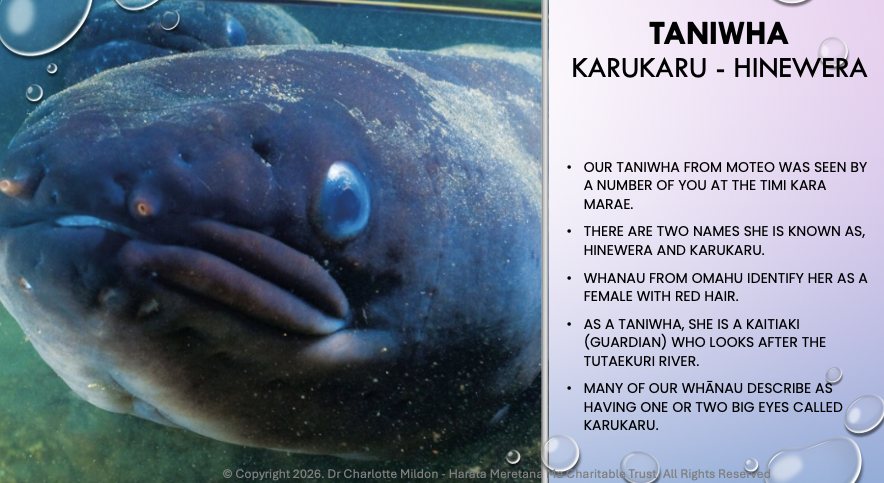
Some of you may have seen our local taniwha Karukaru, during our wānanga, also known as Hinewera. For some, she came out when we were doing the purepure on the whenua. She also came when we were doing the clearing of the land a year ago at the Timi Kara marae just down the road.
Understanding our kaitiaki can frighten some of you who have not been raised with it. Growing up, I had been conditioned in the American Jehovah’s Witness Christian faith where Tohungatanga was seen as black magic and evil. It took me many years to get over this fear. I tried to push the spiritual abilities I possessed down to stop them but they wouldn’t stop.
Many of us have been raised in an ego-driven system (or religion) that isolates us as individuals, separate from the natural and spiritual phenomena of nature. So rather than ‘being’ an integral part of everything that exists in the universe, we can often feel alone. When travelling around the world with the late Manu Korewha, he would often have to speak to huge crowds of people before we started our work, and someone would have to be a translator, as he would often call out YOU ARE NOT ALONE! Many would start crying.
From a Te Ao Māori worldview, our personified Atua (both genders) and the natural phenomena they represent are more inclusive, where they are part of us, and we are part of them.
LIke for instance, the story about the spider on my bathroom wall and the mirror before, and each day during the wānanga. The spider disappeared after the wānanga, then many weeks later, while writing this content, my friend the spider returned and was looking at itself in the mirror again. I don’t consider the spider to be so pretty, but it was admiring itself in the mirror, and I realised that I probably don’t look so pretty to the spider either.
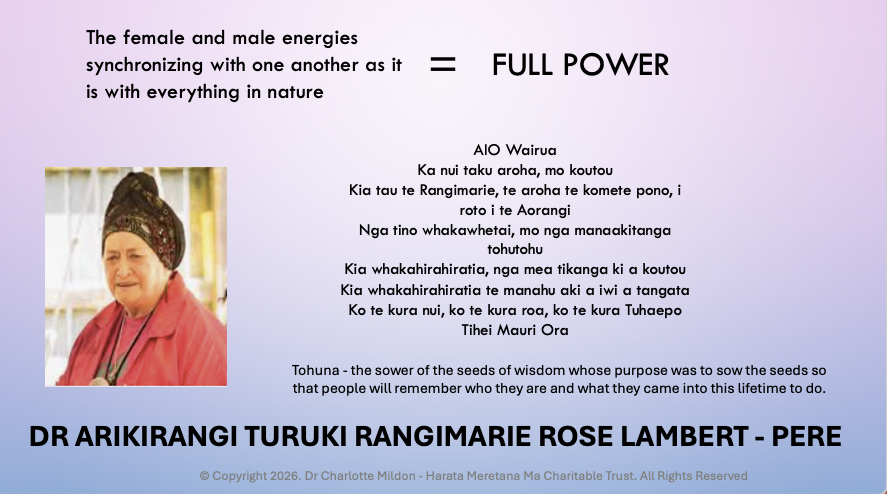
Either way, … He tohu pai tena! This is a divine sign that many will miss from being stuck in the mind rather than the whatumanawa. As Dr Rose Pere said, the spider is a divine sign with its 2 parts of the body and its 8 legs, which equals 10, which she equates to being IO. Note that the vowel sounds of Rikoriko are also similar to IO. The male and female energies are synchronising perfectly with one another, just as it is in nature.
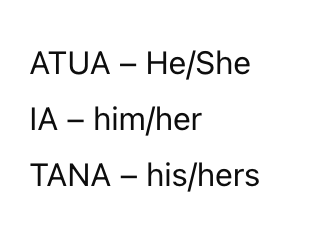
In te reo Māori, these words are not gender-specific. The missionary Christian religion that colonised us in the 1800’s has conditioned contemporary Māori beliefs around tohungatanga so that it remains hidden and/or invisible. This is not Māori, because in our spirituality, everything reflects both male and female energies, just as it does in nature.
In the process of decolonising ourselves, why have we accepted the idea that our Atua is only male, with no female counterpart, when Māori spirituality has always embraced both?
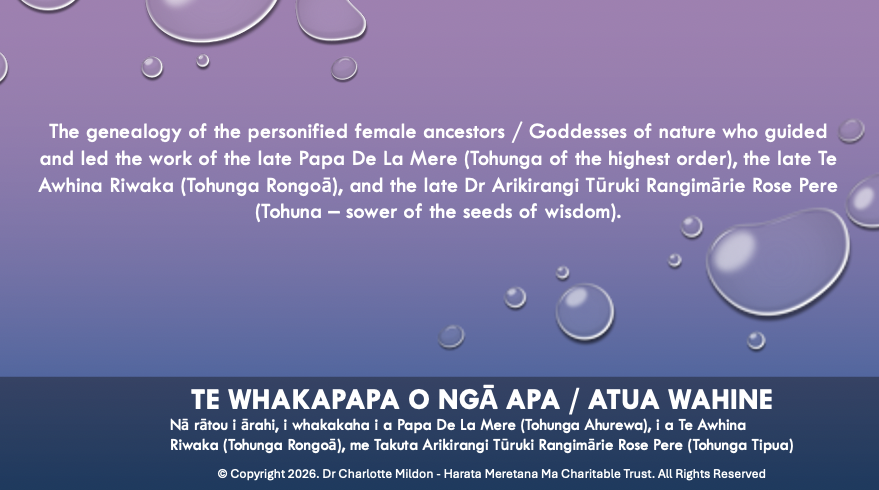
This embodies a core Māori philosophy of inseparable oneness with our whenua and her progeny in our natural environment. This concept (whakapapa) affirms that we are not separate from nature, but part of the living, nurturing Atua of our land, air, earth, water and those beings from other planets.
“Ko au, ko Papatūānuku, ko au Papatūānuku”
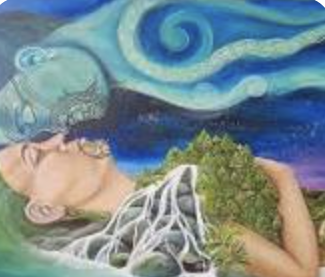
I AM Earth Mother, and Earth Mother is ME
The whakapapa creation stories identify the first partner of Papatūānuku as Tangaroa, who was taught to romiromi her by our Goddess of Romiromi: Rauhine/Ruahine.
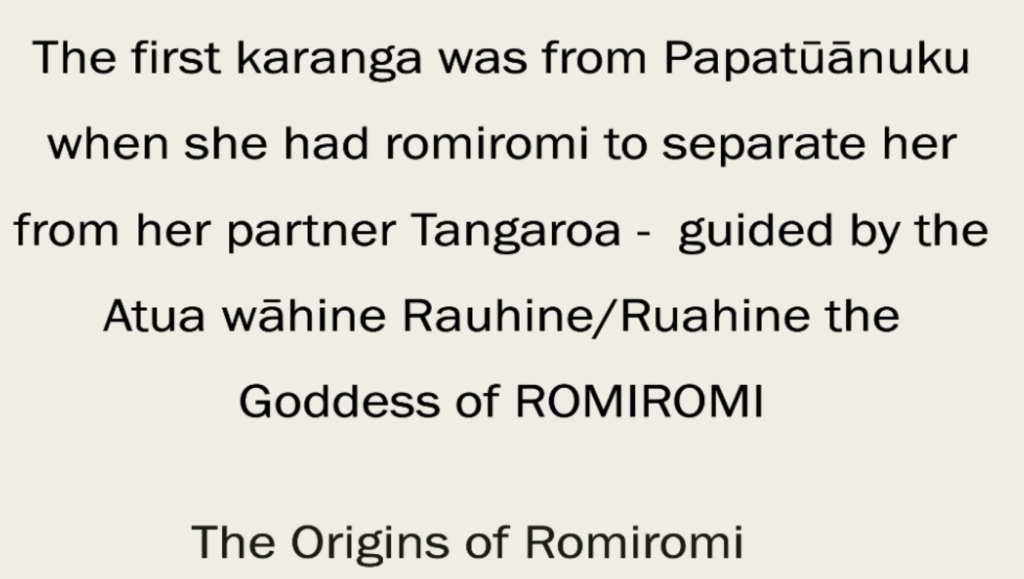
Only once she came up from the waters did she let out the first karanga.
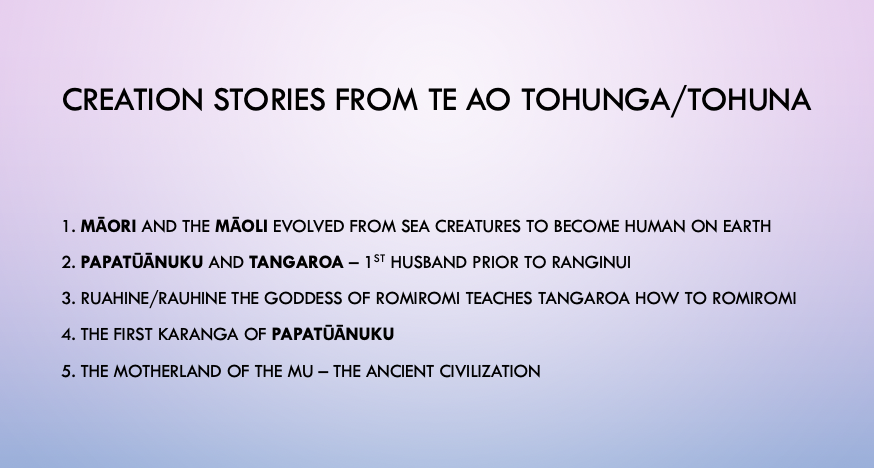
Just as our whakapapa goes back in te ao Tohunga/Tohuna to acknowledge both the male and female Atua, so too can we restore the authenticity of the feminine principle for our pepi, tamariki and rangatahi as our future bearers of ancient mātauranga Māori.
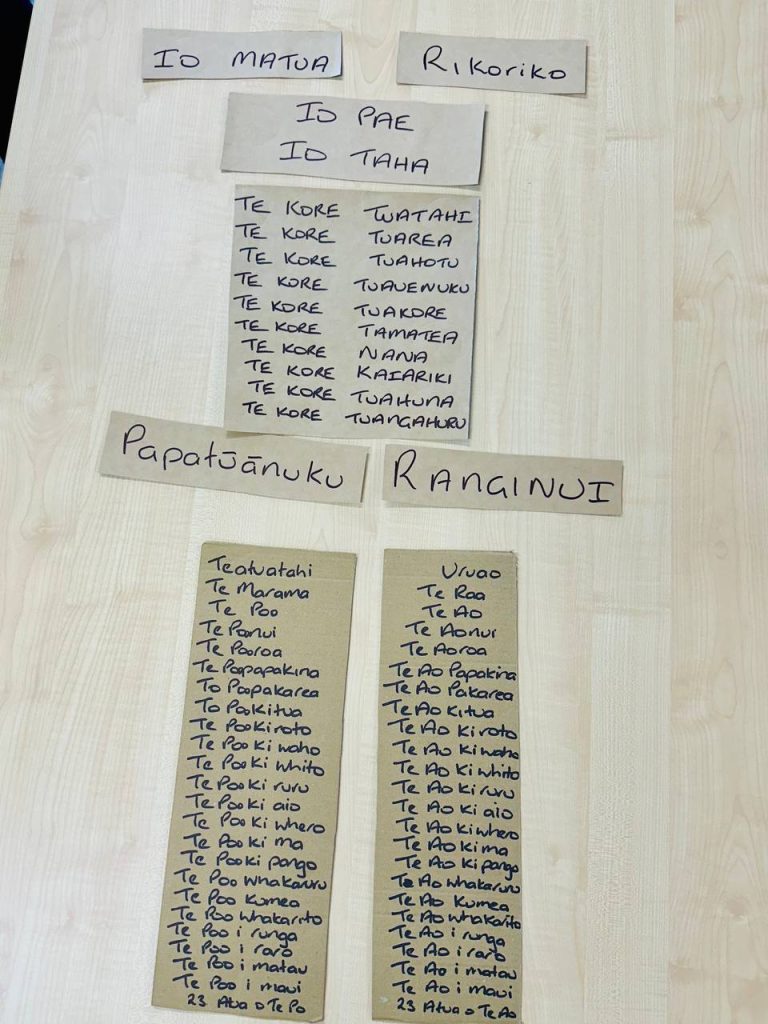
The whakapapa below was 11 years of research, a combination of expertise from the late Tohuna – Dr Rose Pere, the late Hohepa De La Mere – Tohunga Ahurewa and the late Te Awhina Riwaka – Tohunga Rongoā.
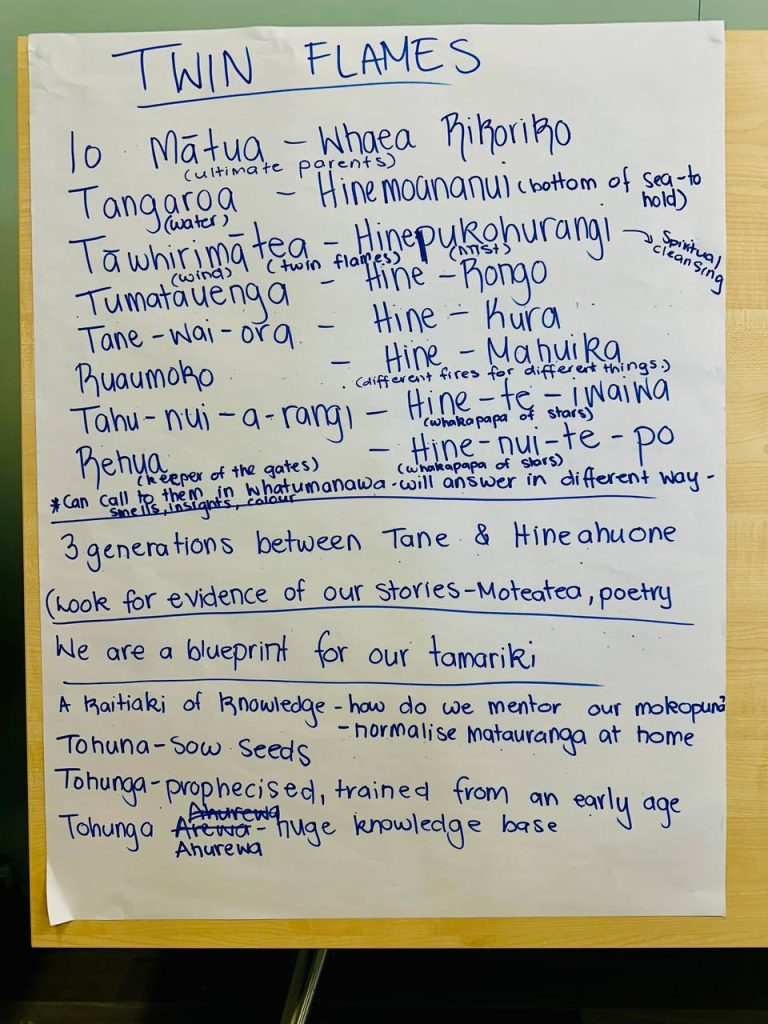
These twin flames were introduced to me by Dr Rose Pere, Tuhoe Tohuna, who mentored me for 17 years, more especially trained me in spiritual warfare. The knowledge she shared with me was deep, metaphysical, esoteric, ethereal, and mystical, which was only available to a specific people who had access to these spiritual guardians, ancient beings who, according to Dr Rose Pere, have existed for thousands of years.
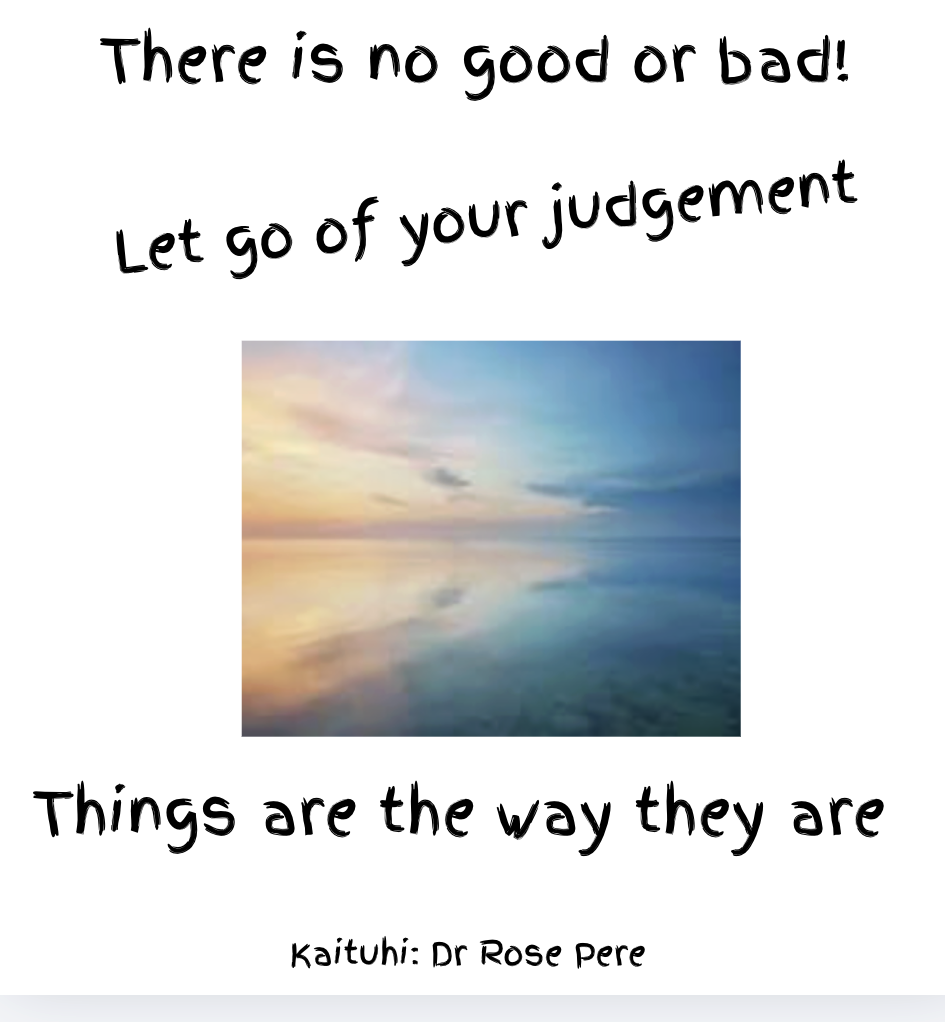
If we want to heal our whanau, then we need to focus on healing and loving ourselves deeply and dearly without judgment. Being able to accept yourself … just the way you are is a lifetime journey. It requires a silencing of the mind which is not as simple as it sounds, but when we do our breathing regularly, we can get a rest from the ongoing stinking thinking to gain access to the whatumanawa. At the end of the day, it means you have to discipline yourself to put your breathing into your everyday schedule so that you can surrender your human ego created in the mind so that you can gain access to the whatumanawa and therefore be in the divine ego.
The late Hohepa De La Mere from Whitianga. Such a gentle, humble man who lived in divine ego.
As taught by Papa De La Mere, I realised that it is an ancient reo that links in with the ‘voices of nature‘. The reason it is difficult to understand is due to our being raised and conditioned in the Western world of education, and all the Crown systems, historically, would not accept the healing lores of our ancestors. Only those who were fluent in traditional Māori healing lore, practices and rituals can be at one with everything that exists, all galaxies, all planets and life forms. The authentic Tohunga/Tohuna have a keen awareness of how all things are interconnected, like the universal oneness and a cosmic consciousness.
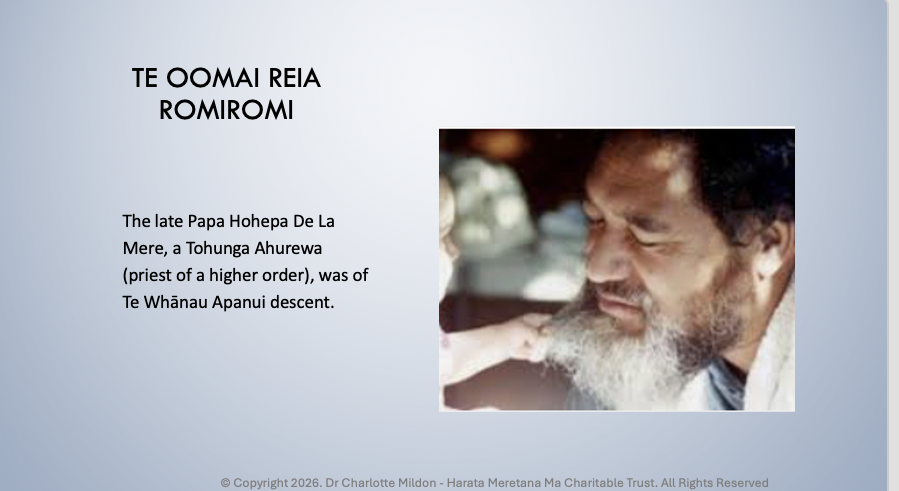
In 2003, I studied Te Oomai Reia Romiromi nearly every weekend with Papa De La Mere in different places throughout the North Island. Some were nine-day wānanga focused on Te Whatumanawa, which I later realised is the most important part of romiromi.
On one occasion, a wānanga that was meant to be nine days extended to eleven. One of the tauira asked Papa why we had to stay for eleven days. He quietly replied, “It’s Charlotte.”
When I went to ask him what I had done for this to happen, he explained that while he was teaching us how to shift our consciousness and spiritually travel to other locations, he could not leave me. He said I was travelling all over the world, and he needed to stay with me to make sure I was safe.
I was shocked and immediately apologised, as I was not aware I was doing this. I asked him how I could stop it. He gently said, “You can’t stop. I just have to make sure you are safe.”
In 2006, 3 years later, I was asked by Tohunga Romiromi from Ahipara, Atarangi Murupaenga, if I would be interested in travelling with the Maori Healers, which meant travelling around the world with them. Papa De La Mere foretold my journeying with them, 3 years before it happened.
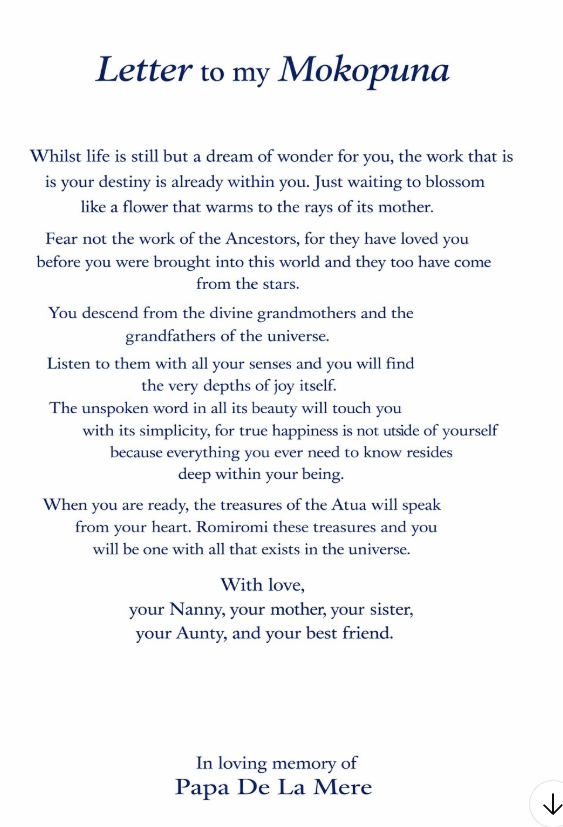
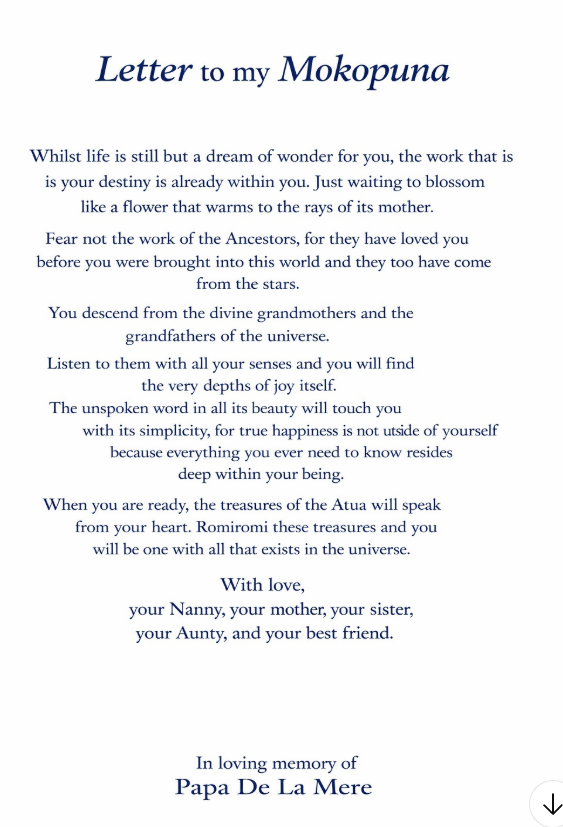
I wrote this letter to my mokopuna in 2003 as requested by Papa De La Mere at a Te Oomai Reia Romiromi Wānanga. We had no funding to do these wānanga, and the tauira raffled off blankets to raise funds, and many of us would koha kai and putea to help pay for the marae venue and the kai.
WHAKAPAPA OF OUR MĀTAURANGA ROMIROMI
When we examine the whakapapa of romiromi with both the Atua tāne and the Atua wāhine, it shows the perfect synchronicity of the male and female elements working side by side. The whakapapa goes right back to Rauhine/Ruahine, te Atua of Romiromi, who worked with Tangaroa to romiromi Papatūānuku to separate the wai from the whenua. This was a time when there was not land and everything was water. The authentic healing Tohunga (priest/priestess) and Tohunga Ahurewa (priest/priestess of a higher order) have long performed takutaku to invoke both the male and female Atua, who are intricately woven right throughout the takutaku.
Hinekorako and Ruamano rode on either side of the Takitimu waka. E ki a Whaea Rose Pere, Hinekorako, the rainbow was a tipua, and her brother Ruamano was a taniwha. These two siblings raced each other on the Te Wairoa Hopupu Honengenegne Matangi Rau river. HInekorako beat her brother and headed to Te Reinga, while her brother Ruamano, rested at the awa o Te Wairoa. Click on this link for the pūrākau by Dr Kiwa Hammond.
As mentioned at the wānanga, HInekorako and Ruamano also rode on either side of the Horouta waka from the East coast (1000 years prior to the Takitimu waka). The Takitimu waka carried the Tohunga, both male and female, and no doubt they would have brought their mokopuna aboard as mentoring them was a lifetime mission. These two kaitiaki were also on either side of the Horouta waka as discovered in moteatea. As the tuakana to the Takitimu waka, it is no surprise that the same tipua and taniwha were kaitiaki, as these magnificent beings are timeless in essence and are still with us in these contemporary times, but visible only to the chosen few.
For those of you who took the time to work on until dinner time, practising the romiromi, well done! Our tuakana of the wānanga were there to tautoko you. Be mindful to practice on your whanau first, as this is a safe place for you to learn romiromi. There are some who go to one romiromi wānanga, then call themselves a kairomiromi. E hara!
It takes decades to become a kairomiromi. The late Manu Korewha was very humble, and he would call himself a kairomiromi, when really he was a Tohunga Ahurewa (priest of a higher order), taught from an early age.
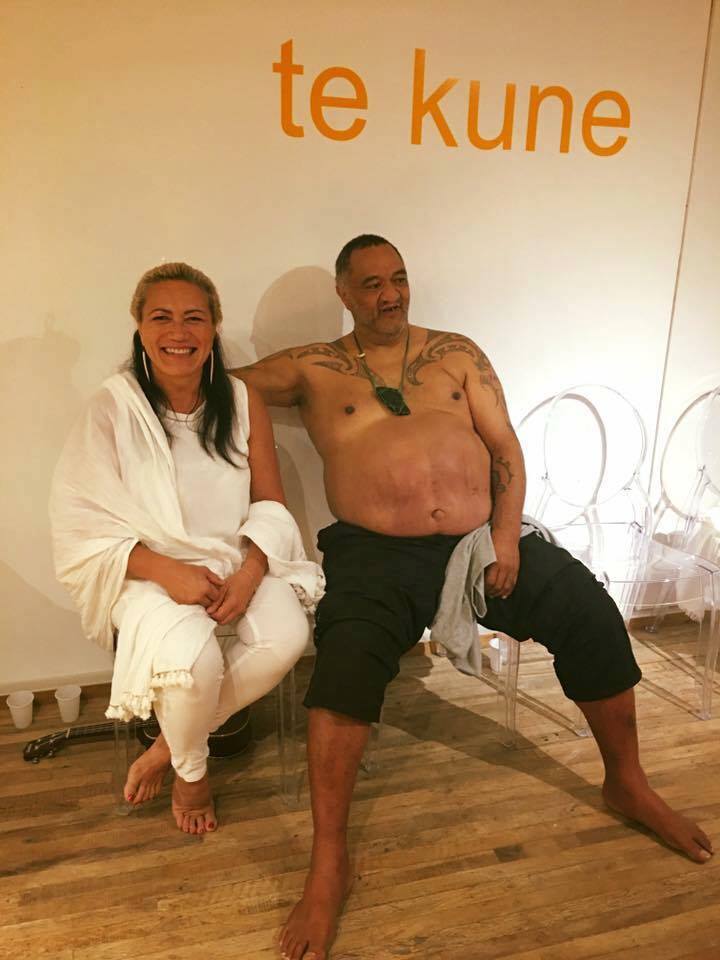
This is Manu and I working in Sao Paolo, Brazil. Over the thirty years of being mentored by Tohunga, I witnessed how early they died. Manu died at the age of 52, and Papa De La Mere died at 60. It is hard work working overseas with the Māori healers as you are away travelling 6 months of the year and you are all upside down, not knowing what day it is, what flight you have to catch or what hotel you are going to stay in, not to mention eating food in a restaurant when you can’t read the menu and when it came out it was nothing like what you expected.
I wondered if the Tohunga dying young was due to their breathing in the hara, mamae, and ngangara (spiritual entities) and other people’s mauiui (energy) with the purpose of their whaiora becoming well. This was often how our old Tohunga worked, as they knew how to release it at a later date.
I also learned how to do this many years ago, and it came naturally for me. More especially, I would do this for tamariki with chronic diseases where the Drs said they were going to die. If you do not know how to let them go, however, then this can make you very unwell, heavy and laden with the energy of mauiui, and this is an ongoing topic for each wānanga. Who heals the healer?
So, when I saw how unwell and how young our Tohunga died, I started to see things differently and made the decision to change the way I live, drink and eat. Watching how so many of the Tohunga didn’t drink any water, no raw vegetables, with loads of unhealthy foods like carbs, sugar, coffee, energy drinks, alcohol, red meat and takeaways. Self-healing starts in the home.
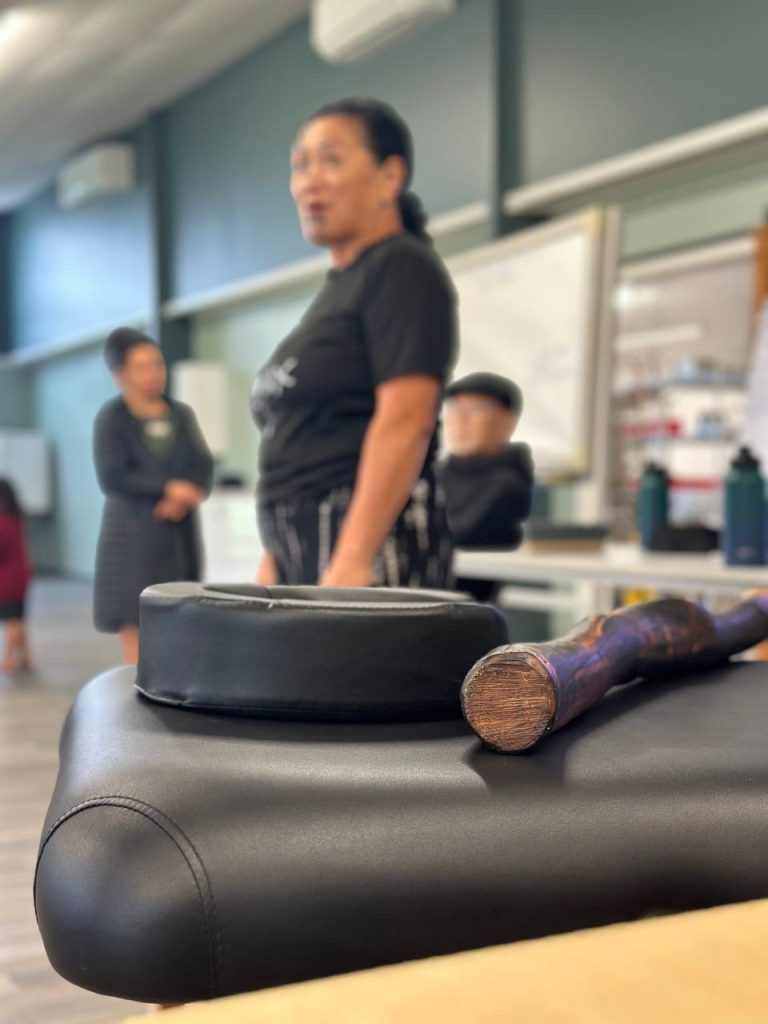


Here’s a 2017 interview with Radio NZ. As the director of the Māori Healers for over 20 years, the interviewer did not think to include Atarangi Murupaenga in the interviews, yet she is a Tohunga Romiromi who was mentored since she was a child. I was disappointed that they portrayed Manu as just a Romiromi practitioner when, in fact, he is a Tohunga Ahurewa. The interviewer seemed to think my doctoral studies were more important than Manu, but really, Manu was simply being himself, so humble.
The wānanga, dubbed Let’s Romi, was led by Atarangi Muru, a well-known Māori healer from Ahipara, and Manu Korewha, a Romiromi practitioner. The three-day wānanga had over forty participants from all over the country and from as far as Australia.
“There are people who have come to this wananga who have never experienced anything Māori. Atarangi and Manu have a way of drawing out the best in us,” said Moana Skipworth-Lousi.
Organiser and healing practitioner, Moana Skipworth-Lousi, runs Manaaki Therapies in Hamilton, specialising in rongoā Maori, reflexology and massage therapies. Raised in a family of ten in Auckland, the experience of Māori healing practises began at a young age.
“I grew up in an environment where I was very aware of Wairua”. (Moana) Photo: RNZ/Justine Murray
Charlotte Mildon says she was sceptical at first about Māori healing practises due to her religion. Photo: RNZ/Justine Murray
Charlotte Mildon is studying towards her PhD at Te Whare Wānanga o Awanuiārangi, as a massage therapist by trade, her foray into learning about traditional Māori healing practises was met with scepticism.
Growing up in a Christian household, she said she had little understanding of Māori healing.
“I thought it was evil and black magic because I’d been taught that – it was in the bible,” said Charlotte.
Charlotte has been a massage therapist for over 20 years and since 2003 has learned more about Māori healing practises with Papa Hohepa Delamere.
She practises the Māori healing philosophy Te Oomai Reia, where she works on the physical, spiritual, mental and emotional well-being of her clients.
Her doctoral thesis will research the education of Romiromi and other forms of Māori healing to achieve whānau ora or family well-being. Charlotte is also well versed in traditional healing and was taught how to takutaku, a formal prayer said while healing practises are carried out.
She regularly travels overseas with Atarangi Muru.
“When you do this type of mahi, the person becomes aware of their own body, their own spirit, they know when things are right or not right.”
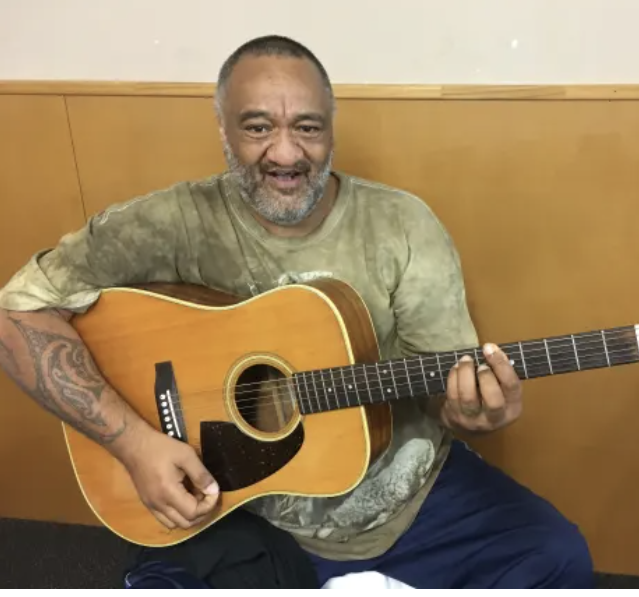
Manu Korewha has travelled the world sharing the practise of Romiromi and mirimiri (traditional healing massage). Photo: RNZ/Justine Murray
During the wānanga at Te Iti o Haua Marae, Manu Korewha teaches the participants a few waiata Māori (songs) and his voice bellows across the room at any given time.
He is a romiromi practitioner and got in hours of practise in the home.
“My nannies did it…my dad did it, my aunties and uncles did it… it was an everyday occurrence”.
Manu uses his bodyweight to carry out his work; Romiromi includes the alignment of the body.
Since 2002, Manu has travelled overseas with Atarangi Muru and shares his work with the international healing community they have both formed over that time.
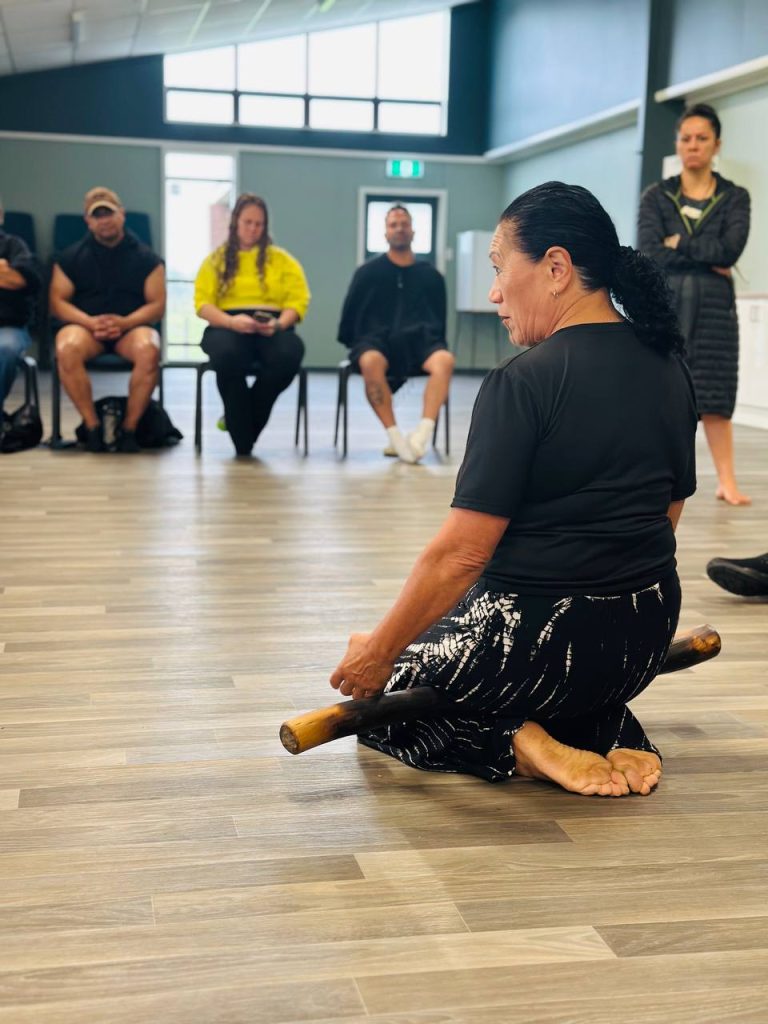
They travel with their own kohatu (stones) and rakau (sticks), tools that aid their work.
“When it comes to the healing aspects of things, the mirimiri and the romiromi is at the forefront only because it’s still considered new but it’s old… everyone knows about reiki, everyone knows about Bowen (technique), so now we are getting people from around the world who want to learn… but for us it’s about telling them and if you really want to learn then you need to come home and learn it” said Manu Korewha”.
Below is a movie of the work Manu did over the decades overseas. I set out to validate traditional Maori healing with my master’s and doctoral research, as our Tohuna and Tohunga as Maori healers were not acknowledged in New Zealand before this. People from overseas would travel here to New Zealand and spend up to $3 – $4K for romiromi wānanga in those days, yet our own health system made our healing ways invisible. Both Manu and Atarangi supported me right through my master’s research as well as my doctoral research.
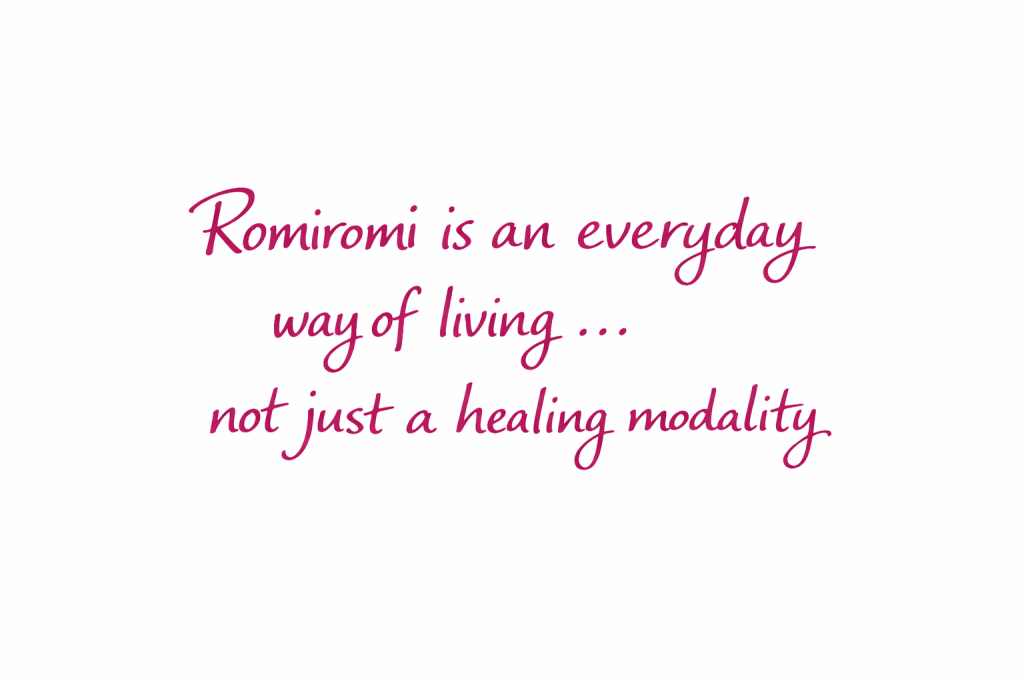
This was the late Manu Korewha’s definition of Romiromi ….
It was Manu Korewha who wrote the Māori Creation song many years ago. So few people will acknowledge him for that. Remember to quote who taught you things.
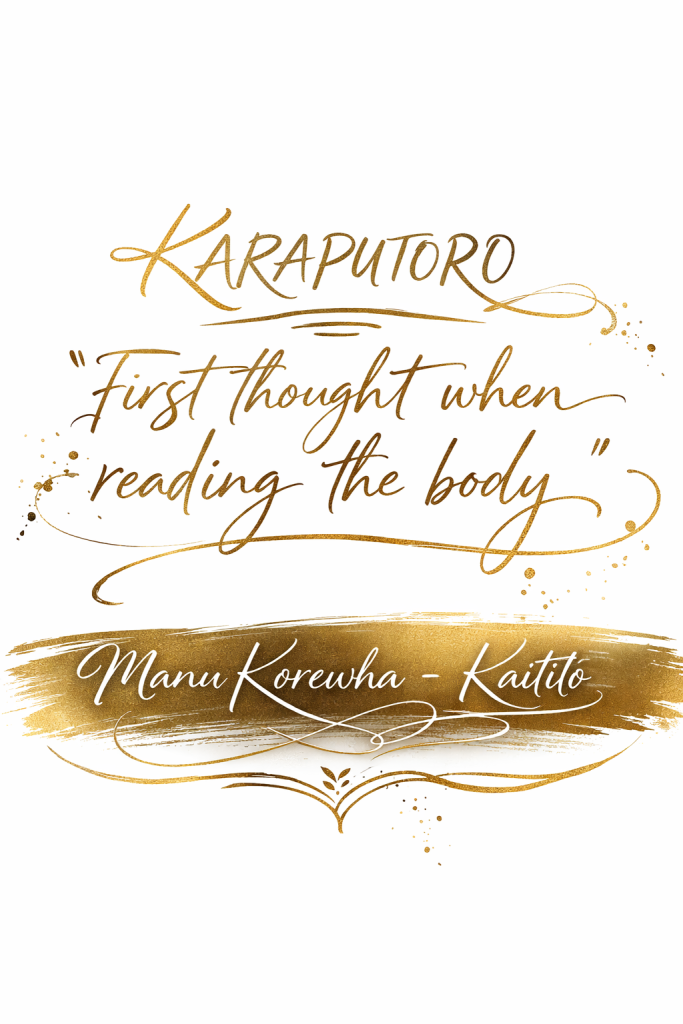
This is one of the reasons I refused to do a program at Te Wānanga o Aotearoa many years ago, as they wouldn’t quote the origin of mātauranga or waiata (like my mentors). So, I wouldn’t engage any further with them, and once Atarangi Murupaenga, Ngati Kuri Tohunga Romiromi, found out, nor would she.
Group Activities
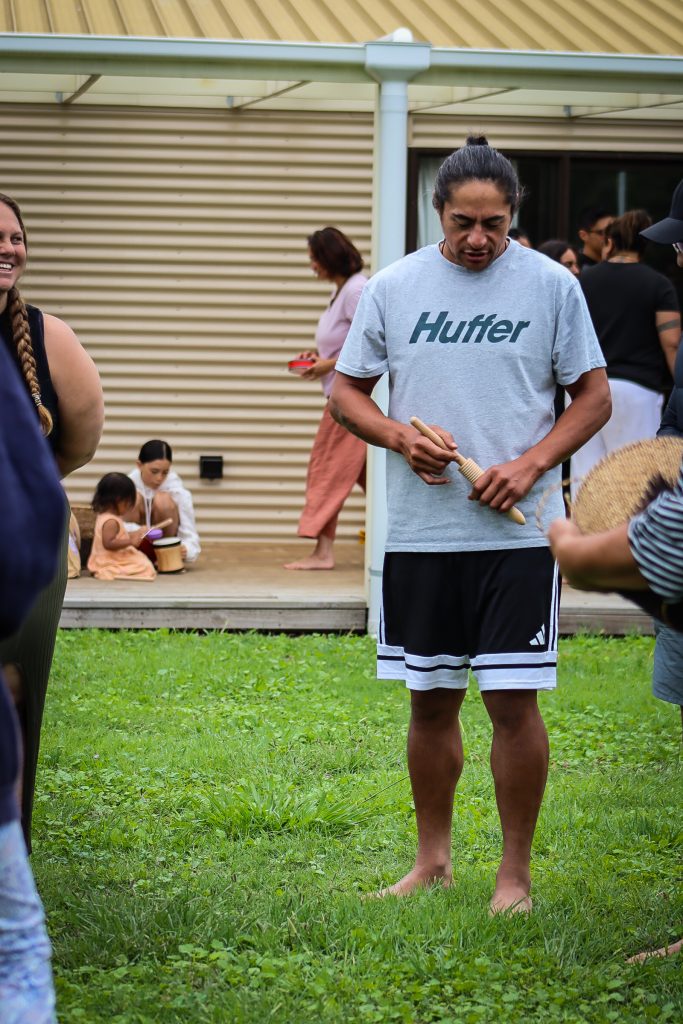
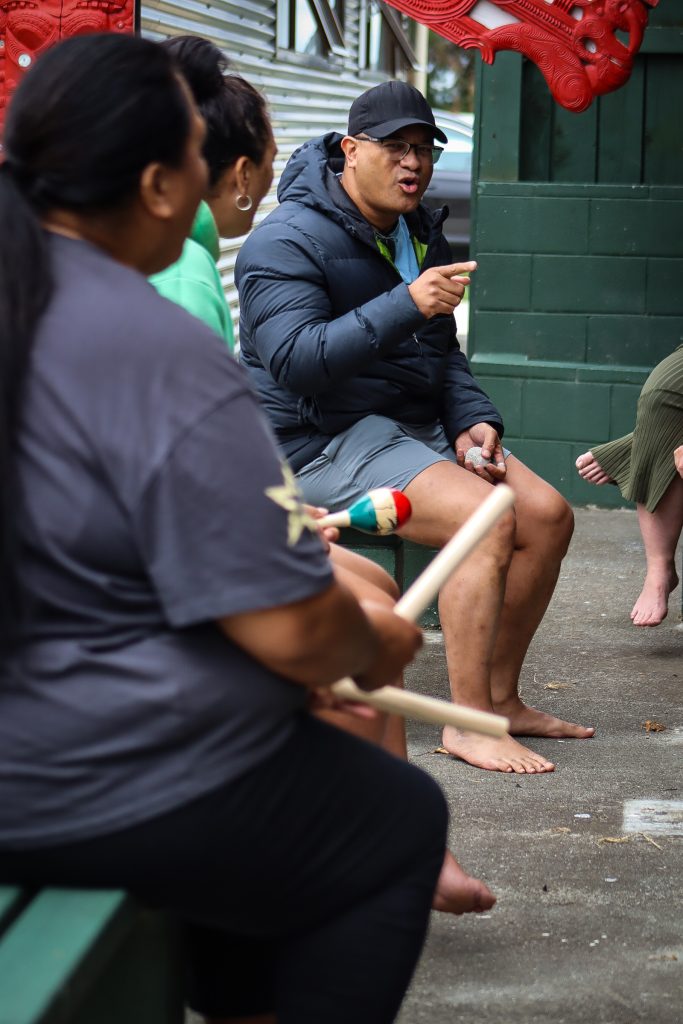
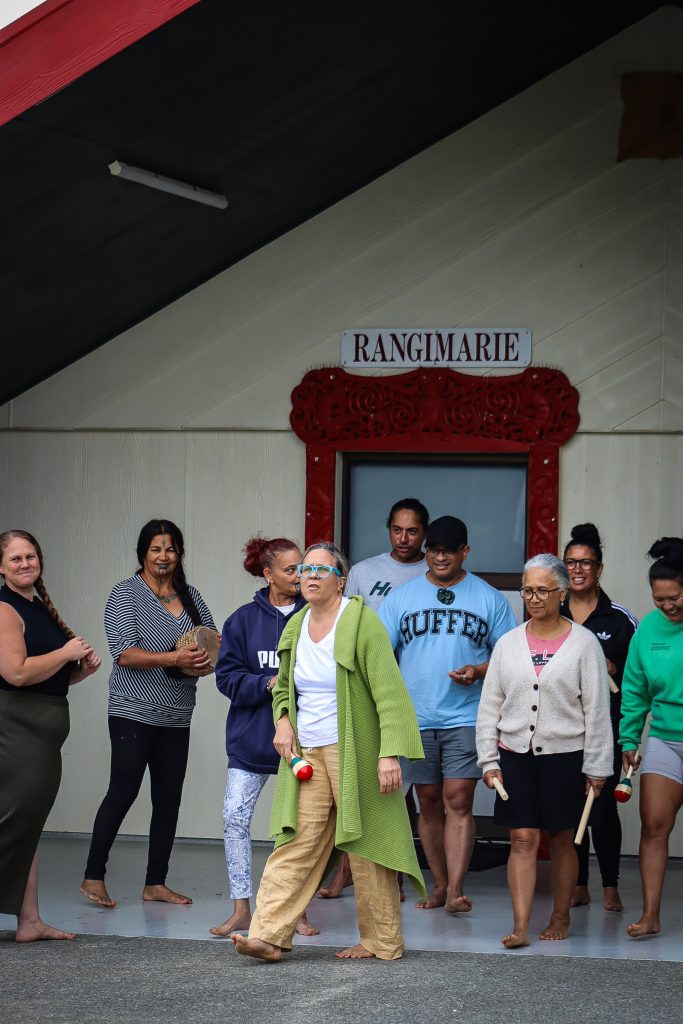
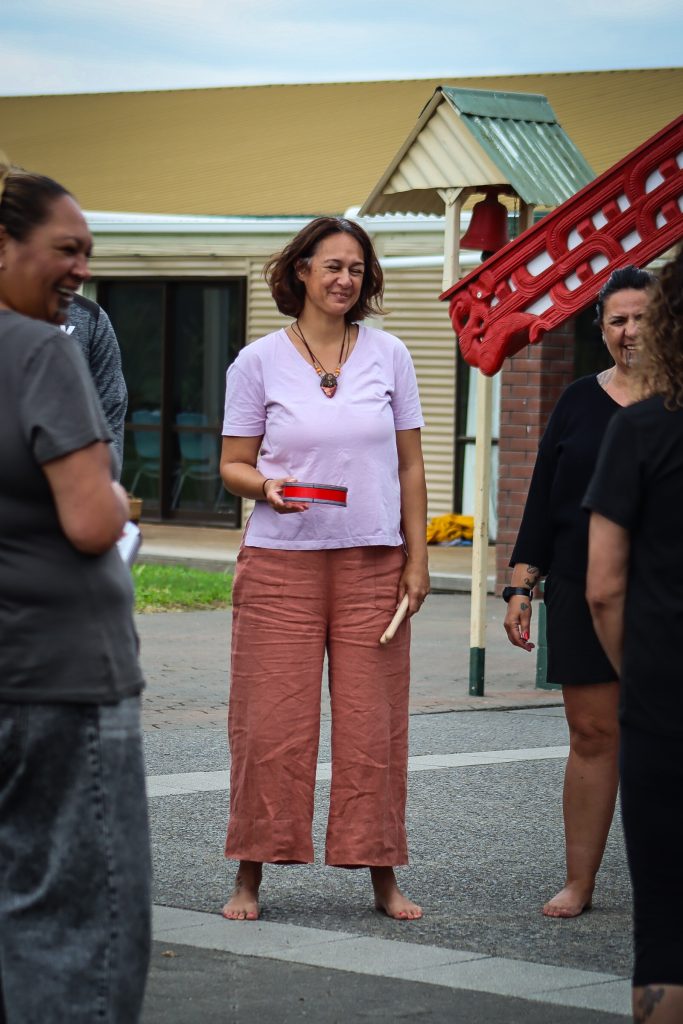
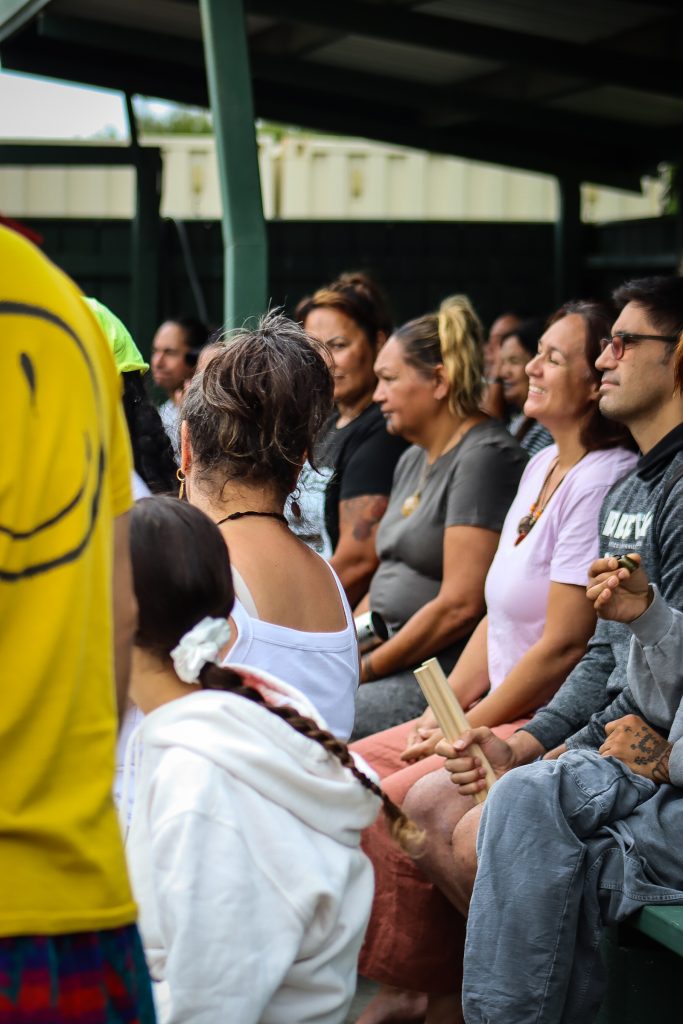
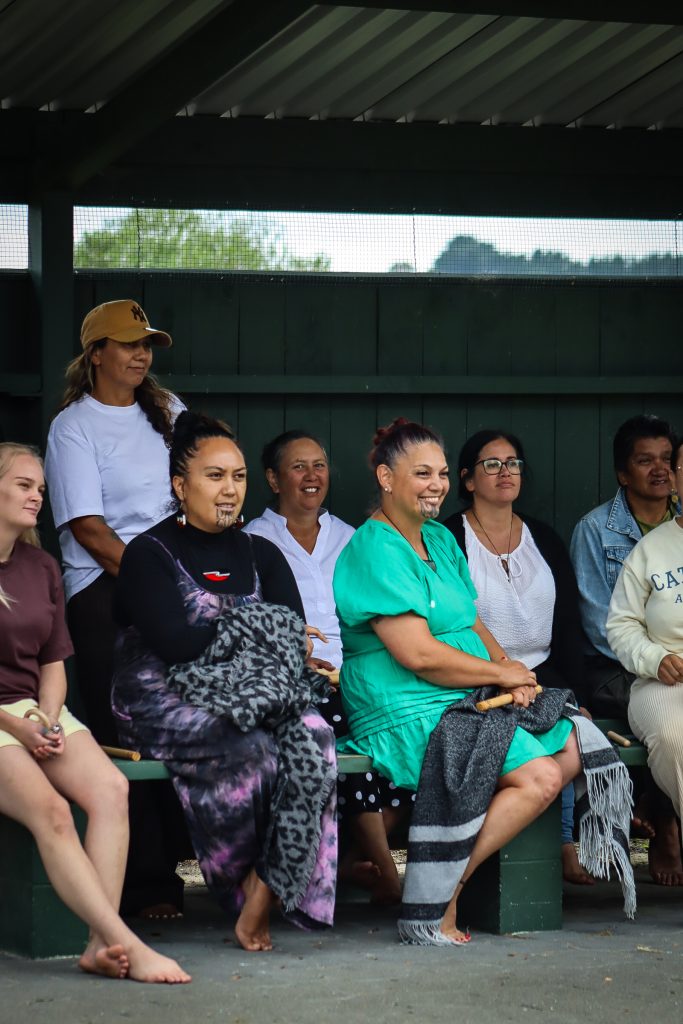
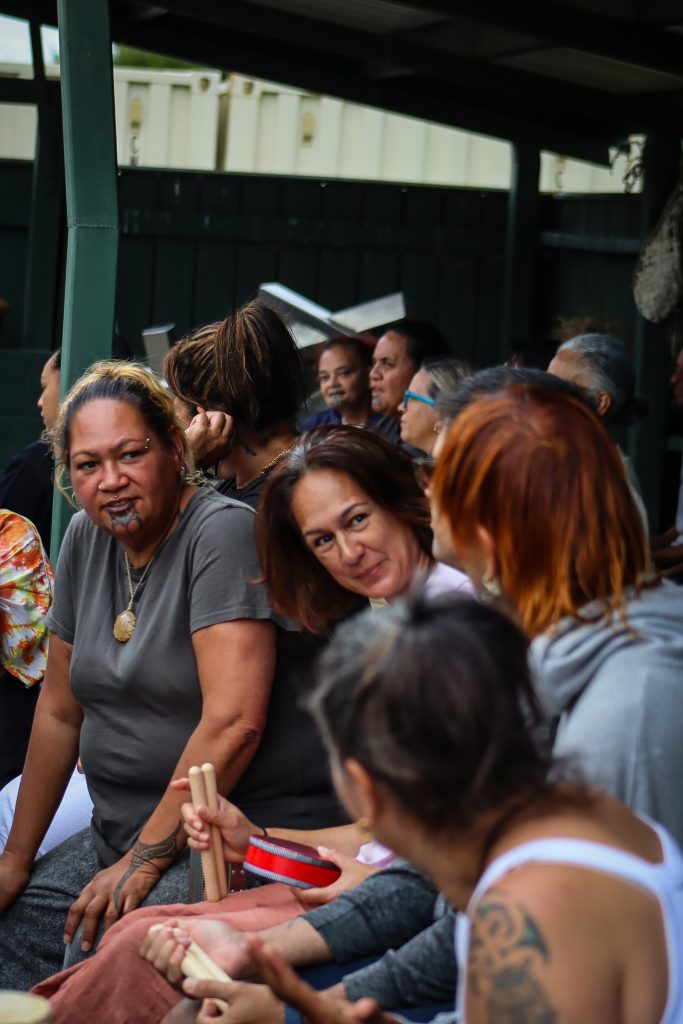
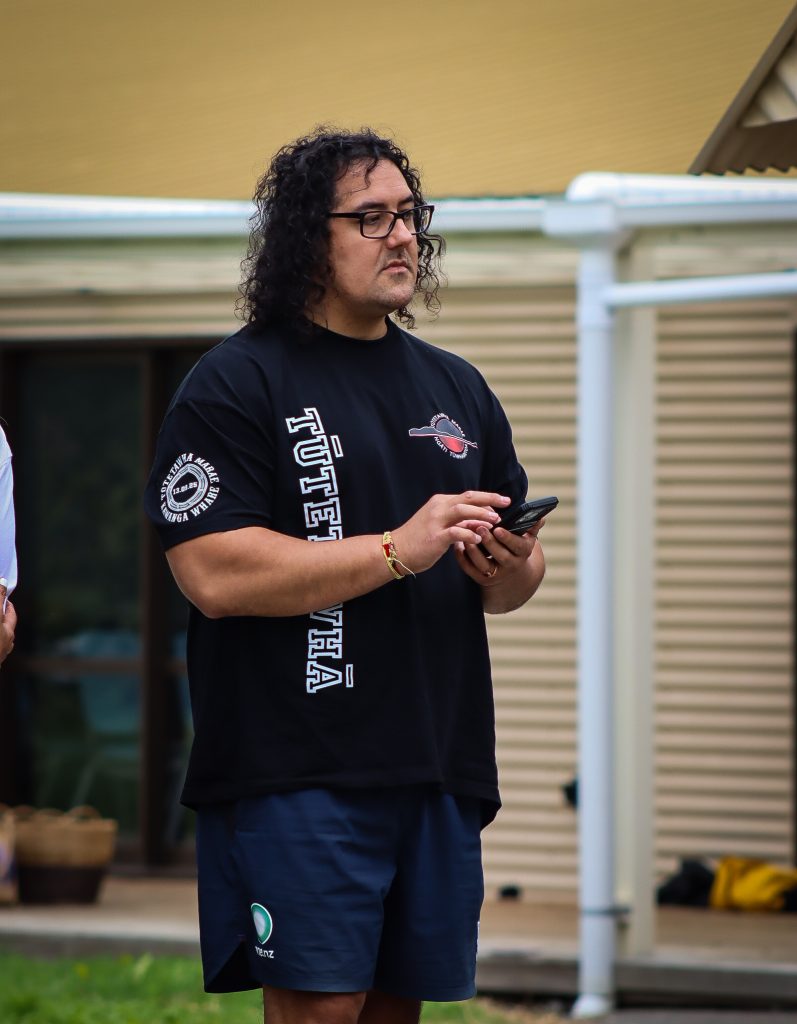
It was awesome to see how our tuakana are leading the preparation of the kai in the kitchen. We have all had to learn, and continue to learn, to role model sugar-free, dairy-free, and gluten-free kai to the teina who have just joined the wananga. The activities were uplifting and well-balanced. They helped release energy, build connection and brought lightness and joy in between the deeper healing work.
The tuakana who have been coming to the wananga over the last 2 – 3 years have learned that they must heal themselves if they want their whānau to learn how to be well.
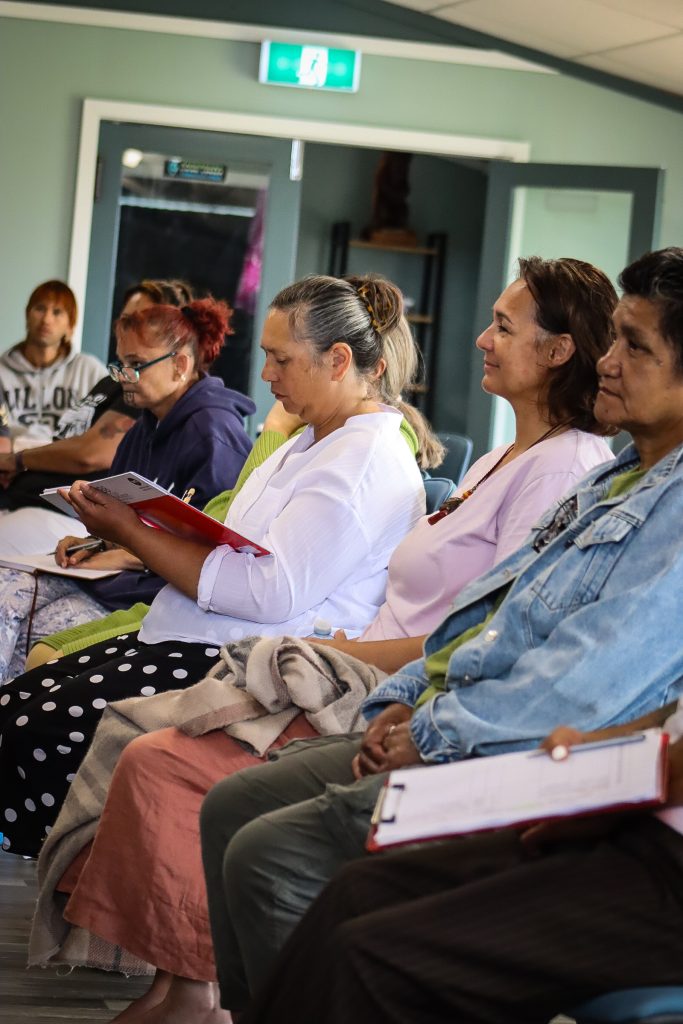
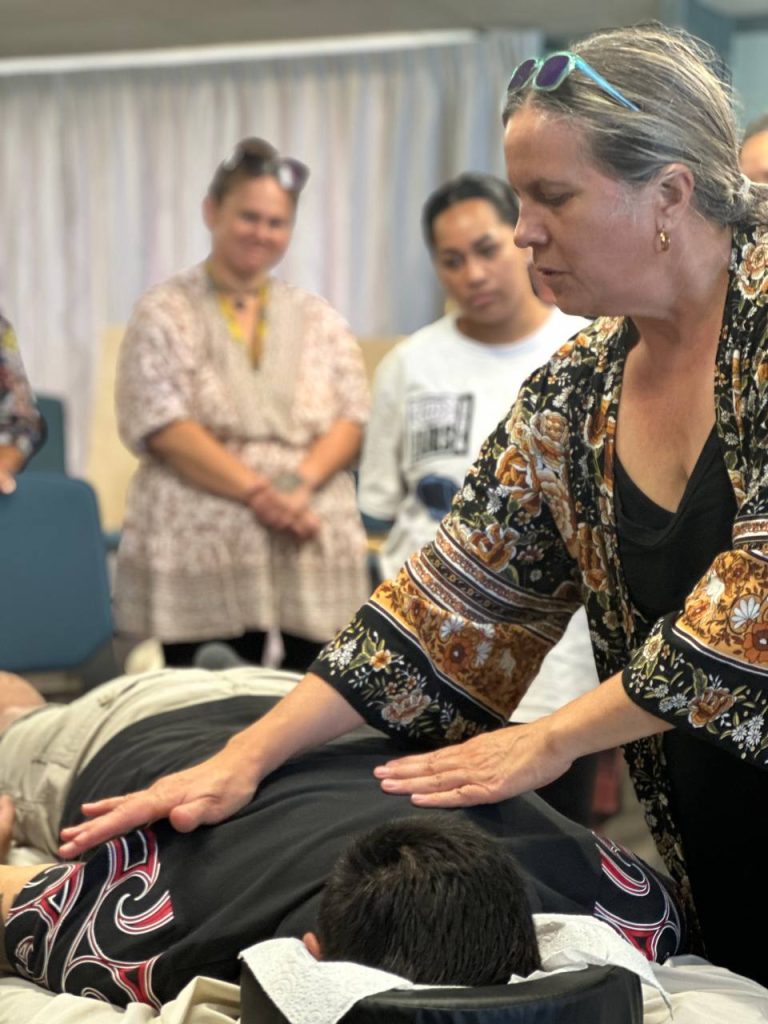
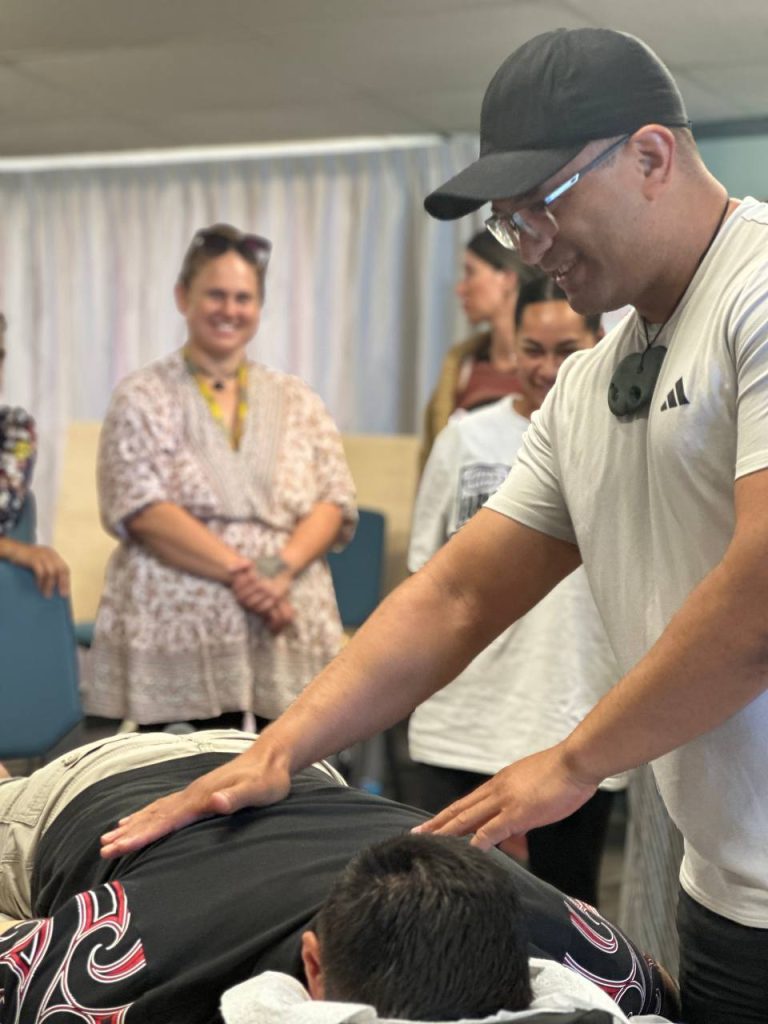
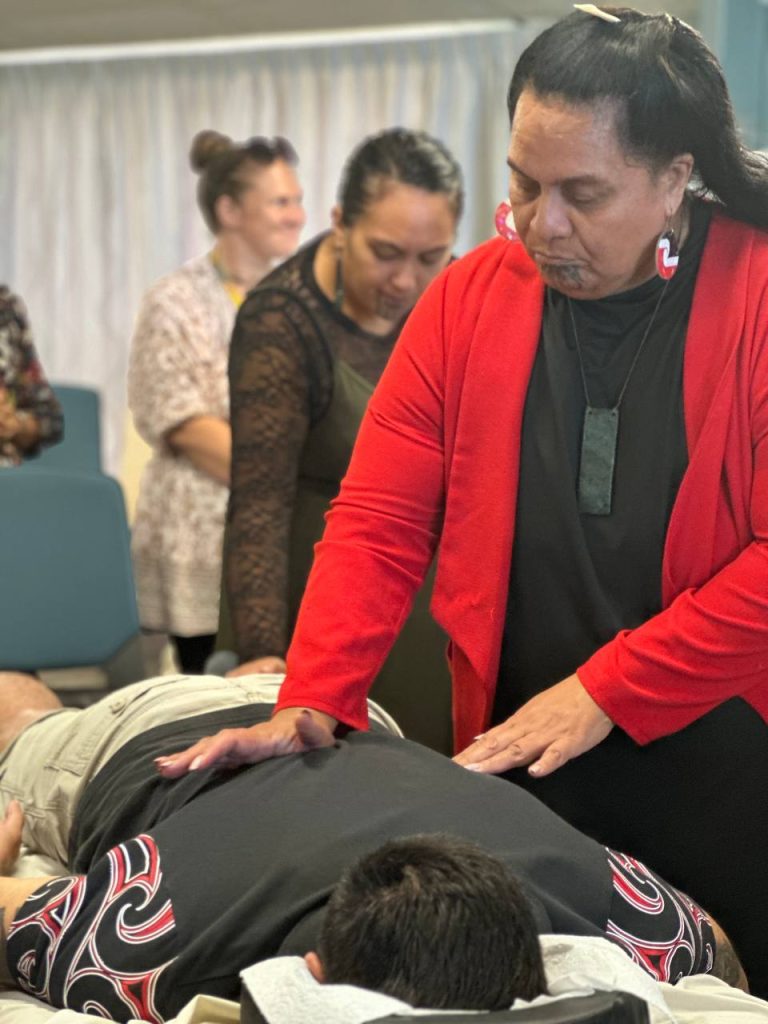
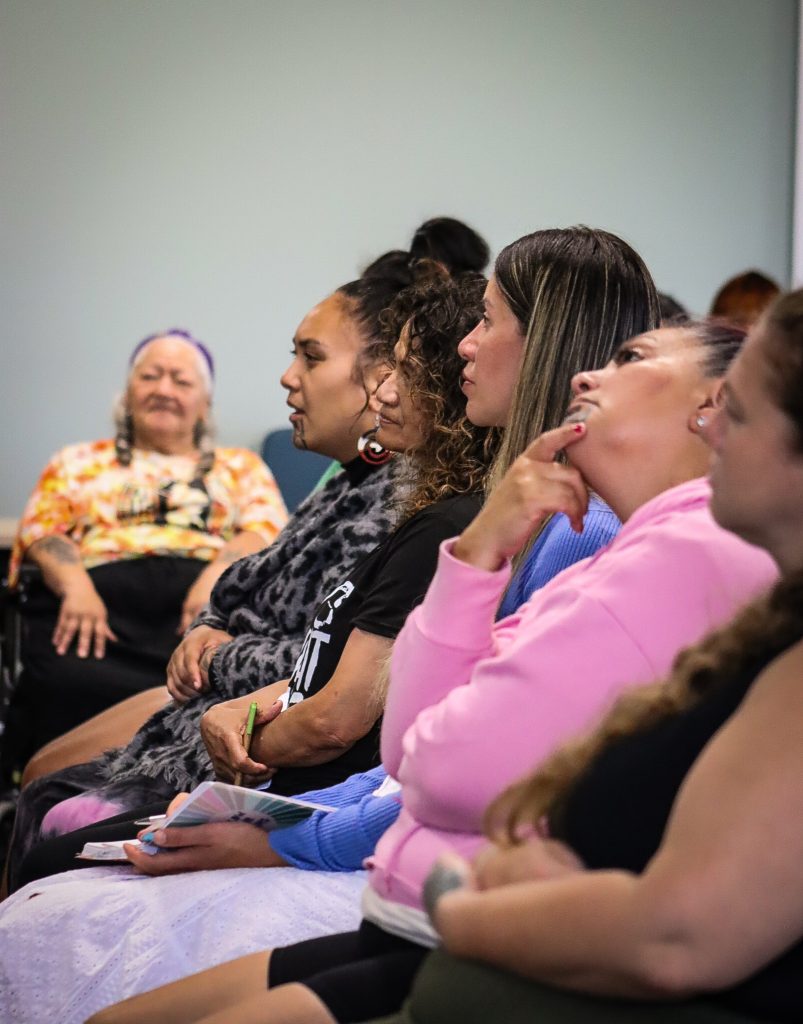
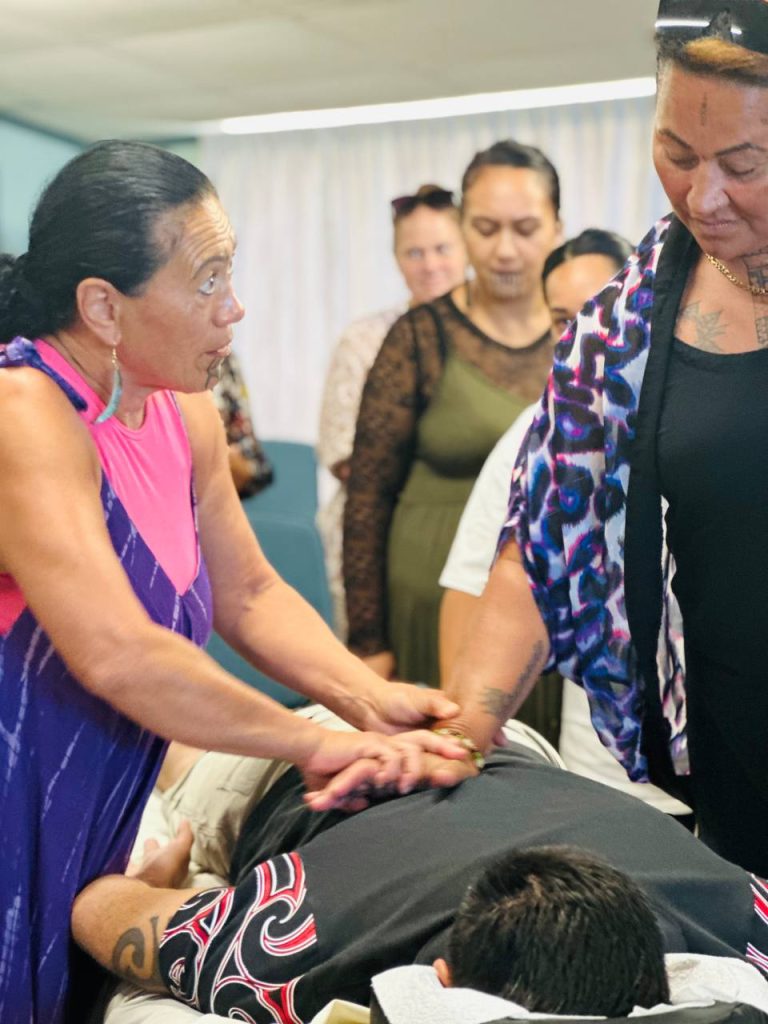
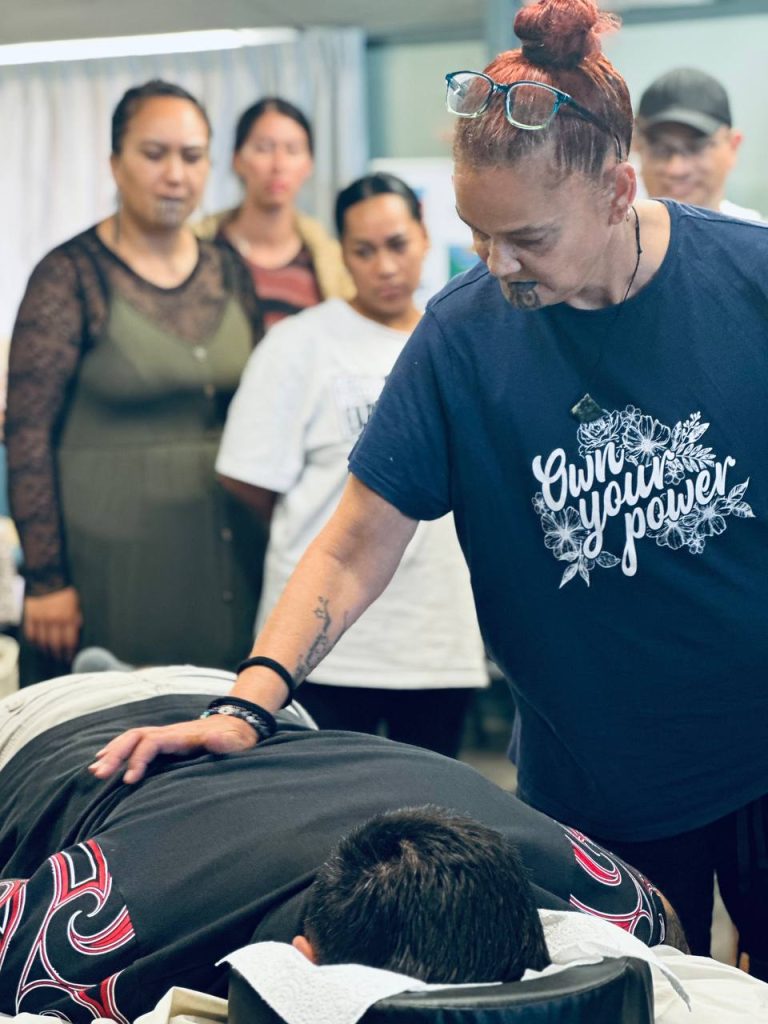
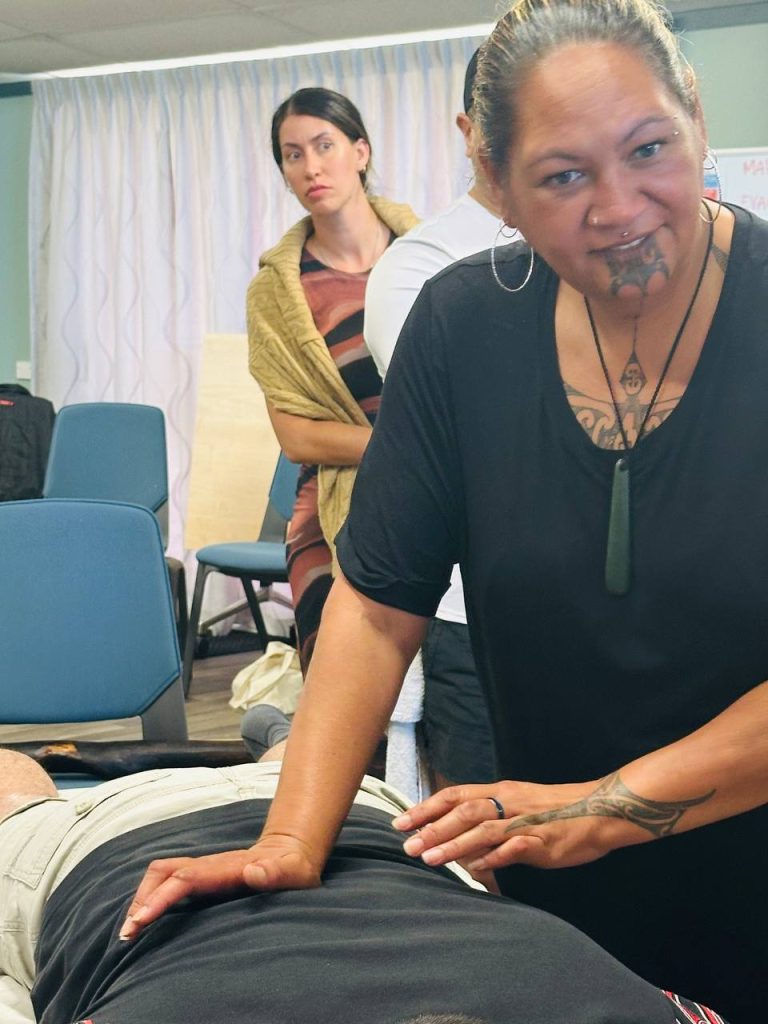
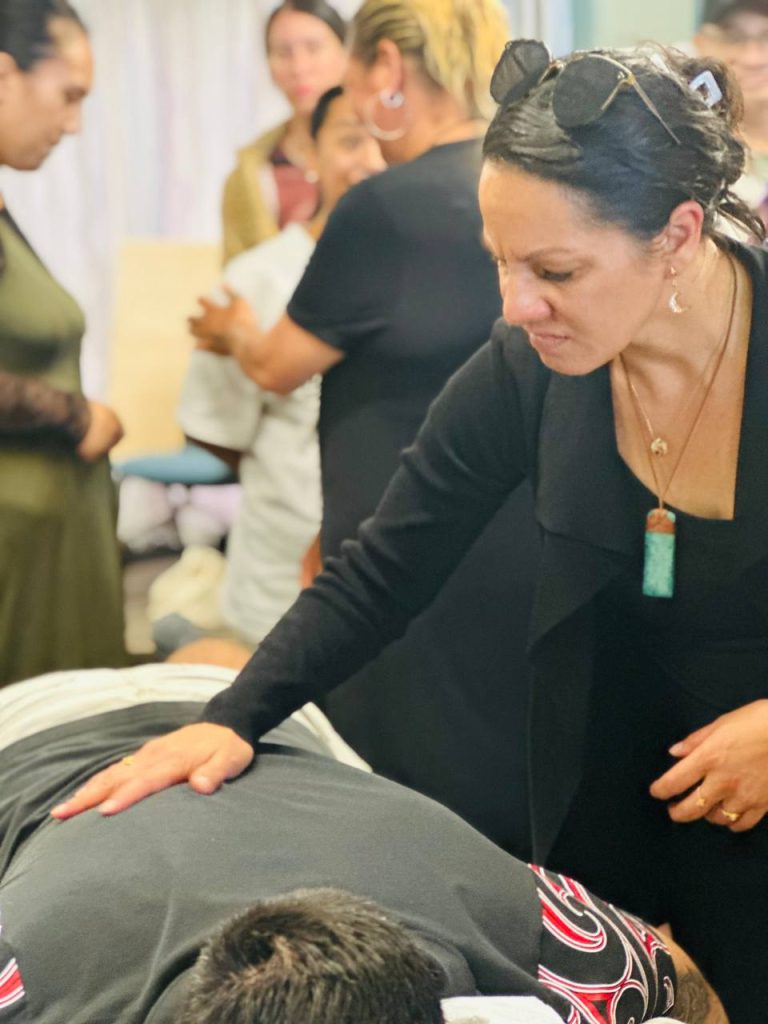
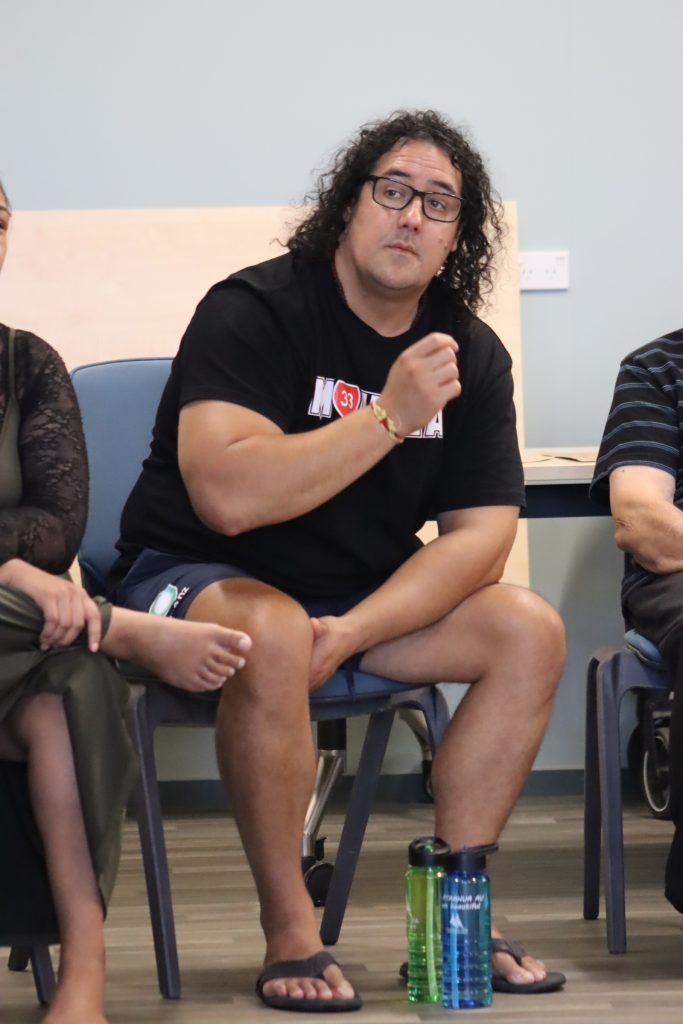
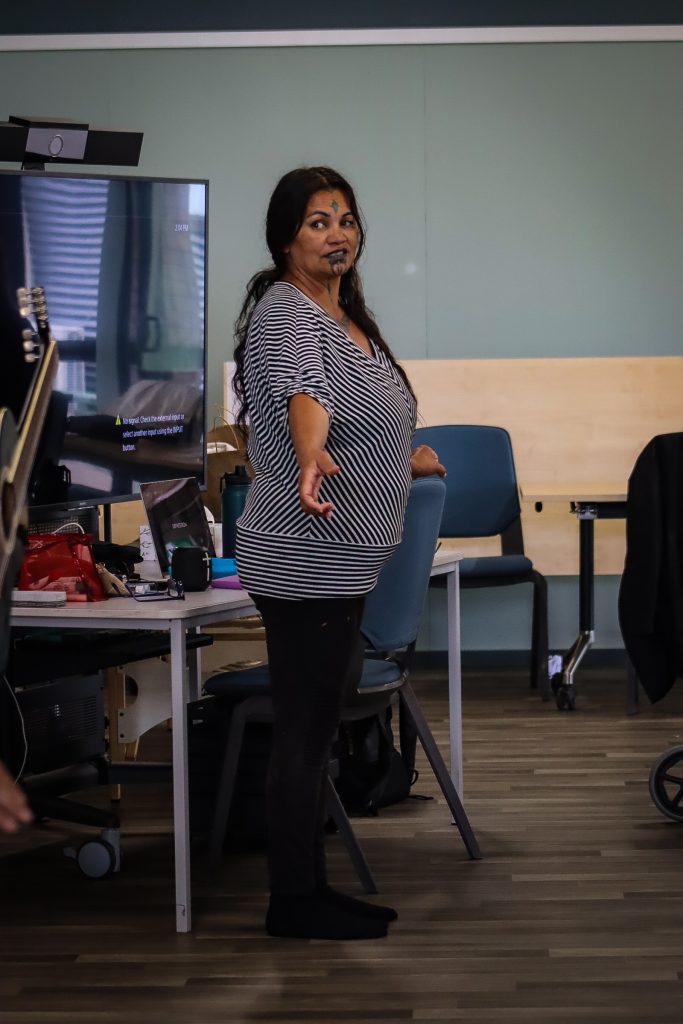
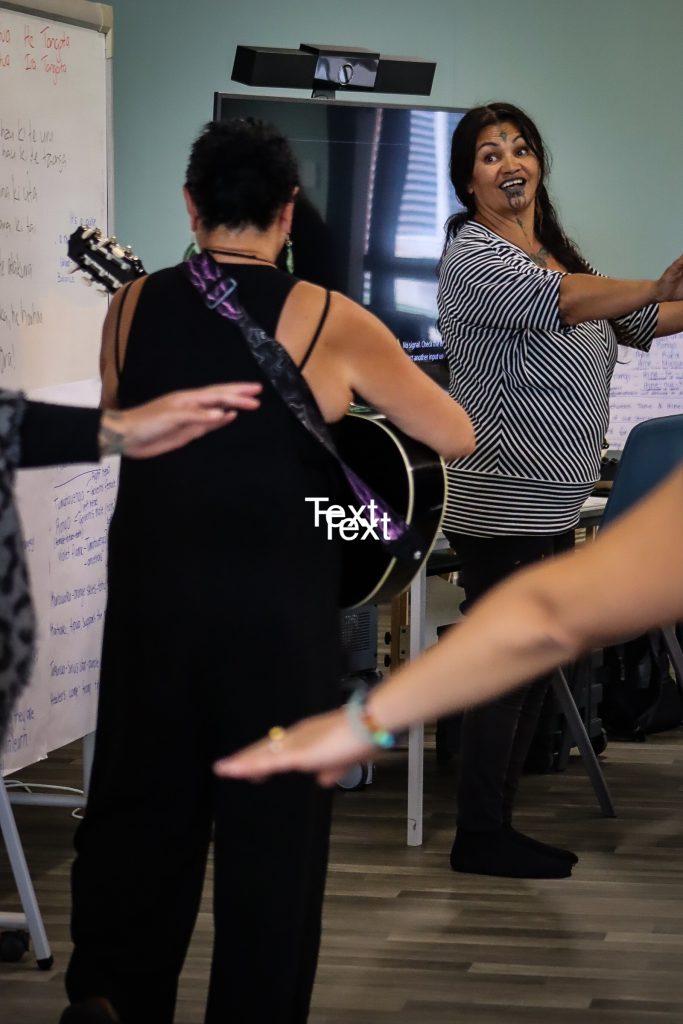
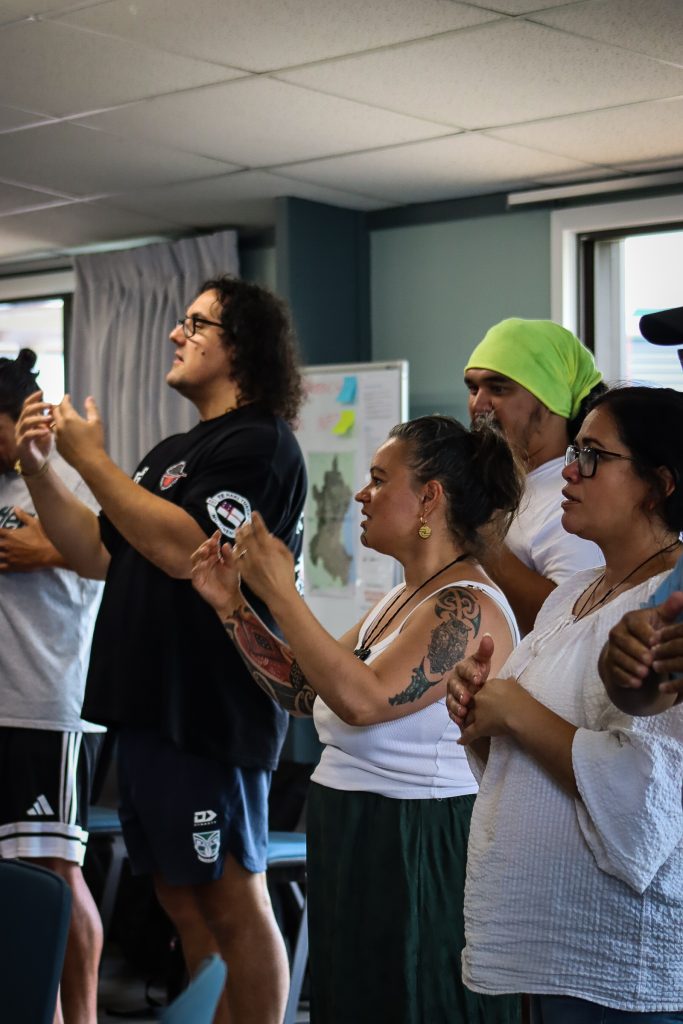
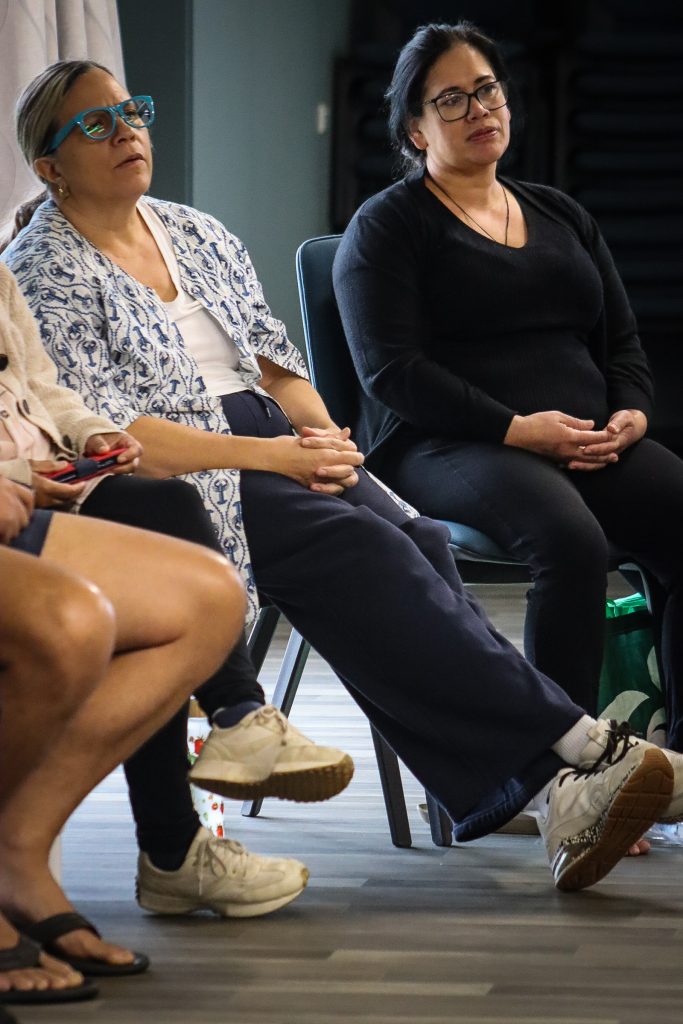
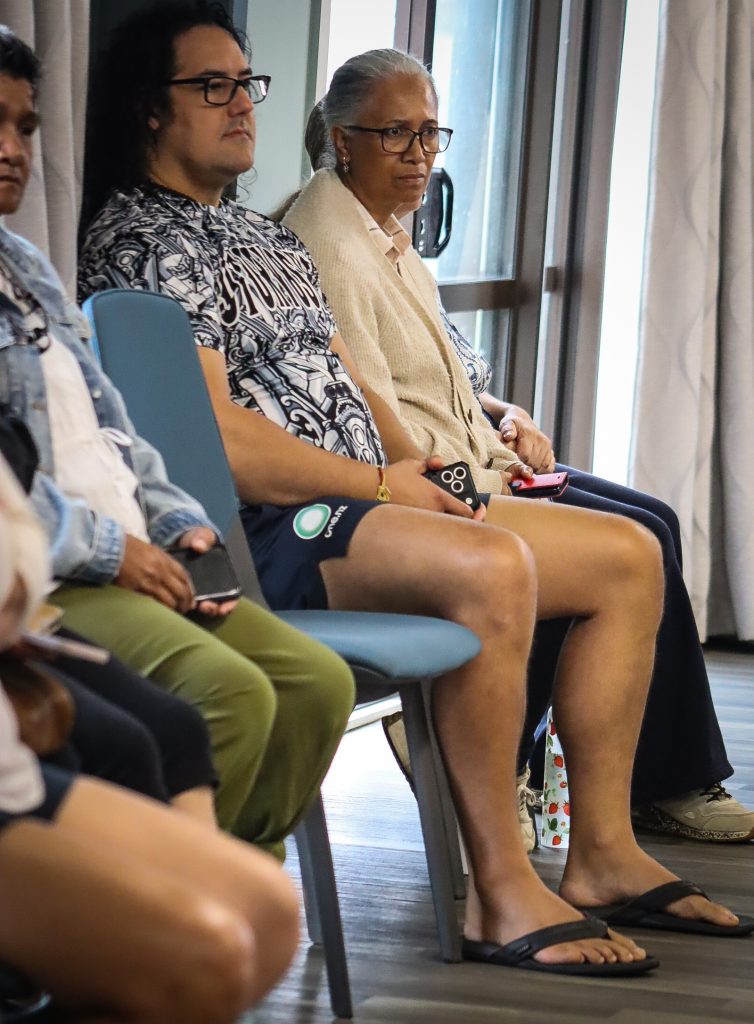
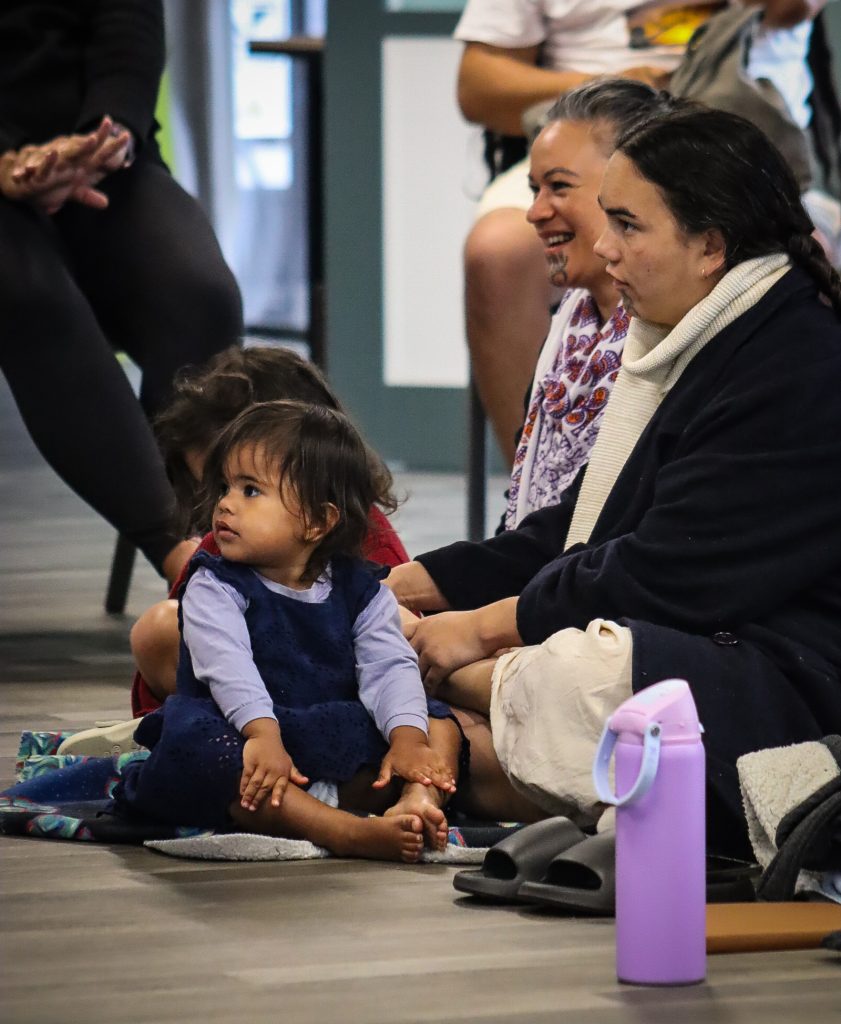
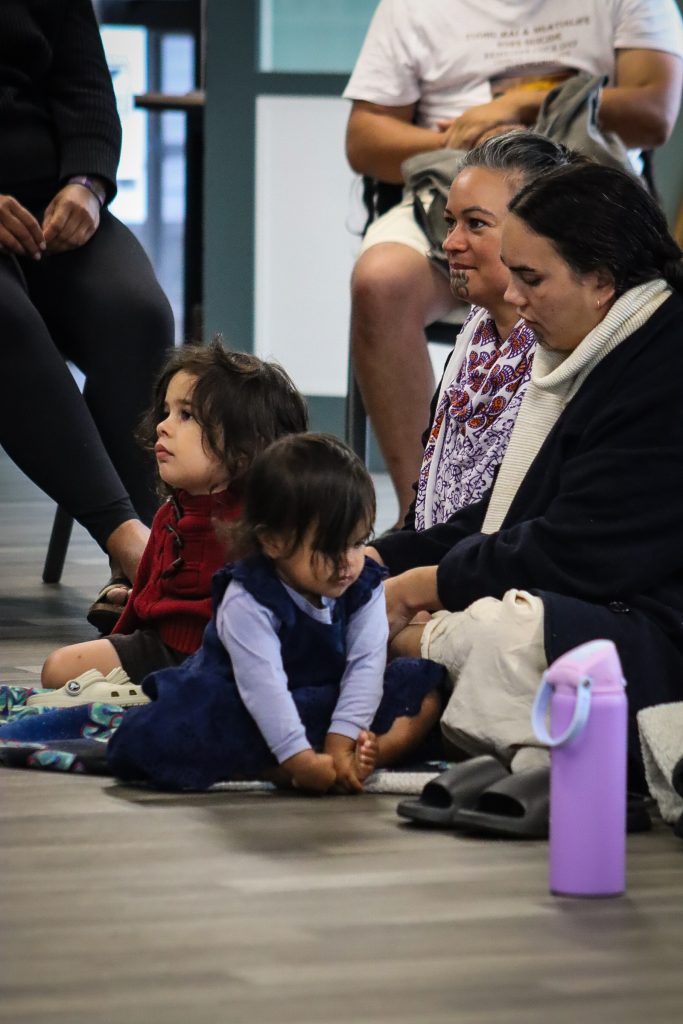
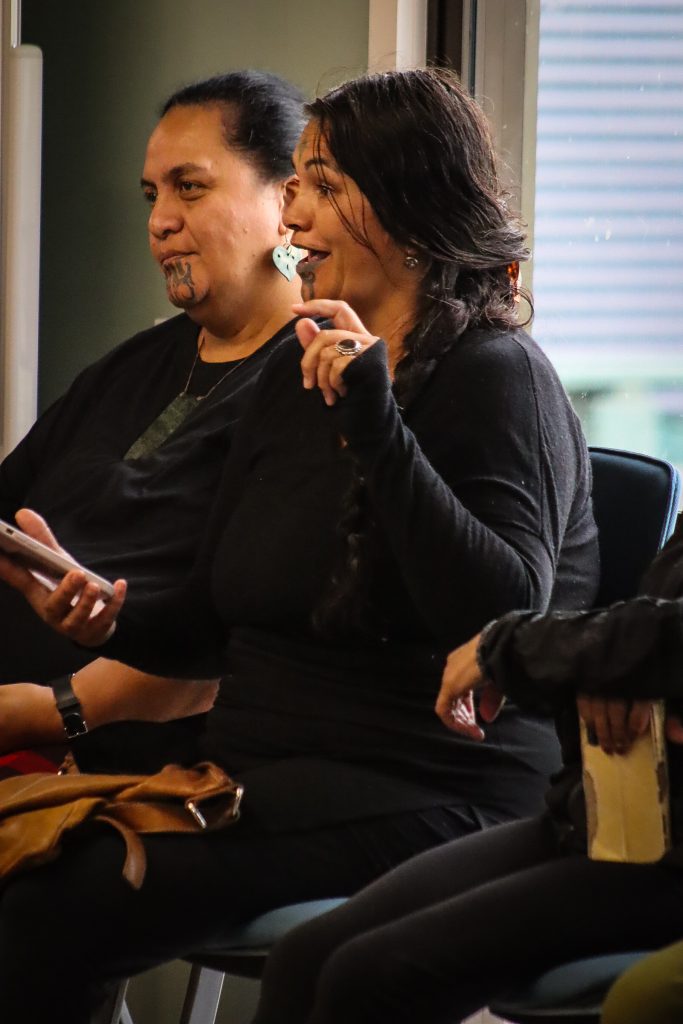
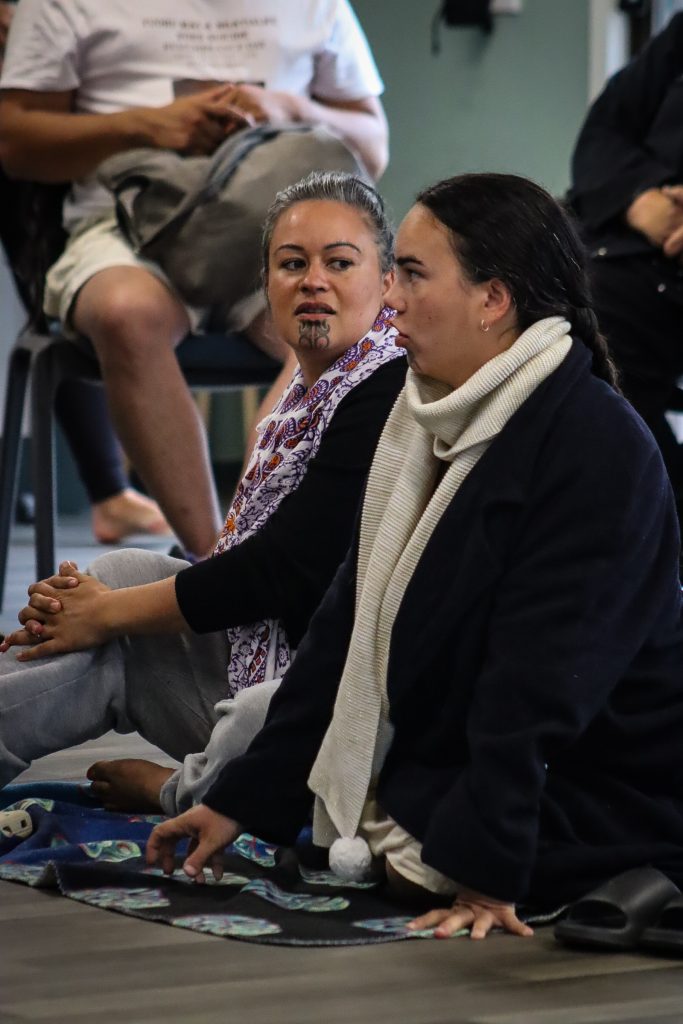
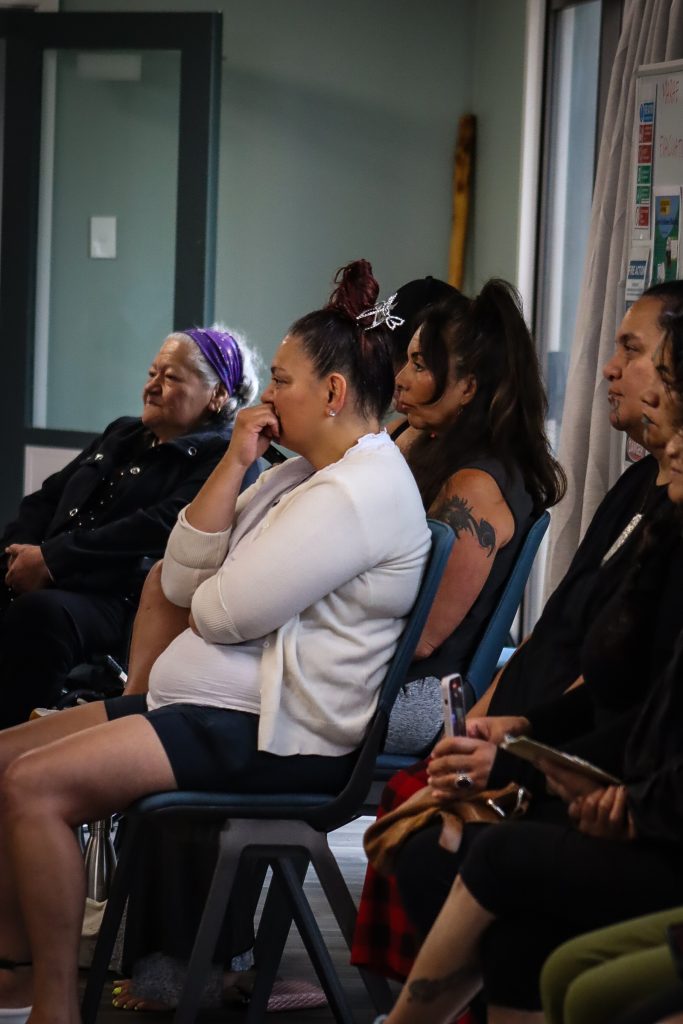
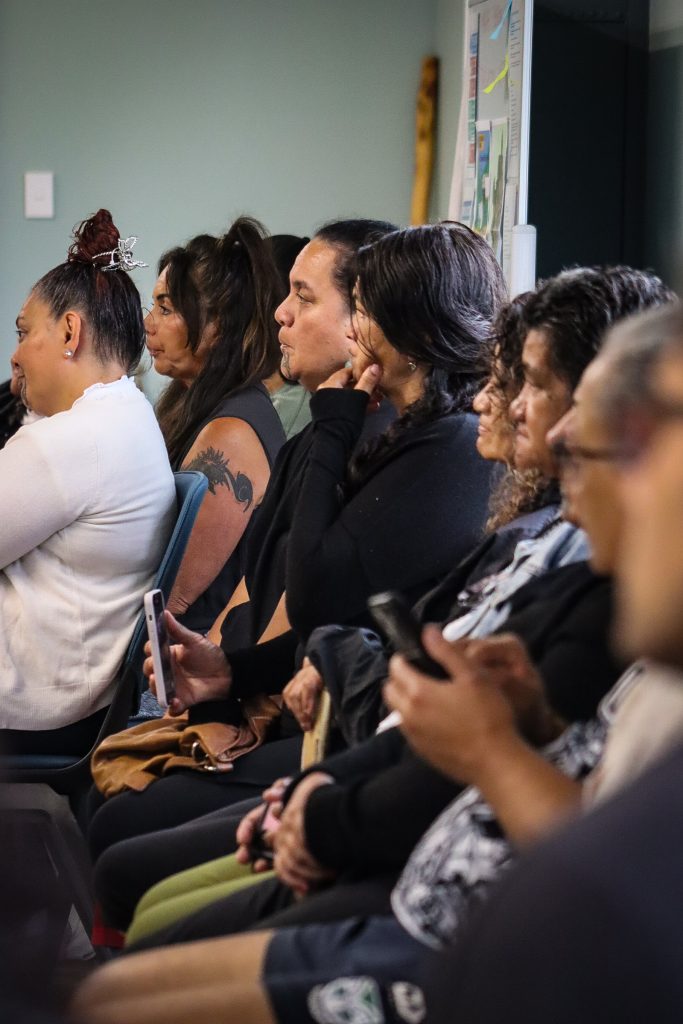
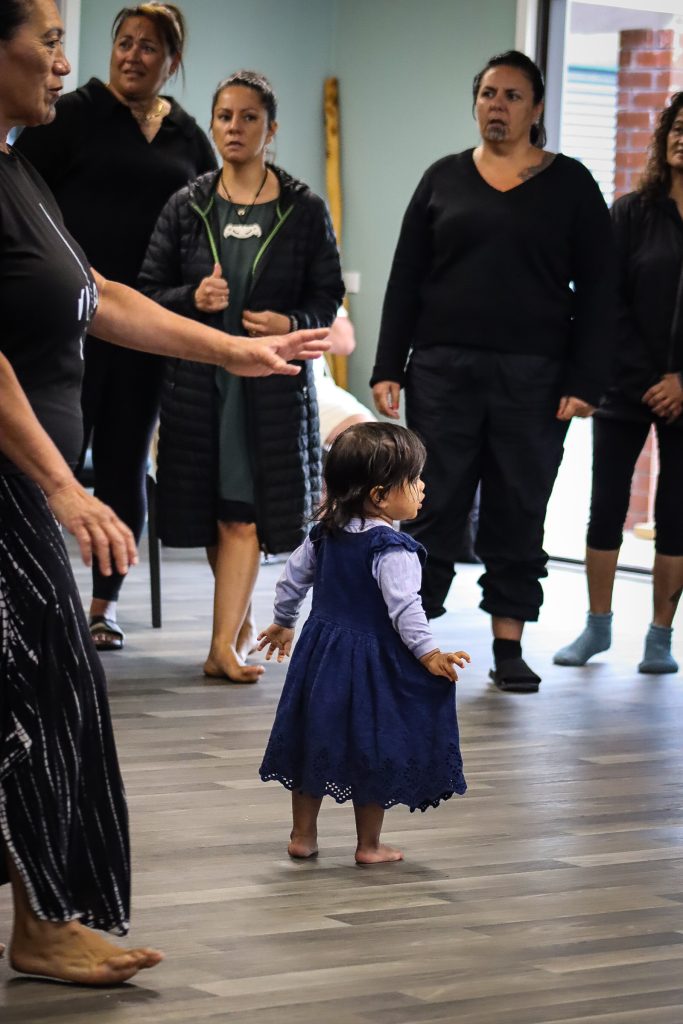
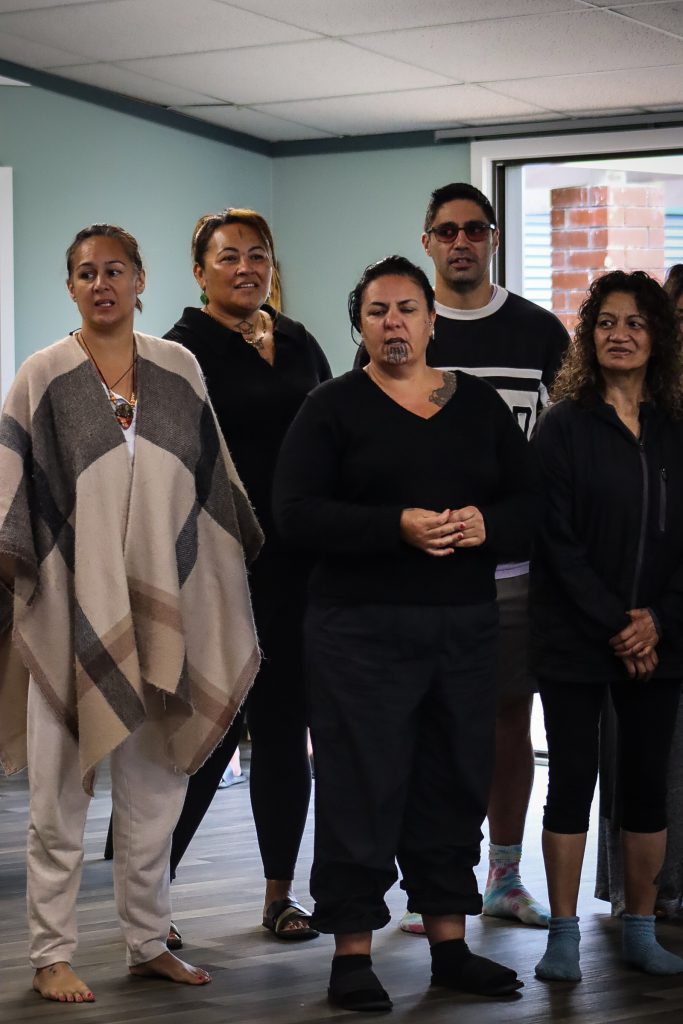
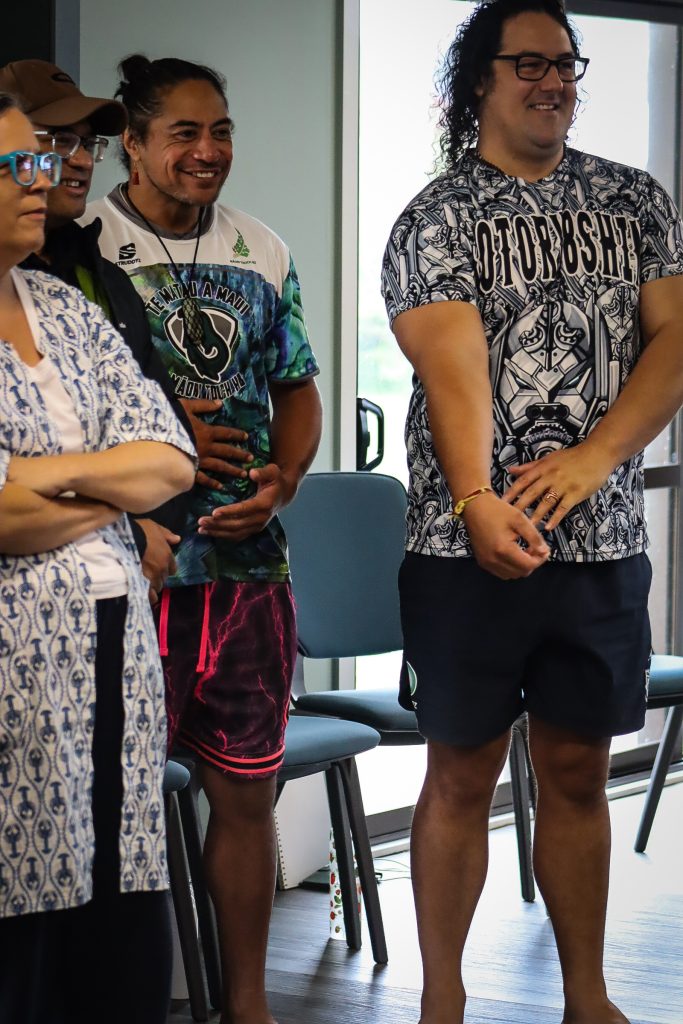
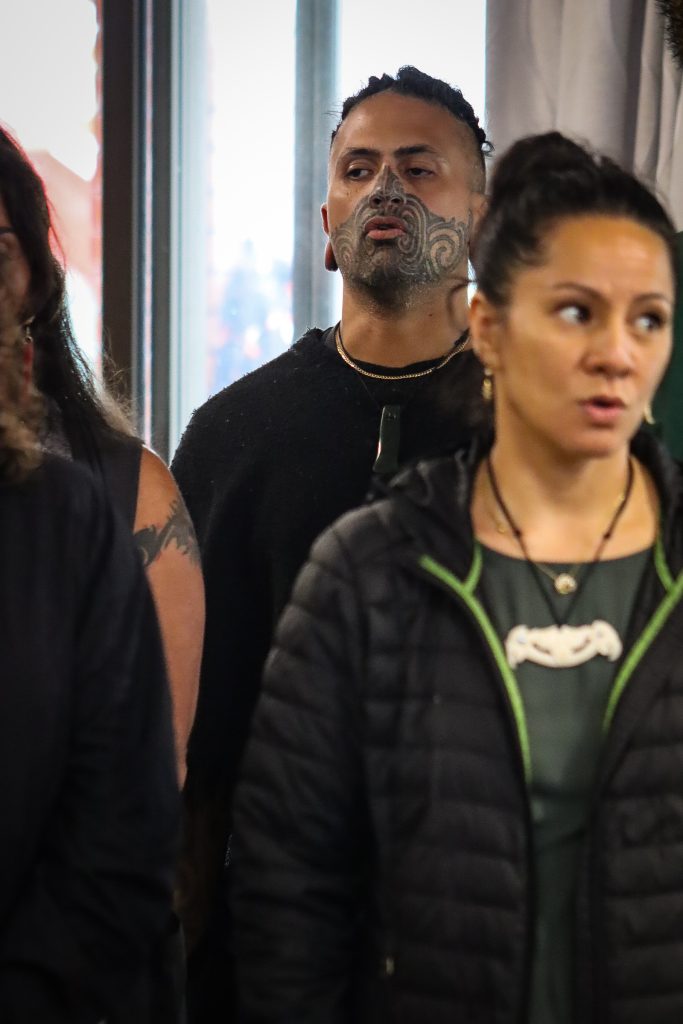
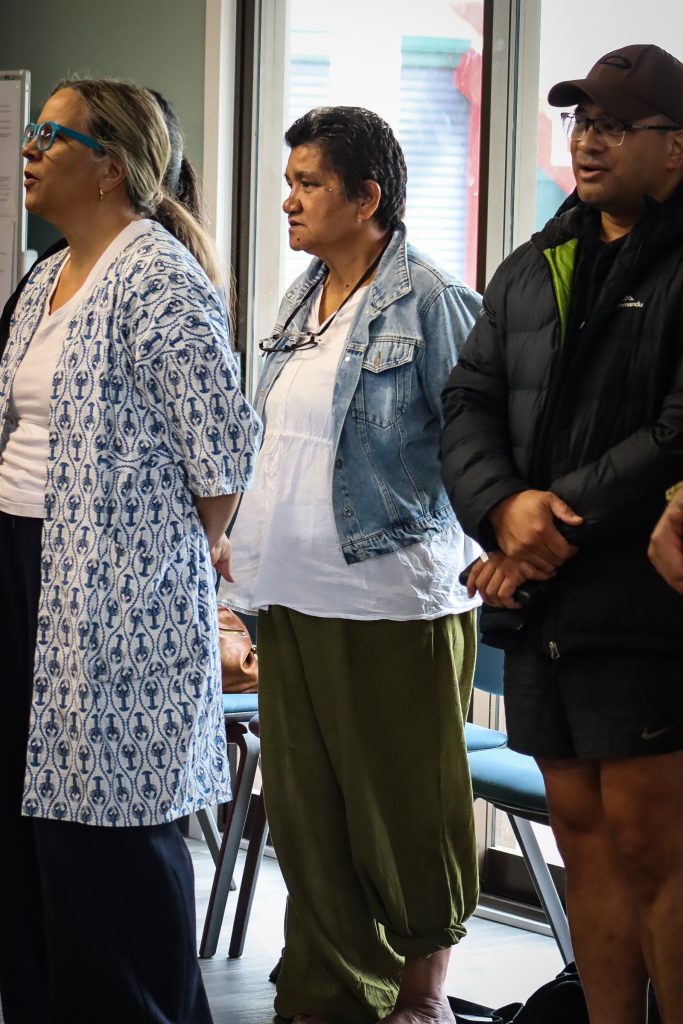
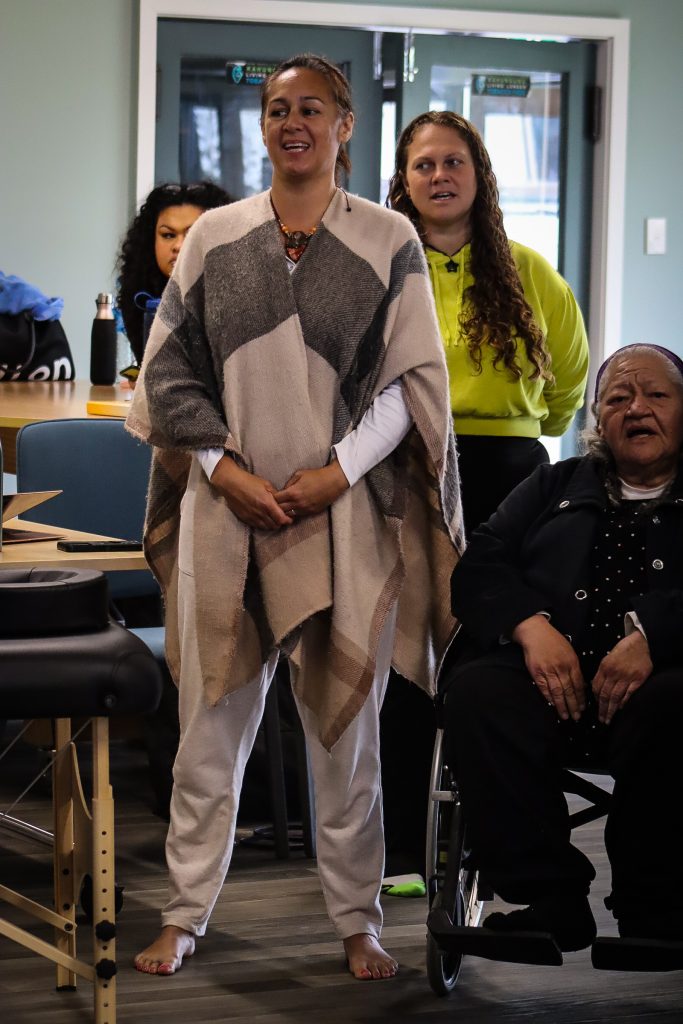
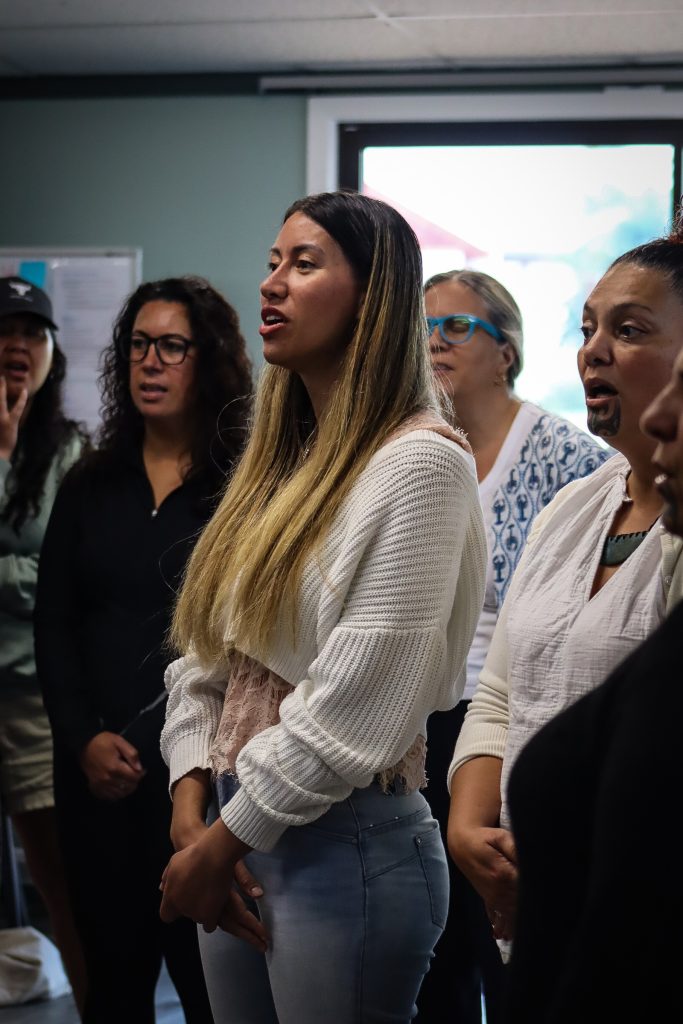
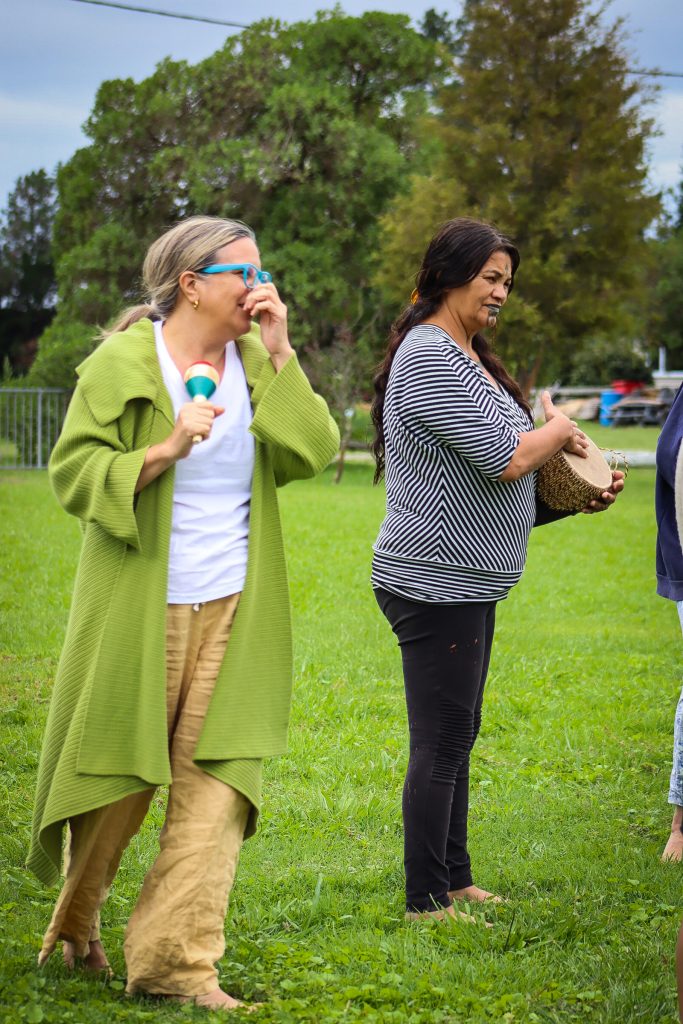
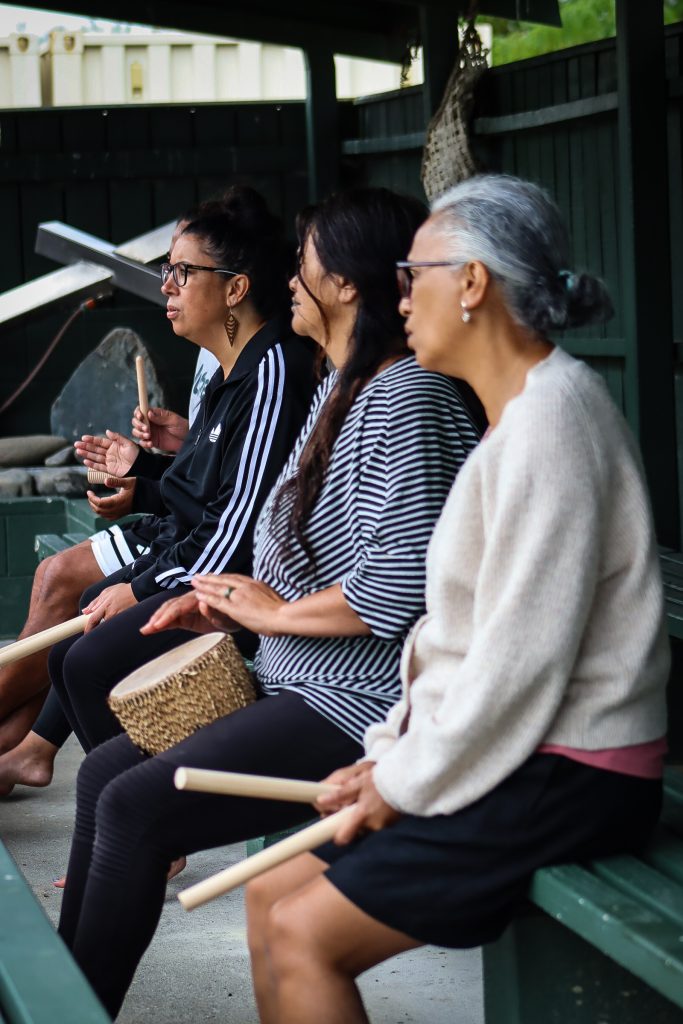
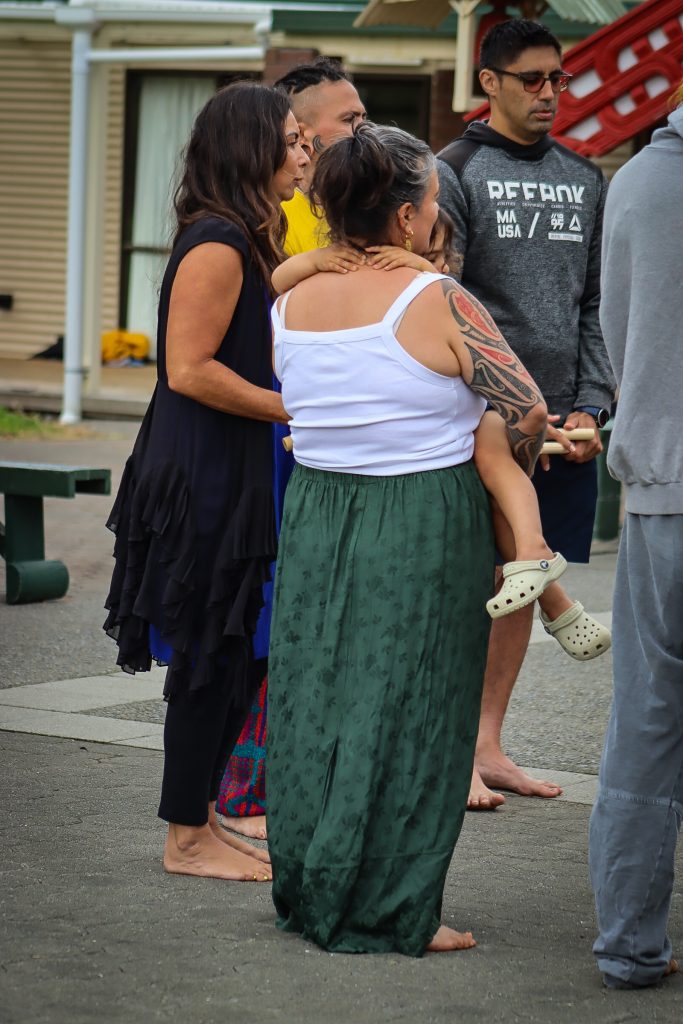
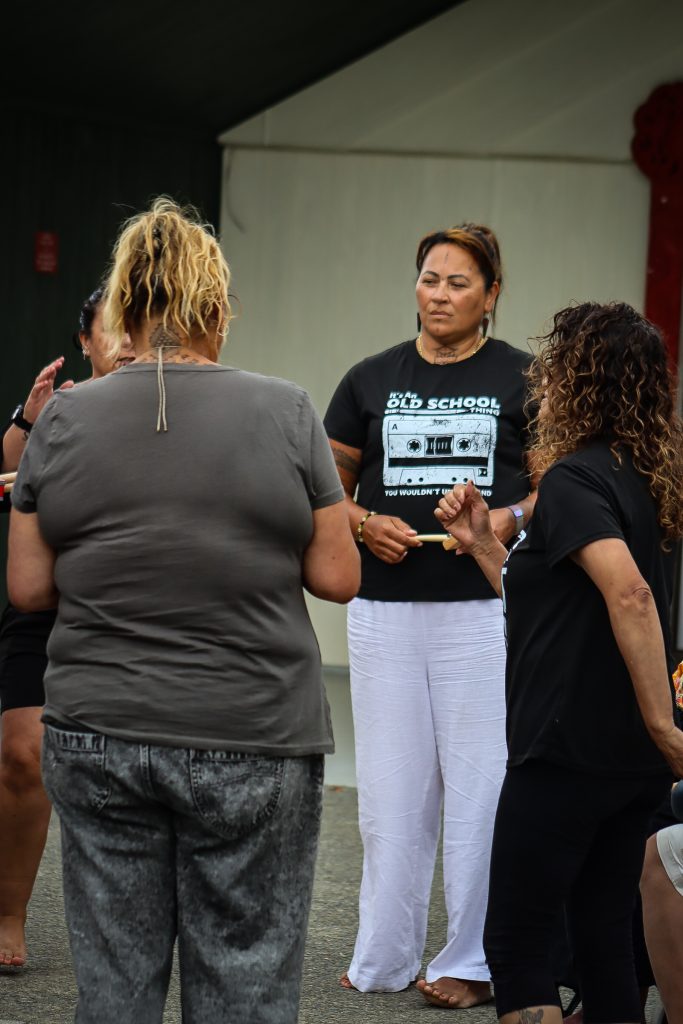
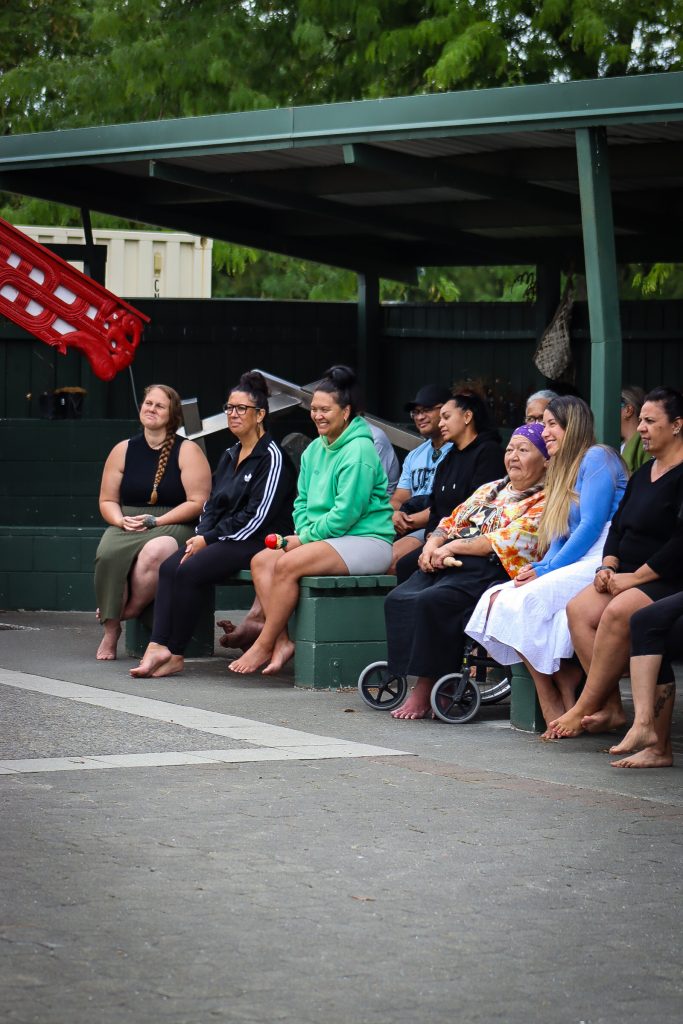
The waiata in groups provided an opportunity for singing in harmony to unify breath, rhythm, and wairua while the percussion activities brought everybody together with a collective awareness before we started working together.
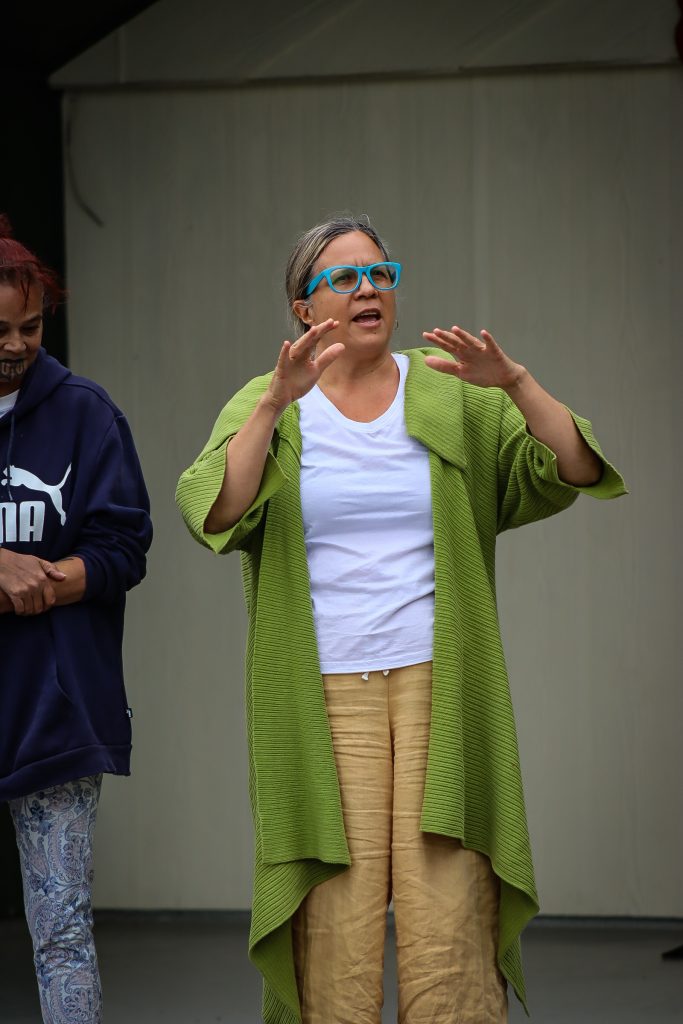
The Māori action song that Jane facilitated with movement integrated learning through the body was a delightful way that we as whanau can enjoy our culture.
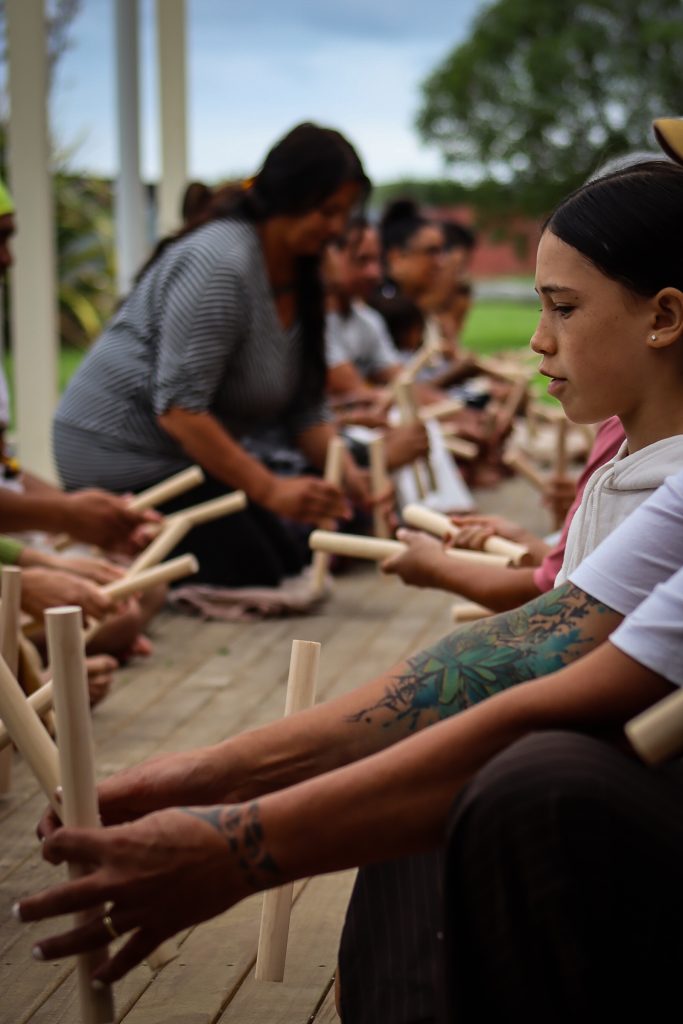
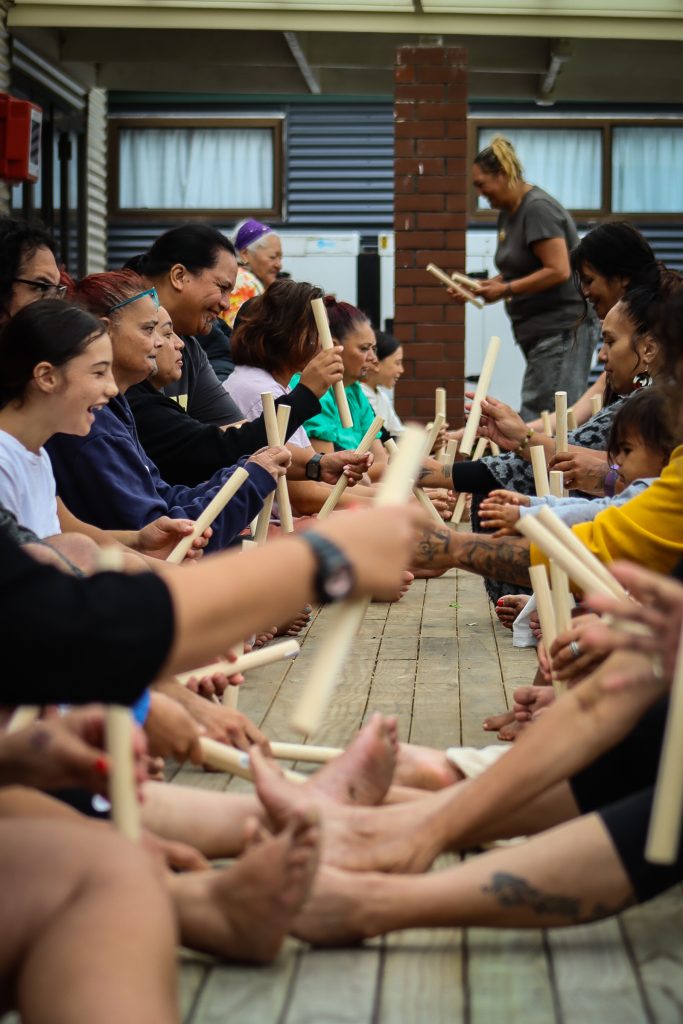
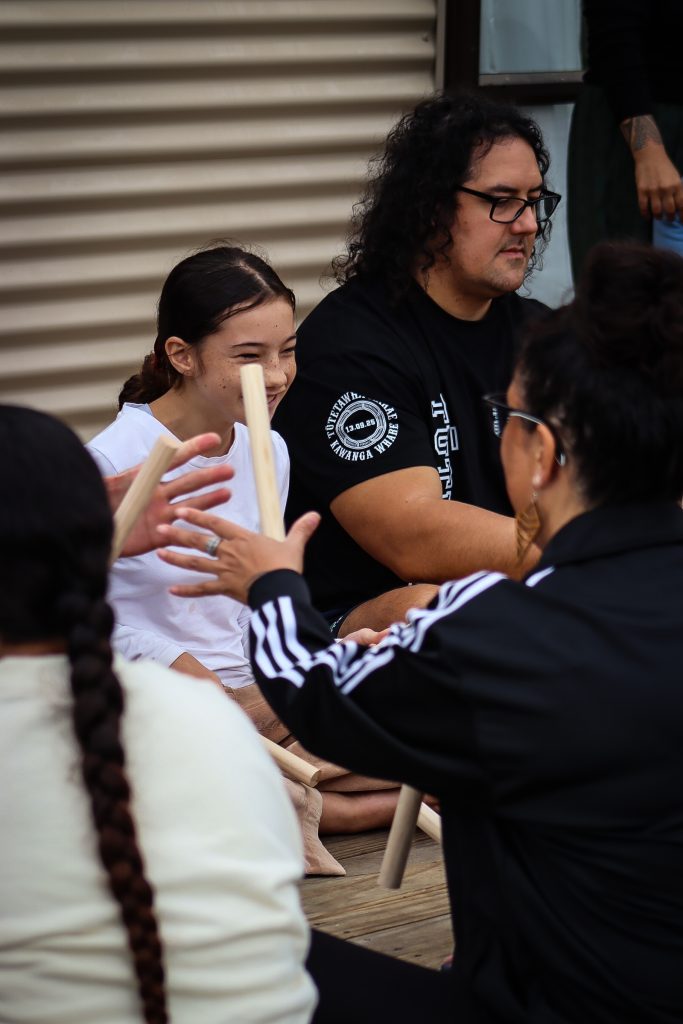
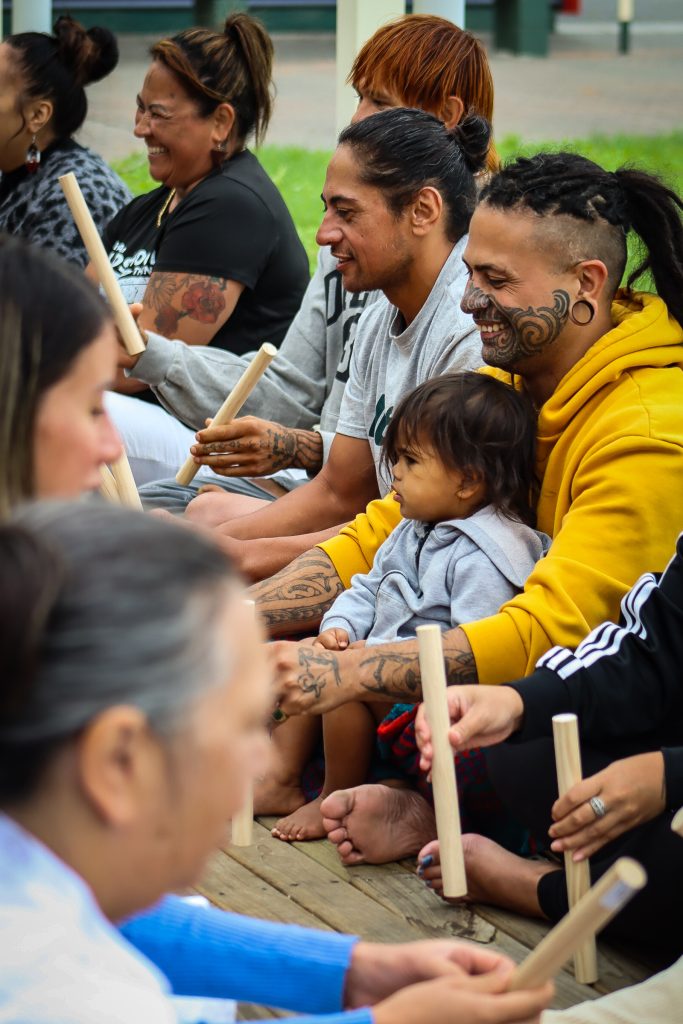
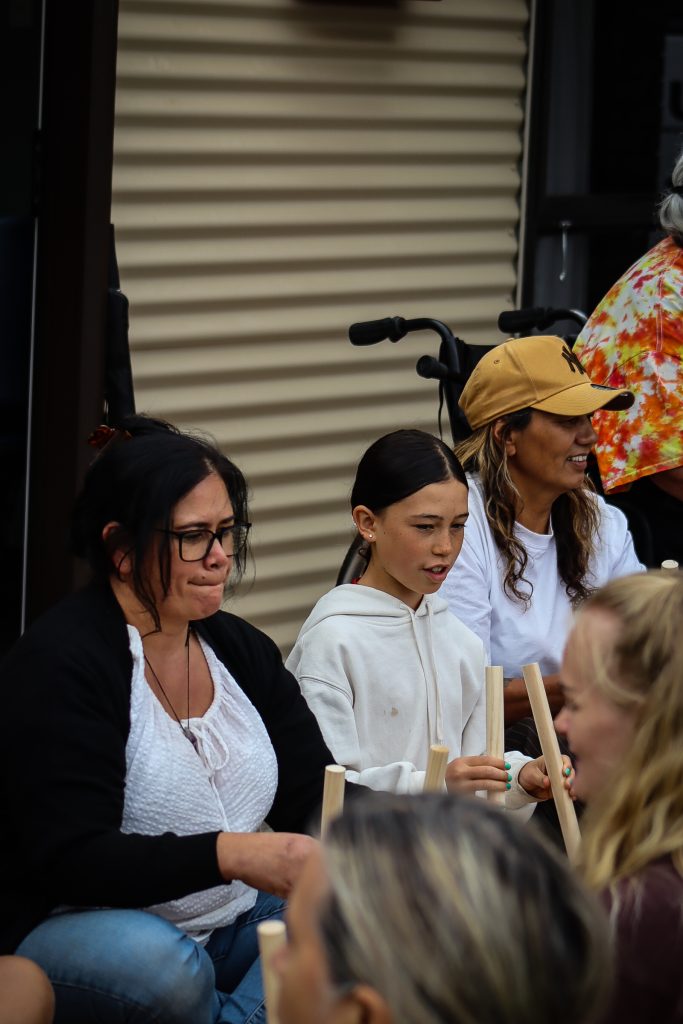
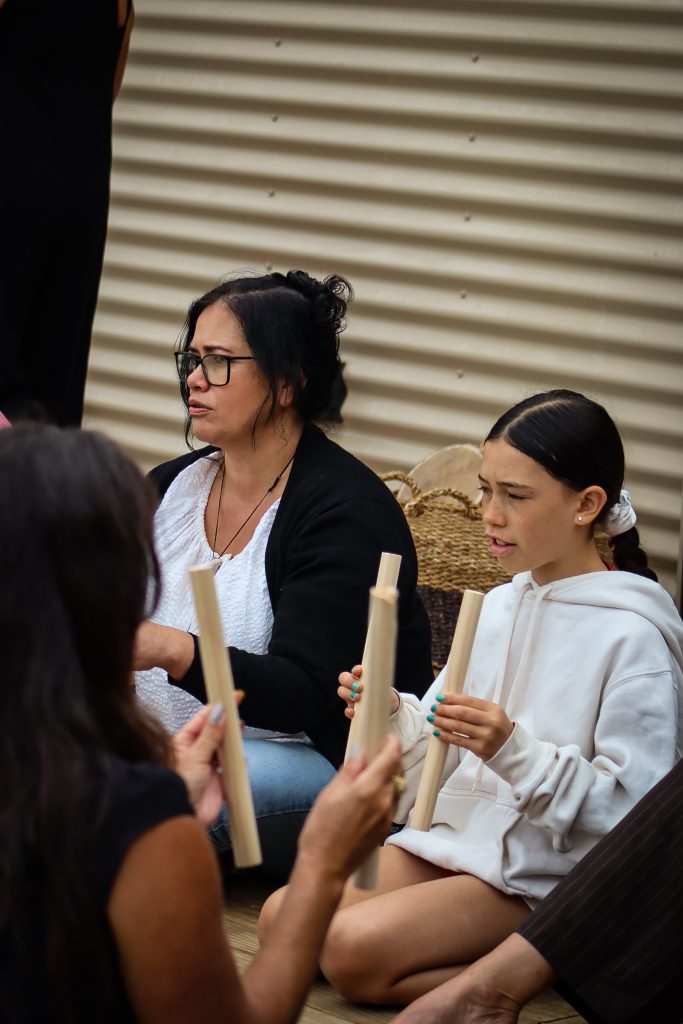
The rākau games were fun and lightened everybody up and brought joy to the whole process after full-on engagement in the spiritual purepure.
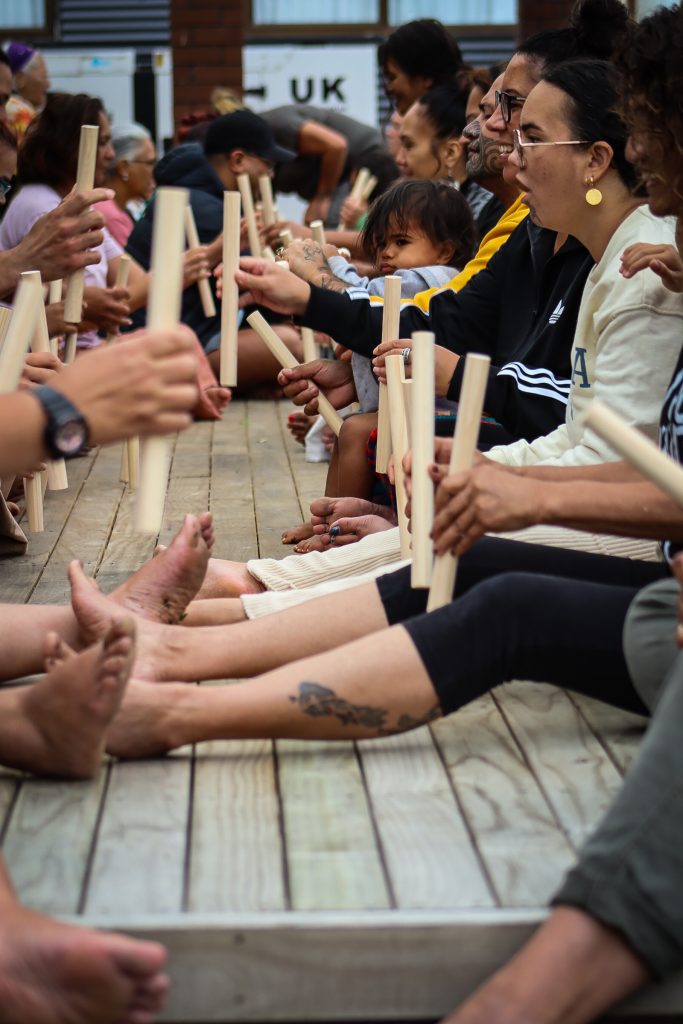
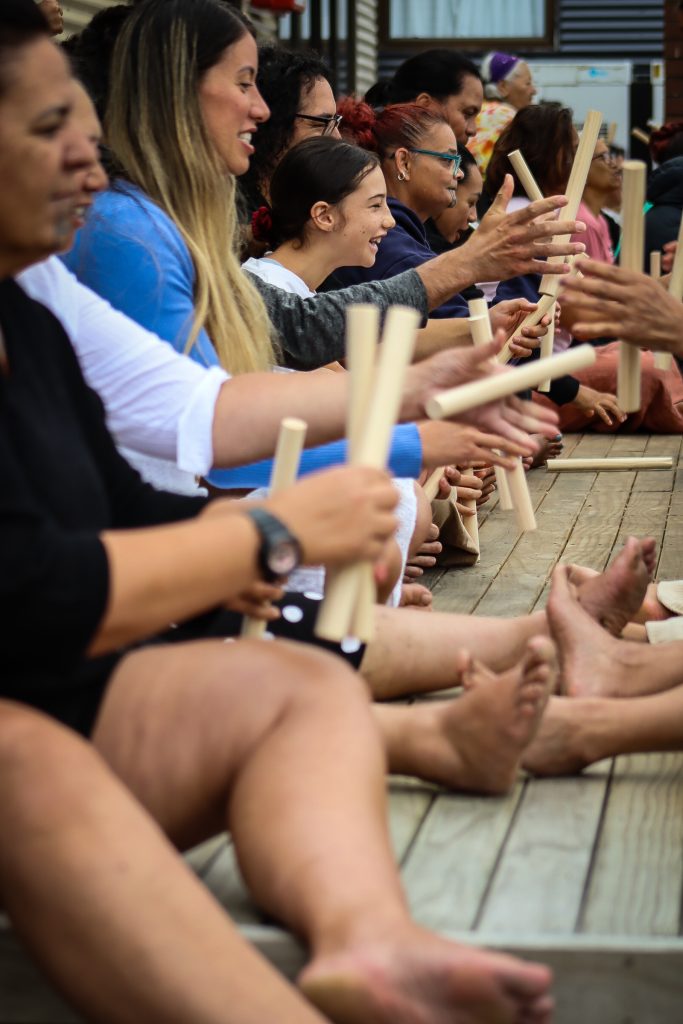
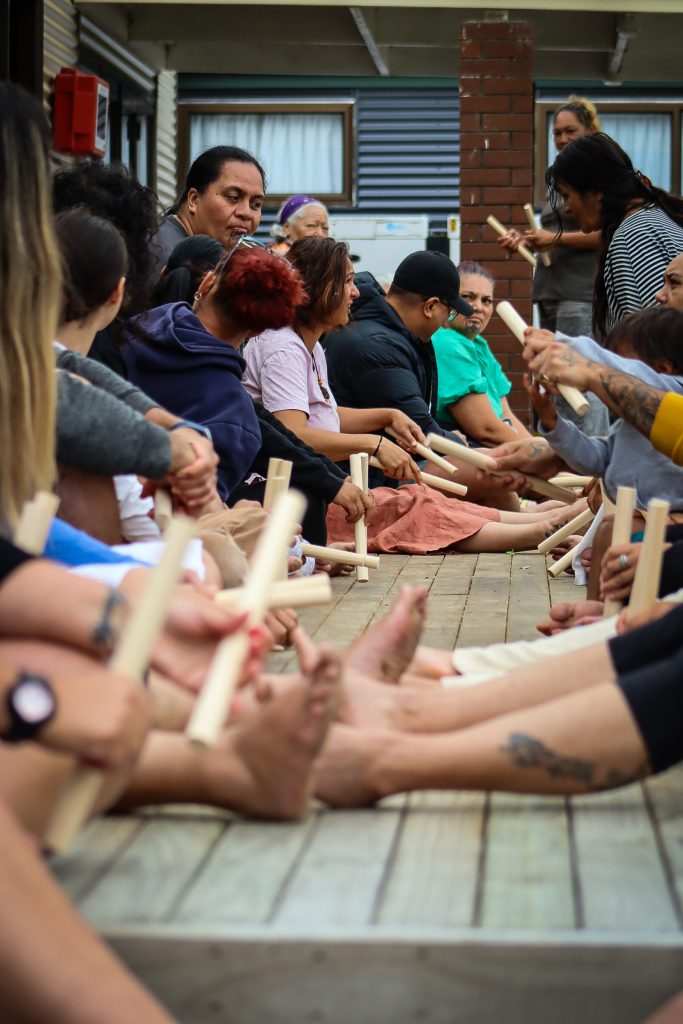
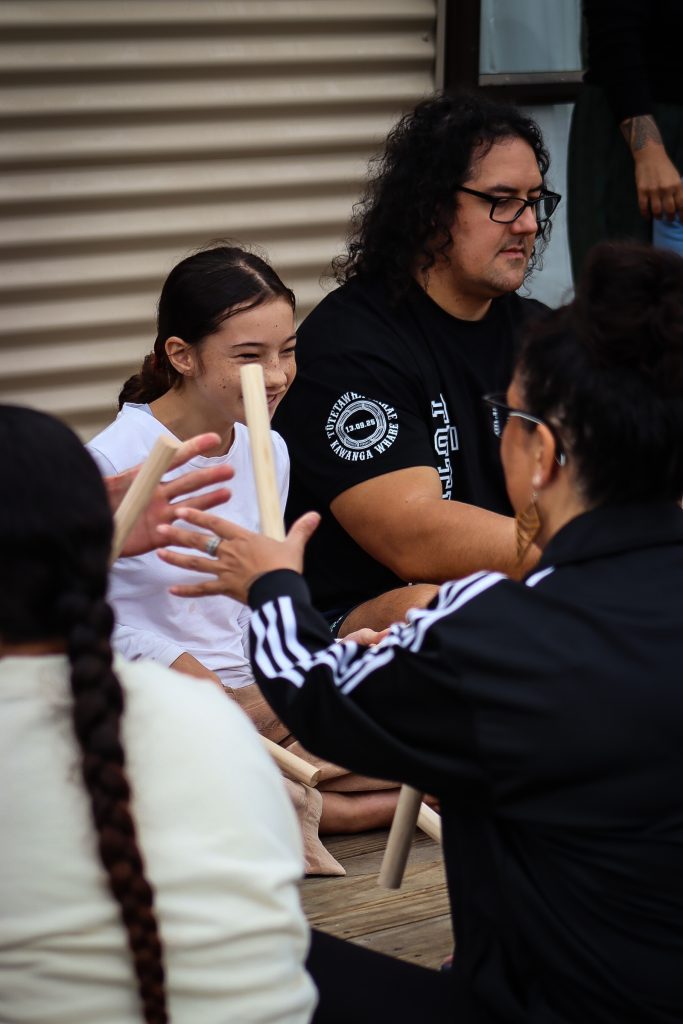
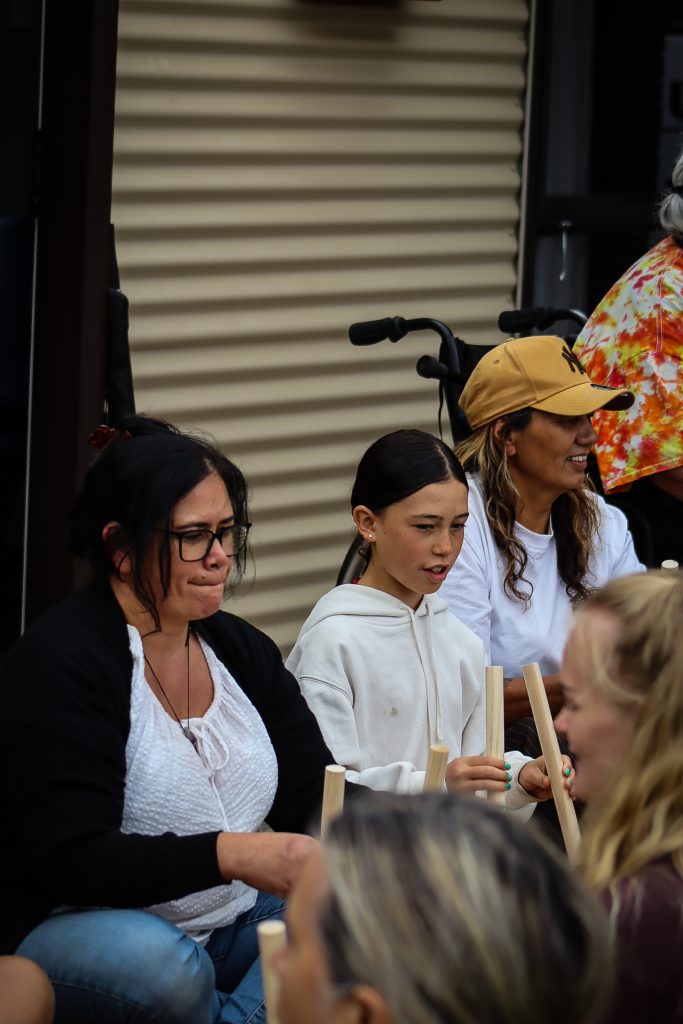
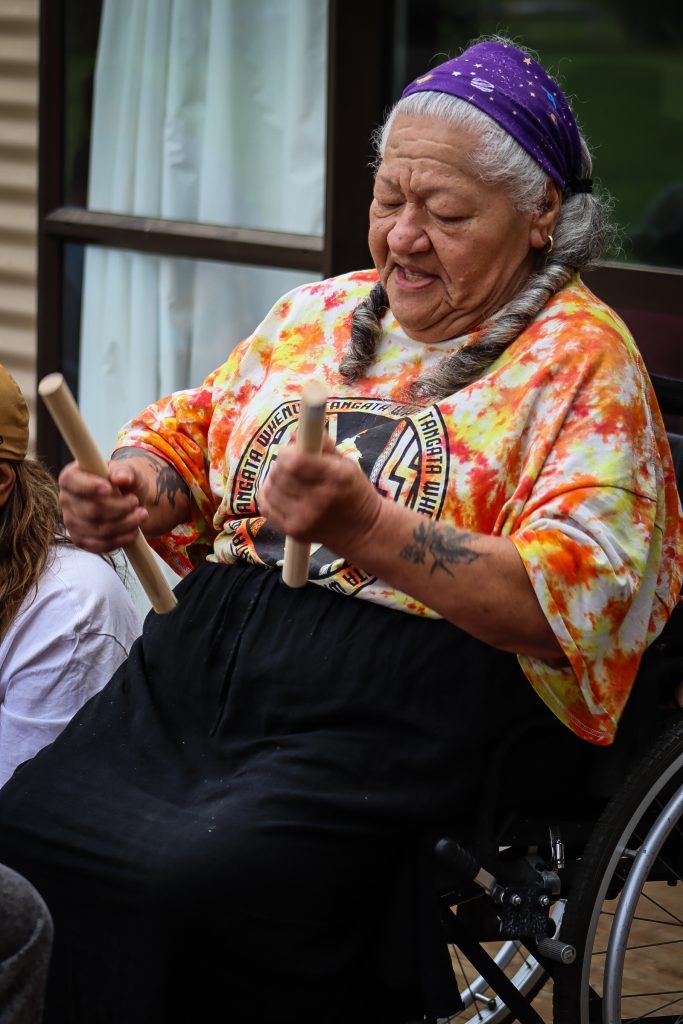
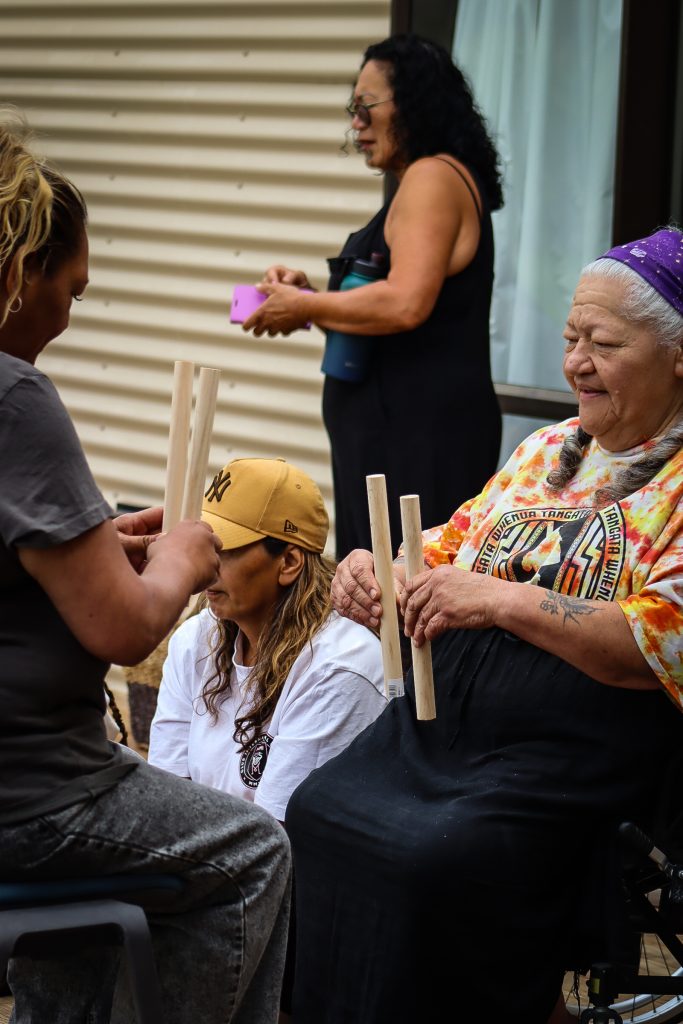
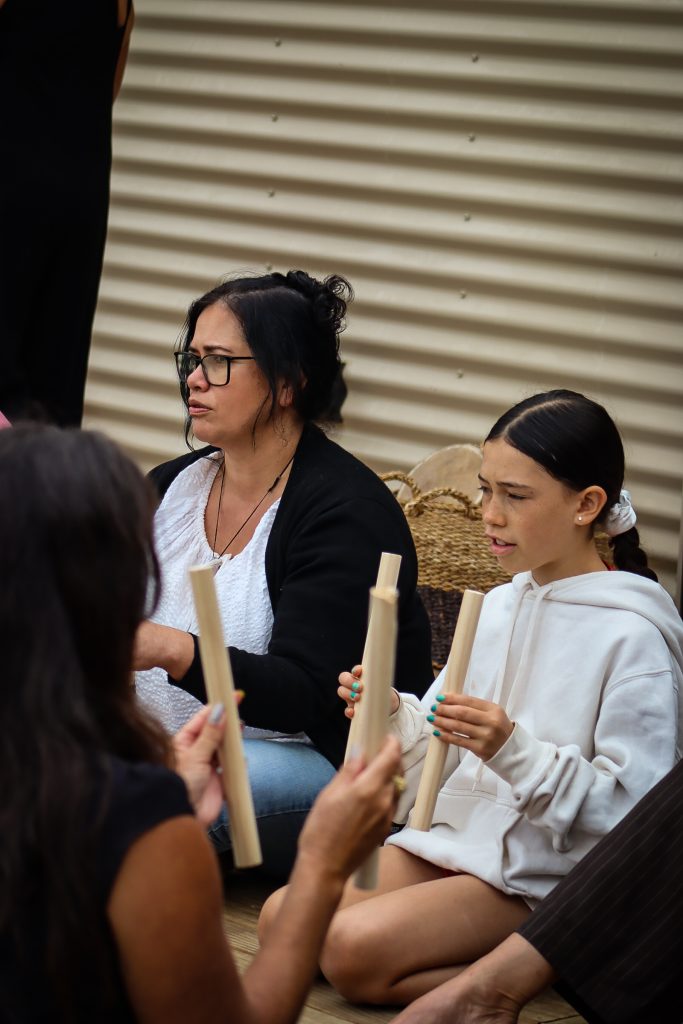
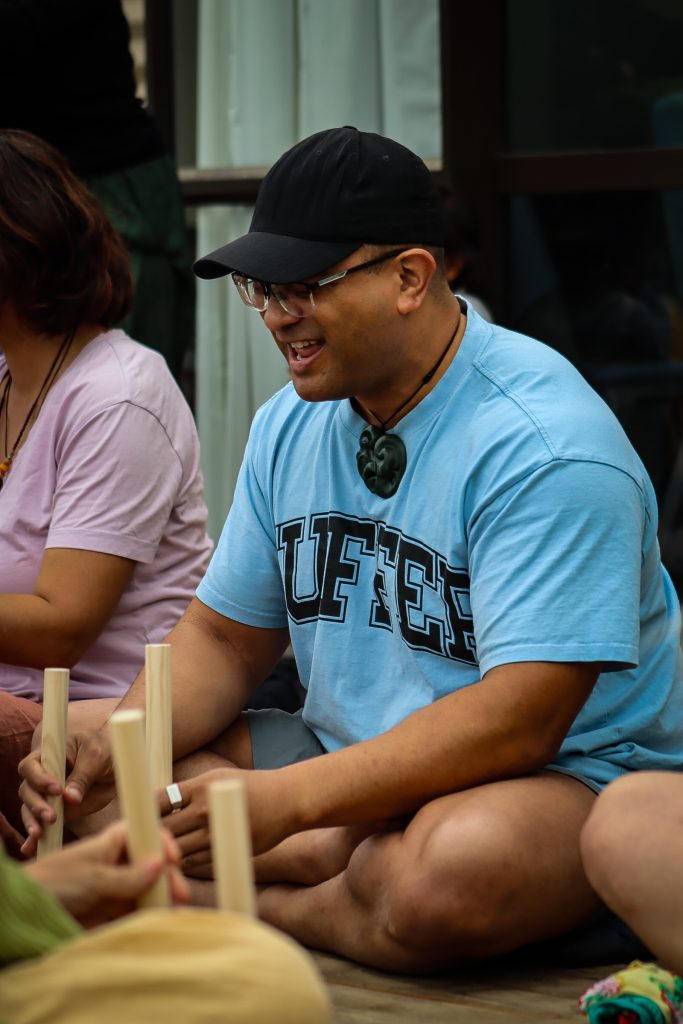
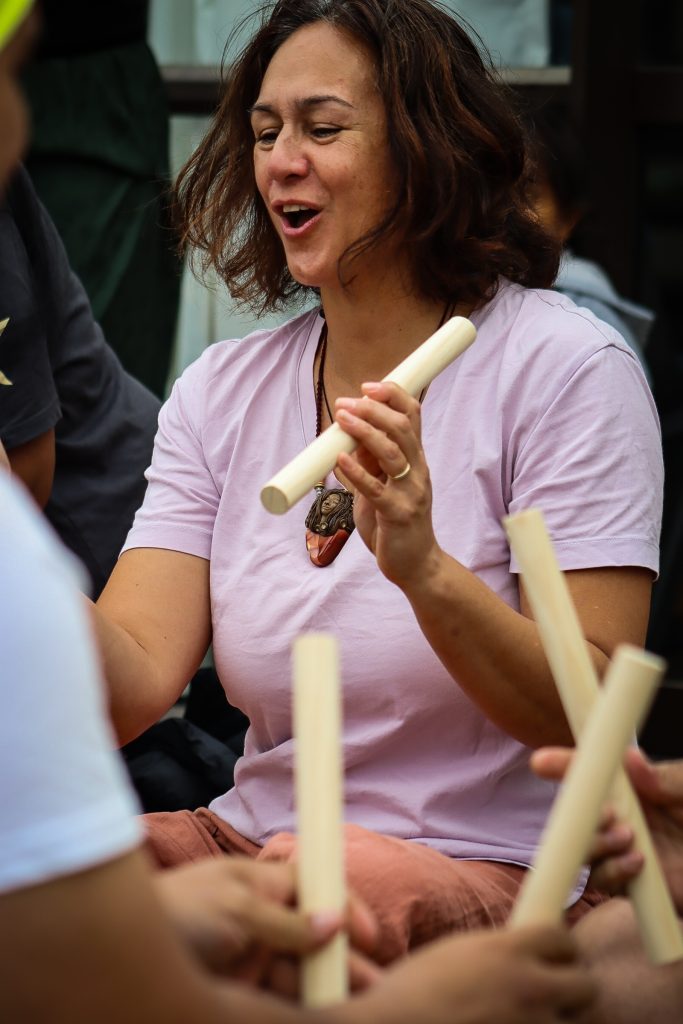
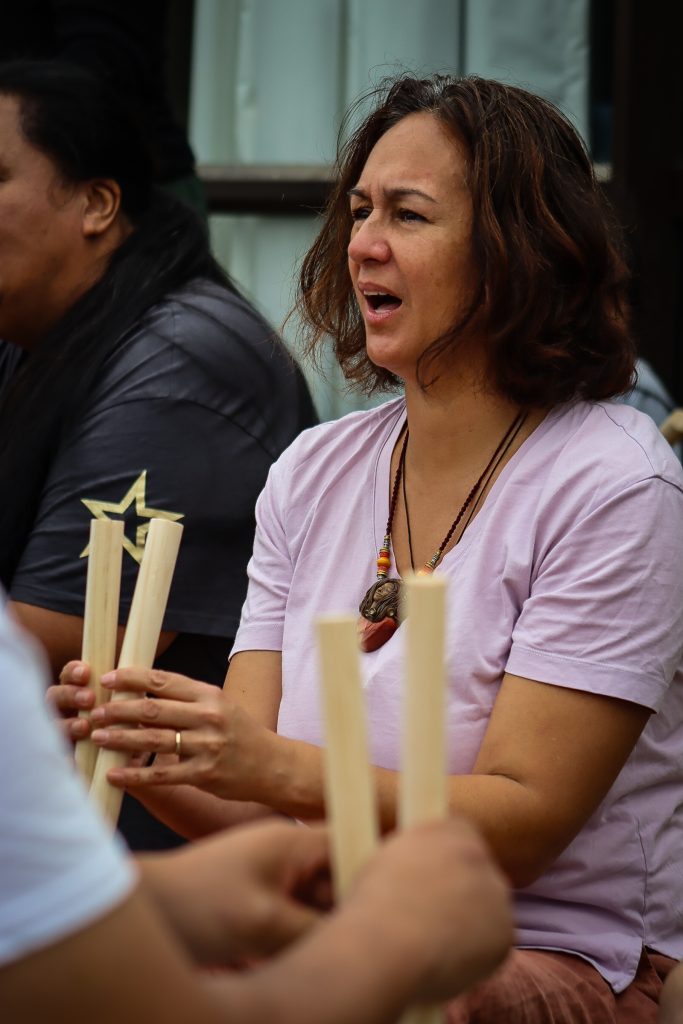
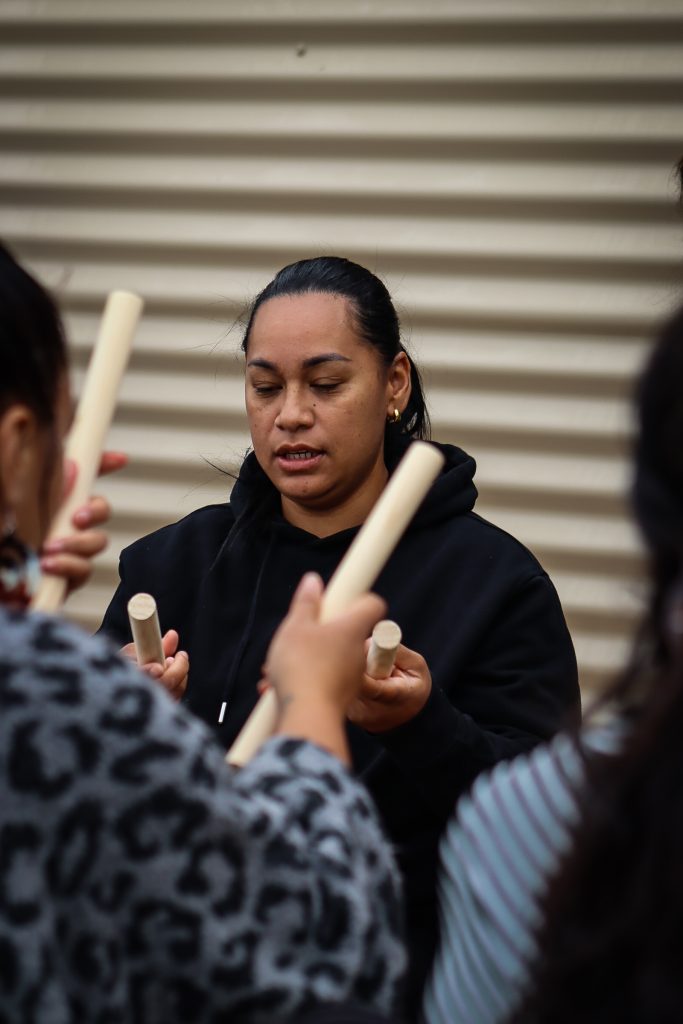
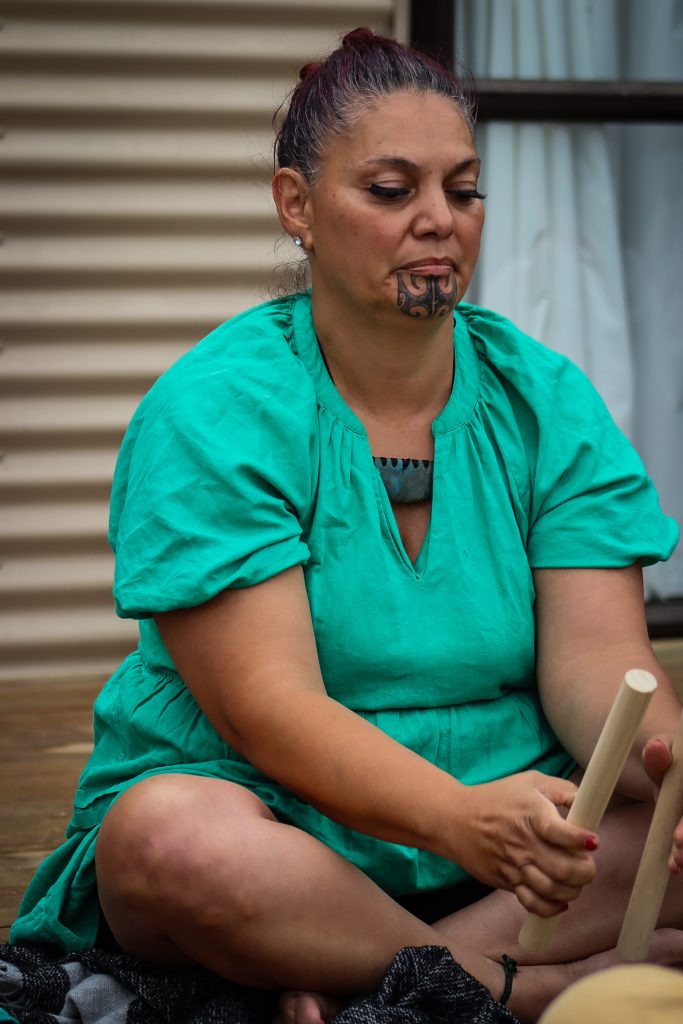
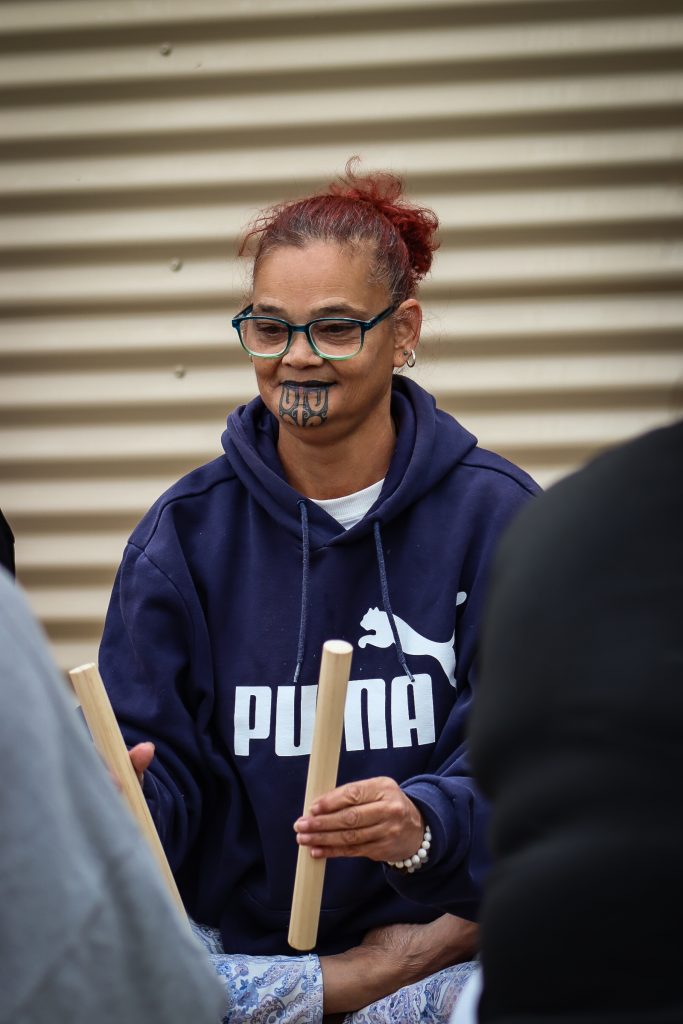
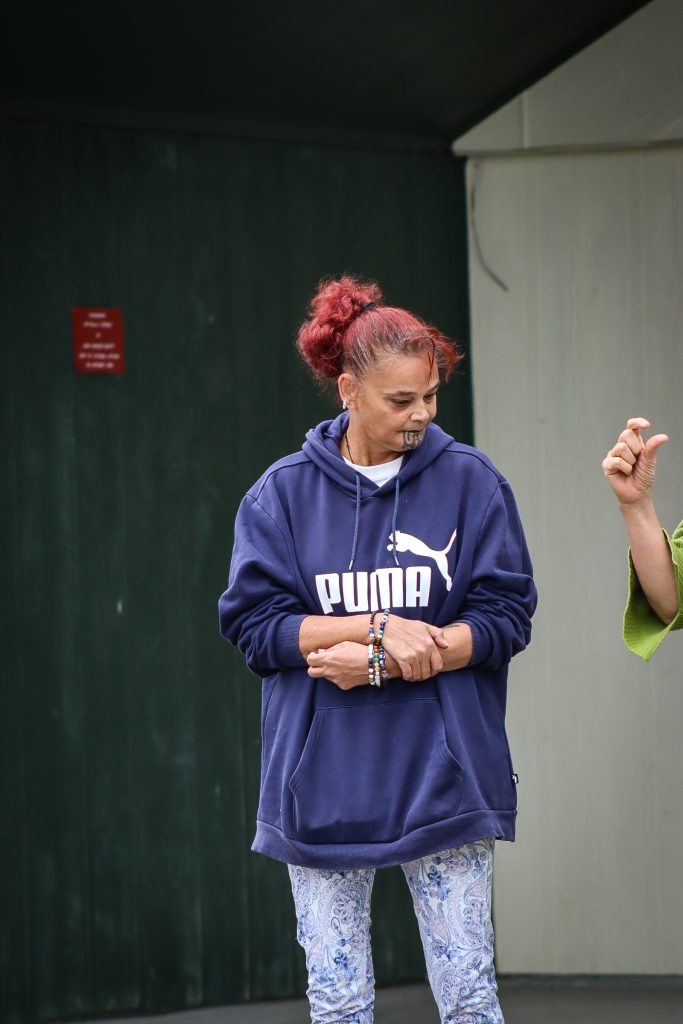
The Ako – reciprocal learning and group-based learning strategies ensure that both tuakana and teina are recognised and learn from and with one another. This approach values shared wisdom, lived experience, and collective growth. Presenting back to the rōpū serves to strengthen confidence and articulation.
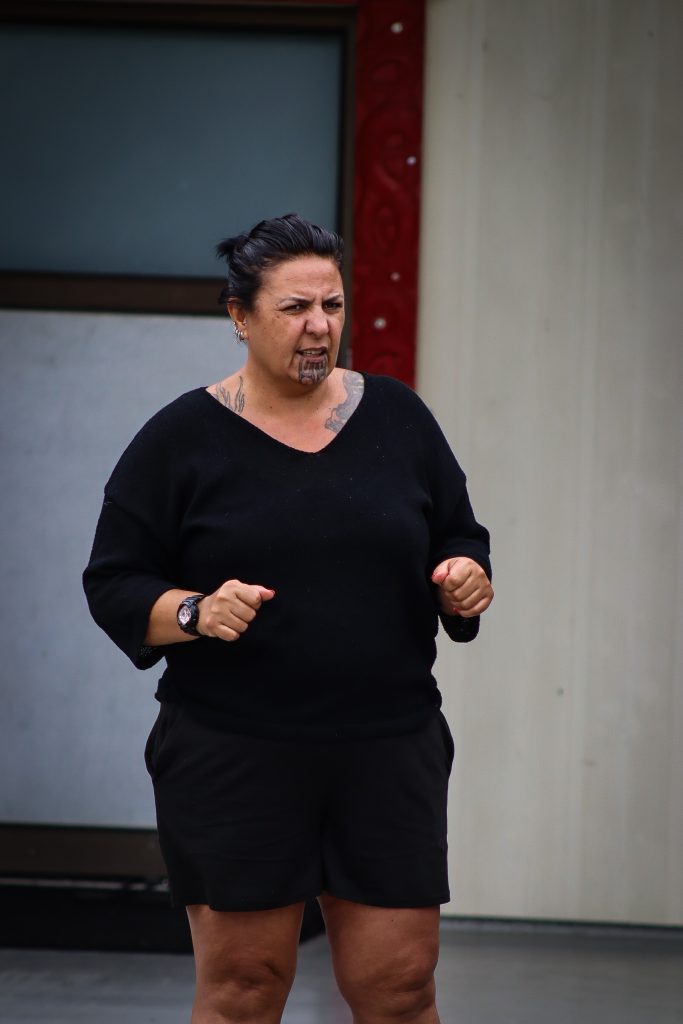
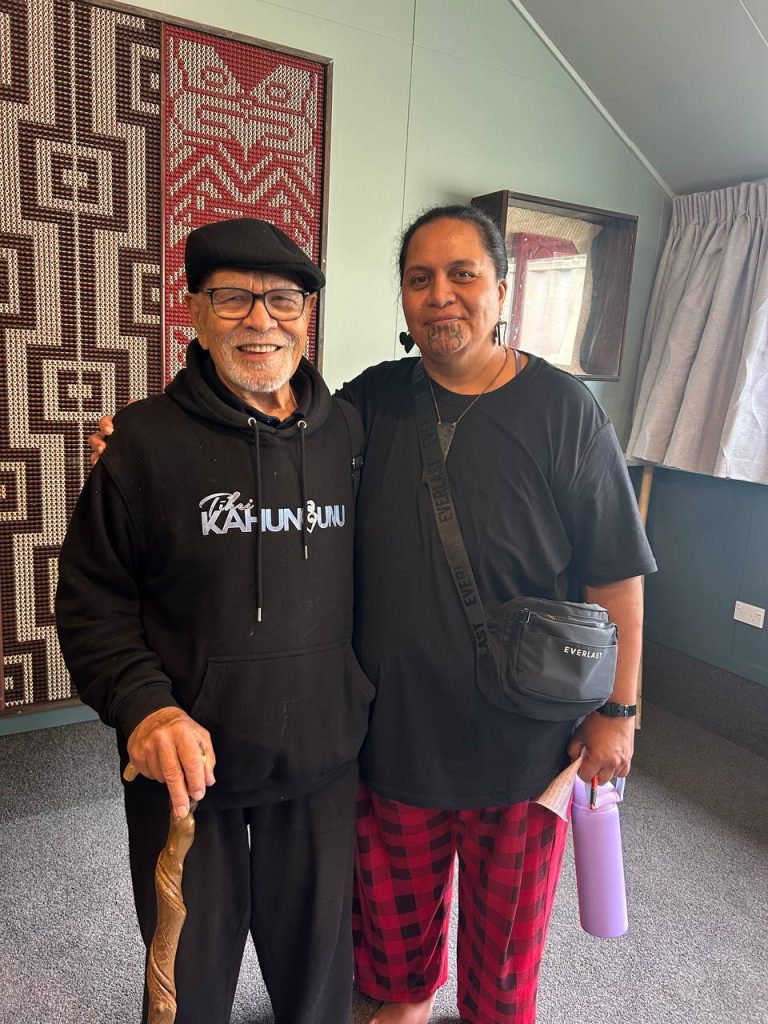
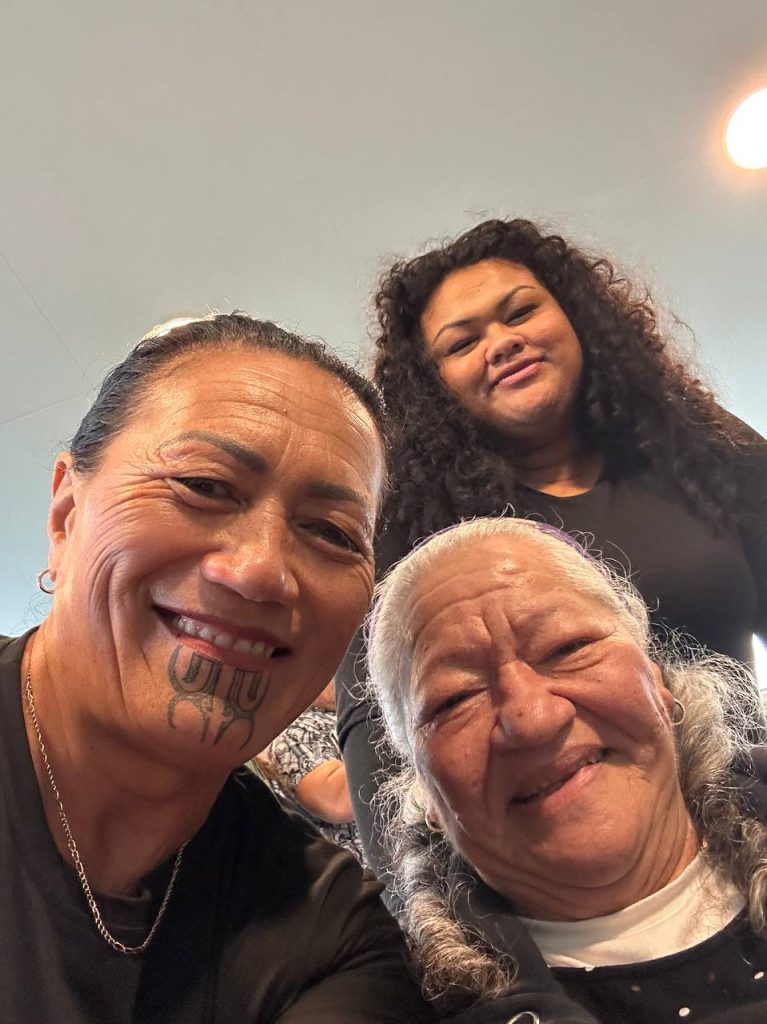
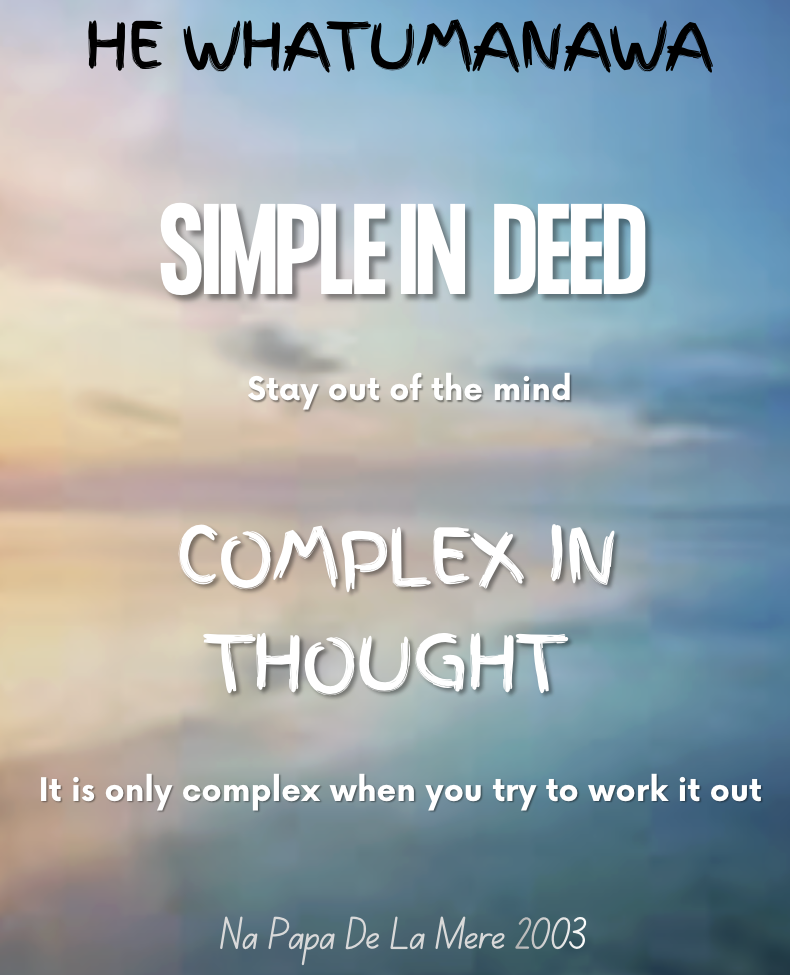
After my first purepure in 2003, on a beach in Whitianga, I sat down to watch the footage I had filmed. As the takutaku began, I saw a violet light move quickly over the mountains in the background and across the sea.
Each time Papa De La Mere flicked water onto someone, this violet light, something we could not see with the naked eye, appeared in the film and moved all over their body.
I sat beside Papa Jo and showed him the footage. He was amazed. He said I was very fortunate to have captured it, because this mahi is very tapu and often cameras break and stop working.
I set up the TV so everyone could watch it on a big screen. As we sat together and viewed it, we were all amazed and left breathless. It is amazing what is happening behind the scenes, things that are not captured with our physical sight, only our spiritual matakite, so being able to film it was amazing.
I still have the video and was never able to show it publicly, not only because I didn’t have everybody’s permission, but also because the video player wouldn’t play anymore. I will probably need to find someone who knows how to transfer it to an online site so we can all review it again. Watch this space!
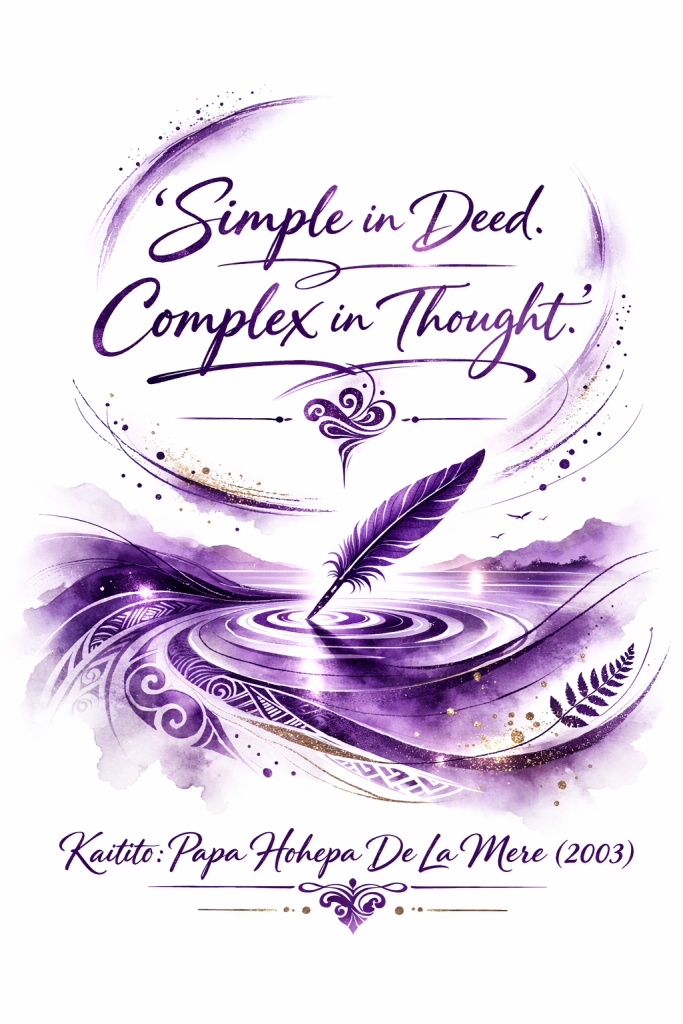
Purepure i te Taiao
Over that year in 2023 studying with Papa De La Mere, we did a number of purepure on the beach as well as on the land. As well, travelling overseas with the Maori healers for 12 years, I experienced many purepure in the sea with Manu Korewha, and all the while was practising my takutaku daily to keep me safe in my practice as well as clear away unwanted energies.
In Ahuriri, due to heavy rain warnings and a sewage overflow at the Westsore beach, we were unable to go to the moana for the purepure. Instead, we were able to do a spiritual purepure on the marae, outside on the whenua.
Make sure you go all to the end of the vimeo movie until you get to the credits at the end.
Being connected to te taiao and grounding ourselves in the history of our local marae ensures that we remain aligned to our whenua and our whakapapa. Through hands-on spiritual rituals, we honoured the practices of our old people, keeping our ancient healing traditions alive for the next generation.
Be mindful that you need to go through the takutaku line by line via wananga to translate it before you start learning it. If you are unaware of the tikanga of performing takutaku, then you can get taken out.
I remember asking Papa De La Mere, ‘How do you know when you’ve been taken out,‘ and he replied … ‘Ohhh you’ll know alright Charlotte’!
Takutaku
Just because you know the protocols (rights and wrongs) for performing takutaku, it doesn’t mean that you will listen. If you are anything like me, you might learn the hard way and then remember afterwards.
The first time I got taken out, I couldn’t get up for 3 – 4 days in a row, sweating profusely like having a fever and in a different world as I had never known before. I learned fast that I didn’t want that again, but some of us are slow learners with spiritual mea and have to go through it time and time again before it finally sinks in.
Takutaku are not like normal waiata. They are deeply spiritual and are used to invoke different Atua and other spiritual phenomena (beings) into your space for different kaupapa. The takutaku that Papa De La Mere gave me are not generic, and each one is for a specific reason.
Practice your takutaku at home first until you get it right, because if you get just one word wrong, it can change the entire kaupapa, and the outcome may be the opposite of what you had intended.
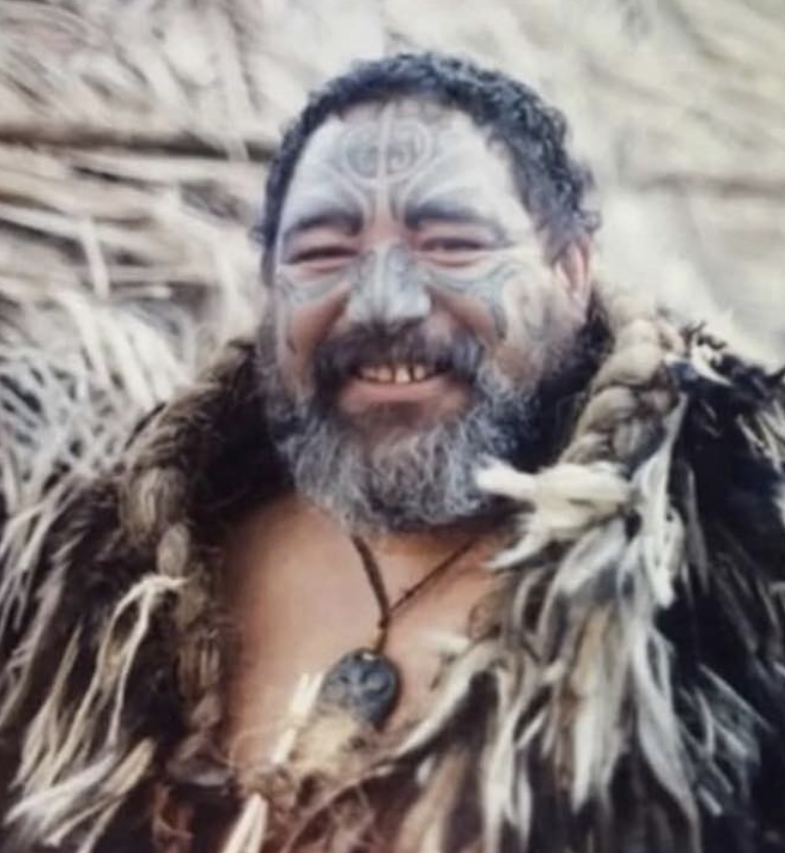
This is why Papa De La Mere went over my folder of takutaku that he had given me and went meticulously over each word and phrase.
Not all of us were taught at 3 years old like Papa De La Mere was. His parents gave him to the grandparents at this age, who would wake up at 3 am to practice their takutaku. Takutaku are what keep you safe in your romiromi mahi. Without it, your mahi is unsafe!
Papa De La Mere said that between 3 – 5am is the time that the ancestors will give you the download of what is needed for your day. However, you must either takutaku (which is also part of your breathing) to open you up to the whatumanawa, for this is where it is at.
I used to discipline myself to wake up at 2.30 am and do my breathing before getting up to write my master’s and doctoral theses. This ensured that my writing was founded in the spiritual lores of our ancestors. It is these kinds of practices that we need to normalise in our homes and in our everyday lives.
Ko te WAIRUATANGA kei mua
Wairuatanga remains central to all aspects of these wānanga. Intentional strategies were used keep the roopu spiritually aligned and grounded.
There is a strong emphasis on upholding the tikanga and kawa of Te Oomai Reia Romiromi. These rituals provide a firm foundation for understanding the distinct roles and responsibilities of:
- Tohuna – born with the knowledge and only taught to access it (sower of the seeds of wisdom)
- Tohunga – trained from an early age and mentored for life, providing your practice is tika
- Tohunga Ahurewa (a priest or priestess of a higher spiritual order)
Through this integrated approach, knowledge is not simply taught; it is lived, embodied, and carried forward with integrity for future generations.
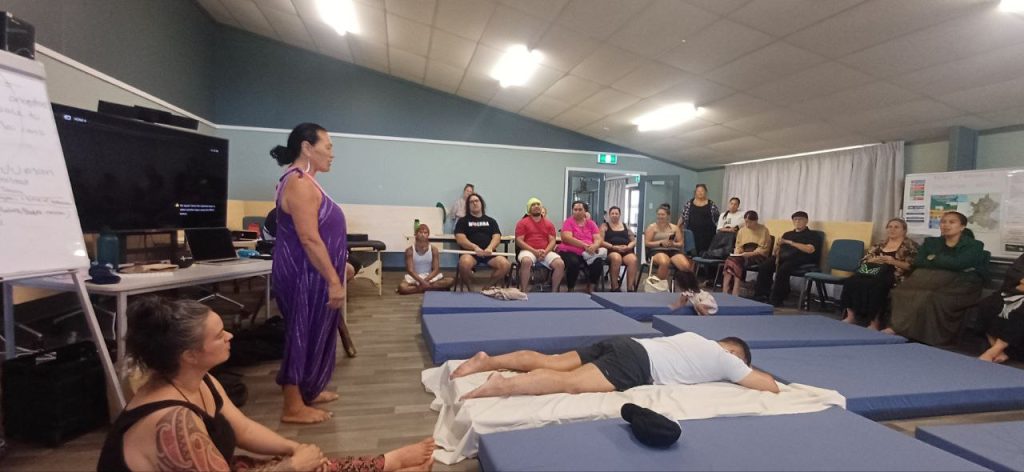
The learning environment is open, experiential, and based on hands-on healing. There are no spectators in this wānanga. Everyone is expected to take part fully and engage in the mahi.
Deep learning comes through doing, not just watching. This is especially important when it comes to healing oneself from a lifetime of hara, mamae, and mauiui.
Our Taonga Learning Through Experience
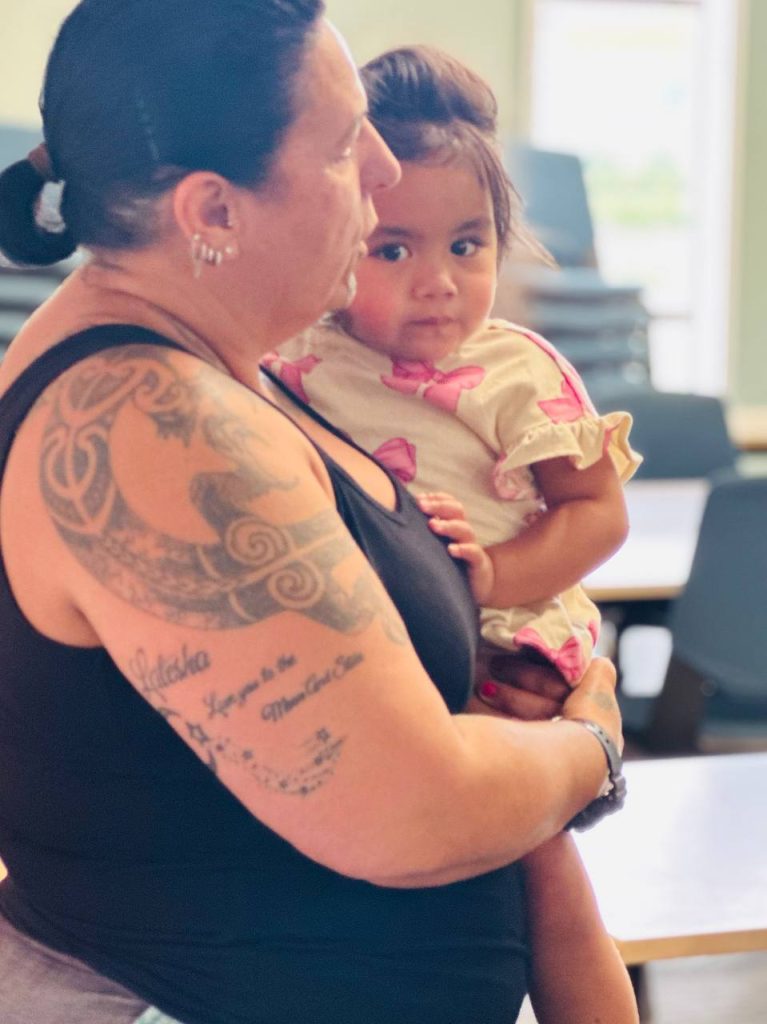
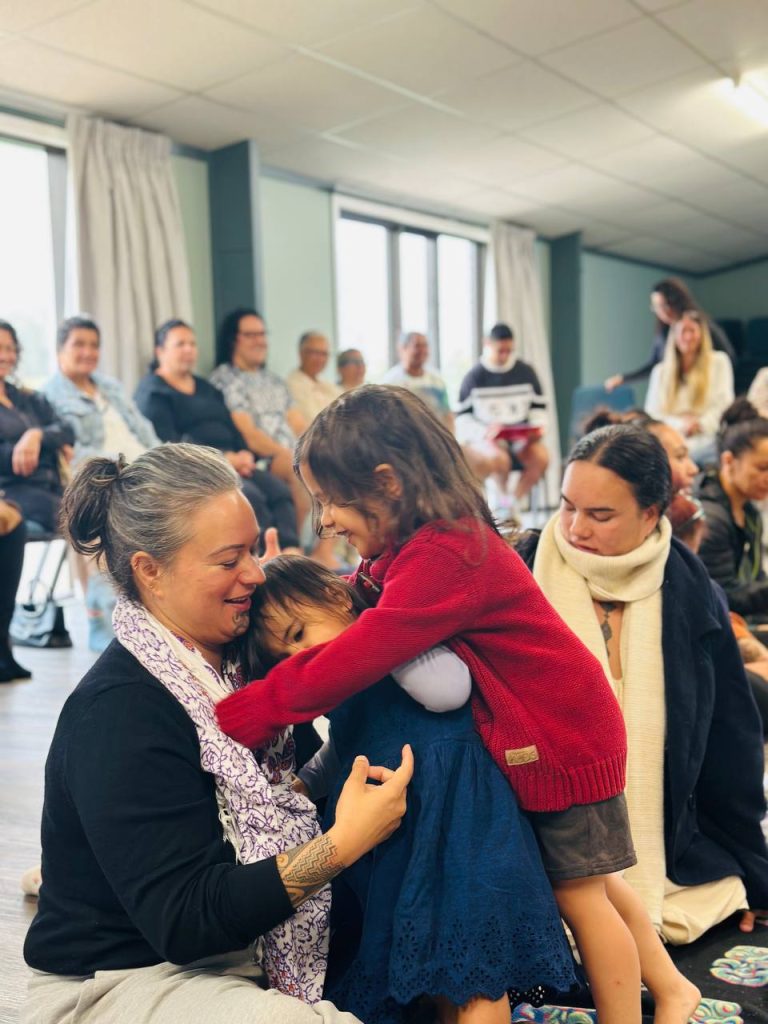
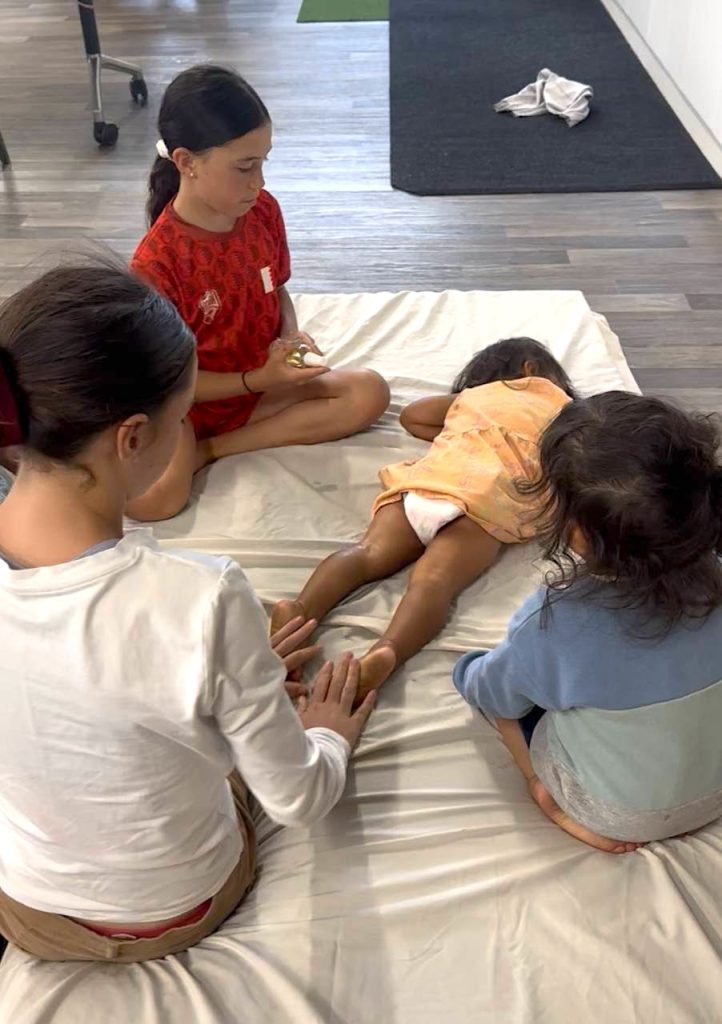
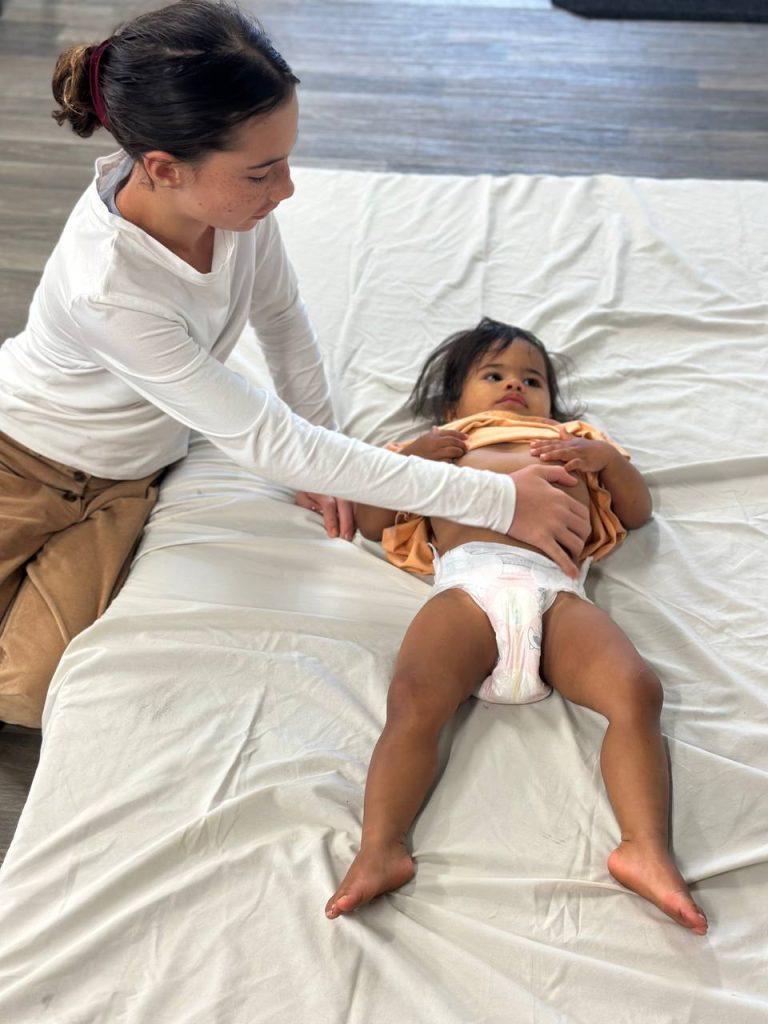
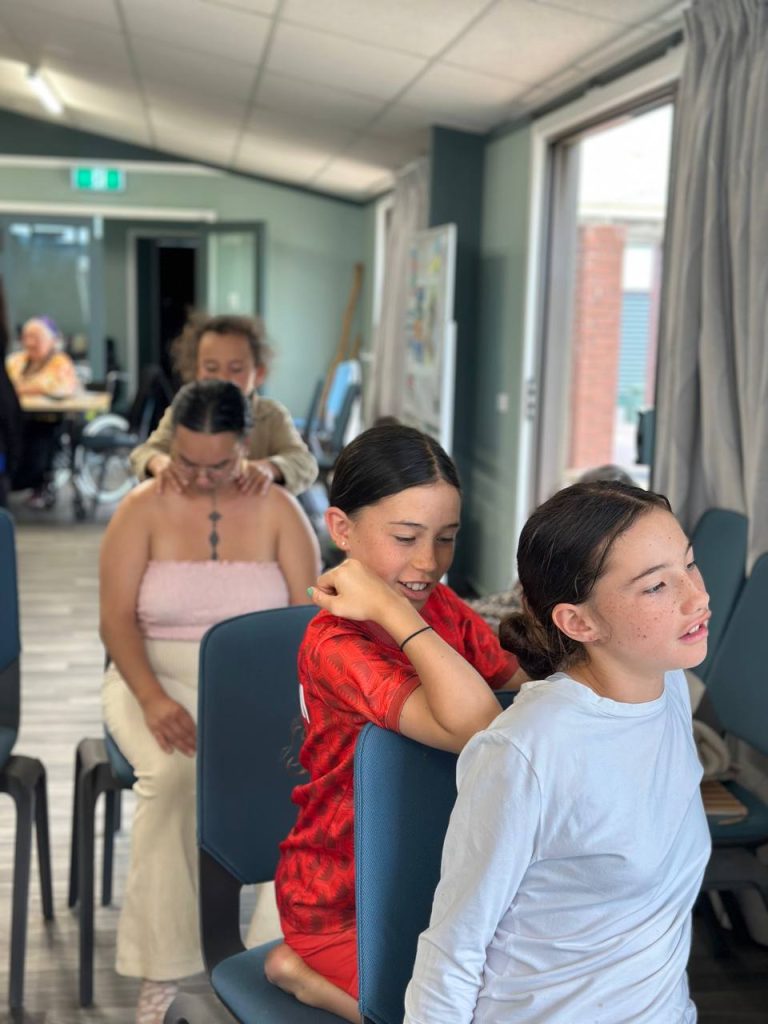
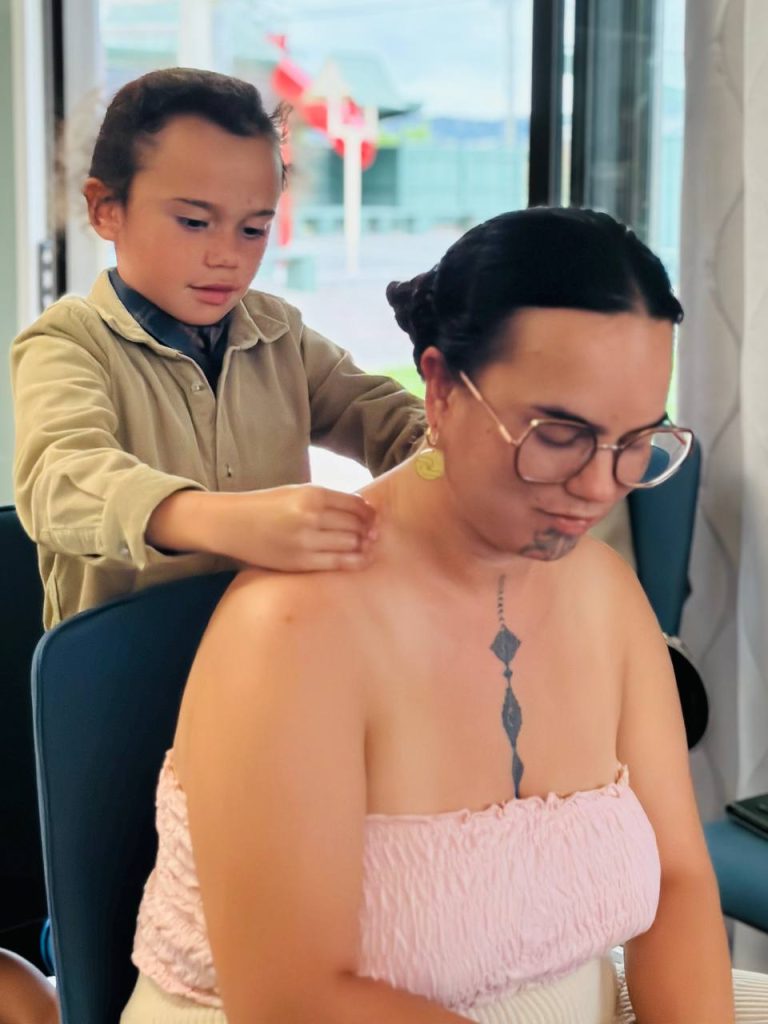
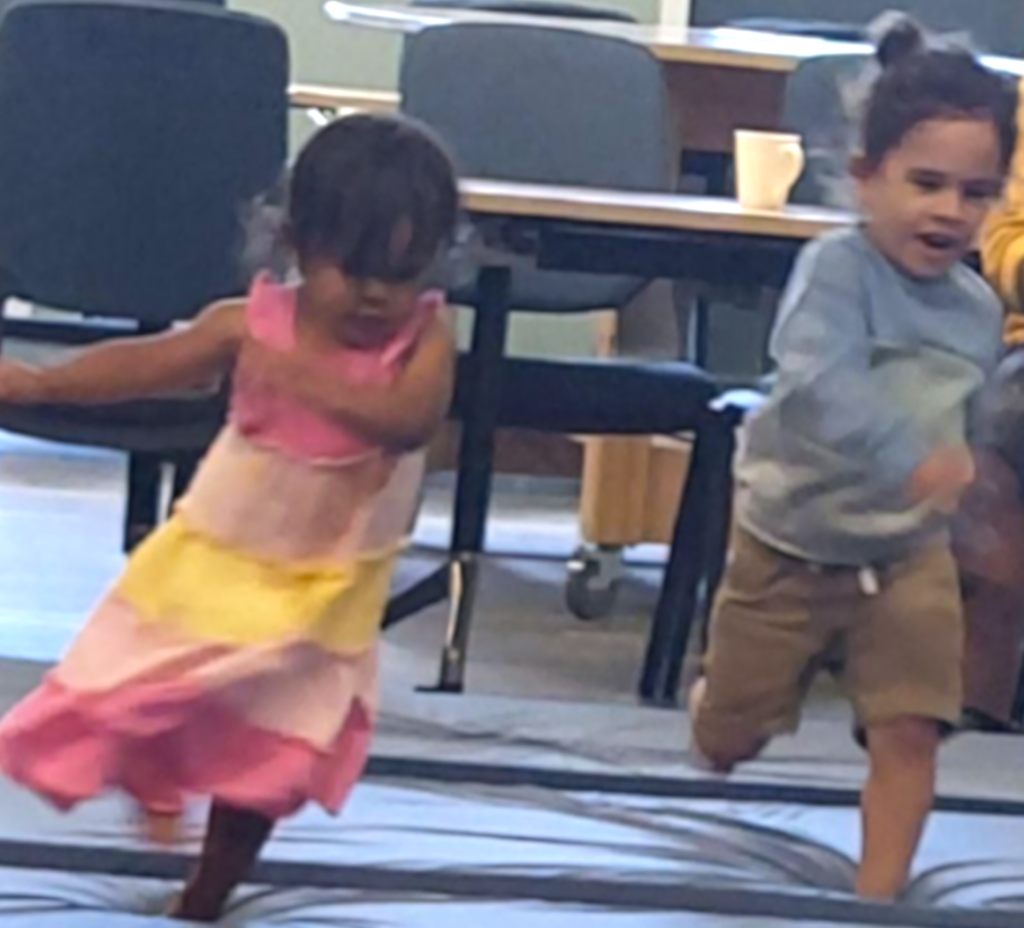
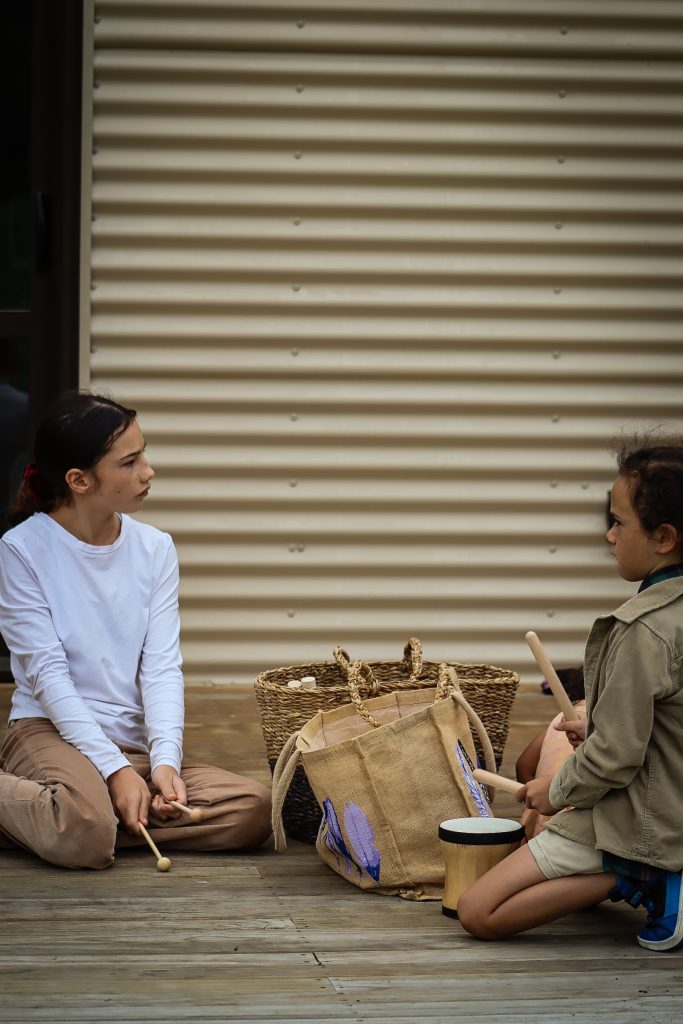
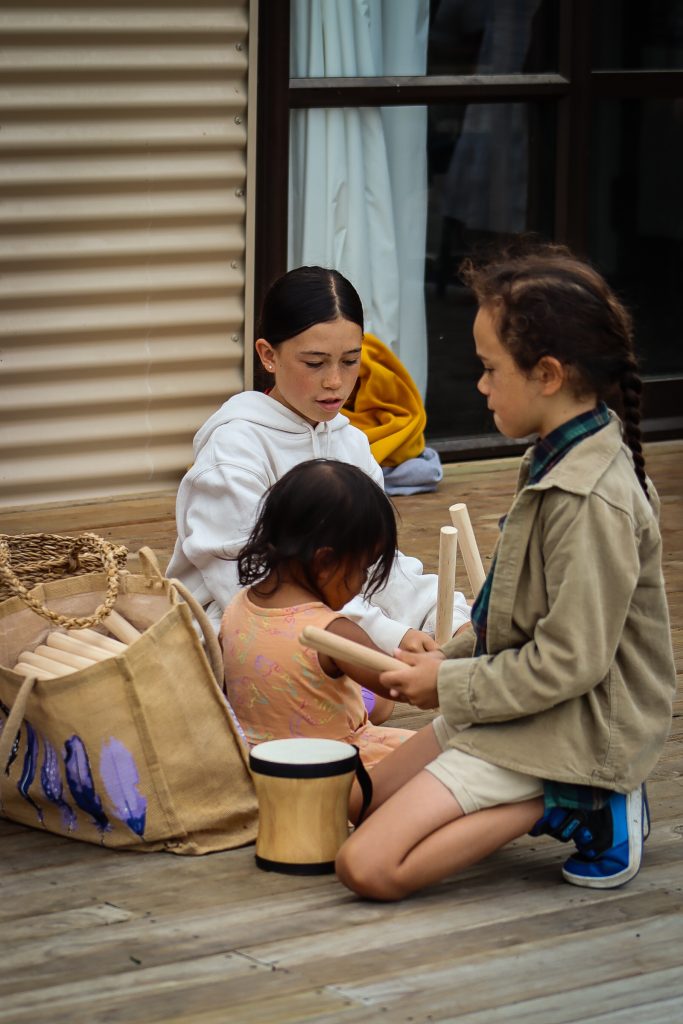
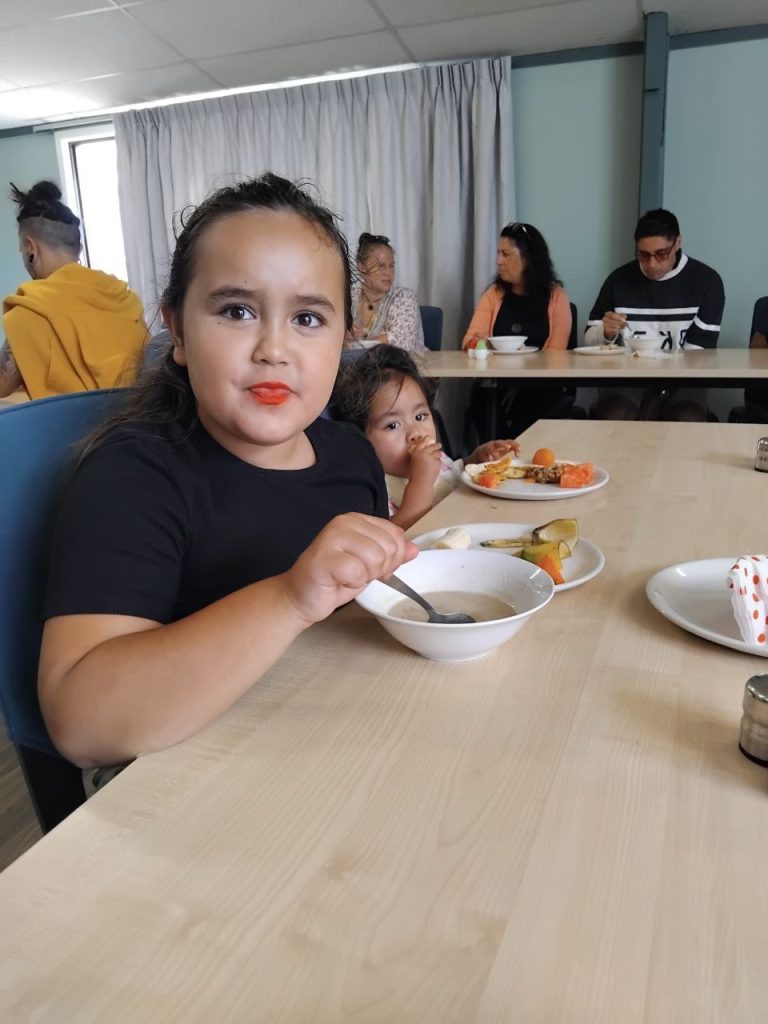
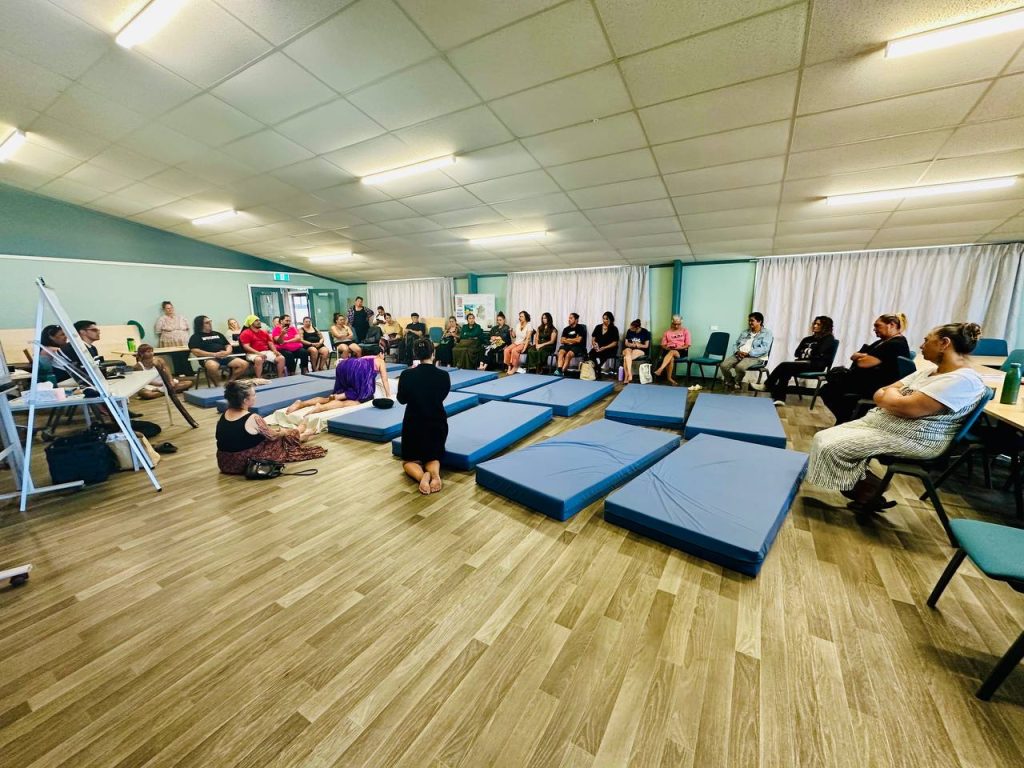
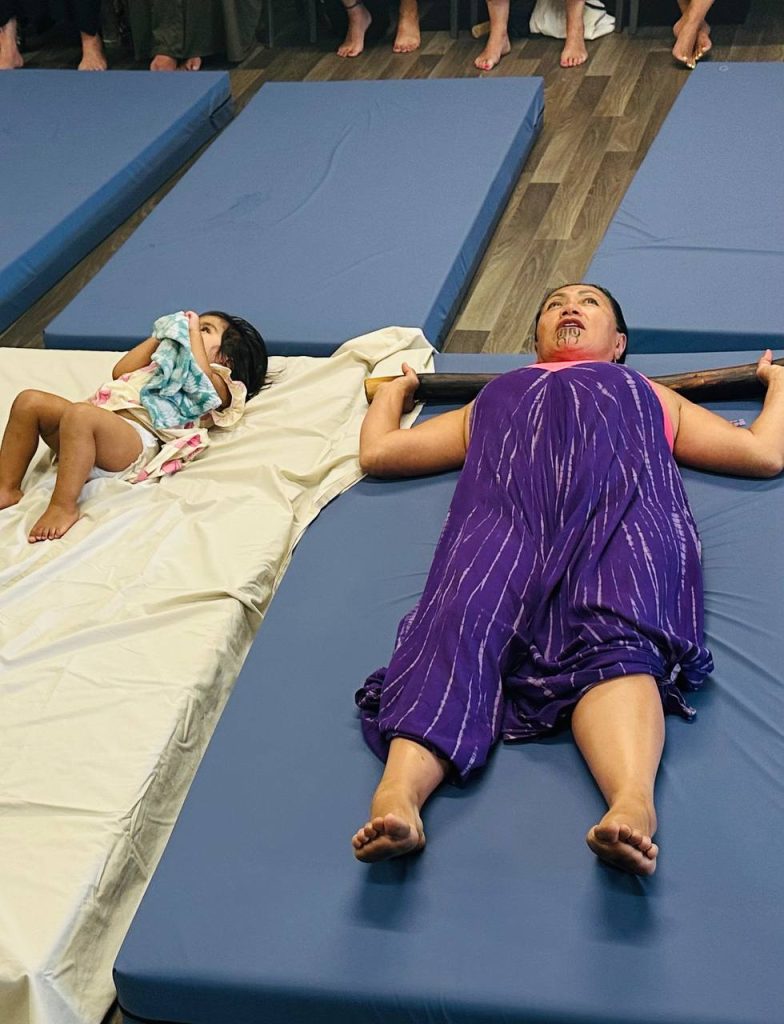
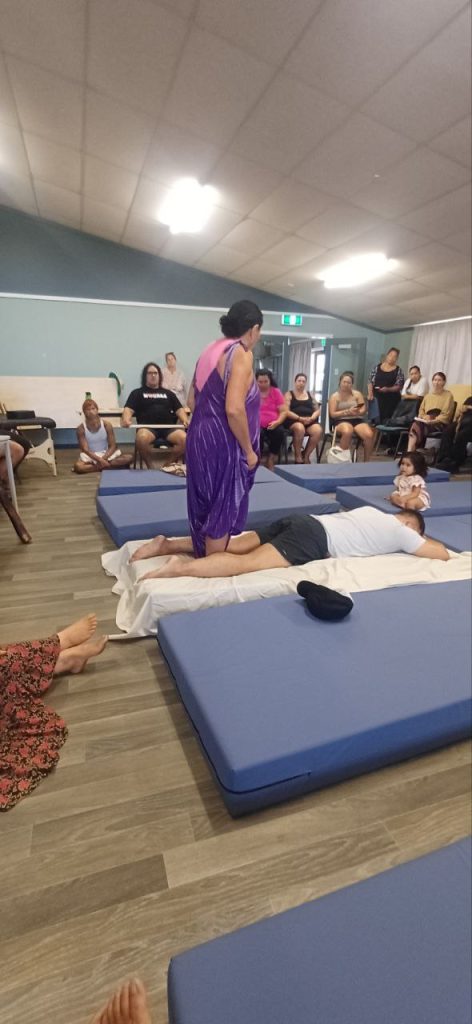
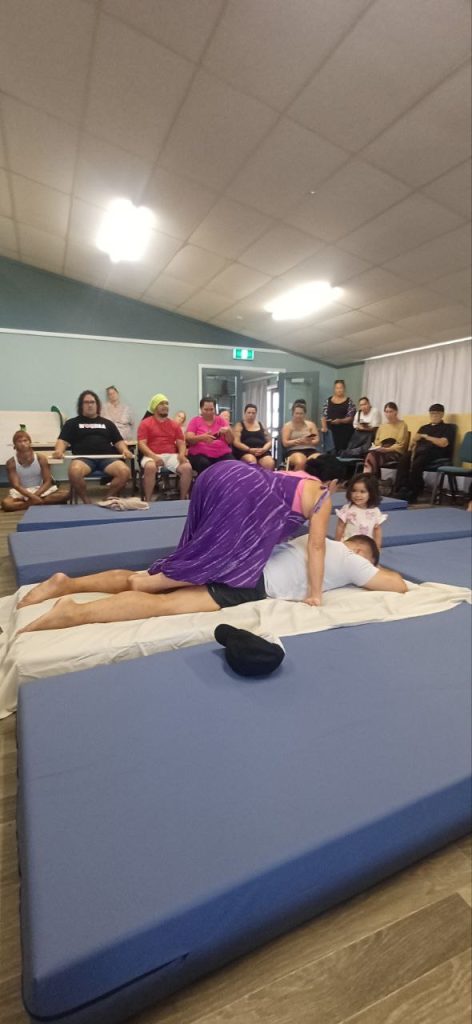
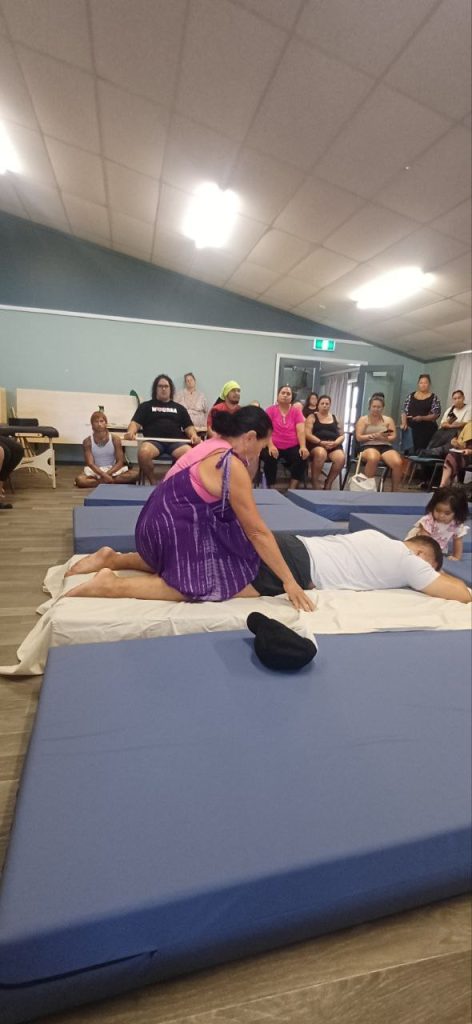
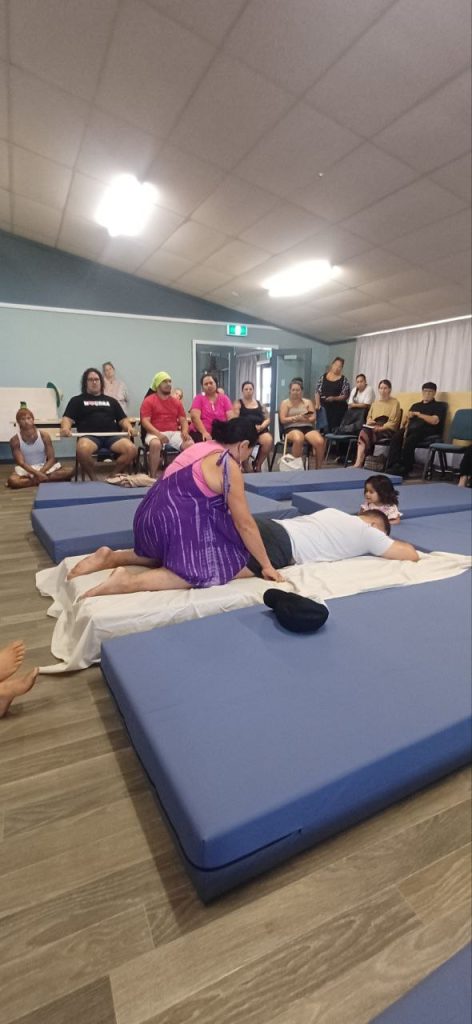
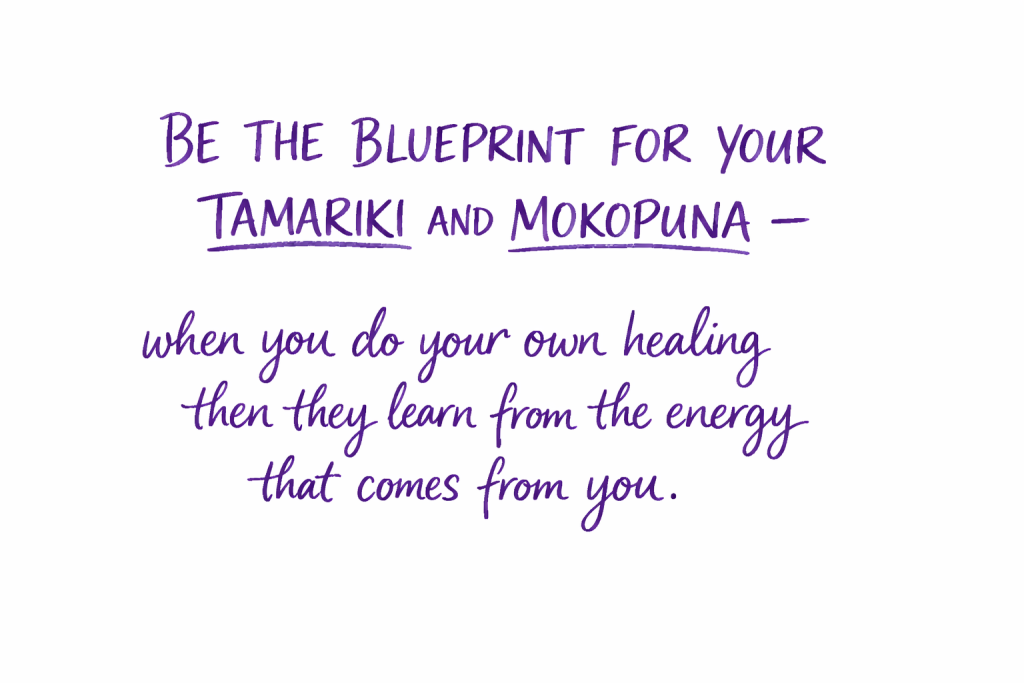
In one of the slide shows, you will see this little bubba watching intently while I was working with Robert on the table. In the different shots, you could see her looking at different areas of his body whilst on the table. She is already tuned in and hasn’t been conditioned yet. Be aware that the gifts our tamariki have before going to school. They are open and flowing. When they get to school, as parents, be mindful that they mustn’t tell others, teachers, especially, the things that they can see, hear, sense, feel, smell and know. Otherwise, nek minute, they are seeing a psychologist and are prescribed medication.
As I mentioned at our wānanga, I made sure that my mokopuna knew to only tell Mummy, Nanny and Aunty Atarangi about the spiritual things they were aware of. At 7 years old, one of my mokopuna asked why Great Nanny was standing there looking at us. I couldn’t see her, but he could, so when I asked him what she was wearing, he said, ‘HER RED DRESS!!! He was annoyed that I couldn’t see her, and he wanted to know why she was standing there looking at us. Once I told them she was just being nosey, wondering what we were doing or where we were … only then did he accept it and carry on.
With this in mind, we need to make sure that our tamariki are protected. Nowadays, tamariki as young as 6 years old are being sectioned by the judges in the mental health courts. This means they will have to take the antidepressant and/or antipsychotic medications by law. Thereafter, if anyone identifies a mental health crisis, the CAFS team (which stands for Child, Adolescent and Family Service) can come out to assess our children and young people and make sure the whaiora take their medications, and if they won’t, then they can be institutionalised in a psychiatric ward. The majority of whaiora in psyche wards throughout New Zealand are Māori.
With tamariki present at the wānanga, their learning happened naturally through observation and participation:
With an understanding that our pre-school tamariki are not yet conditioned by the limitations of adulthood, and are often still able to perceive the Tipua, Taniwha, and Atua in their purest forms. Their presence beside us and engaging in the activities strengthens the authenticity and depth of the wānanga.
SPIRITUAL ENERGY AND SEXUAL ENERGY
There is a very fine line between spiritual energy and sexual energy.
It’s important to know the difference between spiritual energy and sexual energy. If you don’t, the two can become confused, and your healing work can lose its clarity.
Spiritual energy is calm, grounded, andfocused on uplifting and empowering the whaiora. The spiritual energy is from the crown chakra that focuses on the philosophy of the Tohuna of the Ha that comes from a place of service, humility, and respect.
Sexual energy, on the other hand, is physical, personal, and connected to desire. They are not the same, and mixing them can shift the work away from healing and into human ego and/or control.
When working with whānau, there is much trust and mana involved. Your role in healing is to protect that trust. Staying humble and aware of your own energy is essential.
As a healing practitioner, you need to have a number of personal healing tools and practices that help you recognise and manage your energy. If sexual energy arises, it needs to be acknowledged and transformed, not acted on.
Knowing the difference and being able to hold clear boundaries is what keeps the work safe, respectful, and truly healing for both parties. Otherwise, it can taint your work, and you start working from the base chakra.
Working from the base chakra focuses on the philosophy of the Tohunga of the He, which disempowers and uses your spiritual healing abilities to take away the mana of the whaiora. There is a lot of trust and mana involved when you are working with whānau, and being humble is extremely important. Staying out of the human ego is a must, and this is all about control.
One should have a healing toolbox full of techniques and rituals to transform the spiritual energy from becoming sexual energy.
If you are showing your naked body parts during healing sessions, then have a think about whether this is a tohu of what energy your work is at. Transforming the sexual energy into spiritual energy is the secret.
The Spiritual Meaning of the Tailbone
The spiritual significance of the tailbone being down is likened to a dog with its tail between its legs. It is how the body tries to communicate with you to show fear.
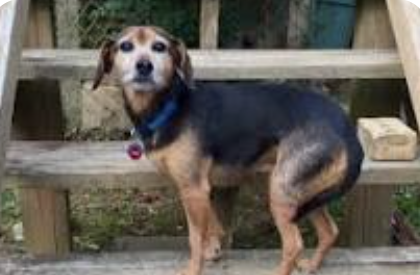
Once we explore what the whiaora fears the most in their lives, only then can we work on releasing that fear; otherwise, your infinite intelligence will manifest what you focus on, be it consciously or unconsciously.
Your infinite intelligence is incredibly obedient. It will keep recreating those same patterns again and again until you have a realisation. That “AHA” moment is vital. Otherwise, we keep doing the same thing, getting the same outcomes!
Tumatauenga & Rongo
According to Rose, Tumatauenga and Rongo work as twin flames in terms of healing.
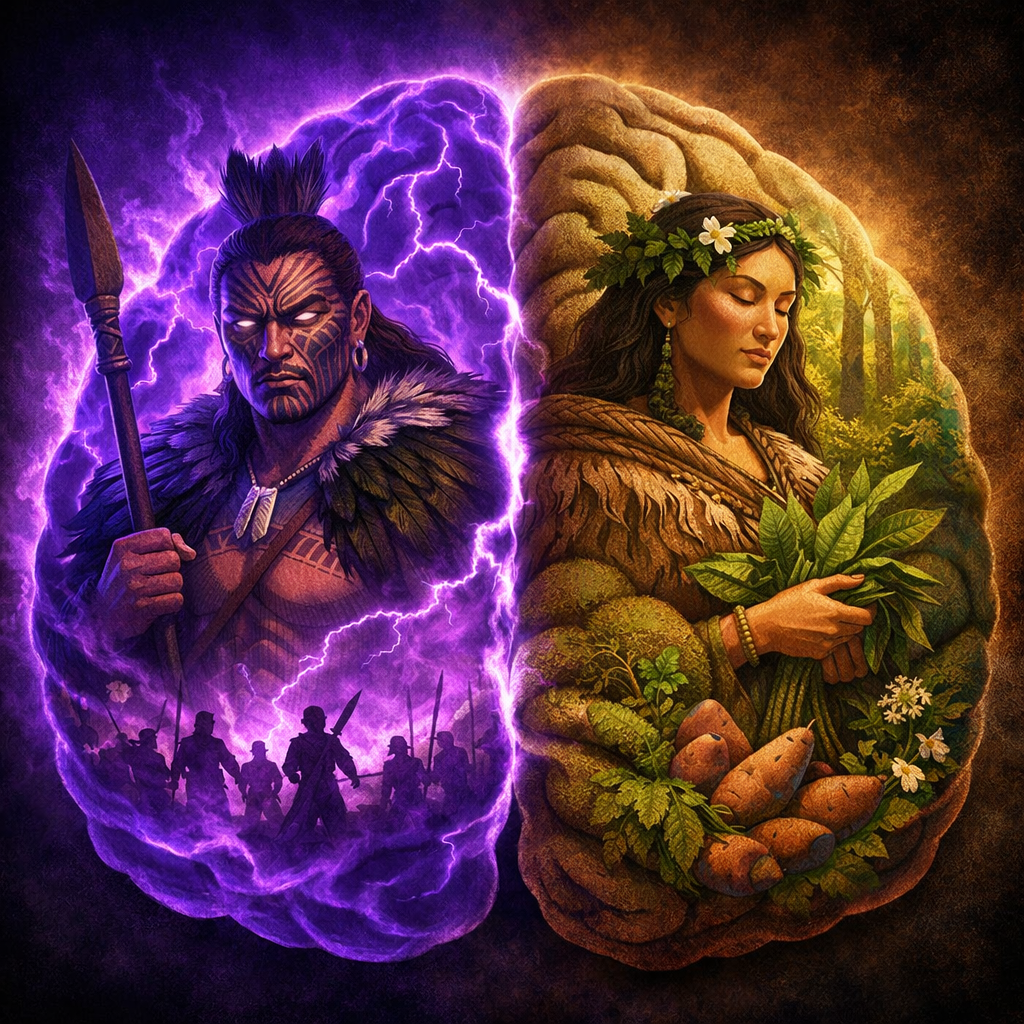
The colonised stories depict Tumatauenga as the God of War, yet Dr Rose Pere growled at me when I called him this, saying he is the God of People as well as the keeper of the violet flame.
TUMATAUENGA resides on the right side of the brain to govern the left side of the body.
The left side of the body is about your spirituality. It is the female side of your body, with a focus on
– your intuition – your creativity – your passion – your insights
RONGO resides on the left side of the brain to govern the right side of the body
The right side of the body is the male side of the body, with a focus on
– your strength – your determination – your courage – your leadership
This is especially relevant when you are doing intuitive diagnosis of the body, so you can read the experiences that are sitting in the cellular memory of the body.
Counselling primarily works with the mind and what is spoken. On the other hand, when we use taa miri, an intricate part of romiromi, we can read what the body has been trying to communicate all along; the whaiora is not listening.
While the mind can talk endlessly, criticising, analysing, justifying, denying, creating illusions, fear-based, creating drama, being full of emotions, blaming, and guilt tripping, the body.
On the other hand, the body just shows what it is and does not have any reason to cover anything up or lie. It just is what it is.
So do your homework, whānau and research what the spiritual significance is of the different body parts so your taa miri (intuitive diagnosis) makes sense.
It was interesting at our wānanga when one of our tauira commented, “Te Kāhui Rongoā does not allow intuitive diagnosis.”
This is exactly why I refuse to join a national body that creates rules for us without a deep understanding of the metaphysical mātauranga of te ao Tohunga.
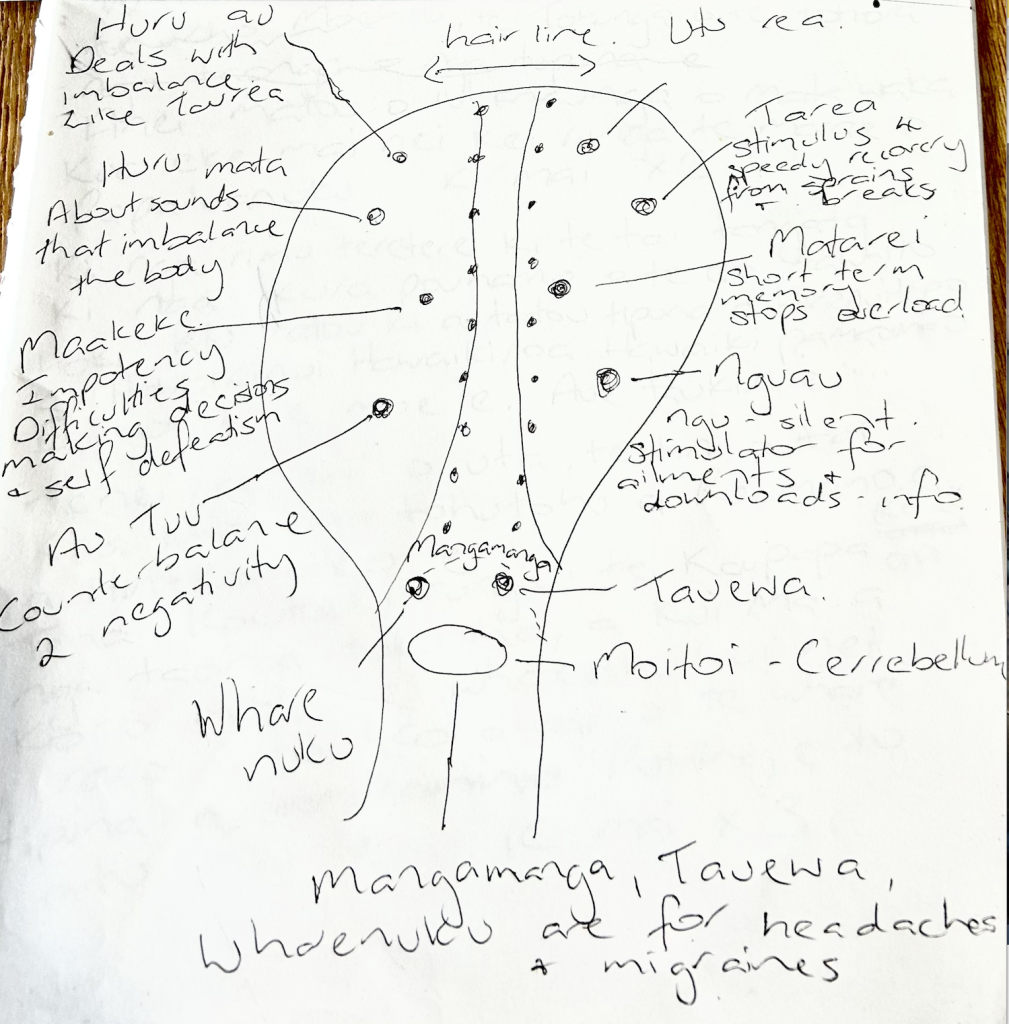
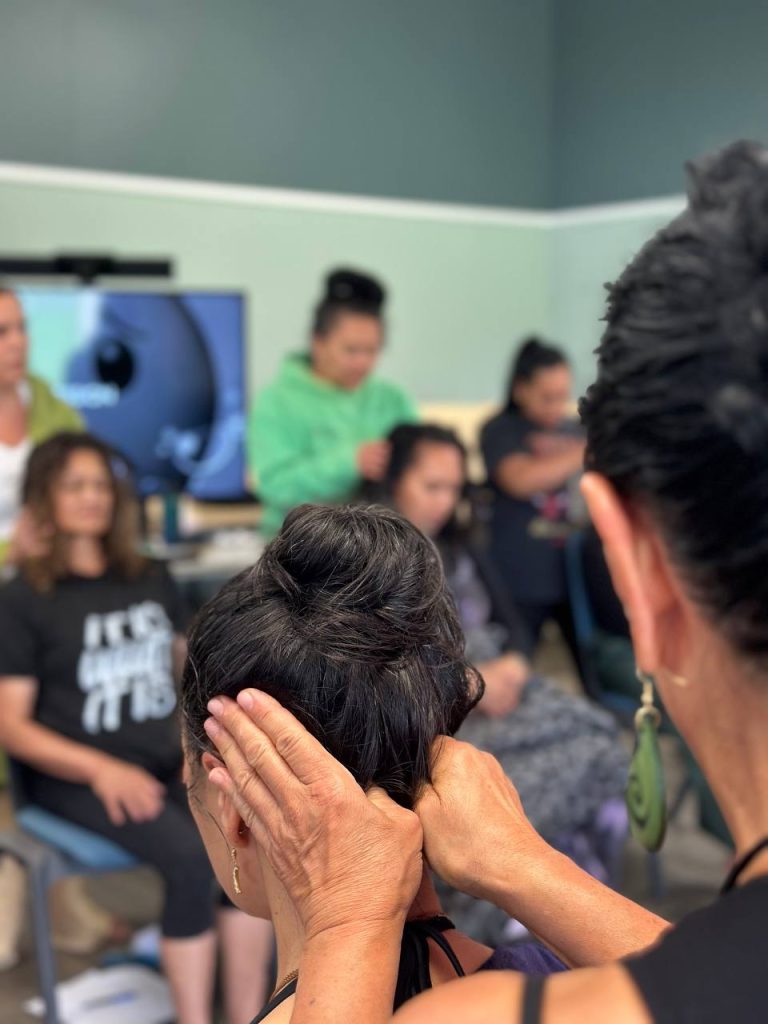
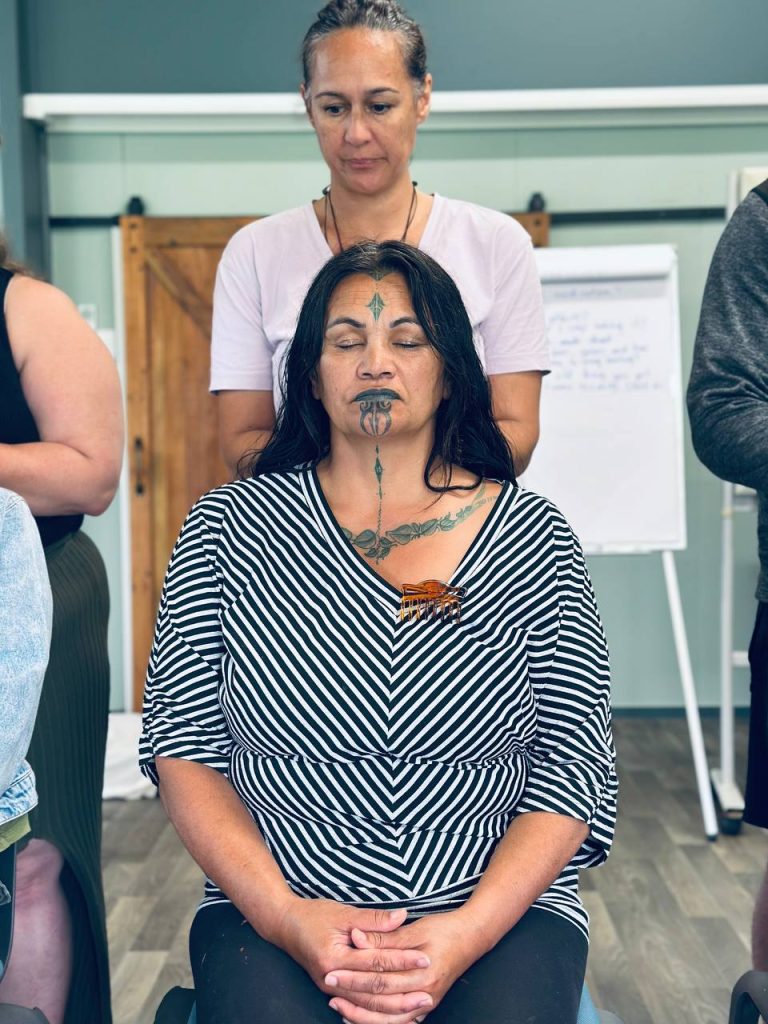
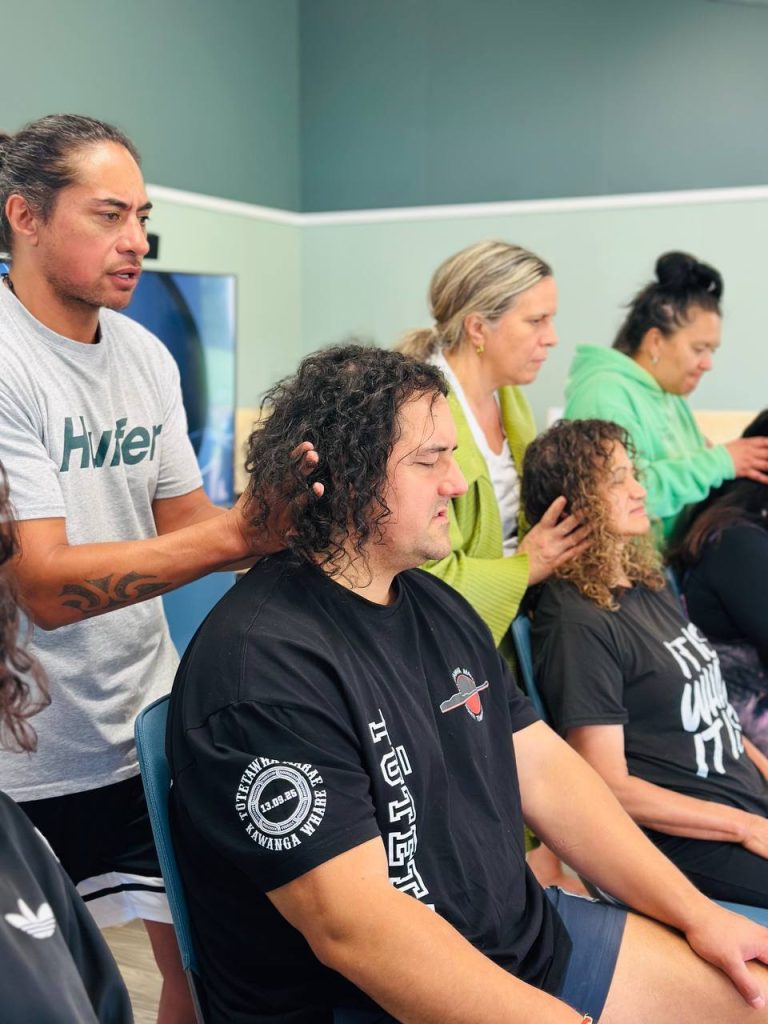
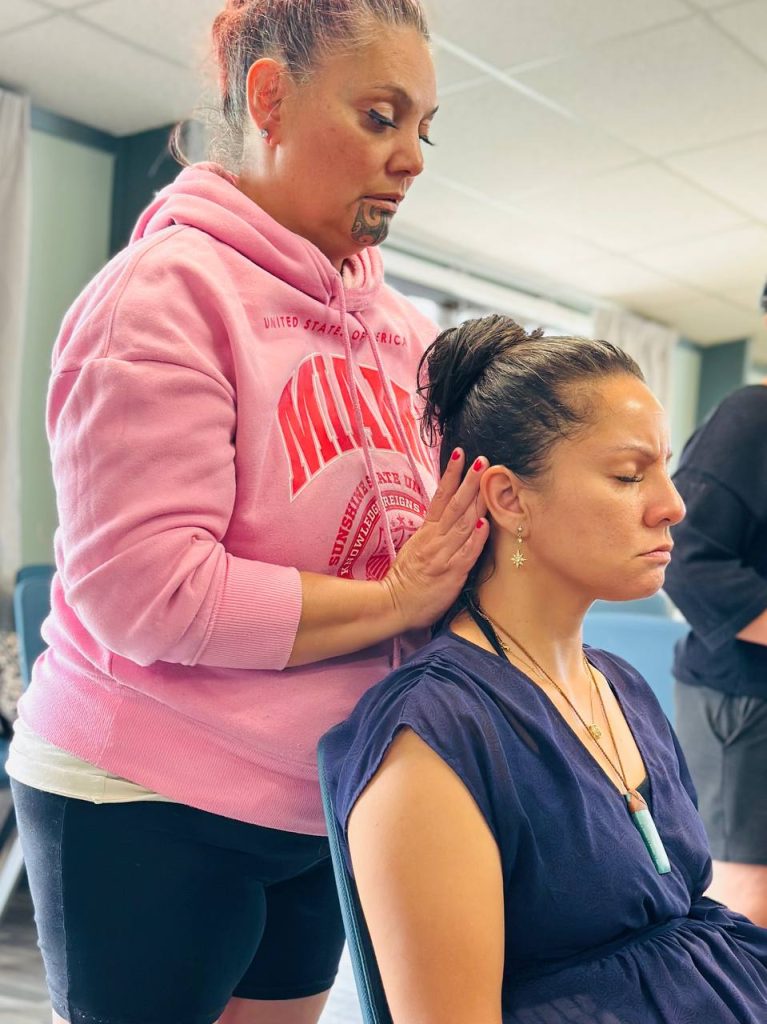
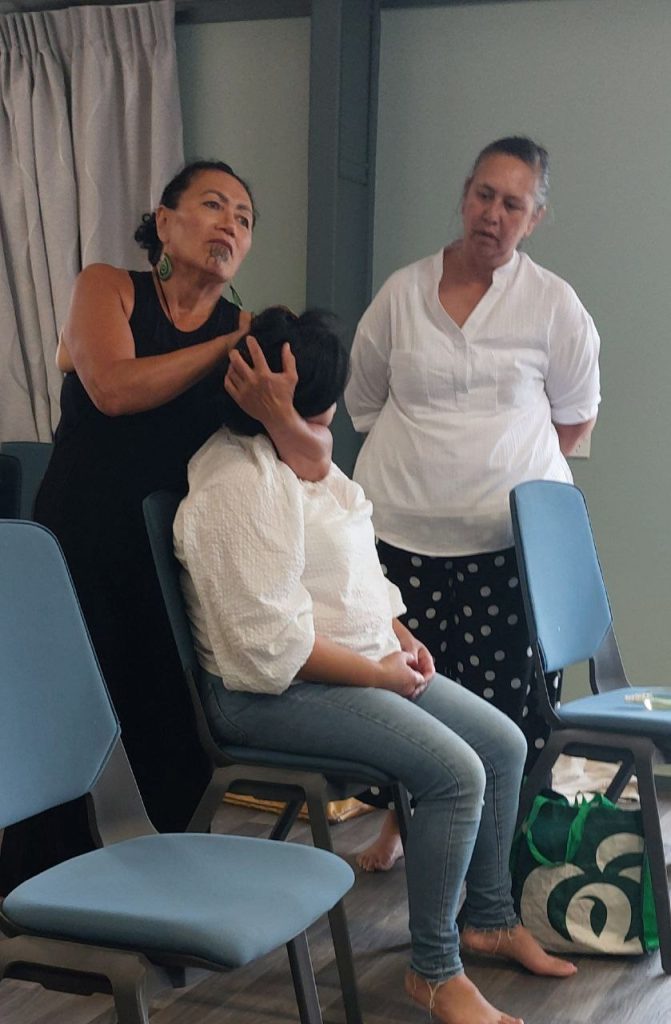
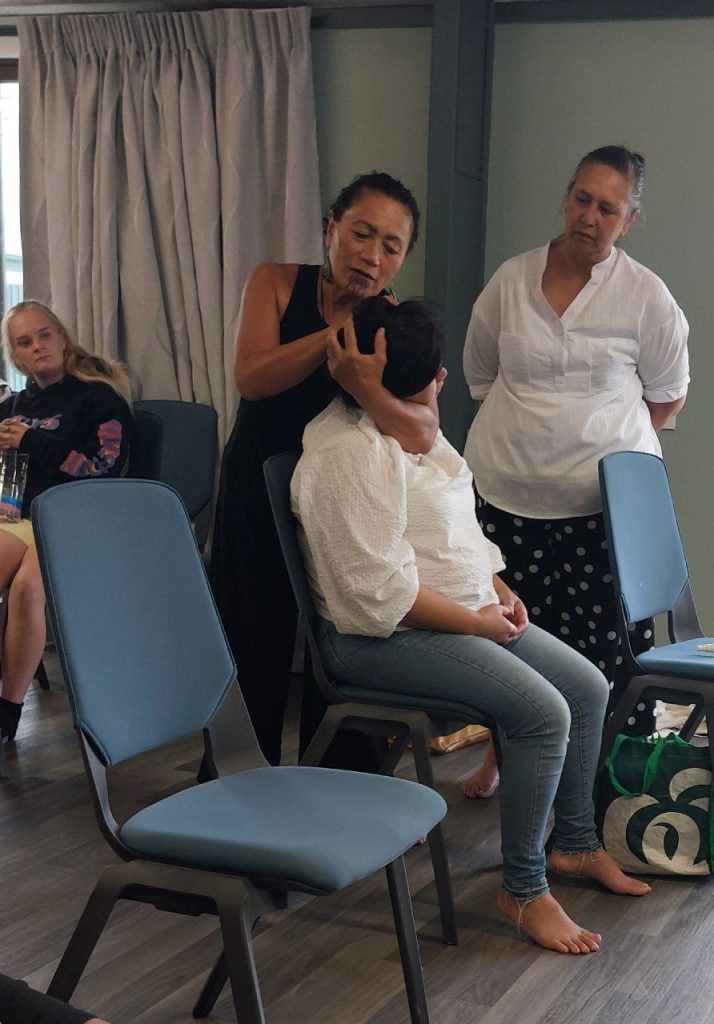
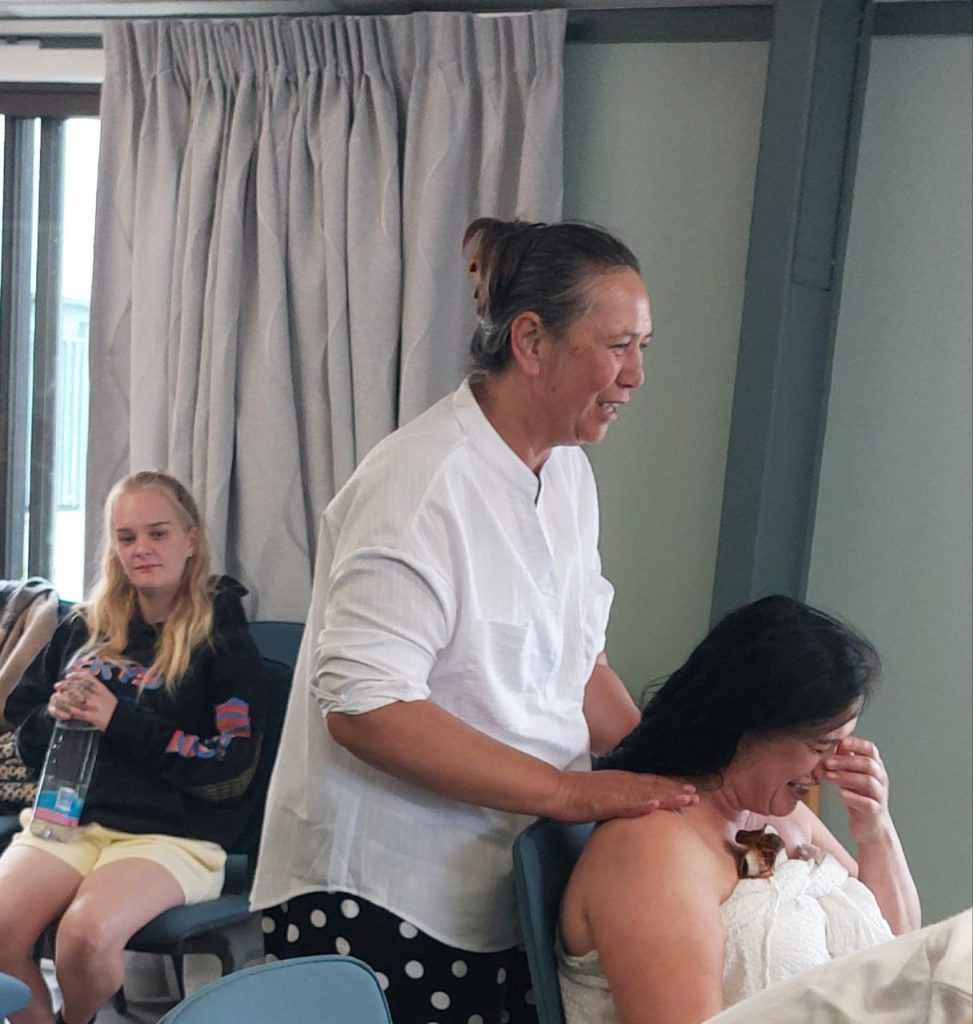
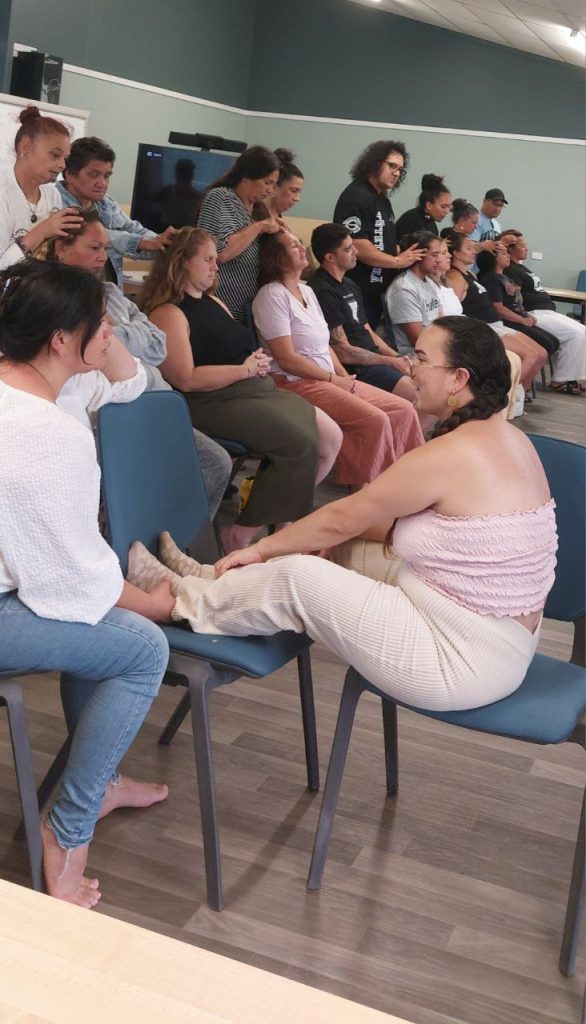
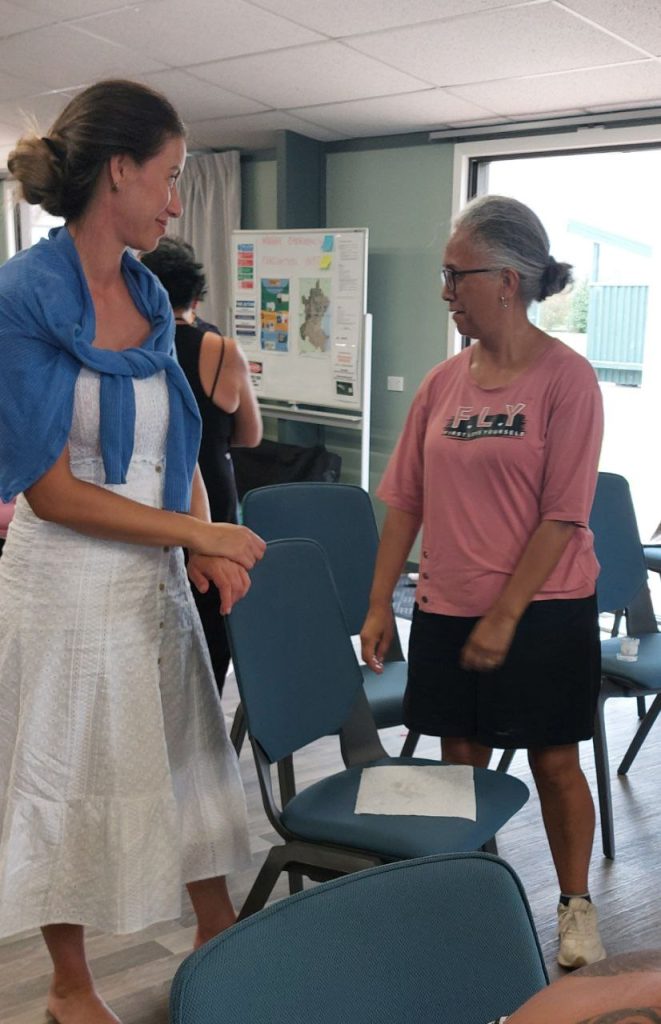
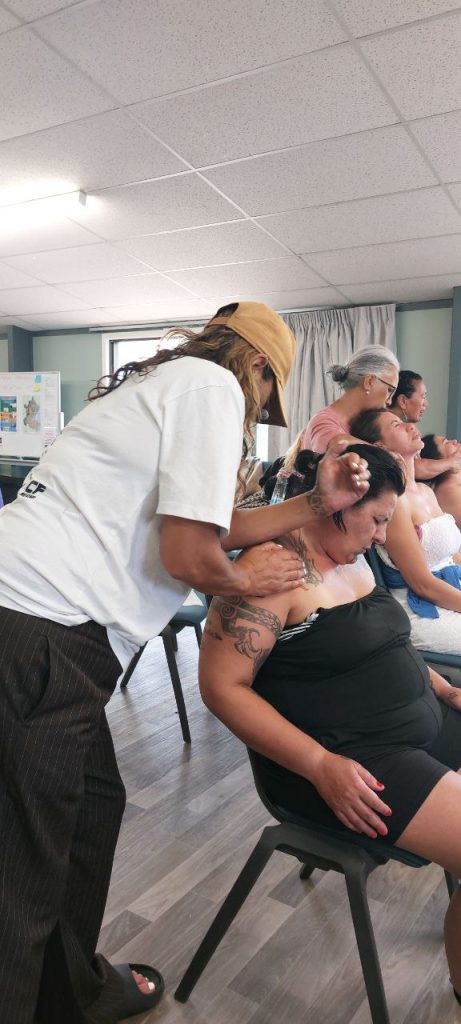
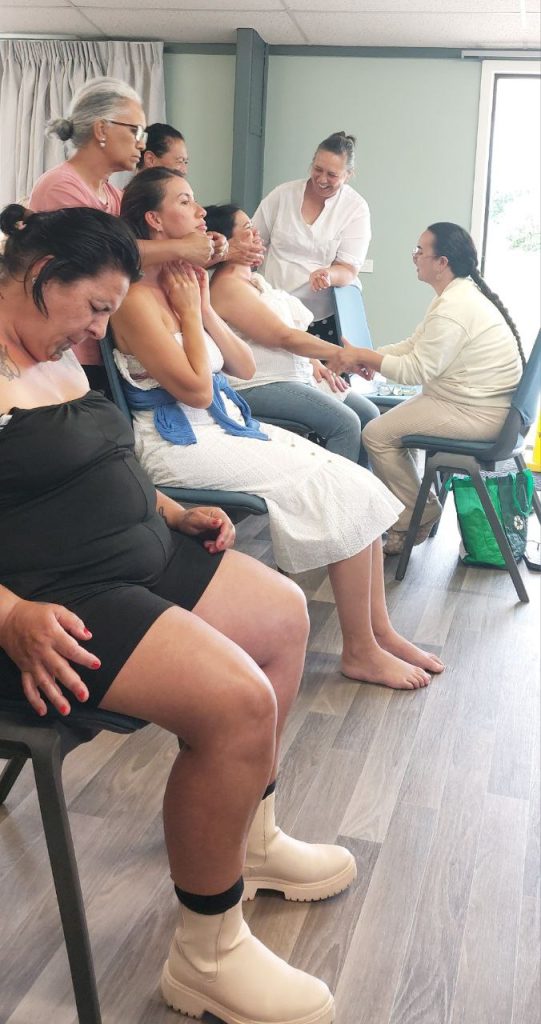
The Master Points on the Head
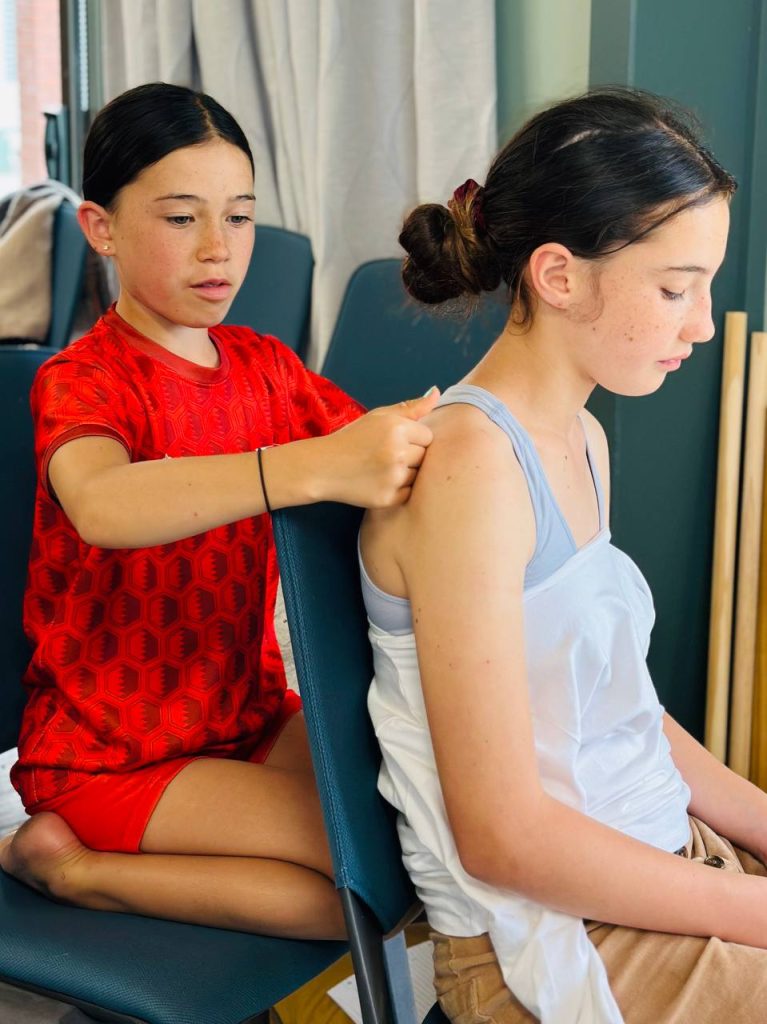
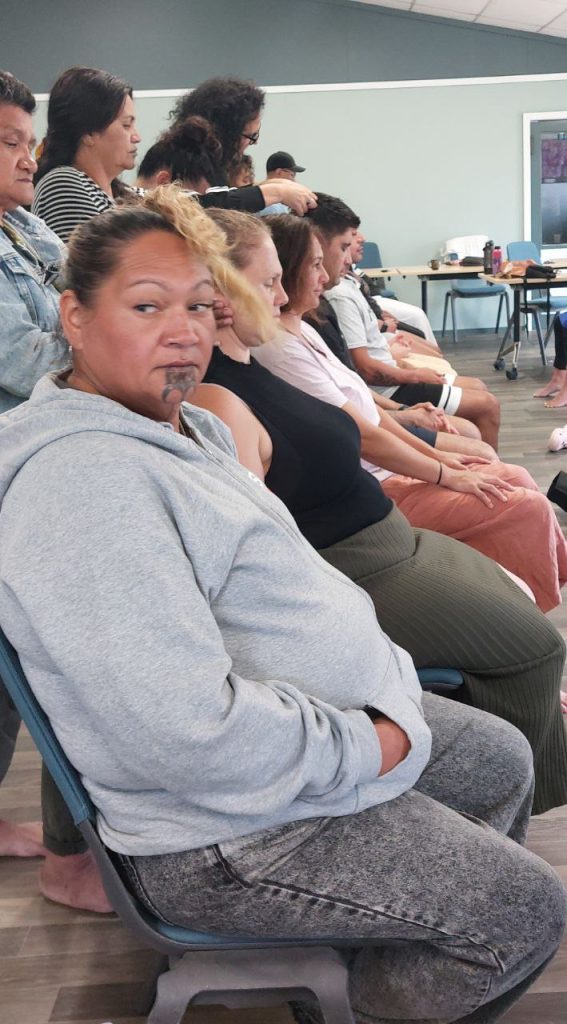
Working the Head part 1 – TEINA
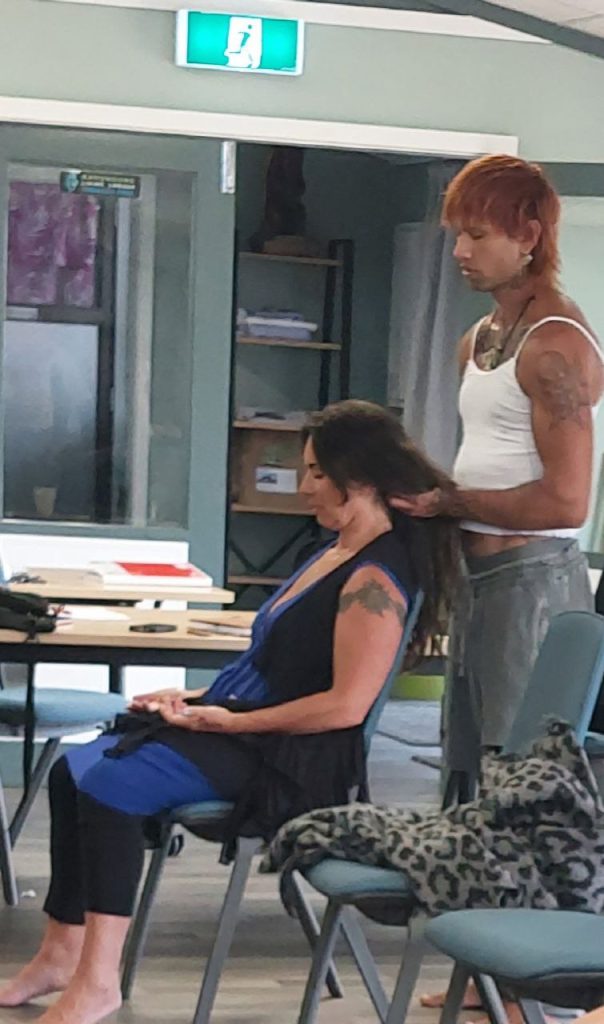
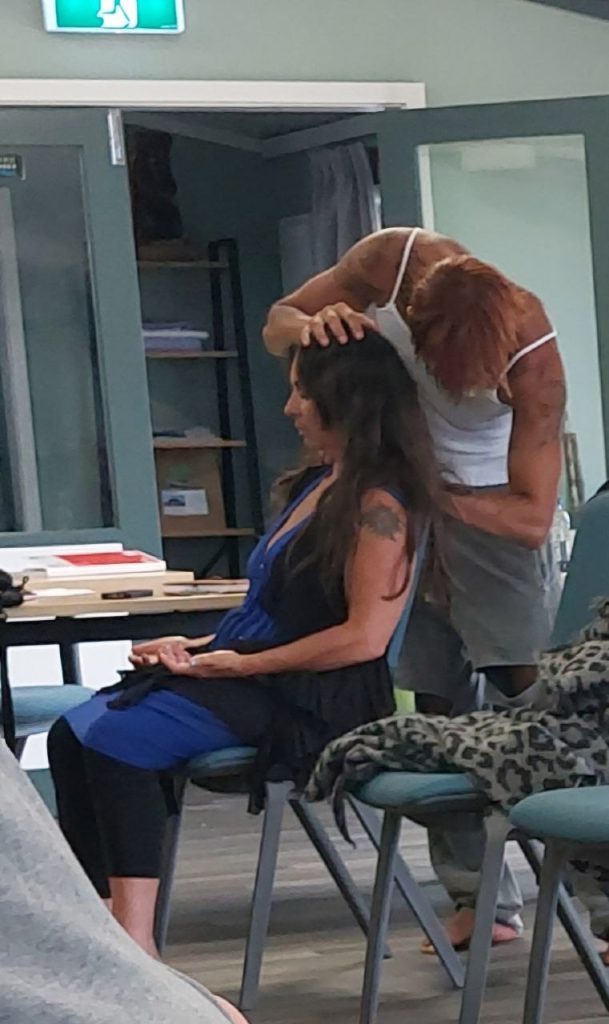
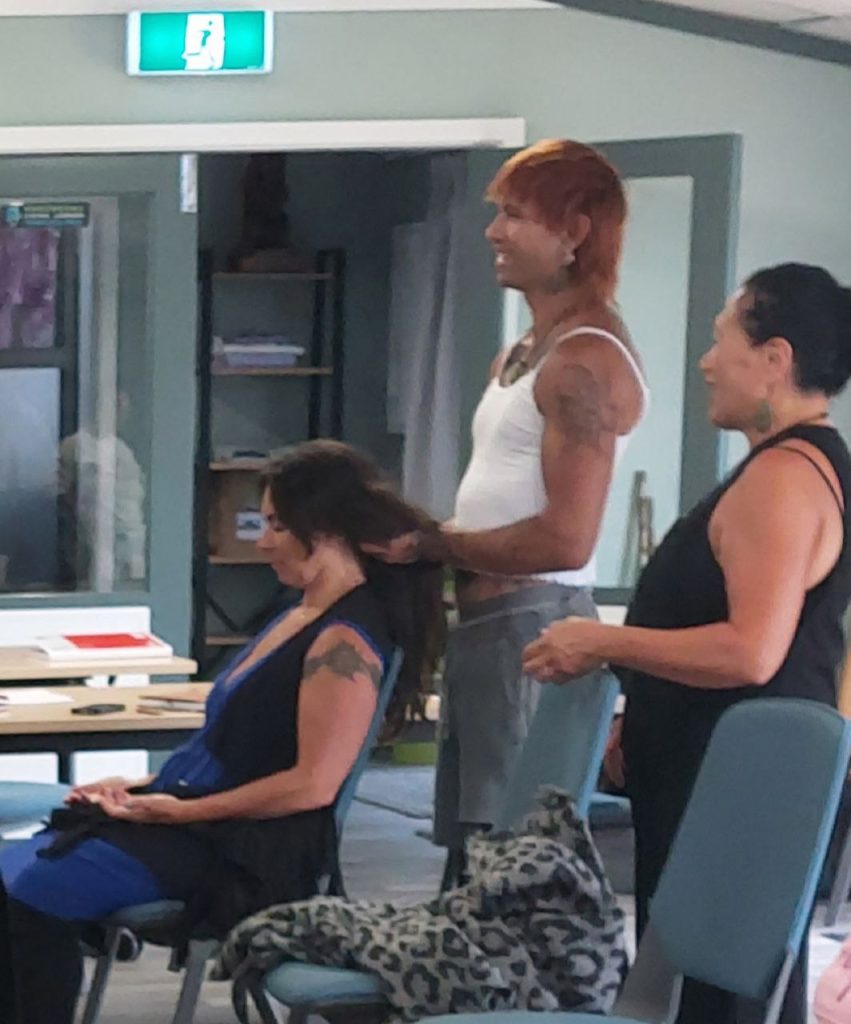
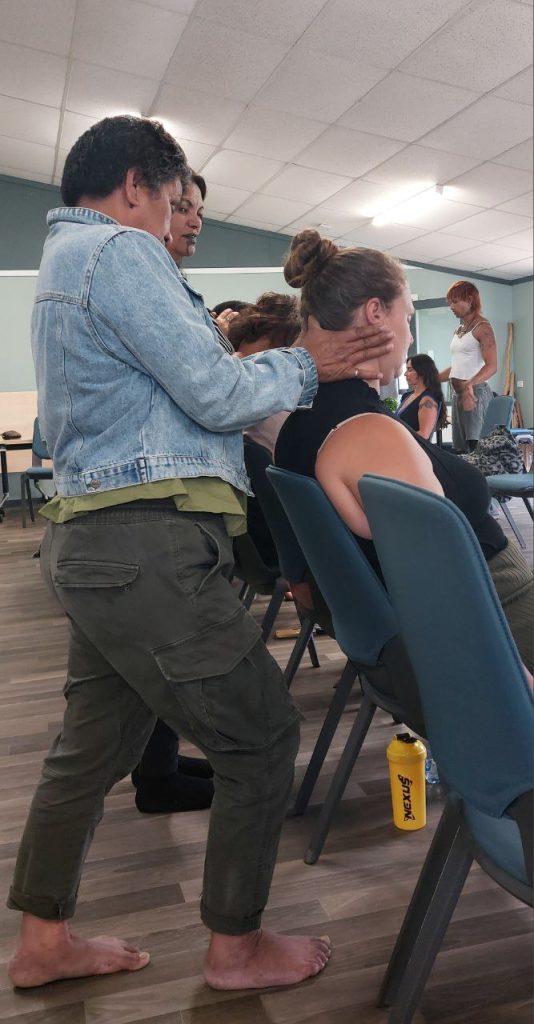
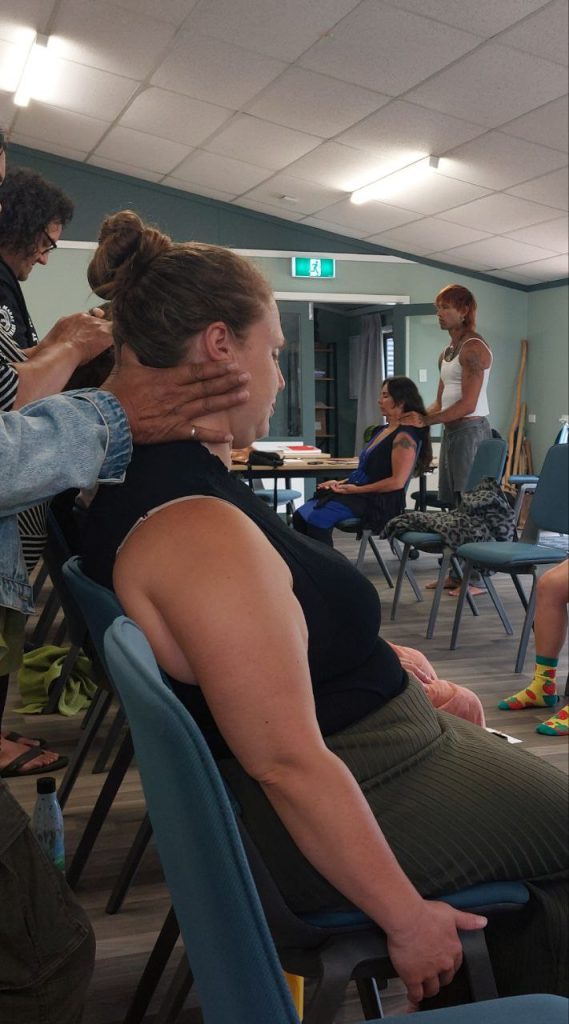
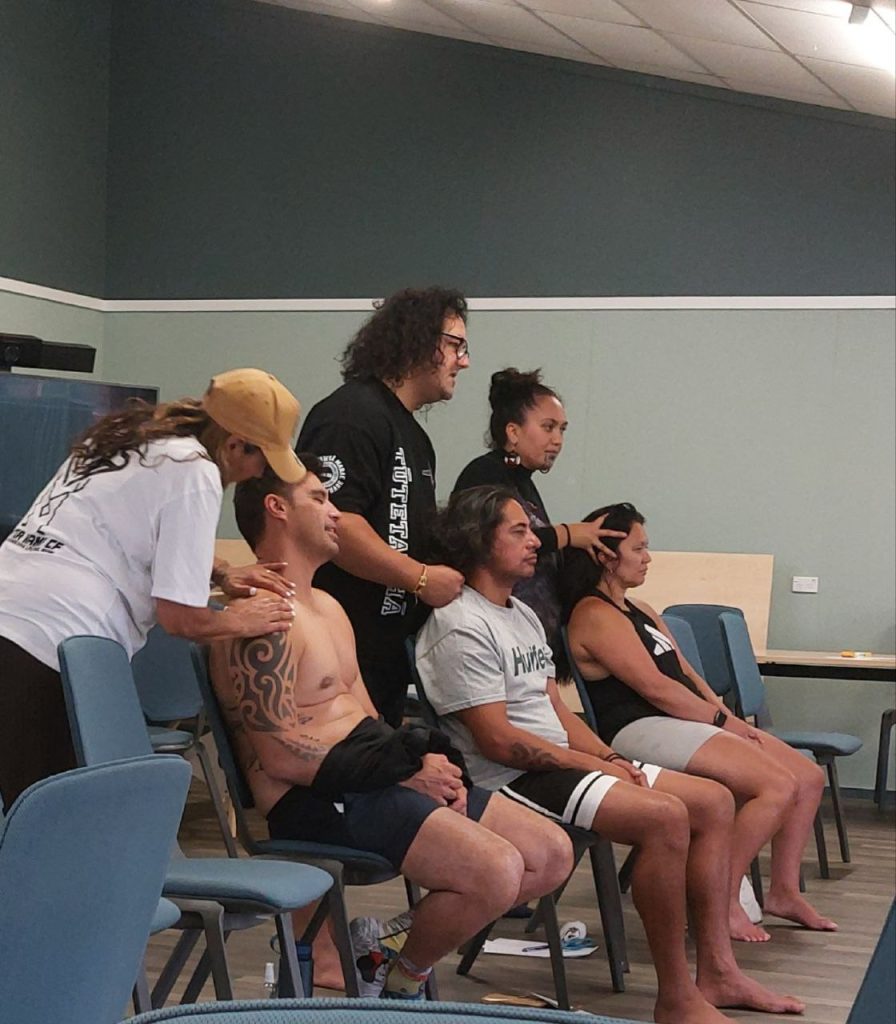
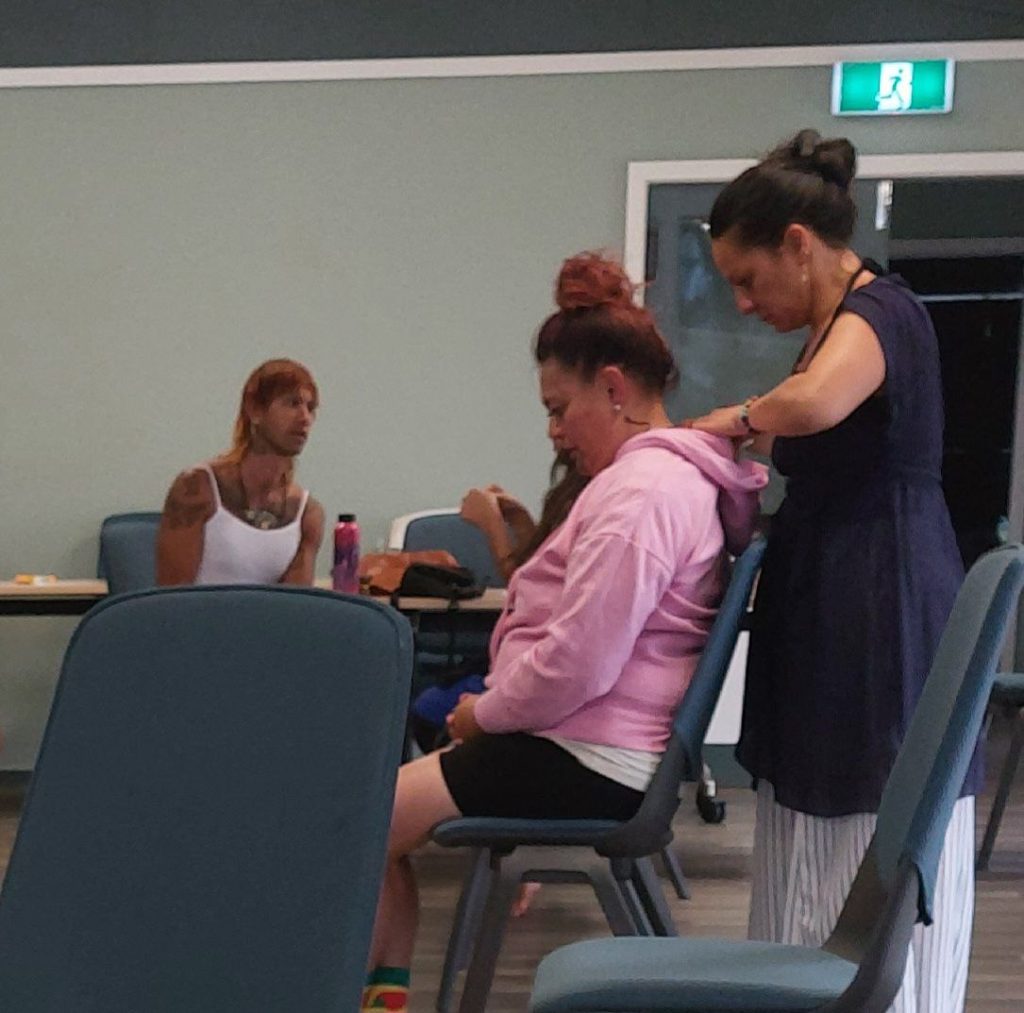
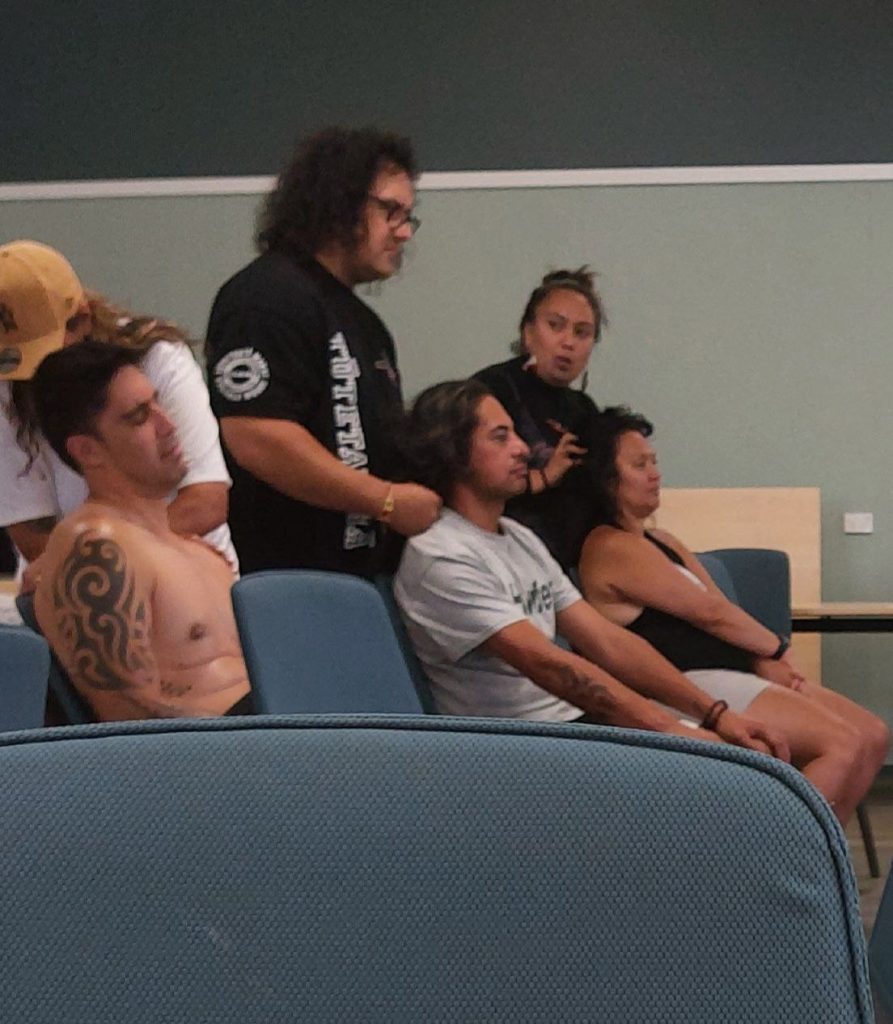
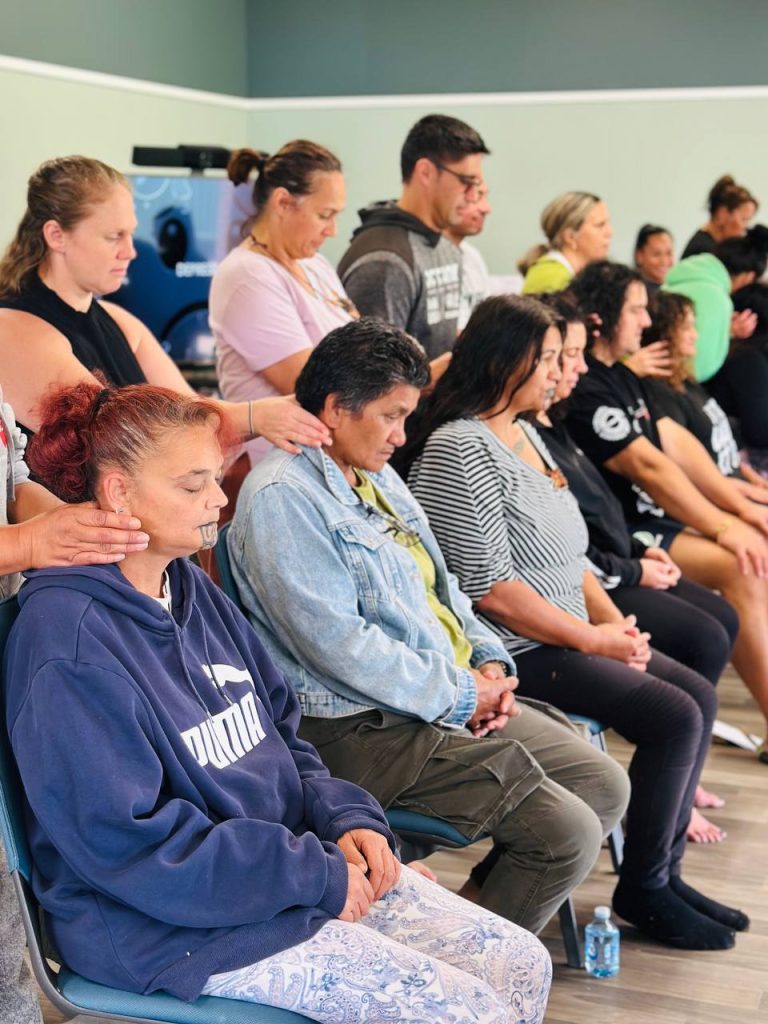
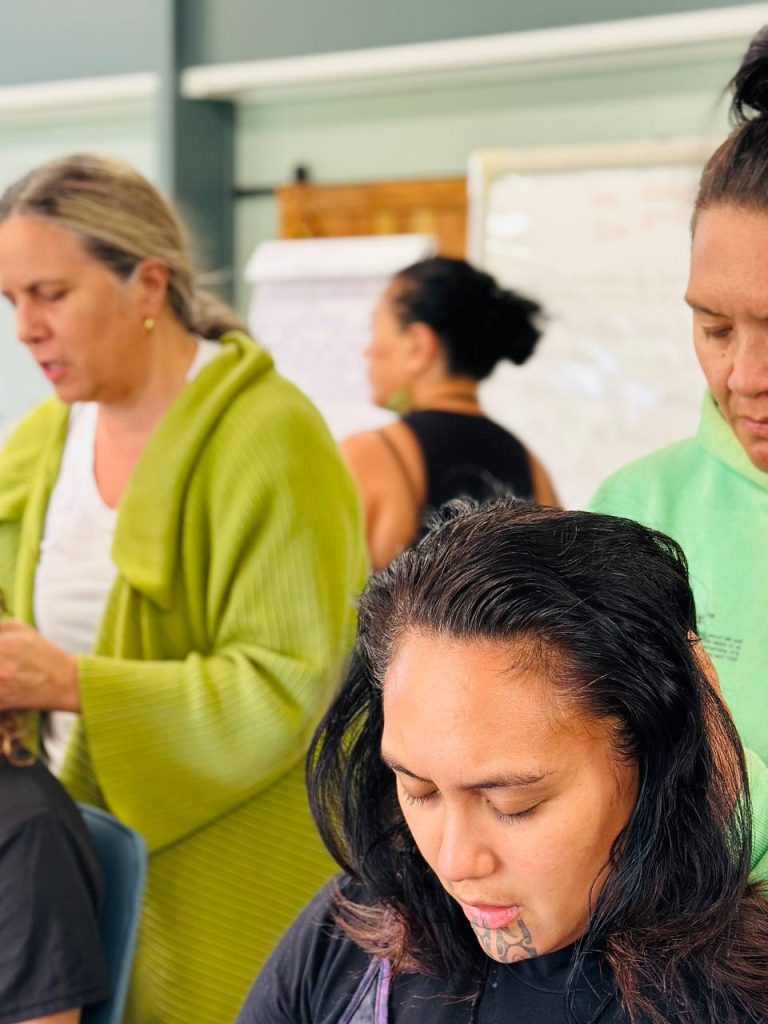
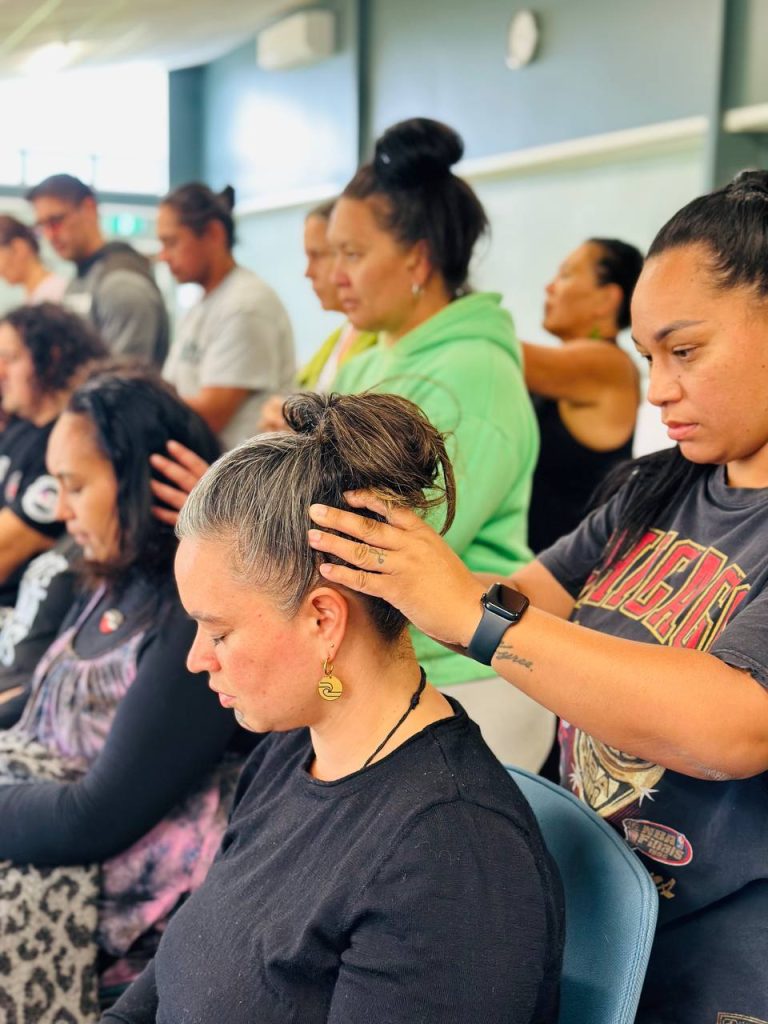
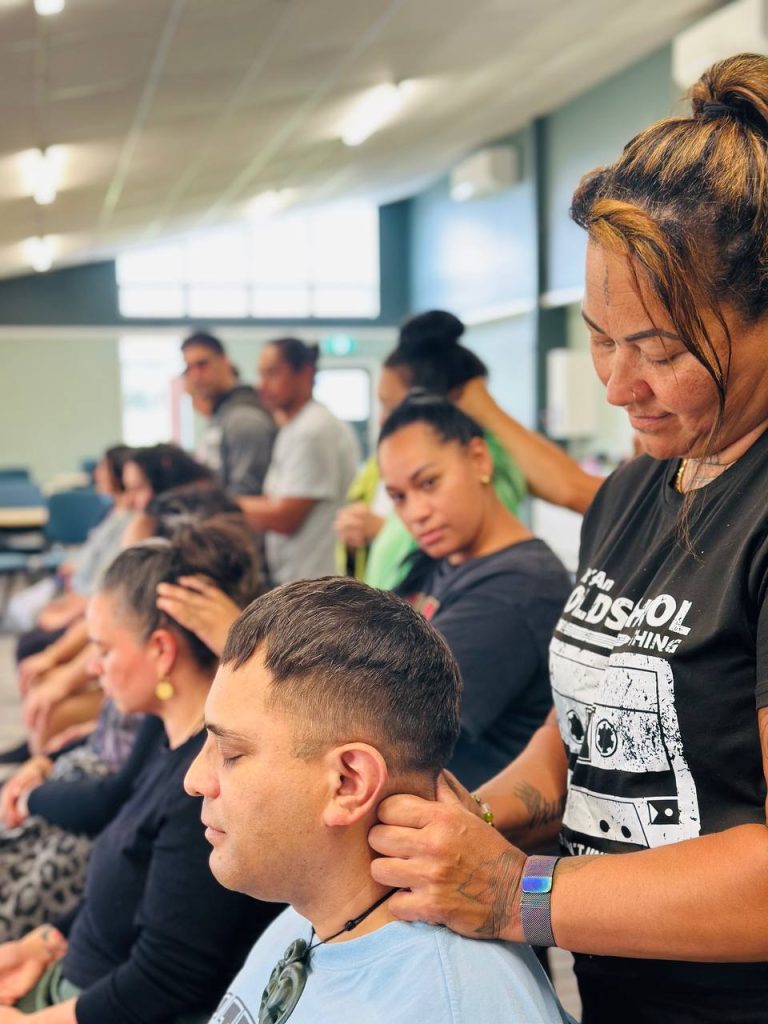
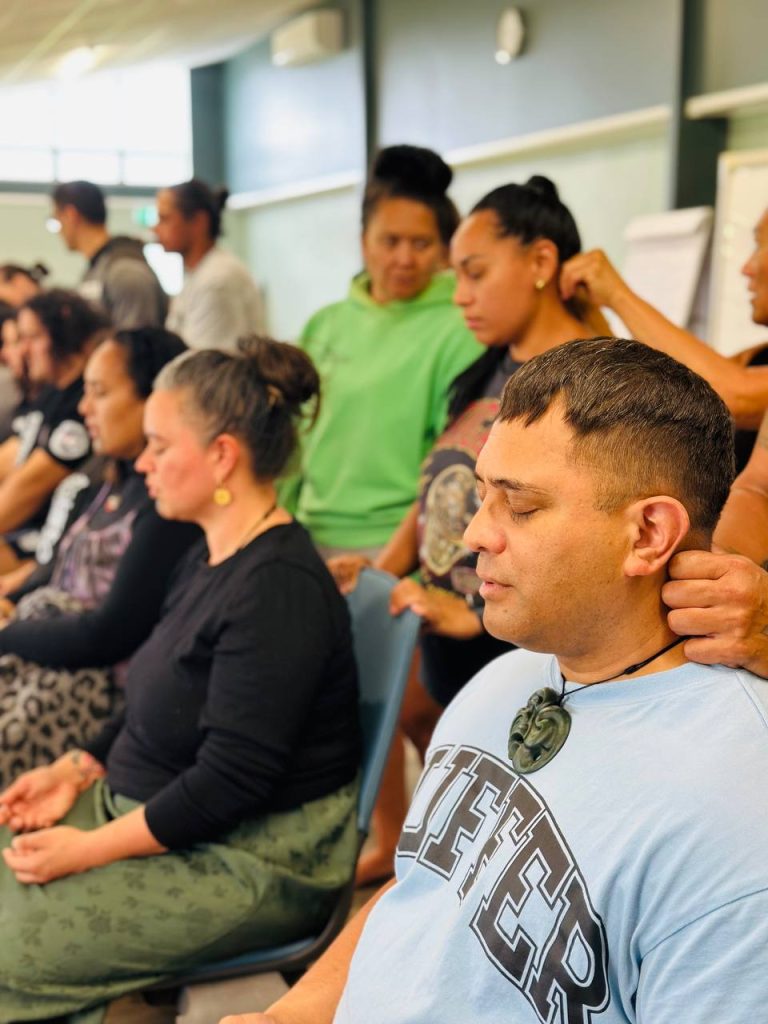
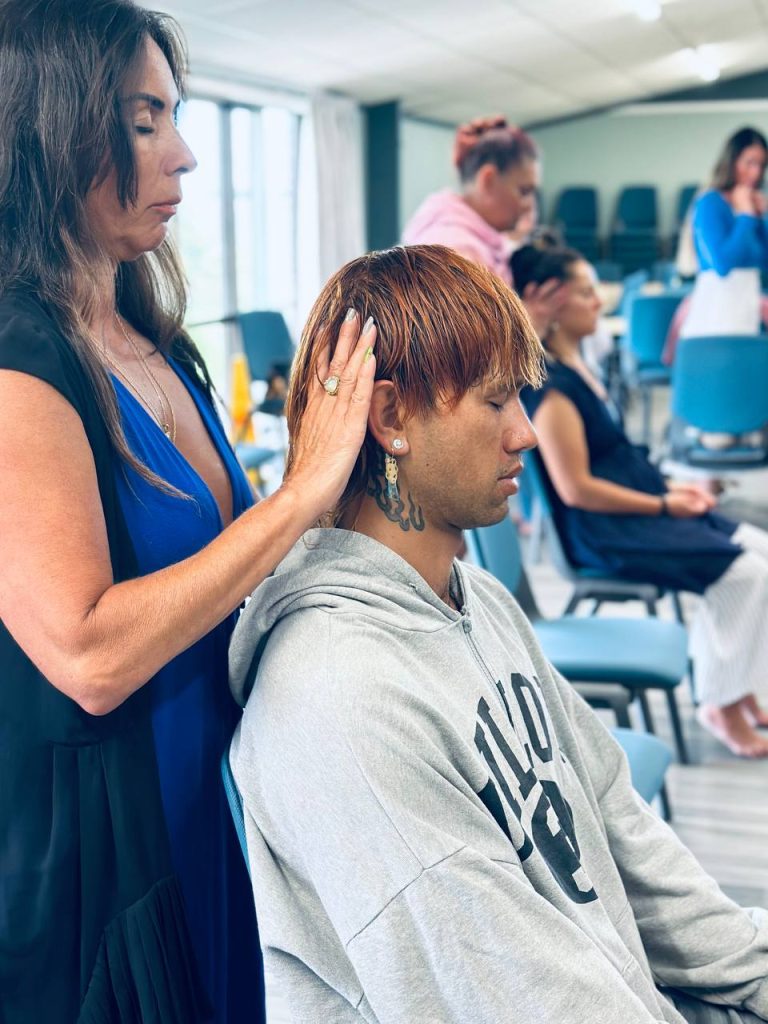
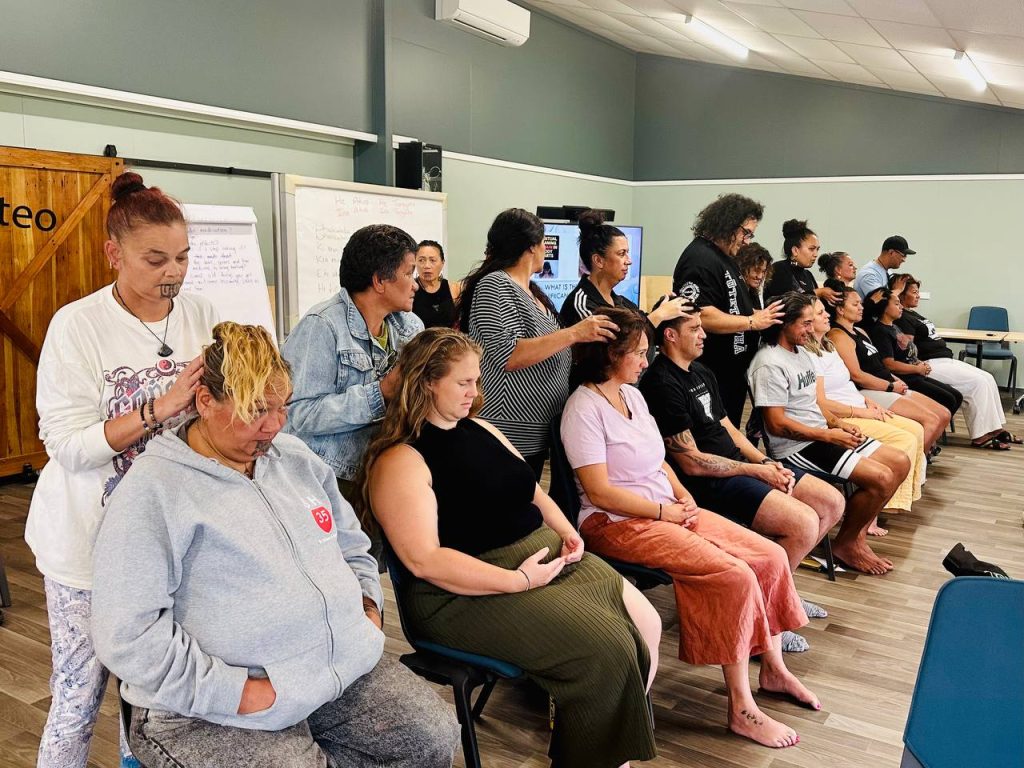
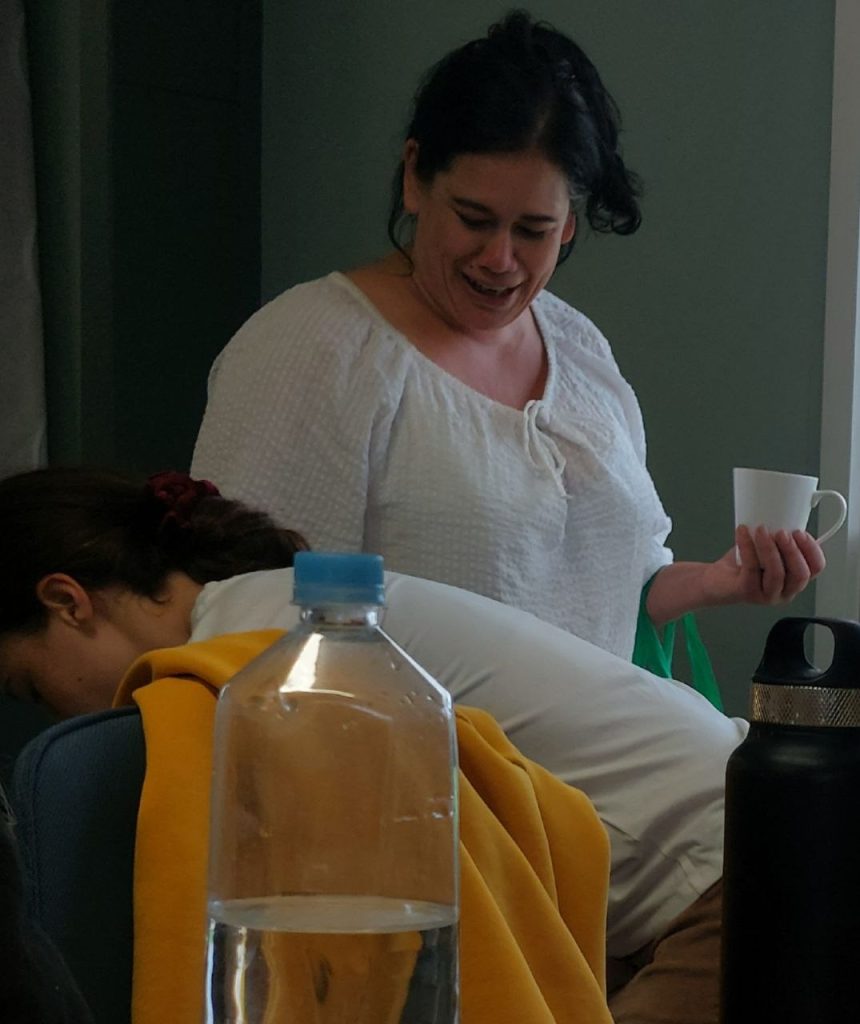
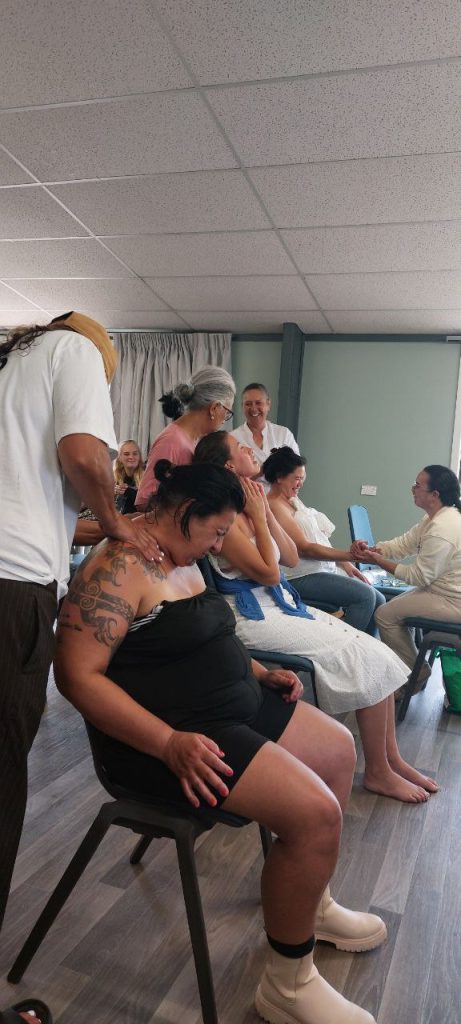
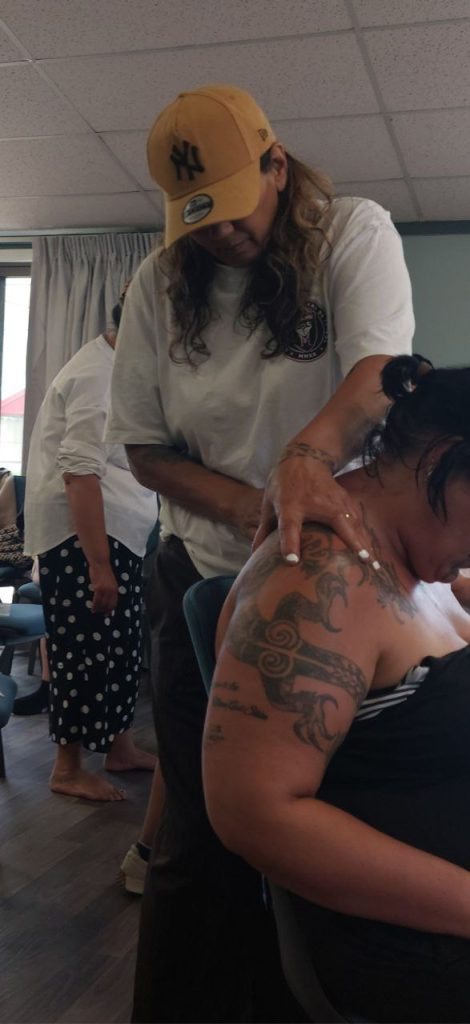
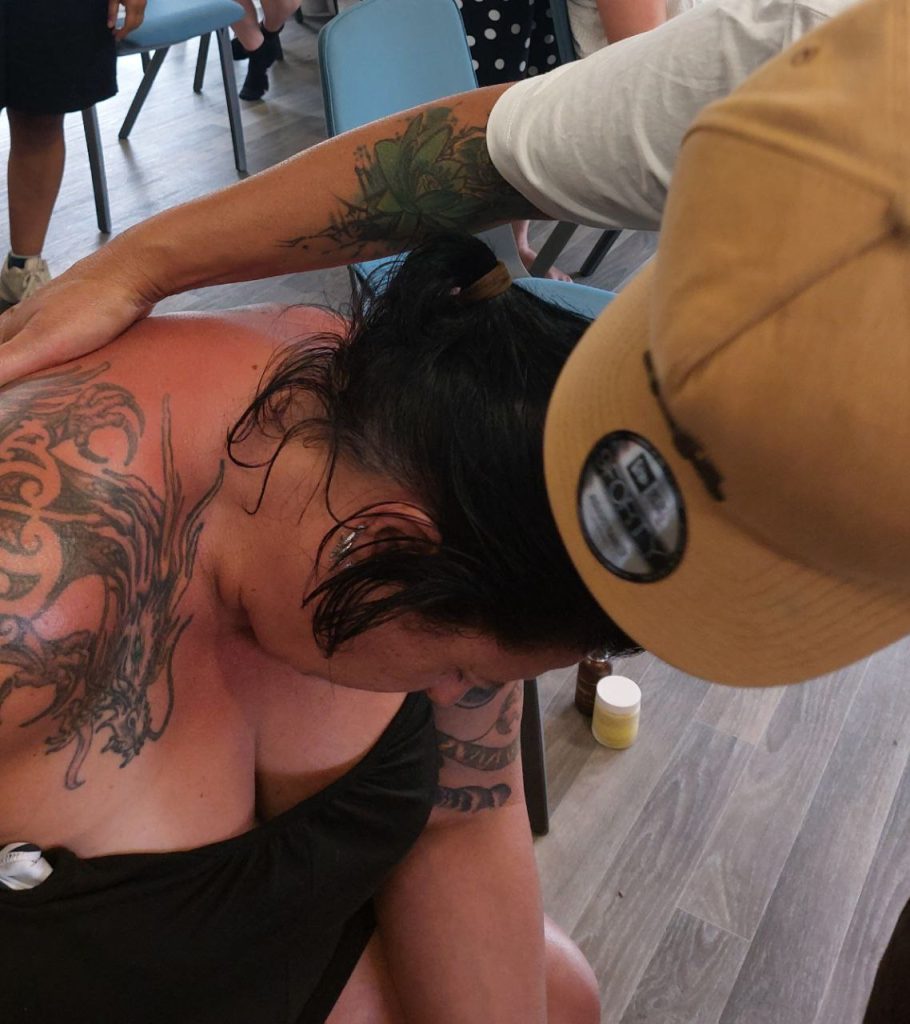
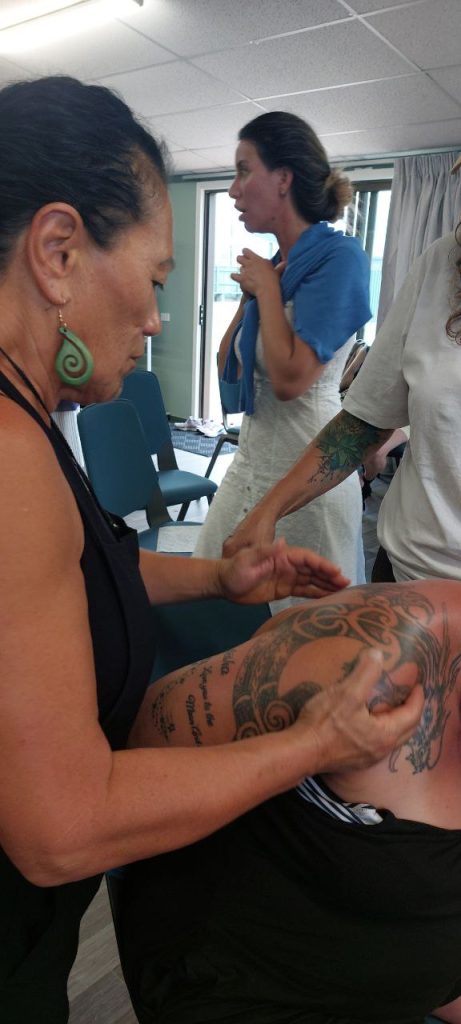
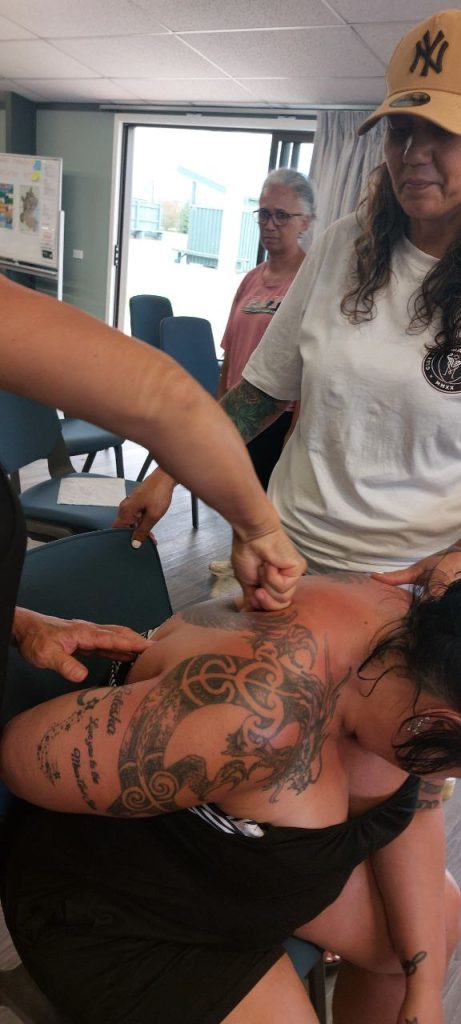
Working the Neck & Shoulders – TUAKANA
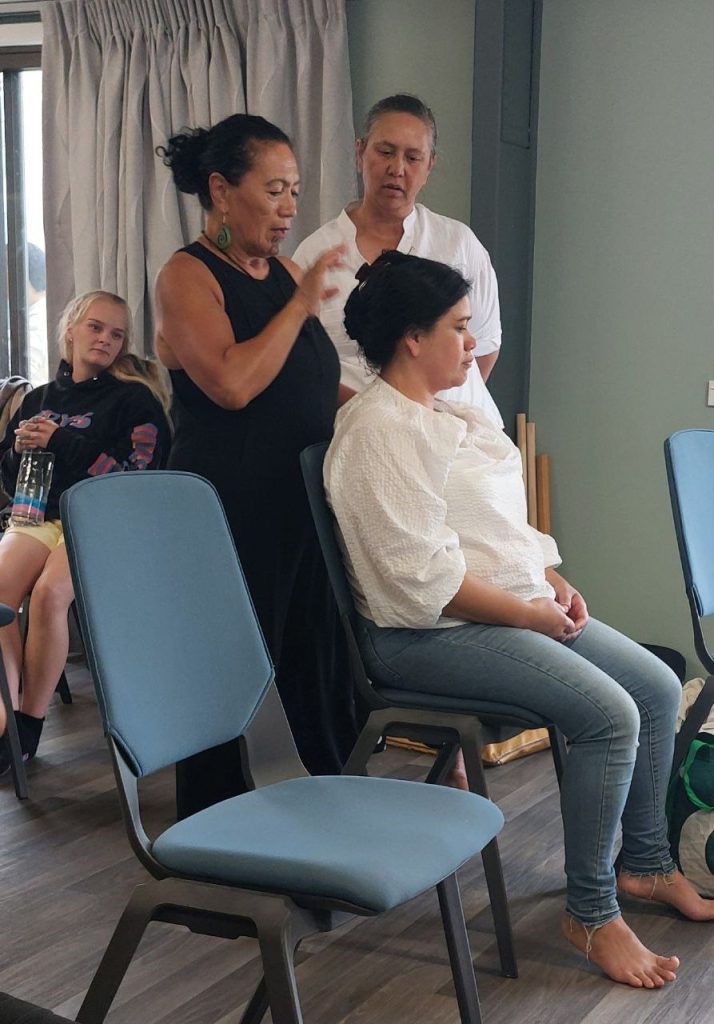
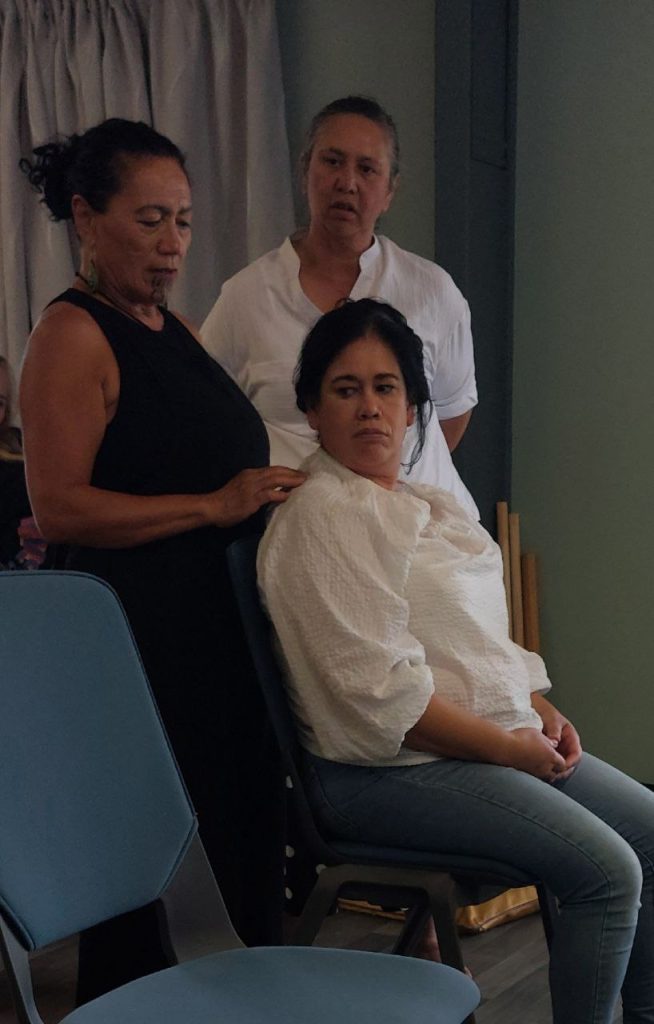
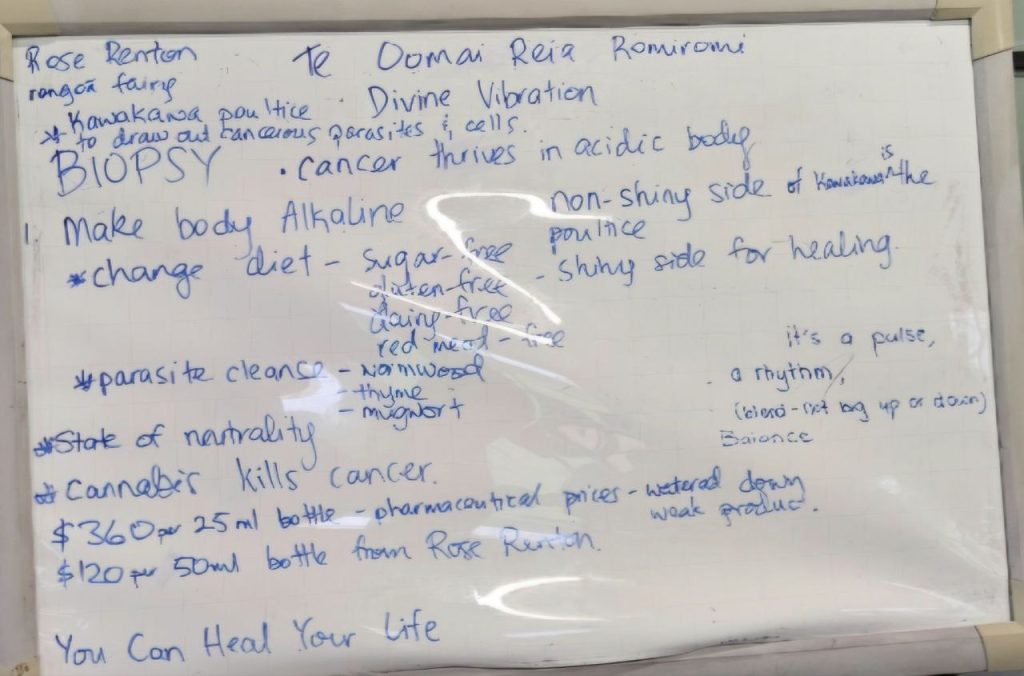
Healing Cancer
Cancer can cause many different symptoms depending on the type of cancer and where it is in the body. Here are some common warning signs:
Loss of appetite – Unexplained weight loss – Ongoing fatigue or extreme tiredness – Persistent pain that does not go away – Unexplained lumps or swelling – Changes in the skin (yellowing, darkening, redness, sores that don’t heal) – Changes in moles (size, shape, colour, bleeding) – Persistent cough or hoarseness – Difficulty swallowing – Shortness of breath – Changes in bowel habits (constipation, diarrhoea, blood in stool) – Changes in bladder habits (pain, blood in urine, frequent urination) – Unusual bleeding or discharge – Night sweats – Recurrent infections – Consume mental space – Drain energy – Affects mood and relationships
There are specific smells and tastes for cancer.
- Rotting flesh smell
- Metalic taste
Unforgiveness at the core of cancer
When someone holds deep anger, resentment, or trauma that results in unforgiveness:
- The body can remain in a stress response.
- Stress hormones (like cortisol and adrenaline) stay elevated.
- Sleep, digestion, and immune balance can be affected.
Over many years, this chronic stress can weaken the immune system and increase inflammation. Inflammation is linked to many illnesses, including heart disease, autoimmune conditions, and potentially cancer progression.
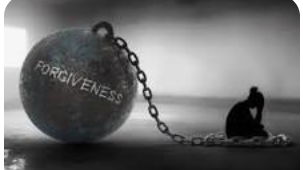
The Cancer Eats Away at the Body
Spiritually, people describe unforgiveness as:
- Bitterness
- Emotional poison
- Internal corrosion
The metaphor comes from how resentment can:
Drain energy – Affect mood and relationships – Impact physical wellbeing indirectly – Emotional unwellness can create physical unwellness!
It feels like something is eating you from the inside!
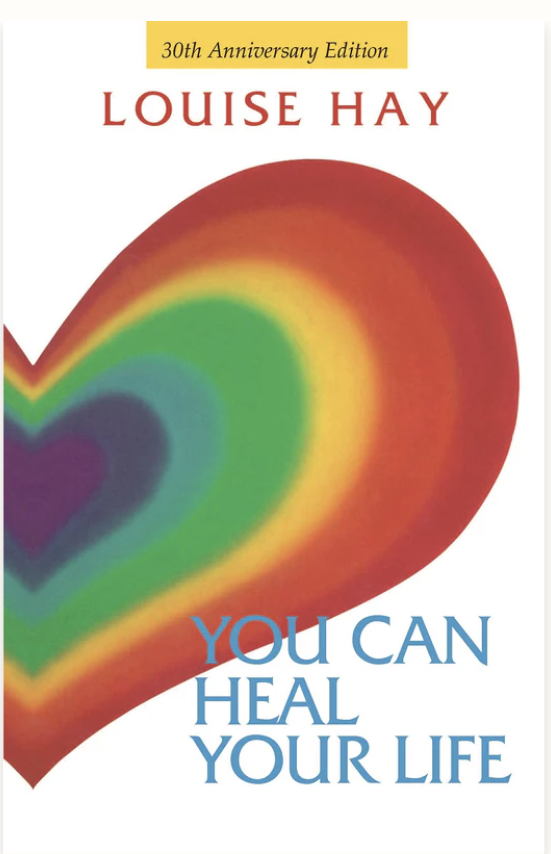
This book by Louise Hay was like a bible to me with all the different parts of the body and what they mean spiritually. Nowadays though, you can google it to see what they mean. Like for e.g. these area here are the results on google of ‘what is the spiritual significance of cancer?’
According to Louise Hay, cancer represents a deep-seated, long-standing resentment or “held” secret that eventually “eats away” at the body. Spiritually, she believed it signifies a need to release old emotional pain, forgive deeply, and fill one’s life with joy to overcome the physical manifestation of these accumulated, toxic emotions
Key Spiritual Aspects of Cancer (Louise Hay Perspective):
- Root Cause: Deep-seated resentment, secrets, or emotional pain held for a long time.
- The “Eating Away” Metaphor: The physical disease reflects an emotional state where, as she wrote, something is “eating away” at the person’s joy and spirit.
- Required Shift: The spiritual path to healing involves letting go of old hurts, releasing toxic resentment, and choosing self-love.
- Affirmation for Healing: “I lovingly forgive and release all of the past. I choose to fill my world with joy. I love and approve of myself”. Facebook
Louise Hay emphasised that by changing thought patterns and releasing negative emotions, one can empower one’s healing process
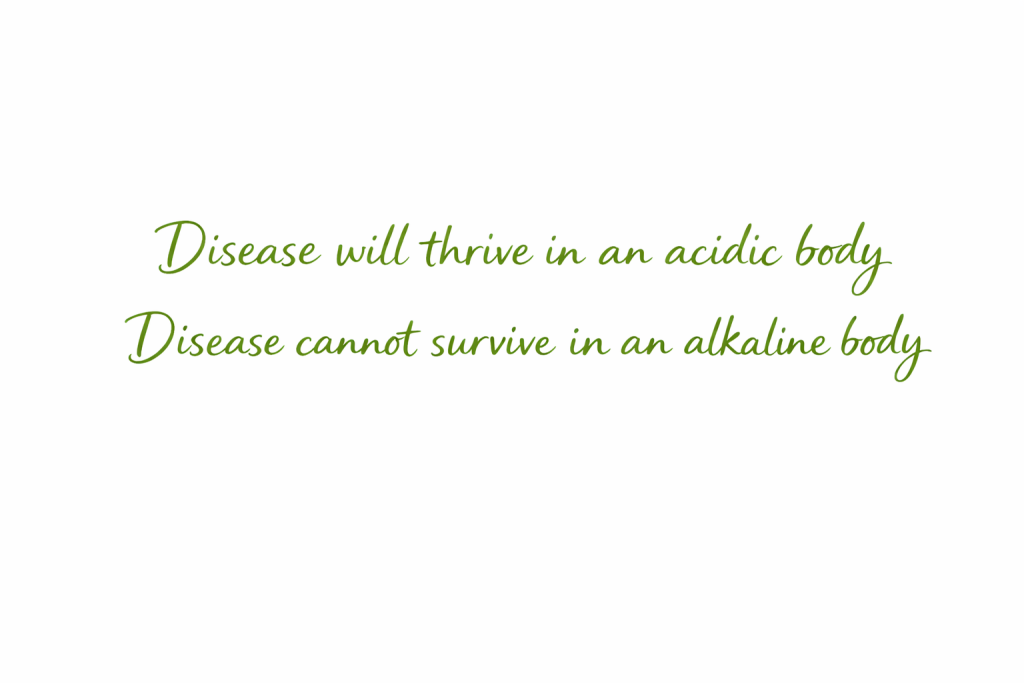
Releasing and forgiveness rituals are important for healing chronic disease.
However, HEALING is about changing the diet for cancer and most chronic diseases.
HEALTH alternatives with synthetic medications can be like a plaster that works the symptoms but often doesn’t HEAL the dis-ease.
Cancer is where the body is acidic. To heal an acidic body, there are many natural ways to heal an acidic body like swimming in the sea, drinking water, changing your diet to sugar-free, dairy-free, gluten-free, red meat-free, alkaline foods, as cancer cannot survive in an alkaline body.
EATING KAI TO MAKE YOUR BODY ALKALINE
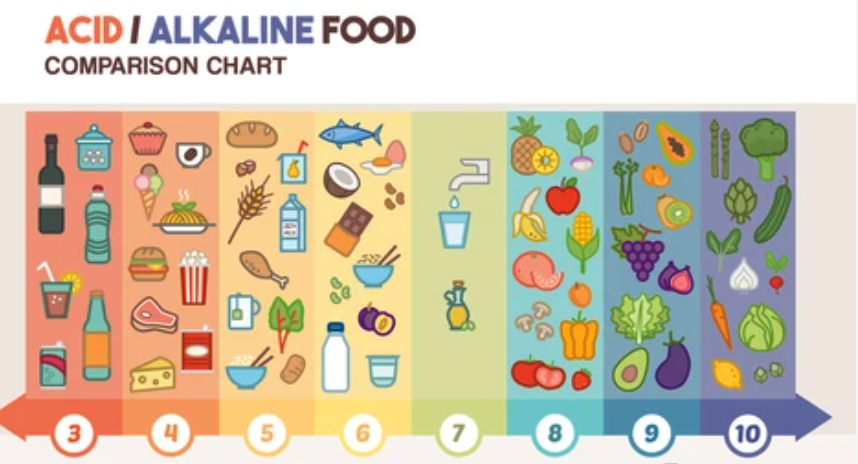
To the left in the pic from 3 – 6 are acidic foods and from 7- 10 are alkaline foods. Disease cannot survive in an alkaline body whereas disease will thrive in an acidic body. Changing our diet heals chronic disease naturally.
Foods like green leafy vegetables, fruits (especially lemons), and certain nuts and seeds are known for their alkaline-forming properties. These foods help balance the body’s pH levels by contributing to the reduction of acidic waste and the increase of alkaline minerals.
Alkaline-Forming Food:
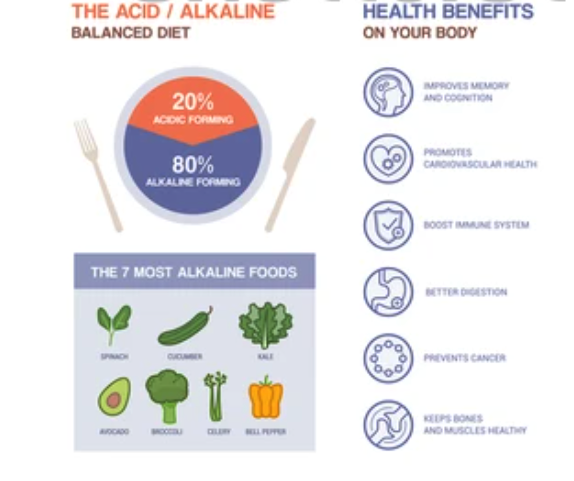
Once we have learned to prioritise alkaline foods then it can become a way of living rather than just a diet choice. So, 80 percent of the time we could eat alkaline foods and only 20 percent of the time, we could eat acidic foods but then afterwards, you must clean your body out.
Alkaline foods …
Fruits: Apples, cherries, avocado, bananas, apricots, and cantaloupe.
Non-starchy vegetables: Broccoli, beets, asparagus, leafy greens, garlic, carrots, and cabbage.
Green leafy vegetables: Spinach, kale, silverbeet.
Nuts and seeds: Almonds, sesame seeds, pepitas, pumpkin seeds.
Legumes: Lentils, beans.
Spirulina, barley, or wheatgrass: These are considered alkaline-forming foods.
Alkaline water: Water with added alkaline minerals.
Other: Raw honey, some grains like quinoa, and fermented soy.
Fresh fruits and vegetables are rich in both vitamins and flavonoids, with flavonoids being a class of plant compounds known for their antioxidant properties. Vitamin C, for example, is a powerful antioxidant found in many fruits and vegetables. Flavonoids, once called vitamin P, are also potent antioxidants, and some, like quercetin and anthocyanins, are found in various fruits and vegetables.
Vitamins in Fruits and Vegetables:
- Vitamin C: Found in citrus fruits, berries, and some vegetables like broccoli and peppers, Vitamin C is crucial for immune function and acts as an antioxidant.
- Vitamin A: Orange and yellow fruits and vegetables, as well as dark green leafy vegetables, are good sources of Vitamin A, which is important for vision, immune function, and cell growth.
- Other Vitamins: Fruits and vegetables also contain various other vitamins like folate, vitamin K, and B vitamins, which play roles in different bodily processes.
Flavonoids in Fruits and Vegetables:
- Anthocyanins: Found in berries (like blueberries, blackberries, and cranberries), these flavonoids give fruits their vibrant colors and are known for their antioxidant and heart-health benefits.
- Quercetin: Abundant in onions, apples, and other fruits and vegetables, Quercetin is a flavonol with potential anti-inflammatory and anti-cancer properties.
- Other Flavonoids: Fruits and vegetables contain a wide range of other flavonoids, including flavanones (in oranges and grapefruit) and catechins (in green tea and cocoa), which also possess antioxidant and other health-promoting effects.
Why Fruits and Vegetables are Important:
- Antioxidant Power: Both vitamins and flavonoids in fruits and vegetables act as antioxidants, helping to protect the body from damage caused by free radicals.
- Disease Prevention: Studies suggest that diets rich in fruits and vegetables, with their vitamins and flavonoids, may help reduce the risk of chronic diseases, such as heart disease, cancer, and diabetes.
- Overall Health: Fruits and vegetables contribute to overall health by providing essential nutrients, fiber, and other beneficial compounds.
ACIDIC FOODS/DRINKS TO AVOID ON AN ALKALINE DIET
When following an alkaline diet, it’s important to avoid foods and drinks that are considered acidic. These typically include meat, poultry, fish, dairy, eggs, grains, alcohol, lentils, and processed foods.
Here’s a more detailed list:
Foods to Avoid:
- Animal Products: Meat (including red meat), poultry, fish, shellfish, dairy products (milk, cheese, yogurt), and eggs.
- Grains: Most grains, including oats, whole wheat, bread, pasta, and rice.
- Legumes: Lentils, peas.
- Nuts and Seeds: Some nuts and seeds, like peanuts and walnuts.
- Processed Foods: Canned and packaged foods, fast food, and other processed snacks.
- Sugary Drinks: Soda, sweetened juices, and artificial sweeteners.
- Alcohol: All alcoholic beverages.
- Some Herbs and Spices: Salt, mustard, and nutmeg are generally avoided due to their high sodium content.
Drinks to Avoid:
- Alcohol: All types of alcoholic beverages.
- Colas and Pale Beers: These are considered acidic and should be avoided.
- Coffee and Caffeinated Drinks: Some alkaline diet approaches also advise avoiding caffeine.
To avoid experiencing acidity issues, it’s helpful to limit or avoid certain foods. Some examples include citrus fruits, tomatoes and tomato-based products, processed foods, sugary sweets, carbonated drinks, coffee and tea, dairy products, and spicy foods. Additionally, acidic foods like red meat, cheese, some grains, and high-sodium condiments should be consumed in moderation.
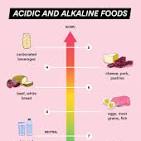
Here’s a more detailed look at foods to avoid:
Common Acidic Foods:
- Citrus Fruits: Oranges, lemons, grapefruits, limes, etc.
- Tomatoes and Tomato Products: Tomato sauce, ketchup, etc.
- Processed Foods: Many processed foods can be high in acid-forming ingredients.
- Sugary Sweets: High sugar intake can contribute to acidity.
- Carbonated Drinks: Sodas, Energy drinks etc., are acidic and can worsen acidity.
- Coffee and Tea: Can irritate the stomach and contribute to acid reflux.
- Dairy Products: Some dairy, especially full-fat yogurt, can be acidic.
- Spicy Foods: Can trigger heartburn and acidity.
- Meat: Fresh and processed meats can be acidic and difficult to digest.
- Grains: Some grains can contribute to acidity.
- High-sodium Condiments: Can irritate the stomach.
- Alcohol: Can worsen acid reflux symptoms.
- Chocolate: Can relax the lower esophageal sphincter and increase stomach acid.
- Peppermint: Although it can soothe digestion, it can also relax the LES, allowing stomach acid to rise.
- Fried Foods: Can lead to acidity due to high fat content.
Only once you have mastered this should you continue on to doing the parasite cleanse as the parasites feed on acidic foods and drinks so it is a waste of time to even start if you are doing this.
As well, another valuable point is the hydration of the body. No point in even starting a cleanse if you are not drinking enough water. How do you think the body will clean out the parasites or the heavy metals they feed on without WATER? The supplements and binder will turn your waste into concrete and your puku will be very sore if you don’t drink water to cleanse the body during a parasite cleanse.
Feedback
MARAE
Tino pai, Moteo marae is so welcoming, homely warm feeling , like a home away from home, modern, clean, and fully equipt. I’m in a wheel chair and the marae is very wheelchair friendly
First of all I just want to acknowledge Moteo Marae what a privilege it is to be here for the very first time the very first time I connected to my Kahungunu roots and I saw the post on Facebook … and I felt the desire to register for a number of reasons. I wanted to acknowledge the marae first and foremost and and the hapū ngā Tawhao, ngāti Hinepare and ngāti Mahu surrounding hapū of the area for having us, having us on your beautiful whenua, Rangimarie Hamuera ngā mihi thank you for having us and looking after us, encompassing with aroha here in the safe learning environment to our elders thank you very much thank you very much for overseeing the kaupapa and Charlotte, Charlotte! Thank you very much for doing this for us for showing the aroha wanting to share with people from far as where have we come from today? Someone from Whangarei was it? Someone from Wellington? Someone from Christchurch? Australia? All over the place and it all comes from a place of aroha so thank you very much, thank you very much for beginning this, thank you very much. Moteo Marae felt welcoming,grounding and safe. The environment supported both the learning and the healing aspects of the wananga, and I felt held by the space.
Although not the biggest marae I have been to for wānanga, in all honesty, it was perfect.
It’s a beautiful marae, the layout & design was comfortable,easy to learn & work in. – loved that we didn’t get wet or cold going to the the wharepaku lol Yeah – its also nice to go somewhere & not get some kind of creepy feels loved it!
The marae was a beautiful setting. The kitchen in particular was fabulous, with all of its different areas, I am sure it made the kai prep and clean up so much easier. The kai and the learning area were very spacious too. Ngā mihi nui ki te Marae.
The kitchen facilities are second to none everything is available at your finger tips. Working in this space is a treat. The marae is well presented and clean making it an enjoyable weekend.
This was my 2nd time visiting Moteo Marae in my life and I absolutely loved it, especially seeing the upgrades since the Cyclone.
Excellent, good functional marae with good flow.
I love the venue, the kitchen is the best equipment, time saving the wharenui is warm and cosy, the waiting area with couches are a nice place to relax, the dinning hall is a great size for gathering doing mahi, the seat up of tables is the best, on wheels saves so much time, having the cart to move seats is awesome.
Moteo marae is gorgeous, I felt beautifully comforted from the moment I arrived.
I really loved the venue, it is modern with a fully decked out updated commercial kitchen, everything is central to your needs. Easy to find the location, for me it was a 10min drive
Great venue, beautiful wairua, plenty parking, well resourced kitchen, toilets and facilities.
I love how everything is central to your needs and you don’t have to go outside for the ablutions & is Kaumātua, Kuia & wheelchair friendly.
I absolutely love the Moteo marae as a venue, spacious, clean, convenient and comfortable.
Have you ever been to a Wānanga like this before?
These waananga are defintely the most different type of waananga I have attended, very enjoyable and where the maatauranga is deep, broad, caring, uplifting, safe and nga taonga tuku iho, comes with homework and even an app reflection of the waananga! For the stuff you want to go over again all in photos, video’s, presentation’s, even a quizz.
No. This was my first time attending a wangana like this and also attending on my own.
No, not for this particular kaupapa. Although I managed to find a copy of the itinerary, it was so much more than I expected. Especially the lived experience by Charlotte, I felt truly grateful to be in her presence.
Nope, not like this
Āe, I have been to a wānanga like this before but as always the depth and width of the mātauranga and the wisdom shared in Whaea Charlotte’s wānanga make it stand out from others.
I’ve been to many Wananga before but nothing like this. It was well planned and the amount of content covered over the weekend is amazing.
No, and this was my 1st 3 day wananga and I loved it.
Yes, this is my fourth wananga.
This was the first wananga of this type that I’ve attended, and I fully intend to be at many more if given the opportunity for it to align.
No, this was my first wananga and I thoroughly enjoyed it, I went with an empty kete and left with not only full kete of knowledge but also some shifts within in myself and a powerful spiritual experience that I will never forget.
I have enjoyed different waananga spaces many times across the years. Charlotte’s delivery style, tohunga maatauranga, and lived experiences made this waananga unique.
No, although I have attended a one day workshop with an ACC practitioner. Although it was enjoyable it was not to the caliber of the knowledge shared at this wānanga.
I’m new to attending Wanangas but from what I gather from others this is a one of a kind and special one that myself and many others feel privileged to attend.
Activities in between the Program
I’ve travelled from Pōneke, and my marae is Waipapa Iwi Te Marae in Mohaka. I’d like to speak to some of my highlights, thanks, so I find a lot of peace, a lot of grounding out in the ngāhere, so I really resonated with any of our mahi rākau work that we did, so I was really surprised how much I enjoyed our rākau stick game out here on the veranda, why I like that, or why I love that in particular, it reminded me of happy childhood memories at primary school with the rolled up women’s weekly magazines, and we’re all like, I love that, that was so much fun, so appreciated that game, that was cool.Really enjoyable, I haven’t done the rakau game since I was at primary school with rolled up magazines. The dance was out of my comfort zone a good way for us to change energies with some light hearted activities.
Although short, it was one of the most fun parts of the whole weekend. It helped create a bond with my partner and those around me.
It gave a perfect mix of fun & learning – like having mini breaks, and gave me time to breathe & process the learning, while having fun!
The in between activities were special to me as they gave me opportunities to step into facillitation for a brief moment. I am deeply grateful for this opportunity. I also see and feel the importance of it as it helps us to ground into our bodies and keep us present.
Rakau game was cool felt like a kid again and to get the brain functioning in a different way and pushing it was cool. And the dance with Jane was another way to break the ice within the Roopu and I enjoyed the feeling of slowly breaking down barriers to feel comfortable.
I really enjoyed the rakau game was fun,the dance with Jane I enjoyed, moving around, Jane made if fun she has a lovely way about her.
The activities in between were awesome. Great for keeping us alert/engaged and connecting with each other in fun ways.
I really enjoyed the activities, I had never played the rakau game before, it’s great for hand and eye coordination, it was great to have a laugh at myself when I messed up, instead of putting myself down and the usual negative self talk.
Activities were thoroughly enjoyable and all so different. Sometimes in other spaces we do things and they’re so boring. But these were fun.
Loved the kapa haka led by Lee, and the softness and care Jane brought through her exercise. Tau kē!!
The activities between were out of my comfort zone as I would avoid them in the past. But it was neat pushing myself to learn them and connecting with others in the process.
Facilitation and Waiata with Charlotte
Charlotte’s facilitation was warm, clear and mana enhancing. The waiata created a strong sense of unity and helped anchor the spiritual and emotional aspects of the wangana.
Haemata given what happened a while back I usually flinch when someone comes near my head, or you know, even by my face, but just being here felt so relaxed and at ease I’d had a headache for around 18 months and yesterday was the first time that released, and I didn’t have a headache but then about 5 o’clock this morning I got this real intense headache, and I was awake and I heard what she said yesterday, it was like someone throwing something at me, like who in their right mind would be up at 5am in the morning talking about me so I kind of told them where to go in my head, and it took a few minutes, but it released again, so that headache was gone again.
Ki te hau kāinga. Ki ngā kaumātua. Otira ki ngā tira. Ngā runga tautoko i a koe whāea Charlotte. Mere, Lisa, we see you and we thank you for your beautiful hāpai. Te hāpai ōki muri. Thank you for triggering the W.O.F. card fire to get back on track with my own personal well-being. Really appreciate it because there’s something in there that I’m dealing with on a personal level and so for that I thank you. But the W.O.F. is, I was thinking what is that? It’s wairua on fire. That’s how I feel because I’m in a space where I’m dedicated to looking after our kaumātua. So you’ve just given a whole kete of goodness there, mātauranga, to strengthen and empower the people that I’m busy working with. So I’m really grateful for that. I’m going to be your most astute student because we’re going to be back.
Outstanding. Once again, it’s that lived experience and the kōrero that was shared that you aren’t going to find in books or videos. It felt a privilege to be in that room at that time. The waiata was great, and that also helped to lift the energy levels.
Healing cancer not just healing cancer, but healing all sorts of things, that was real interesting to hear, and when you put that slide up and it had all the stuff of the bad the bad diet I was like yep, yep, yep, yep that’s me, energy drinks, coke dairy no water so maybe that’s what the issue is oh and the kawakawa leaves
Yeah, that was awesome, loved it! Especially the harmony guidance, lol your harmonies are on point, we ended up sounding like a choir
The facilitation of the wānanga felt natural and relatable. The lived wisdom that is woven through the wānaga speaks volumes and helps to further integrate the kōrero in a way that is inspiring. I love hearing about the gifts our people have, it reminds me that I am phenomenal too and that there is still so much potential waiting for me to awaken.
Charlotte is an amazing facilitator, her explanation of the subject and lived experience makes sense. I like her straight forward approach, everything is well planned and applied.
Everything was on point, and with Whaea Charlotte’s explanations of real life experiences really made this Te Waka Tapu O Takitimu wananga more understanding for me, and the waiata is another way of breaking down more walls I felt and loved every moment of it.
The kawakawa leaf was also interesting, that was just something I just knew I learnt both sides of kawakawa never done rongoā as well had a lot of kawakawa tea yeah so just wanted to acknowledge that, just little things that I’ve picked up so I’m really looking forward to the homework ngā mihi kia ora koutou.
I’ve got so much homework to go away and do after this and that doesn’t include I’m not even in the telegram group yet that was just wonderful so I just wanted to acknowledge that but it was the lived experience a lot of what you talked about I felt that I already knew whether by reading or by video or some other modality but hearing the lived experience just cemented it all for me, that’s the best that was the highlight absolutely of the weekend and we’re going through things like Twin Flames, I didn’t realise they were Twin Flames so now I know and I’ve got the list the kōrero of good and bad no good and bad, it just is it’s that, that’s what it is it’s on the menu.
Excellent as always. You knew what the program was.
Working with the depression points on the head yesterday, that was… I’m going to use that. It was interesting how painful my thumbs were to begin with. But learning that it’s actually not in the thumbs. So, and the feeling I had after having the work done on me was just, I was falling asleep in the seat. And I could have gone to bed without dinner too. So, that was beautiful. It was just, it was beautiful. And, yeah, that was probably my favourite part. But watching you’s do the working on the neck hump thing, I was like, oh, I want to do that too.
I’ve never done miri miri I’ve never done romiromi but I’ve been a client of many times of having that and the minute I’m standing there I’m there I’m doing it, didn’t know what I was doing but I was doing it but I think also you giving us the confidence. At first I’m like, I haven’t done this and I think I gave the declaration… have you got health insurance … and all this kind of stuff but then but then just having the confidence that you know we can do it or us giving us the confidence or just telling us we have this innate ability to do it. It’s pre-programmed into us I think after a while I had to admit … because I was thinking five minutes for each, I’m looking at the clock do the five minutes but after a while … I went way over five minutes and because my hands were sore … it’s time to give up but I felt no … no, I just felt it needs to go as long as it needs to go so even in my very first session, I was getting that level of intuition that was coming through and I think I was covering up with a few jokes. I was joking around and talking a lot but inside I was quite zoned in on it so I just wanted to acknowledge that as well.
no Wairarapa au. Yeah, first of all, of course, there’s an acknowledgement to you, Whaea, for yourself, your life journey, everything that you’ve shared with us, your openness, your honesty.
I love how you don’t fluff around with things like you’re raining the korero if it’s going a little bit off track and I love directness and I love calling spades spades and not shovels. You know where you are and you know where you’re going. Ngā mihi to all your kaimahi as well, all the crew that have done the mahi here behind the scenes that have been supporting you as well in this kaupapa, the ones that you get grumpy at.
We acknowledge all of your whaea mahi behind the scenes and throughout the whole kaupapa as well. So I don’t actually like public speaking so I’m just going to try and just keep it short and sweet and just cram in touches here and there.
I’ve been following this waka training for a few years now but I still am building on what we’ve learnt but always learning new stuff and developing on myself a little bit I feel so light after the mahi I didn’t realise I was all like compacted down, yeah, just sort of, yeah, getting through and carrying it and then it’s not until it’s sort of gone that you’re like, oh, this is how I’m supposed to feel. You know, my head’s not supposed to feel like I’m dragging around a big dead weight.
So with Whakapapa o Ngā Atua Wahine, I didn’t actually know that there were Atua Wahine until I started on my rongoā journey two years ago. So that was a huge revelation and a beautiful one for me. Knowing about the balance, you know, you can’t have male without female, of course. The Twin Flames never heard about that before either and I loved that. What I actually saw was a beautiful purple flame and it had the deeper wai poroporo in the middle and the nice lavender around the outside of it. It was beautiful. The ancient reo, voices of nature only recently became aware of this before coming to this kaupapa towards the end of last year and it was exciting to know that there was an ancient reo.
He tino tino iho tōku reo Māori, so I’m on my reo journey, but to know that there’s a reo before our reo, that’s exciting for me.
I always enjoy the waiata, its a neat way of connecting, shields down and just giving it ya all, and it was so well conducted by Charlotte.
Just a few that jumped out was the lived experience was the key word as I was just drawn into all weekend lived experience you have wonderful resources even on the website I went and stalked all the way through the website leading up to coming here I found the itinerary I had the itinerary, did anyone else have the itinerary? It was just a wonderful resource!
Working with depression, that was the ultimate highlight for me and the reason being is that the day that we travelled here. I’d actually picked up my script from the chemist and my daughter, she’s the youngest of my five girls, she’s 19, she has mild intellectual disability and extreme out-the-gate anxiety. Now I’d taken her to the doctors last week because she had actually shared that she said that she was feeling suicidal and the first time she ever said that to me was when she was 8… Anyway, when I took her to the doctors, because my girl, is like a ruru, up all night and the Dr recommended quitiapen. I wasn’t going to give it to her because I hadn’t had time to research it myself but when you mentioned yesterday about anti-psychotics, I did some quick research yesterday and thought, what the hell, this isn’t even an anti-depressant, it’s anti psychotic.
I’ve loved this wananga. And before I go to the kaupapa, I just really want to say how I’ve really enjoyed your facilitation. How we learn about the mātauranga, about how it comes alive in the way you present. And it just falls into the moments. That’s the bit I’ve really loved. The honesty and, you know, sometimes people get feels on how honest people can be. And, you know, just tohu, tohu. I love that. So, thank you for being a really good example of how to live the wā. And also to those you who have kind supported, Treena and Lisa and the rest of them, how the succession and the beauty of what that looks like. I love it, that’s the bit I’ve loved the most.
The voices of nature. So, for me, like, learning te reo is, although both my parents were reasonably fluent speakers, it wasn’t something that was instilled in us. And so I’m still way back on the baby version of that. But the voices of nature is something that, you know, like you struggle with the sentence structures or getting the right kupu, but the voices in nature are something that’s sort of in us, that nobody can say, you can’t speak that language, you know, because it’s something.
I thought I was going to get through this without a tangi. I’m a bit of a tangi weto. So I was doing really good. But yeah, so that’s something that is quite nice, because it is something that we can all have and, you know, isn’t as difficult as trying to get back the reo.
The cancer thing is something that crosses and comes through a lot of our whanau, but more recently I lost a cousin to cancer, and just hearing that unforgiveness that was in the korero around prior to his passing and after his passing as well. There were a couple of big events in his life that he couldn’t let go of. And I feel he’s probably more at peace with that unforgiveness that he took through his life. And the, you know, the event that happened to him and us is something that we all sort of are trying to still work through the forgiveness of it.
I’m focusing a lot on myself and what I got out of this weekend and I do recognise and thank you whaea for reminding us that we need to look after ourselves first before we try and look after other people.
Absolute 20/10 for facilitation and waiata with Charlotte, I love singing and I would love to learn more songs that come from the region I whakapapa to.
Ancient reo, I’m still a baby pepe and learning my reo, so funny, the ancient reo, you can hear it, know it, and you don’t know how you know it, but you just do. And then when I need it, I don’t know it, just gaze. And then just randomly, you know, I got it. So that one is, yeah, that’s a whatu manawa and the ancients and that, so that I understand so, yeah, very much implements in my life.
I’ve loved definitely the whakapapa, to see the names, to know them, to understand them. So, if they ever show up, ka mohio ki te ingoa, rawa tēnā.
Creation stories of the tohuna. To understand that everyone has a story and that we have stories that contribute to our stories before our own, and then that those stories continue after, helps me understand a bit more about the responsibility of how to live the story I’m in now, and to do that better. Yeah, that’s a challenge.
Kia ora kia ora te whanau ngā mihi ki a koe whaea for what you’ve brought the knowledge that you’ve brought to us to help us on our healing journey and to think like you’ve empowered us to help out not only ourselves but our whanau and all the kai mahi too and everybody hearing everybody’s journeys it’s been so uplifting even though I’m crying it’s still uplifting the um just the knowledge that we’ve picked up over this weekend is life changing.
Personified atua of nature, Twin Flames, beautiful. It was really good to understand, because I’ve had hono with different people, male, female, when I walk into different places, like you’ve known them forever. And to understand that those energies aren’t always sexual, kind of that attraction stuff, because you kind of think, oh, what’s that? That’s weird. But to know this kind of relationship exists between different energies, ahakoa no he ano wai, yeah, I really enjoyed that.
And to recognize too that within our atua is the same, that some are partners, some are not, but there’s some real synergies that happen because of that energy coming together.
The ancient reo, the voices, I love that. I love reo, and I’m still always going to be a learner of reo. Pai tera, but I think the reo that we learn in the books is sometimes a doorway into the real reo. And to hear the body speak, to hear the land speak, and to be able to hear that conversation going on and to be part of it, because I haven’t always been part of that conversation. Love that.
Haemata, yes, really cool. What I’ve loved about learning the haemata is where they are. Sometimes intuitively you kind of know there’s a something somewhere, but you’re not quite sure what it is. So to actually have names for them, to know sequences and how to, that actually you’ve got to really push sometimes. Pai tera.
Working with depression, I’ve never been in mental health, but there’s a part of me that’s shifting there after our kōrero to be able to help others navigate that space, so I’m kind of hoping to have experiences that help me understand that better so that I can feel the mātauranga come alive.
Healing cancer, our whānau has cancer in the whakapapa. And so to know that there are some real stuff in there, and the last couple of months I’ve been thinking, these doctors don’t know what they’re talking about. Like, they really don’t. So to know that our tūpuna do, and it’s different to move from trusting the mainstream process that we’ve kind of lived and brought up with to actually shifting back to something more intuitive. And that’s a challenge, to unlayer that. Yeah, colonisation has done a big number on us.
But coming back to, when you talked about the kawakawa, I have a love for kawakawa. And I have no idea why, but it’s one that calls me. So thank you for sharing that experience about the skill sets of what the kawakawa does.
Healing cancer and the dementia it’s um so prevalent in all my mother’s and father’s generation and the same I’ve been on that journey in my fifties going I really don’t want dementia and so I’ve been changing a lot of the diet and it was so um again life affirming to hear other bits of knowledge to add to that when you were talking about um the acidity of your body and it being making it more alkaline so I’d heard a little bit about that but this was really so much knowledge, so much more knowledge um again to add to that Kete
Te mahi rākau, yep. We had mahi rākau when we were younger, but it wasn’t like that.
We had different pressure points that they would push. But just to know, not just where to place it, but the relationship between us and the rākau, that’s the bit that really jumped up for me.
Whātu manawa and the mind, I really loved that. That bit really kind of gave me some clarity today around the divine ego and the human ego, and knowing, I guess just learning more about them and still learning, but just to know, I can kind of pick a song and play little games with myself, which one’s which. And then later I’ll judge people where they’re at. No, no, I won’t do that, no, no, not at all, not at all.Charlotte’s delivery as a facilitator was very intriguing. I enjoyed the waiata as it enabled use to further our understanding of vibration, frequencies and energy that connects to our Tīpuna and Atua through song.
Loved the waiata. Best part was the harmonies and understanding the depth of vibration and frequencies in this way. Charlotte was such a Crack up as a facilitator. Clear lived examples shared for learning
Charlotte is captivating and explains each topic with interesting lived experiences.
The Wananga facilitation and waiata with Charlotte I thought were coordinated and thought out really well. I learnt heaps!! Very insightful, inspiring and knowledgeable.
kei te mihi whaea for enabling this wananga, a safe place for all of us to learn and for me to grow.
This is the fourth wananga for me the third of this series. It’s been really wonderful and mihi to you uncle nice to meet you, what I love about the wananga is the whakawhanaungatanga and hopefully I get to see you all again so I’ll be back next time so nau mai haere mai.
The highlights, I’ll speak to the highlights or pretty much everything.
The whakapapa o nga apa atua o wahine so I’m OCD and I’m a why’s this how come what’s that and an example I use is our Pepeha when you have to get up and do your pepeha everybody anybody can do their Pepeha but do they know the whakapapa behind it so that’s what I loved about the whakapapa and you had all those bits of cardboard and we had to put them all to aue! oh my goodness! and I was not leaving that table until I got it so um I’d like to say that when you um came up with the answers the following day I’m like I got it and yep ok I cheated I went on to um google but in saying that, there was no right answer but you had to sit there and we had in depth kōrero about ok what’s Io who’s Io what’s that about what’s te kore you know te kore is nothing so ok it can’t be there um and these two they didn’t have parents ok so they got it up there so that’s what I loved about it everything has a whakapapa, I really enjoyed that.
The female and male twin flames, that was really good um why? because it just was ok, because that’s the answer you gave I like that it just was but that’s work in progress for me to do when I get back home. The haemata, my neck and shoulders were worked on that was an experience. Had quite a few knots on my left side so that needed a bit of working out so I knew at the end of it oh boy I’m gonna have a good sleep tonight and may I say that the room last night pretty much everybody yeah you all had a good sleep.
As someone who works in mainstream western medicine, working with depression and whānau with cancers, so I’m blessed I work with colleagues in mātauranga so I can recognise ok western medicine may not work for you I can steer you to people who can work with you but as well as that I work hand in hand with with kaimahi who have these gifts like yourself.
Te whatu manawa and the mind so yeah, when I started coming to the wānanga I show up with this pukapuka and I pretty much write everything in there and then when I get home I go back so I see that I have grown, and each time I leave I take more and more away and I’m becoming more aware of my mātauranga Māori, so that’s just been wonderful.
Time alloted for Romiromi and Rakau Practice
I haven’t done a lot of work with rākau before, so taking the opportunity to lie on the mattress and do some mahi on myself, so I wouldn’t call them headaches, but I always have a heavy head, like a lot of pressure on my head, so now I’ve found a way where I can self soothe or release some of that pressure by just using the rākau on my head before going to bed at night, perhaps, so doing that myself for the first time was just enlightening, empowering, I’m going to keep, (bloody painful as well), but great, and then with the upoko continued, the work that we did on our haemata, again, haven’t done that before, again I felt all day yesterday, and all throughout the day yesterday my head was getting heavier and heavier and I’m trying to sit here and concentrate and tell whatever to get out of my head and leave me alone, and I still need to learn what’s going on in my head to be fair, but when we’re able to do the work, get into those pressure points, just instant relief afterwards as well,Yes, I felt there was enough time to practice and become comfortable, while also respecting that this was a learning and introductory space.
You know, we get too busy, we forget to make sure, you know, and it’s not until we sit down and like this, it’s a reset. So this is a good reset for me when I get back. Think, think, slow down, breathe.
The mahi rākau, neat. I use it a lot. I have, think all the time, I can’t sleep. I use it quite often. I have sore lower back. I have osteoarthritis, so that makes a big difference. So rākau I use a lot on my lower back and that is marvelous. Just, it changes my world. I can walk, I can get up, I can bend, I can do a lot of things without working with that, I was on crutches, literally. So that is a mask that I use daily and because I want to be healthy, I want to look after my body. I want to love my body and I tell it that and I’ve seen the benefits of doing all this mahi in the change in my body. How I couldn’t use it and how I can now use it, but purely because I want to. I’ve made the choice, so I’m staying on that track. I’m not perfect, but every little step I make to being better than what I was doing is making a great difference. So all of the mahi that we do here is definitely changing my life and working for me.
How I couldn’t use it and how I can now use it, but purely because I want to. I’ve made the choice, so I’m staying on that track. I’m not perfect, but every little step I make to being better than what I was doing is making a great difference.With our rakau, I had like the best sleep without headaches that I’ve had for I haven’t had for so long and the same waking up sore but knowing actually we have the tools now to be able to think, think about and not think that’s more to the point, stop thinking stop thinking and release and go with that, the tools that we have and not being afraid to let go because there’s more peace and calm in that letting go
Yes, although towards the end of the first day. I was quite tired from traveling and sat out the rakau work.
Plenty, no rush, or pressure to get it perfect on the first go lol
I loved how much time and attention was spent on romiromi in this wānanga, I can see the natural succession of the mahi, we have spent a few wānanga going over certain moves, and then in this wānanga we inetgrated those again by past participants supporting new participants, and then further building on that with new moves. It feels like the mahi is alive in us, its not just a workshop where we go learn a couple of moves and then be on our merry way. There’s ample opportunities to practice and integrate, an essential part of keeping the mahi tika and pono.
Yes I feel there was plenty of time. Everyone was still going for a while after Charlotte left, which was good no one was in a hurry to stop.
I think maybe a little bit more time working on each other to be able to be guided a bit more by whaea would be good in both Romiromi and Rakau.
I felt there was plenty of time for the mahi, a lot carried on till they had enough, so it was a good time of day to do at the end of the day.
Yes there was ample time allocated at the end of our days to practice romiromi and rakau work.
Yes there was. It was also very helpful to have Charlotte and her assistants checking to ensure we were doing it correctly and correct us where necessary, or if we had any questions or concerns.
I thought there was plenty time. Loved that they gave that time to us and allowed us time after to explore and tutu as we needed to figure out our dialect of kaitiakitanga.
I felt the balance was just right. After Charlotte’s clear, well-presented demonstrations, we were trusted to work with guidance from tuakana, and it was obvious everyone had the information they needed.
I didn’t practice the romiromi or rakau work due to being hapu but on my observation it seemed to me everyone got to go at their own pace and finish up where each individual felt necessary.
Feedback of Powerpoint Presentation
The presentation was very informative and relevant. It helped give context and understanding to the practices, without taking away from the experimental learning.
Very informative and relevant. Couldn’t have asked for anything more.
Yeah, very relevant, and seeing it – made it easy for me to learn & digest the kōrero
The powerpoint was very relative and having it there to check back in on is very helpful. I tend to become immersed more in the stories shared orally, at the time, so both complement each other nicely.
Very informative and relevant to the topics we were going over. Love seeing references from other tohunga that are so relevant.
This wananga was on point, and another reason being the presentation of the PowerPoint and all the relevant information that also complimented Whaea Charlotte’s life experienced stories.
Very informative. I took lots of notes. And these can be supported with the wananga app, when this becomes available.
They are always on point, I could sit there all day listening and absorbing.
The PowerPoint presentations were extremely informative and very relevant to all that we were talking about and learning, furthermore they were relevant to recent curiosities I’ve been having into the rongoa and Atua space as well so I was completely captivated and engaged in the content provided in them.
The PowerPoint presentation was very informative, and each topic was relevant to to the slide being shown and topic
Very informative and highly relevant. Looking back on notes they provide enough info so we don’t become dependent on them, but enough info to remind us of what we learnt.
For me I struggle to retain the knowledge but know that it has gone into my cellular memory and will come out when needed. I am currently working on correlating the information from all wānanga I’ve attended to keep a hard copy for my own person journey with the intention of handing the knowledge down to mokopuna who show a genuine interest and appreciation for this mahi.
The power point I thought was very informative and relevant. I know a lot of my questions and other’s questions were answered within this.
Purepure experience on the Whenua
The pure, the pure on the whenua was beautiful. It’s, yeah, just to be, just to be, but to have the protection of takutaku while we did that space, that’s the part I really want to weigh into, is how to protect and facilitate those spaces so that we can be safer, because safety’s a big thing and I know when you start to move into spiritual highways, there’s some road rules I don’t quite know about. So a tenaa mohio ae, and it’s time, but yeah. Ko ae tērā.
The pure was a real amazing experience. I’ve only had my first pure last year in Tangaroa, but to do it on Papatuanuku, it was beautiful, and I loved the fact that we were in that porowhita, and when you were going around doing the takutaku, for me, things were intensifying. Every time you’re going around, the more I could hear, and the closer you came, the more intense it was becoming with me, and I was feeling myself being pulled up, my upoko going up and up and up, and my karu going faster and faster, which was beautiful.
And also the oro, the oro in there as well, too, could feel that. One last thing is that an interesting thing that I found out last week, just last week, was that when we waiata, when we waiata with someone, which will include oro, of course, is our manawa actually synchronises, and our manawa beats at the same rate when we’re in that roopu space together, and I loved that. That was amazing for me.The purepure I loved that, so going back to the whatu manawa and the mind and when we’re all connected in the circle yesterday it was quite cold and I feel the cold easily but you’ll hear Whaea say get out of your mind so I told myself you’re not cold you’re not cold and I felt this gentle breeze which was Tāwhirimātea and who was reminding me be still be present with yourself and I went into the whatu manawa and it was just beautiful so it’s becoming more aware of myself and what is around me get rid of the clutter, so thank you for that Whaea for enabling this wonderful safe space kia ora.
So, I’ll be here next Wananga. And, yeah, just, I enjoyed it all. Especially the outside, doing the pure. Yeah, that was just beautiful feelings. Beautiful feelings, like surreal. And then me getting in my own way again.
With the pure on the whenua yeah, that’s a first time for me too because I only kind of know what I’v e been sort of taught and it’s been in Tangaroa so it’s also cool to know a new way of doing a pure without having to go into the water during that I think a couple of times you had circled around and it felt like you had purposely stopped in front of me a couple of times but that may not have been it but every time you kind of did stop there and done the takutaku or whatever you needed to do in that moment it was multiplying me into that space, it was sort of uplifting me, aligning me to my tupuna more too and in that same moment was another moment I got to see my dad again too but I saw my mum right next to him as well both acknowledging me for stepping out of my comfort zone and being here in this wananga so again thank you whaea for everything you’ve done and all the helpers that have done all the mahi in the back and still hold space while you’re left kia ora.
The pure on the whenua the same normally in the Moana and you know everyone talks about getting on the grass and grounding yourself but in that collective that wasn’t just that grounding that was that uplifting just actually knowing that we’re full of potential and doing you know being in that group made it even more so so it’s not an individual rising it was a group rising, aye?
Mine was seeing colours. Colours coming, but shadows as well. Shadows coming through. And just the different colours that come through for me. And I just, I did see a mouth and then I was like, ooh. And then it was like, oh, it went. So, yeah, I loved that. Thank you.
I’m from Tamaki Makaurau. The pure, I really just got into the pure. Seeing the dragon fly around above us that was cool. I don’t know what to say about it.
The purepure experience was very powerful and emotionally significant for me. I felt deeply connected on a spiritual level, and although it was quite overwhelming, it was also a highlight of the wananga for me. I found it meaningful as it was.
I found the Atua Wahine peering, the twin flame, so profound. Like, that was beautiful to see and know.
No, I think that was a great alternative than going to the sea.
What we did, and the way did it felt perfect on the day
I find myself trusting and surrendering more and as a result I feel I am developing a relationship with my whatumanawa and getting a knowing of what it is in to be in that space, and move out of the hinengaro. The purepure for me was like all the wisdom of the wānanga settling inside of me.
Awesome experience enhanced being a shared experience with everyone in the group and then sharing what we all experienced, felt and saw.
The ancient Te Reo when we were outside yesterday everything just went quiet for me, and I could hear the birds, and I could feel the breeze, and it was picking up and dying down.
1st time experiencing one of these types of Purepure and I’d recommend it to others, but obviously under the right guidance.
No. I am still learning about the purepure though. It was great that we had an alternative on the land as it was not safe to go into the Moana at the time.
I am unsure that there is any way to have improved the purepure experience, it was wonderful to feel so connected and the feelings that occurred during.
No, I don’t feel there needs to be, Had an absolutely beautiful, empowering spiritual experience and message during this exercise it was something I had never felt before on my spiritual journey, that powerful experience is something I will never forget.
Korekore rawa atu. Naa te wairua teeraa i arahi. Naana anoo i whakatika.
Koa, not in my opinion. The feedback exercise was a great way to collect and share because it allowed more time for other learning.
Sound and Precussion Exercise
This exercise helped shift energy, release stored emotion and bring awareness back into the body. It felt cleansing and centering.
For me, it was frequency, vibration, and primarily kotahitanga.
Yeah, uncomfortable lol but that’s a good thing right? Lol
This was a way to collaborate and connect with the ancient reo. Sharing and sitting with what each individual in the ropu was feeling, and then sharing this together and creating a unity within that. In a way getting a feeling and a remembering for what community and unison feels and moves like.
It was good to be out of my comfort zone and the exercise was hardcase and enjoyable, loved hearing and seeing what the other groups done. Also good to get to know one another during this exercise.
For me it was a way of connecting with myself, trusting myself and having courage to do things out of my comfort zone.
I was nervous, as I do not like performing in front of others. Engari, once I got over myself, it was great team work.
That was awesome, our group all had some input as to what we were going to do and we did a great job at feeling the tune that came out.
I always enjoy these experiences.
I enjoyed this exercise a lot I saw and felt different things. I don’t think there’s been a time before this wananga that I’ve had that kind of a feeling of connection before.
I really enjoyed this exercise, it was all about sound, frequencies and connection, connection to not only each other but also connecting to our tīpuna and atua.
This exercise caused me to think about content we had learnt in such a different way. One thing to read and write and remember. But another thing to add oro or vibration to it and totally flips what I thought I learnt in the first place. Helped me understand how I could go past the physical and enter other spaces and elements of the learning.
Being tone deaf (lol) and not really musical at all. I was at first hum bug with this exercise. Once we got into it and thankfully had someone with the knowledge of pulling it together I felt I learned from it.
I didn’t feel out of place like I once expected I would while doing these activities.
Kai Pai
Loved the Kai! Was nourishing and well prepared.
In my mind, that was the key standout point of difference from any other wānanga I have been to. Our whenua (our kai) is the foundation that our health is built on, and it is often overlooked. As Māori the taste is often prioritised at all costs. In my mind, this is taking us as a people in the wrong direction for our health and this is clear in the statistics. I loved the whole food nature in the variety that was offered. Low to no processing. Low to no sugar and salts. Dairy-free. And vegetarian options. It was also ideal food that creates low inertia in the body, therefore enhancing spiritual connectivity. And we certainly did a lot of that over the weekend. Well done, Charlotte! I was so impressed.
I’m going to start with the table that was sitting over there the whole weekend so I’ve been to a number of wānanga and for me the elephant eye, I’m right into nutrition and all that kind of stuff that’s my specialty area and that’s why our health stats are where we are as Māori because kai is the key component you know apart from air it’s the largest volume of what you’re putting into your body you know water and kai. I went up to the table on that first kai we had and I was like something’s different here … you mentioned the nuttalex, nuttalex!, hey what’s that? And I could just see there’s a lot of focus, a lot of care, a lot of thought that’s gone into that for us. A lot of wānanga we go to, we go straight for the fried bread and the pork chops and stuff but for me it defies the purpose of why we’re going to the wānanga. We’re trying to open ourselves up to possibility, not bog ourselves down. So I saw that all through the weekend and I’ve got to say it’s the best salad I’ve ever had, all the salads were just amazing! So I just wanted to acknowledge that it’s normally something someone would say at the end of the kōrero I’m saying at the front first because it’s a priority so thank you very much for that it did not go unnoticed at least for me so thank you very much for that and getting into our kaupapa.
Not gonna lie, healthy kai wasn’t my favorite, but by the end of the wā – it made perfect sense… Healthy Kai is my new favorite
Healthy and delicious, loved the tasty yummy healthy treats. Always a beautiful reminder to keep us on track with healthy eating. Gives me new ideas for healthy eating too, I can get a bit boring with it!
Really awesome to have such good food throughout the weekend, makes the puku feel good as well as the tinana, inspires me to do better at home. Also shows how good food can be the normal for us as Maori when we hui instead of our normal, which isn’t as good for our health.
The Kai was very healthy and very fresh. Definitely motivated myself to start slowly making little changes.
As always, beautiful and prepared with love. The kai was healthy which supported the kaupapa we were on.
Awesome
My goodness, all of the kai throughout wananga was just amazing. Simply delicious. It’s reframed my view on creating delicious meals for my whanau.
I really enjoyed the fresh healthy meals, fresh fruit and beverages that was provided for us, it was great for us to nourish our body and minds during the wananga, as this allowed us to retain the information we were receiving, without feeling sluggish, fatigued and unable to retain information.
Food was great. Not a health freak, but could be tempted after seeing that.
Serving healthy, nutritious kai is important, especially with how much kōrero is shared about supporting an alkaline tinana. Giving whānau the chance to experience both the goodness & the taste of this kai helps bring those messages to life.
As a hapu mama I was really satisfied with all that was served. Fuel food with a great taste.
TEAM Work – Mahi Tahi
I learnt some really cool stuff but I think I was meant to bring this one here and then just a quick mihi to whaea Charlotte and your support crew there’s a lot of mahi time, energy that goes into not only preparing a programme, and we know that when we prepare a programme, the programme might not come to fruition, we just go with the flow and we’ve definitely gone with the flow and learnt off each other this weekend, but even the logistics of booking out the marae and purchasing kai, and all that kind of stuff, it all takes time so thank you to all of our whanau here that were involved in bringing us together really grateful to have met lots of beautiful people, and I look forward to seeing you all again next time around, so kia ora whanau.
Teamwork was positive and collaborative, everyone contributed which strengthened whanaungatanga and shared responsibility
The wahine, in particular, were all warriors in the kitchen! I normally get in there and contribute, but I found it difficult to be honest because everyone was just putting in and I couldn’t find a space lol.
Actually awesome fair, and made everything easy
It is like a well oiled machine. The flow of it is amazing, and it was evident as it felt like everything in those areas happened a lot quicker.
Once the teams were formed everyone was happy to get in and do what was needed which made the flow of the Wananga really good.
This was amazing to rub shoulders and learn about others and there wananga journey and the laughter created by this mahi was amazing.
Group work really helps everyone knows what is happening and what we need to achieve and feel a part of wananga.
Absolutely loved the style of putting together teams to get food prep, dishes and cleaning done. Created an even deeper connection and immersion into the wholeness of wananga
Absolutely fantastic everyone worked as a team, we all pitched in and done what needed to be done regardless, whether it was meal prepping, cooking, clearing tables and doing dishes, cleaning everyone had a part to play.
Teamwork seemed on point to me.
The organization in the back ground helped to achieve a great flow with the prep work! The teams were all helpful and happy doing the mahi. It was good all round.
The team work was pretty neat. Treena was an amazing team coordinator which made things super easy for myself and everyone.
I just wanted to thank everybody for all your help that you’ve done throughout the stay and it’s been a beautiful stay and easy because of you, all of you, because you all pitched in and helped out and it couldn’t have worked any other way if you hadn’t have done that. So give yourself a big pat on the back for doing the mahi. It’s totally appreciated and safe journeys to you all too.
Safety
No, I felt safe throughout. The rituals were facilitated respectfully with clear intention and care for all who participated.
Not at all.
Not at all – it felt safe, and held…
Kao, I trust more and more and know that I’m held by the takutaku and our powhiri tikanga.
Not at all, have complete trust in Whaea Charlotte as a professional and master of the trade, she always examples integrity and dignity so feel completely safe in her hands.
No, no unsafe feelings during the wananga. I think everyone’s intentions were of great day to this whole wananga going the way it did.
No. I let myself go with the kaupapa, knowing that I was safe.
Not once did i feel unsafe with the spiritual rituals.
Definitely not, I felt safe at all times during the rituals, as a spiritual being I know how important it is to protect and ground myself when undertaking any spiritual rituals or healing
None at all. We were well prepared, cared for, time to process things we had questions about, and tuakana also who were there as we needed.
No not at all. I felt comfortable and in tune with the mahi.
For me I feel very safe in this space.
Recommendations
I came with an open mind with no expectations, and I left with a full heart and a content mind. I have no recommendations for improvement.
Ka hoki mai ke tēnei o ngā kaupapa. Why? Because you fulfil, you have helped fulfil and fill that gap where things like, shit I’m that guy that drops everything and wondering what the heck it’s been. When you’ve got everything’s in place and you’re still dropping things, I live in between that world. So I’m acknowledging everything here and I love anything with collectiveness, bringing us all together because we are a collective consciousness or vibration and energy. So I appreciate that and I acknowledge everyone here that’s on this journey to do what we need to do in our own communities for our people and our mokopuna coming. So tēnā tātou.
I can’t think of anything in terms of the quality. No qualms at all. I did find a copy of the itinerary for the weekend on the website… Secondly, I observed that the schedule wasn’t adhered to; although I didn’t mind, we received so much more value than I could have imagined. And when Wairua takes over, you just go with it. Another thing I find really beneficial is when the kaiako tells us to pair with someone different. Yes, it’s just something small, and yes, it’s something that we should be able to do ourselves, but it is different when the kaiako says it. It really puts us out of our comfort zone and helps to create that whanaungatanga. And from a person that attends wānanga on a weekly basis, it really does work. In summary, this is the best wānanga I have attended, and it would be a privilege to be part of the next. 10/10 does not do this justice. Thank you.
The quality is on point… Not too much, and enough time to practice, process & experience what we learned during the day balance achieved – you nailed it! Nga mihi nui Koka Charlotte
We could be mindful for the mornings during Wananga that we have a schedule to stick to with Whaea Charlotte and we need to be ready to experience all she has to offer when she arrives.
Nothing to improve on sorry. Everything is set up pretty good.
1: In the registration, ask people what they are good at and put them into appropriate groups and then advise tauira what group they are in at the start of the waananga. To help to help with jobs eg: kitchen prep, cleaning bathrooms, ask what tohu whanau have?
2: Recycle station.
3: Final feedback session. Maybe, limit to 3 mins per tauira and/or 3 highlights only. Because then we can just explain further in wanaga reflections in telegram app.
4: On day of powhiri, tell those of the tangata whenua side what the waiata is. That way, I can brush up on my lip syncing because the singing in tune tohu was not given to me!
I believe that it was absolutely amazing and have no idea how it could improve as I found it all so beautiful and amazing.
I saw a video of whaea Charlotte talking about purchasing raakau and describing them before the waa and what to do and how to get them. Those little info drops before the waa are always helpful and could be dropped on a group page that we all come into before the waa.
Would you recommend these wananga to whanau?
Yes Absolutely I would recommend this wangana to whanau and to others from Pacific backgrounds. I found the space welcoming, respectful and deeply healing.
Absolutely, and I have already shared that there are more upcoming this year.
I already have lol
These wānanga have gotten better and better with time, and it has been a privilege to see them grow into their own.
Absolutely. Now, if i could just get them there hehe. I’m grateful I have one sister that comes.
Absolutely
Heck yeah, I would try encourage my children to come along with me to the next one.
To like minded people… yes.
Yes, I always promote this wananga
I already have recommended these to whanau, I would want all my whanau to feel the same spiritual connection to our whakapapa that I felt during the wananga. I had a 2 hour video call with my sister about it and she could hear/see how much i enjoyed all matauranga shared.
Yes definitely.
Hell yeah.
Hell yes!
I would most definitely recommend these Wanangas, I’m trying very much to drag my mum along so she too can gain the benefit of being a part of them and getting to meet/connect with everyone.
He Kupu Whakamutunga
He Atua, He Tangata (kupu nā Dr Rose Pere).
We are both beautifully human and magnificently divine!
Hei whakakapi i tēnei wānanga, ka tuku mihi aroha ki a koutou katoa mō tō koutou tae mai me tō koutou kaha ki te whai wāhi atu. Ngā mihi nui mō te kawe mai me te tohatoha i ō koutou mātauranga tuku iho mō te whakaora. Nā koutou i waihanga tētahi wāhi kī tonu i te wairua, te māramatanga me te aroha. Ina huihui mai te whānau i tēnei āhua, e kawe ana i te mātauranga o ō tātou tūpuna, ka puta he mana nui. Ā, ka maumahara anō tātou ko wai tātou tūturu he wairua whakahirahira, he tangata ātaahua hoki.
He tino honore mō mātou te noho tahi i ēnei rā ki a koutou. Ko ngā kōrero, ngā katakata, ngā roimata, me ngā wā puku, i whakapakari i te mauri o te rōpū. He taonga motuhake tō ia tangata i kawe mai ai.
Ngā mihi hoki mō ngā koha i tukuna mai e koutou. Ka nui te whakamihi mō tō koutou manaaki me tō koutou atawhai. Engari, nui atu i tērā, ka mihi mātou mō ngā menemene me te hari i kawea mai e koutou ki te wānanga. He taonga nui tēnei āhua.
E titiro whakamua ana mātou ki ngā tau kei te heke mai, kia tautoko tonu tātou i te whakaora o tēnā me tēnā, o tātou katoa hoki. Kia tipu, kia kaha, kia mauri ora tātou i raro i te kotahitanga.
As we bring this wānanga content to a close, I want to sincerely thank each and every one of you for being present and fully participating. Your willingness to show up, to share, to listen, and to contribute your ancestral healing wisdom created a space that was rich in wairua, depth, and authenticity. When whānau gather in this way, carrying the mātauranga of our tūpuna, something powerful happens, and then we remember who we really are – a magnificent spiritual being and a beautiful human: He Atua He Tangata (quote: Dr Rose Pere)
It has truly been a privilege to spend this time together. The kōrero, the laughter, the tears, the learning, and the still moments in between have all strengthened the collective mauri of the group. Each of you added something unique that could not have been replicated by anyone else.
We also extend our heartfelt thanks for any koha that was given. Your generosity is deeply appreciated. But even more than that, we thank you for the smiles, the warmth, and the joy you brought into the space. That energy is priceless and is what makes a wānanga come alive.
We look forward to many more years of walking alongside one another, supporting, uplifting, and strengthening the healing within and between us. May we continue to grow, to share, and to restore balance together as whānau.
Ngā mihi nui ki a koutou katoa
Nā
Charlotte
Harata Meretana Ma Charitable Trust
Chair